Loading...
Done
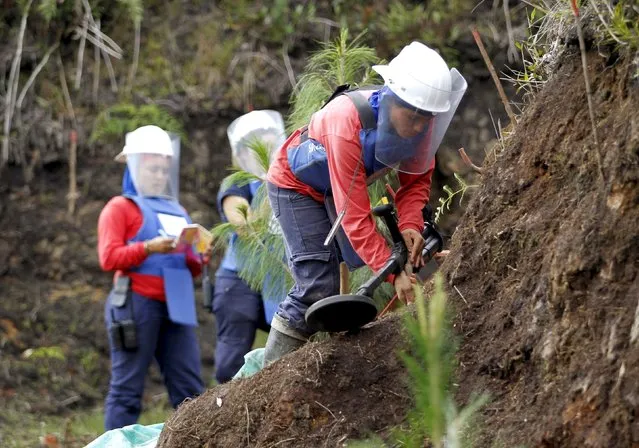
Natalia Arango works with her mine detector in a zone of landmines planted by rebels groups near Sonson in Antioquia province, November 19, 2015. (Photo by Fredy Builes/Reuters)

Natalia Arango works with her mine detector in a zone of landmines planted by rebels groups near Sonson in Antioquia province, November 19, 2015. Women's work takes on a nontraditional meaning for fifteen Colombian women who work to rid the Antioquia Mountains of deadly landmines as the country edges closer to a peace agreement with Marxist rebels to end over a decade of conflict which has claimed 220,000 lives. (Photo by Fredy Builes/Reuters)
Details
27 Nov 2015 04:44:00
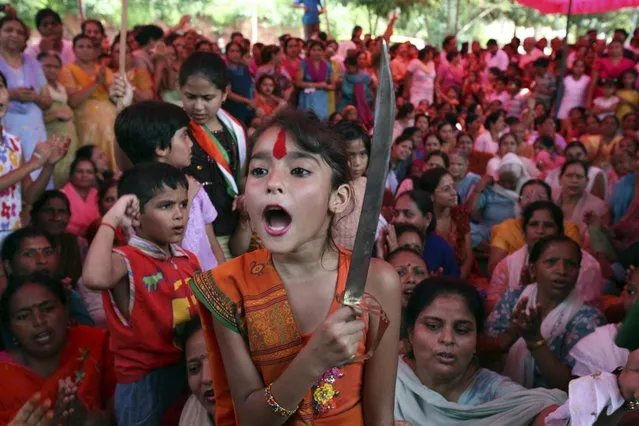
A girl holds a sword during a protest in Jammu August 20, 2008. (Photo by Amit Gupta/Reuters)

A girl holds a sword during a protest in Jammu August 20, 2008. (Photo by Amit Gupta/Reuters)
Details
14 Oct 2014 10:37:00
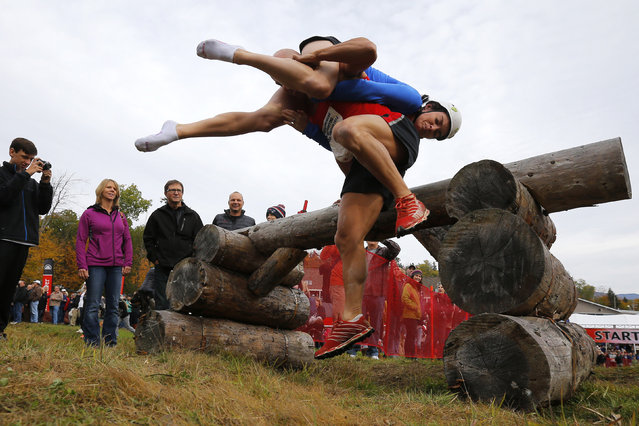
Jeff and Kelly Lyons clear the first obstacle while competing in the North American Wife Carrying Championship at Sunday River ski resort in Newry, Maine October 11, 2014. REUTERS/Brian Snyder

Jeff and Kelly Lyons clear the first obstacle while competing in the North American Wife Carrying Championship at Sunday River ski resort in Newry, Maine October 11, 2014. (Photo by Brian Snyder/Reuters)
Details
13 Oct 2014 11:05:00
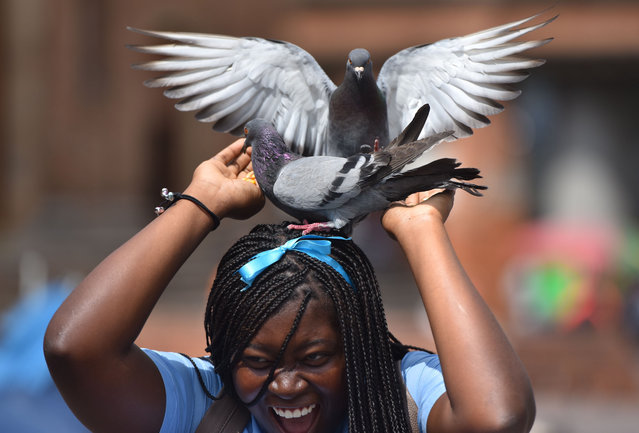
A woman walks at the Boulevard of the River the eve of the International Women's Day, in Cali, Colombia, 07 March 2019. (Photo by Ernesto Guzman Jr./EPA/EFE)

A woman walks at the Boulevard of the River the eve of the International Women's Day, in Cali, Colombia, 07 March 2019. (Photo by Ernesto Guzman Jr./EPA/EFE)
Details
09 Mar 2019 00:03:00
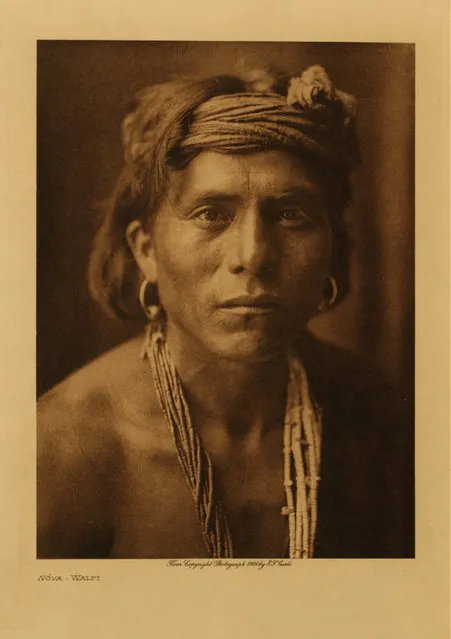
Nova, a Walpi, in 1906. (Photo by Edward S. Curtis)

At the beginning of the 20th century, Edward S. Curtis set out to document what he saw as a disappearing race: the Native American. From 1907 to 1930, Curtis took more than 2,000 photos of 80 tribes stretching from the Great Plains to the Pacific Northwest and Alaska. He then published and sold these photos, along with narrative text, in 20 volumes of work known as “The North American Indian”. It is one of the most significant collections of its kind, “probably the most important photographic document of its age and its topic,” said Jeffrey Garrett, associate university librarian for Special Libraries at Northwestern University. (Photo by Edward S. Curtis)
Details
07 Sep 2014 12:57:00
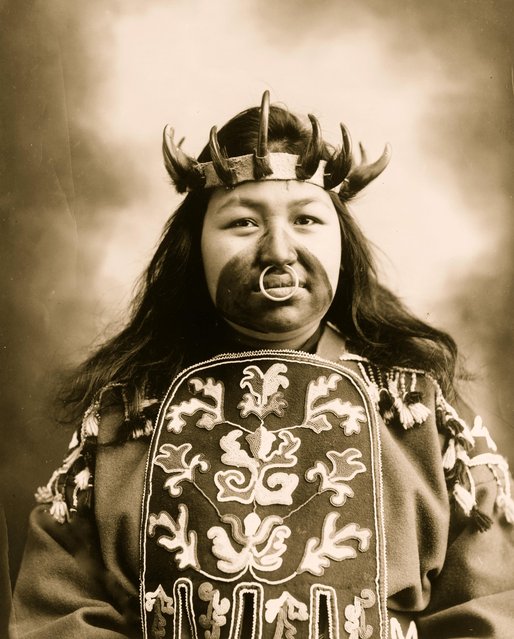
Kaw-Claa, a Tlingit native woman in full potlatch dancing costume, 1906. (Photo by Case & Draper/Buyenlarge/Getty Images)

Kaw-Claa, a Tlingit native woman in full potlatch dancing costume, 1906. (Photo by Case & Draper/Buyenlarge/Getty Images)
Details
11 Jan 2017 14:42:00
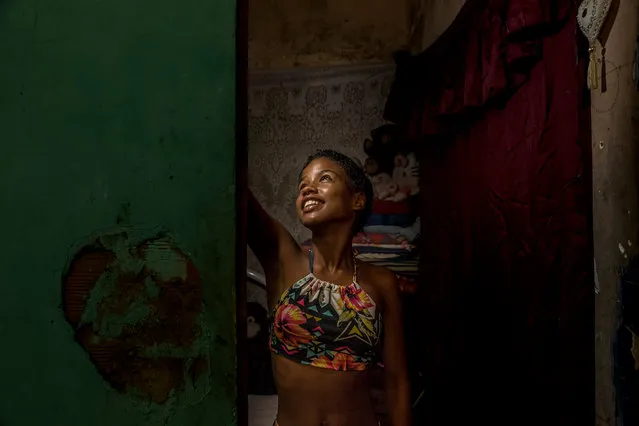
Victoria, 12, at her home in Mangueira. (Photo by Tariq Zaidi/The Guardian)

Planned improvements to Rio’s favelas have meant increases in rent, forcing the poorest families into squatting in unoccupied buildings. Photographer Tariq Zaidi visits the Mangueira community favela, less than 1km from the showpiece Maracanã stadium, to see what life is like for the women living there. Here: Victoria, 12, at her home in Mangueira. (Photo by Tariq Zaidi/The Guardian)
Details
29 Jun 2017 08:08:00
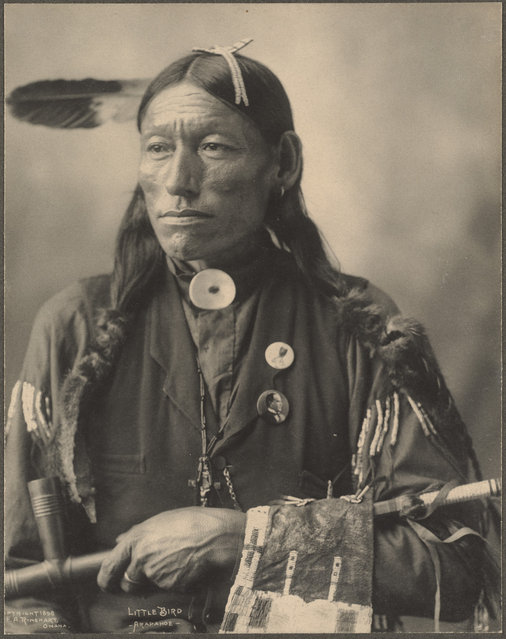
Little Bird, Arapahoe, 1899. (Photo by Frank A. Rinehart)

Frank A. Rinehart, a commercial photographer in Omaha, Nebraska, was commissioned to photograph the 1898 Indian Congress, part of the Trans-Mississippi International Exposition. More than five hundred Native Americans from thirty-five tribes attended the conference, providing the gifted photographer and artist an opportunity to create a stunning visual document of Native American life and culture at the dawn of the 20th century. Photo: Little Bird, Arapahoe, 1899. (Photo by Frank A. Rinehart)
Details
25 Apr 2013 11:30:00