Loading...
Done
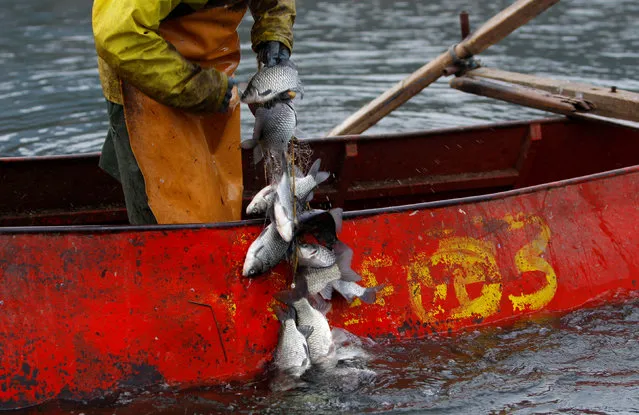
Fishermen collect their catch from a net at Dojran Lake, Macedonia, January 4, 2017. (Photo by Ognen Teofilovski/Reuters)

Fishermen collect their catch from a net at Dojran Lake, Macedonia, January 4, 2017. Fish from the lake is a traditional food for locals for orthodox Christmas eve, which falls on January 6. The lake faced sustainability issues during the 1990s due to drought and excessive use of its water but has since recovered after measures were taken to replenish and sustain water levels, according to local media. Dojran Lake is one of the three natural lakes in Macedonia, and also the warmest. It is said it is also the richest lake in fish in Europe. (Photo by Ognen Teofilovski/Reuters)
Details
05 Jan 2017 13:41:00
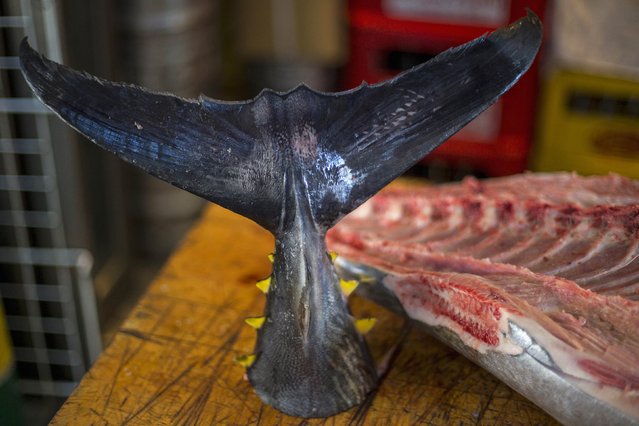
The fin of a tuna is seen on display in the outer part of the Tsukiji fish market, the Jogai Shijo, in Tokyo January 4, 2015. The famous Tsukiji wholesale fish and seafood market, is scheduled to leave its fabled 80-year-old halls to move into bigger, more modern facilities next year ahead of the 2020 Tokyo Olympics. (Photo by Thomas Peter/Reuters)

The fin of a tuna is seen on display in the outer part of the Tsukiji fish market, the Jogai Shijo, in Tokyo January 4, 2015. The famous Tsukiji wholesale fish and seafood market, is scheduled to leave its fabled 80-year-old halls to move into bigger, more modern facilities next year ahead of the 2020 Tokyo Olympics. The outer part of the market, the Jogai Shijo, that caters to the public will stay in its old place, but critics wonder about its chances for survival without the world's biggest fish trading place at its doorsteps. (Photo by Thomas Peter/Reuters)
Details
08 Jan 2015 14:50:00
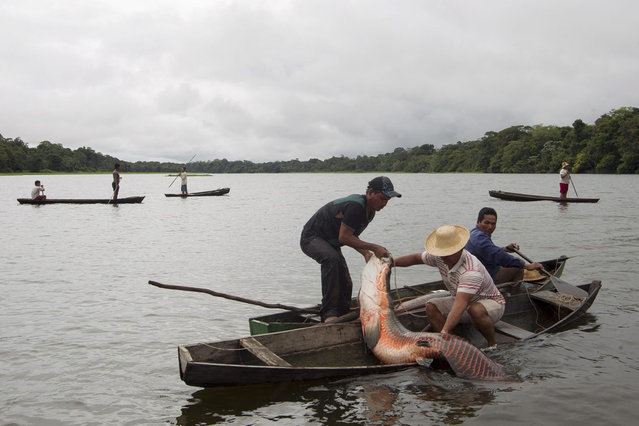
Villagers from the Porto Novo community load into their canoes arapaima or pirarucu, the largest freshwater fish species in South America and one of the largest in the world, while fishing in Poco Fundo lake along a branch of the Solimoes river, one of the main tributaries of the Amazon, in the Mamiraua nature reserve near Fonte Boa about 600 km (373 miles) west of Manaus, November 26, 2013. (Photo by Bruno Kelly/Reuters)

Villagers from the Porto Novo community load into their canoes arapaima or pirarucu, the largest freshwater fish species in South America and one of the largest in the world, while fishing in Poco Fundo lake along a branch of the Solimoes river, one of the main tributaries of the Amazon, in the Mamiraua nature reserve near Fonte Boa about 600 km (373 miles) west of Manaus, November 26, 2013. Catching the arapaima, a fish that is sought after for its meat and is considered by biologists to be a living fossil, is only allowed once a year by Brazil's environmental protection agency. The minimum size allowed for a fisherman to keep an arapaima is 1.5 meters (4.9 feet). (Photo by Bruno Kelly/Reuters)
Details
17 Dec 2013 08:03:00
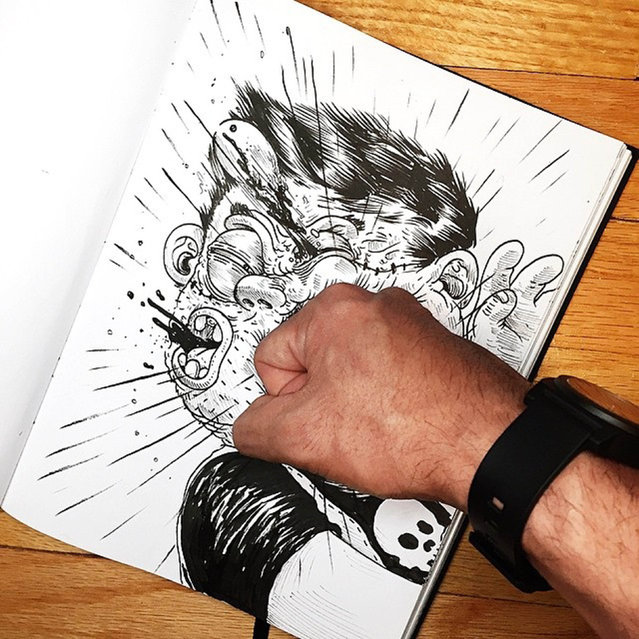
A quirky cartoonist challenged his own creation to a fight – but he could only draw. US artist Alex Solis, 31, from Chicago, Illinois, drew his skull t-shirt-wearing alter ego, who he calls Chuck, smashing his phone and stabbing his finger in his Inkteraction pictures. But Alex got his own back with a punch to Chucks jaw before squashing him against the bottom of the page. (Photo by Alex Solis/Caters News)

A quirky cartoonist challenged his own creation to a fight – but he could only draw. US artist Alex Solis, 31, from Chicago, Illinois, drew his skull t-shirt-wearing alter ego, who he calls Chuck, smashing his phone and stabbing his finger in his Inkteraction pictures. But Alex got his own back with a punch to Chucks jaw before squashing him against the bottom of the page. The ink man tried to get under Chucks skin to win the fight by stretching and pulling the cartoons face as the drawings became more bloody. (Photo by Alex Solis/Caters News)
Details
23 Feb 2015 12:39:00
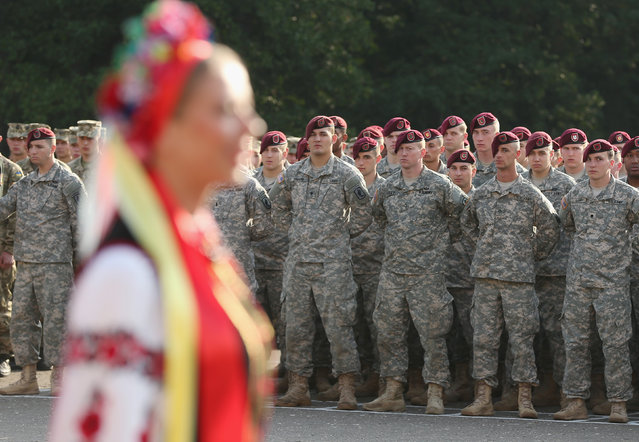
Members of the U.S. Army 173rd Airborne Brigade stand at attention as a Ukrainian folk dance group performs at the opening ceremony of the “Rapid Trident” NATO military exercises on September 15, 2014 near Yavorov, Ukraine. (Photo by Sean Gallup/Getty Images)

Members of the U.S. Army 173rd Airborne Brigade stand at attention as a Ukrainian folk dance group performs at the opening ceremony of the “Rapid Trident” NATO military exercises on September 15, 2014 near Yavorov, Ukraine. The two-week exercises include participating units from a variety of NATO and NATO-associate countries as well as Ukrainian troops. Meanwhile fighting between pro-Russian separatists and Ukrainian armed foces has flared again in eastern Ukraine in a battle for the control of Donetsk airport despite the tenuous ceasefire. (Photo by Sean Gallup/Getty Images)
Details
17 Sep 2014 12:34:00
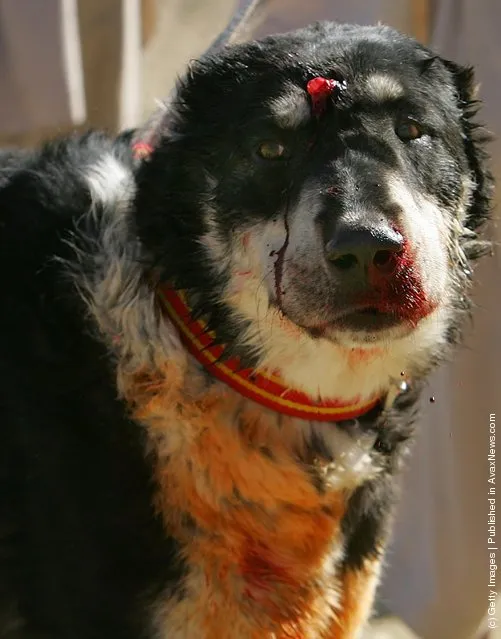
Afghan Dog Fighting

“Dog fighting is a form of blood sport in which game dogs are made to fight, sometimes to the death. It is illegal in most developed countries. Dog fighting is used for entertainment and may also generate revenue from stud fees, admission fees and gambling”. – Wikipedia

Photo: A bloody Afghan dog is bleeding with many wounds after he lost a dog fight November 24, 2006 in Kabul, Afghanistan. While the Afghan government is trying to ban the violent use of dogs for fighting, the unofficial sport remains a regular weekly event. Afghan dog fighting is popular among Afghan men who gamble on the dogs making upwards of 15,000 Afghanie (300 USD). (Photo by Paula Bronstein/Getty Images)
Details
07 Aug 2011 11:47:00
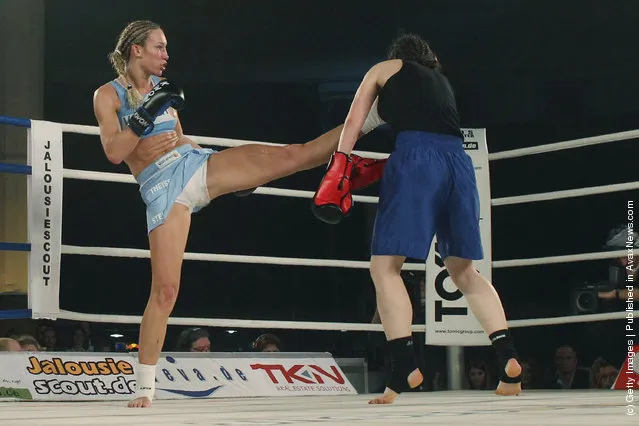
German kickboxer Christine Theiss hits challenger Olja Zerajic of Bosnia during their WKA middleweight title fight at Postpalast

German kickboxer Christine Theiss (L) hits challenger Olja Zerajic of Bosnia during their WKA middleweight title fight at Postpalast on March 2, 2012 in Munich, Germany. (Photo by Alexandra Beier/Bongarts/Getty Images)
Details
05 Mar 2012 11:44:00
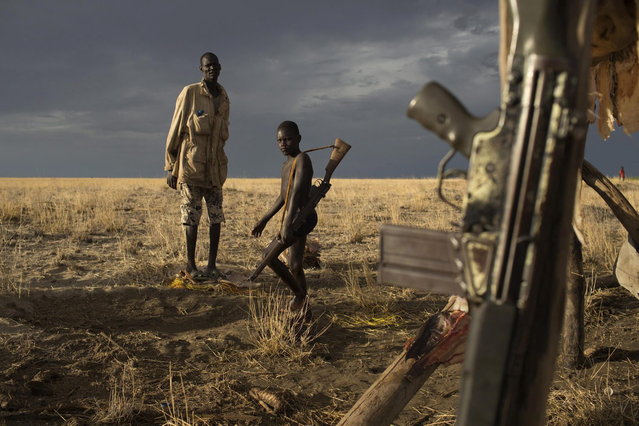
A Turkana man and a boy carrying a gun look on as a G3 battle rifle hangs from a structure used to dry fish at a fishing camp on the shores of Lake Turkana, some kilometres from Todonyang near the Kenya-Ethiopia border in northwestern Kenya October 12, 2013. (Photo by Siegfried Modola/Reuters)

A Turkana man and a boy carrying a gun look on as a G3 battle rifle hangs from a structure used to dry fish at a fishing camp on the shores of Lake Turkana, some kilometres from Todonyang near the Kenya-Ethiopia border in northwestern Kenya October 12, 2013The Turkana are traditionally nomadic pastoralists, but they have seen the pasture that they need to feed their herds suffer from recurring droughts and many have turned to fishing. However, Lake Turkana is overfished, and scarcity of food and pastureland is fuelling long-standing conflict with Ethiopian indigenous Dhaasanac, who have seen grazing grounds squeezed by large-scale government agricultural schemes in southern Ethiopia. The Dhaasanac now venture ever deeper into Kenyan territory in search of fish and grass, clashing with neighbours. Fighting between the communities has a long history, but the conflict has become ever more fatal as automatic weapons from other regional conflicts seep into the area. While the Turkana region is short of basics like grass and ground-water, it contains other resources including oil reserves and massive, newly discovered underground aquifers. (Photo by Siegfried Modola/Reuters)
Details
05 Dec 2013 12:08:00