Loading...
Done
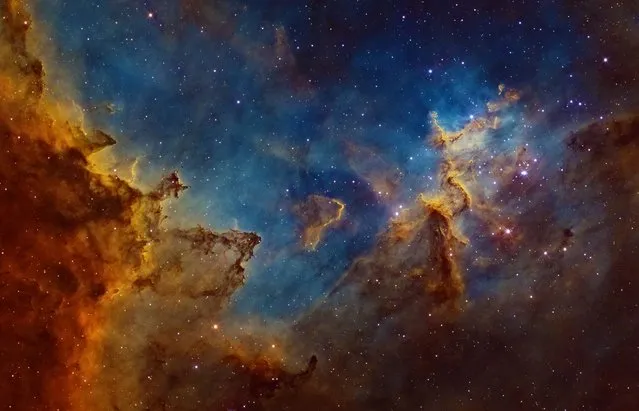
Centre of the Heart Nebula by Ivan Eder (Hungary). Situated 7500 light years away in the ‘W’-shaped constellation of Cassiopeia, the Heart Nebula is a vast region of glowing gas, energized by a cluster of young stars at its centre. The image depicts the central region, where dust clouds are being eroded and moulded into rugged shapes by the searing cosmic radiation. (Photo by Ivan Eder)

The competition, which is run by the Royal Observatory Greenwich in association with BBC Sky at Night Magazine, is now in its sixth year and has received over 2,500 entries. Photo: Centre of the Heart Nebula by Ivan Eder (Hungary). Situated 7500 light years away in the “W”-shaped constellation of Cassiopeia, the Heart Nebula is a vast region of glowing gas, energized by a cluster of young stars at its centre. The image depicts the central region, where dust clouds are being eroded and moulded into rugged shapes by the searing cosmic radiation. (Photo by Ivan Eder)
Details
03 Jul 2014 11:59:00
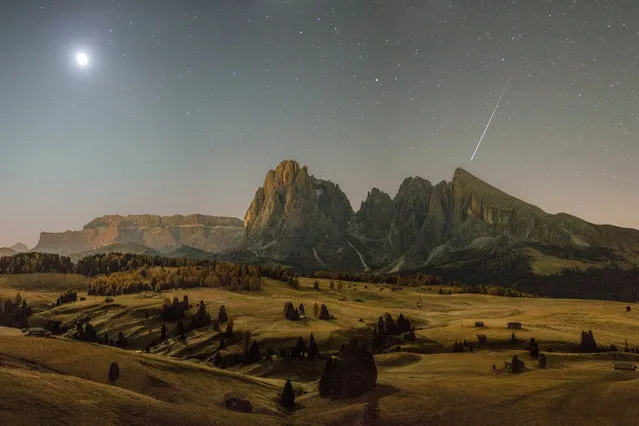
Young category winner. Great autumn morning by Fabian Dalpiaz. (Photo by Fabian Dalpiaz/2018 Astronomy Photographer of the Year)

Young category winner. Great autumn morning by Fabian Dalpiaz. (Photo by Fabian Dalpiaz/2018 Astronomy Photographer of the Year)
Details
26 Oct 2018 00:03:00
NASA

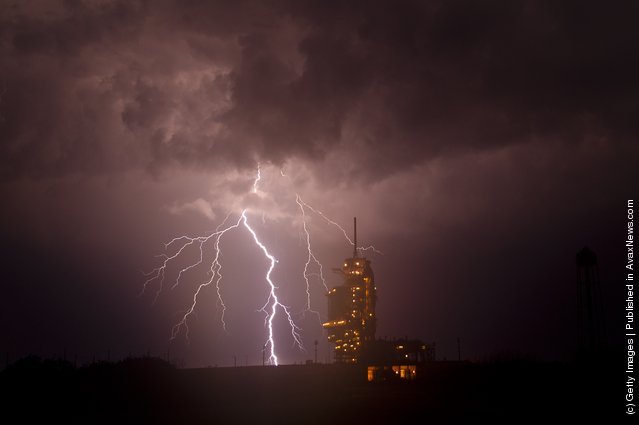
In this handout image provided by NASA, the space shuttle Endeavour is seen on launch pad 39a as a storm passes by prior to the rollback of the Rotating Service Structure (RSS) April 28, 2011, at Kennedy Space Center in Cape Canaveral, Florida. During the 14-day mission, Endeavour and the STS-134 crew will deliver the Alpha Magnetic Spectrometer (AMS) and spare parts, including two S-band communications antennas, a high-pressure gas tank and additional spare parts for Dextre. Launch is targeted for April 29 at 3:47 p.m. EDT.
Details
30 Apr 2011 08:18:00


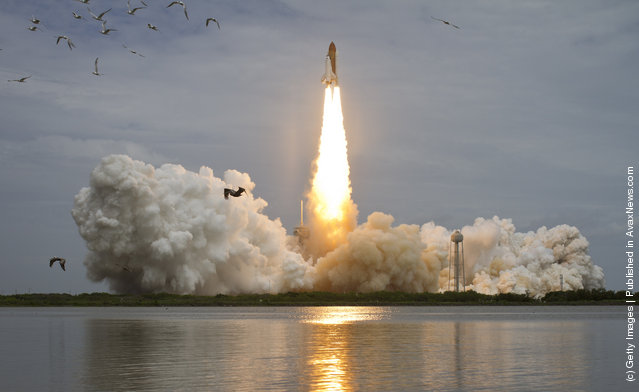
Space shuttle Atlantis launches from pad 39A on July 8, 2011 at the NASA Kennedy Space Center in Cape Canaveral, Florida. The launch of Atlantis, STS-135, is the final flight of the shuttle program, a 12-day mission to the International Space Station. (Photo by Bill Ingalls/NASA via Getty Images)
Details
09 Jul 2011 12:06:00
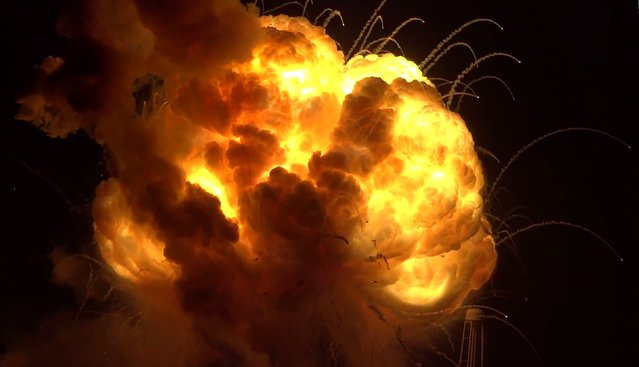
An unmanned Antares rocket is seen exploding seconds after lift off from a commercial launch pad in this still image from video shot by Matthew Travis of Zero-G News from the press area at Wallops Island, Virginia October 28, 2014. (Photo by Matthew Travis/Reuters/Zero-G News)

An unmanned Antares rocket is seen exploding seconds after lift off from a commercial launch pad in this still image from video shot by Matthew Travis of Zero-G News from the press area at Wallops Island, Virginia October 28, 2014. The 14-story rocket, built and launched by Orbital Sciences Corp, bolted off its seaside launch pad at the Wallops Flight Facility at 6:22 p.m. EDT/22:22 GMT. It burst into flames moments later, then plunged to the ground in a huge ball of fire and smoke, but authorities said no one was hurt. The cause of the accident was not immediately known. (Photo by Matthew Travis/Reuters/Zero-G News)


Details
29 Oct 2014 10:57:00
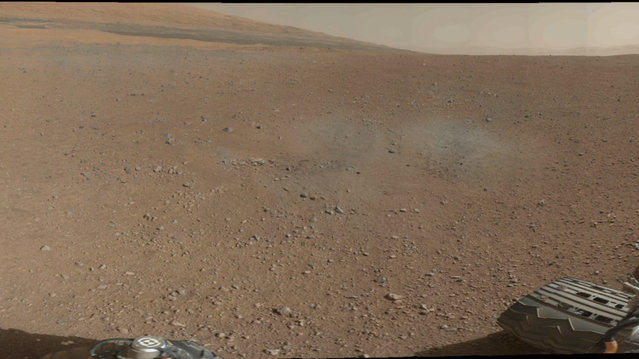
This is a portion of the first color 360-degree panorama from NASA's Curiosity rover, made up of thumbnails, which are small copies of higher-resolution images

This is a portion of the first color 360-degree panorama from NASA's Curiosity rover, made up of thumbnails, which are small copies of higher-resolution images. The mission's destination, a mountain at the center of Gale Crater called Mount Sharp, can be seen in the distance, to the left, beginning to rise up. The mountain's summit will be imaged later. (Photo by NASA/JPL-Caltech/MSSS)
Details
10 Aug 2012 08:48:00
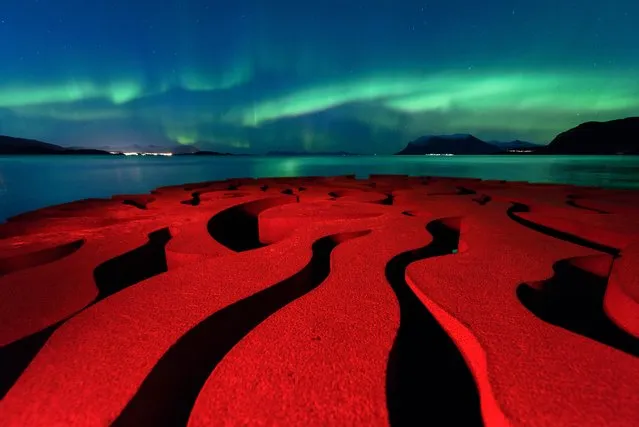
“Seven Magic Points”. The rusty red swirls of the circular, iron sculpture Seven Magic Points in Brattebergan, Norway mirror the rippling aurora above. (Photo by Rune Engebø/Royal Observatory Greenwich’s Astronomy Photographer of the Year 2016/National Maritime Museum)

Gorgeous galaxies and stunning stars make up this selection of pictures from the shortlisted entries for this year’s Insight Astronomy Photographer of the Year award. The winners will be announced on 15 September, and an exhibition of the winning images will be will be displayed in a free exhibition at the Royal Observatory Greenwich’s Astronomy Centre from 17 September. Here: “Seven Magic Points”. The rusty red swirls of the circular, iron sculpture Seven Magic Points in Brattebergan, Norway mirror the rippling aurora above. (Photo by Rune Engebø/Royal Observatory Greenwich’s Astronomy Photographer of the Year 2016/National Maritime Museum)
Details
28 Jul 2016 13:51:00
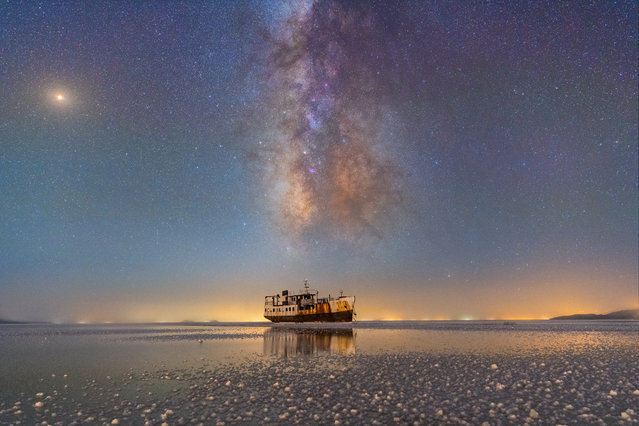
Sharafkhaneh port and lake Urmia. Masoud Ghadiri (Iran). The summer Milky Way is very prominent in this photo. On the galaxy zone, Saturn is located besides the Lagoon nebula. On the right of the horizon, you can see the extreme light pollution of Urmia, which is caused by ever-increasing city development. (Photo by Masoud Ghadiri/National Maritime Museum)

Sharafkhaneh port and lake Urmia. Masoud Ghadiri (Iran). The summer Milky Way is very prominent in this photo. On the galaxy zone, Saturn is located besides the Lagoon nebula. On the right of the horizon, you can see the extreme light pollution of Urmia, which is caused by ever-increasing city development. (Photo by Masoud Ghadiri/National Maritime Museum)
Details
20 Jun 2019 00:01:00