Loading...
Done
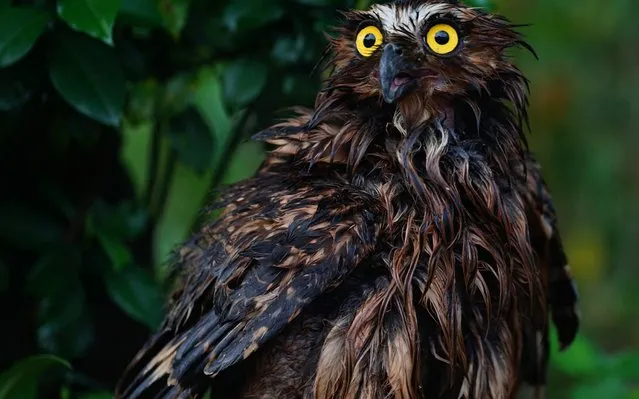
A Sumatran Owl is seen in Palembang City, Indonesia on March 5, 2020. (Photo by Sigit Prasetya/Opn Images/Barcroft Media via Getty Images)

A Sumatran Owl is seen in Palembang City, Indonesia on March 5, 2020. (Photo by Sigit Prasetya/Opn Images/Barcroft Media via Getty Images)
Details
08 Mar 2020 00:03:00
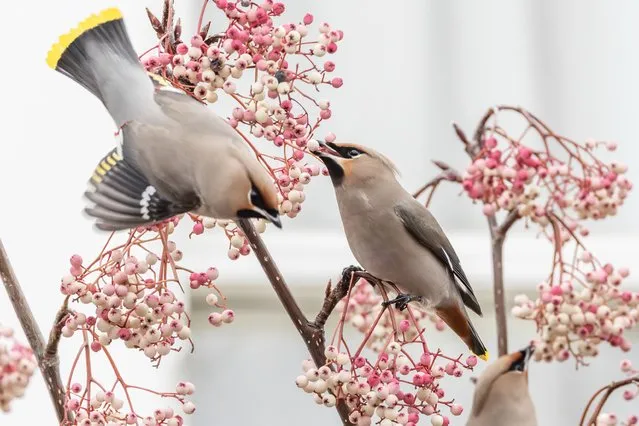
Waxwings in Balham south London on December 31, 2023. There has been a huge influx of this erruptive species this year. This probably due to severe storms and a shortage of food in their native Scandinavia in the Autumn. (Photo by Jack Hill/The Times)

Waxwings in Balham south London on December 31, 2023. There has been a huge influx of this erruptive species this year. This probably due to severe storms and a shortage of food in their native Scandinavia in the Autumn. (Photo by Jack Hill/The Times)
Details
25 Jan 2024 10:02:00
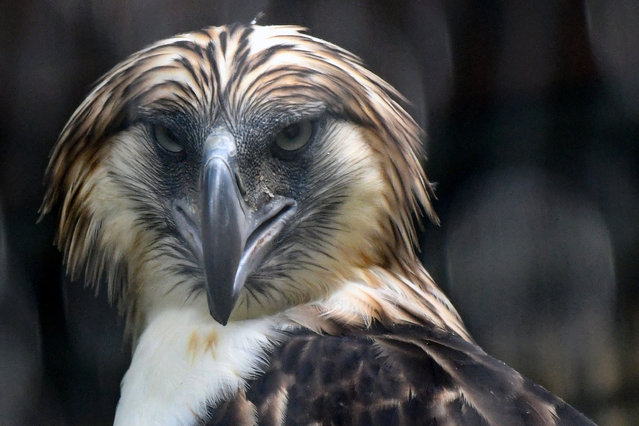
A male Philippine eagle named Geothermica is seen in an exclosure at Jurong Bird Park in Singapore on November 27, 2019. Singapore unveiled two Philippine eagles at its main aviary November 27, the first breeding pair of the critically endangered raptors to be brought outside their native country as part of a conservation plan. (Photo by Roslan Rahman/AFP Photo)

A male Philippine eagle named Geothermica is seen in an exclosure at Jurong Bird Park in Singapore on November 27, 2019. Singapore unveiled two Philippine eagles at its main aviary November 27, the first breeding pair of the critically endangered raptors to be brought outside their native country as part of a conservation plan. (Photo by Roslan Rahman/AFP Photo)
Details
01 Dec 2019 00:03:00
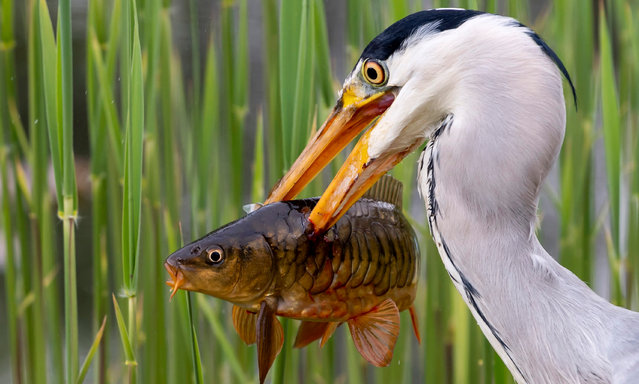
A gray heron (Ardea cinerea) that fished a common carp (Cyprinus carpio) in Geneva, Switzerland, 21 April 2019. (Photo by Martial Trezzini/EPA/EFE/Rex Features/Shutterstock)

A gray heron (Ardea cinerea) that fished a common carp (Cyprinus carpio) in Geneva, Switzerland, 21 April 2019. (Photo by Martial Trezzini/EPA/EFE/Rex Features/Shutterstock)
Details
06 Sep 2020 00:01:00
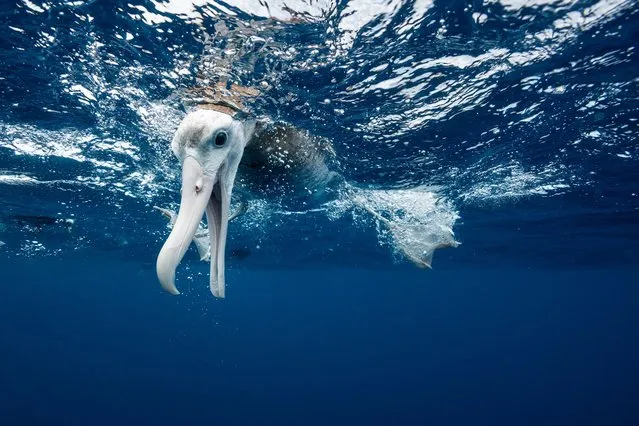
The endangered antipodean albatross, which is often caught in fishing nets, won most first-choice votes out of the more than 55,000 votes cast during the 2020 New Zealand’s bird of the year competition. (Photo by Wildestanimal/Getty Images)

The endangered antipodean albatross, which is often caught in fishing nets, won most first-choice votes out of the more than 55,000 votes cast during the 2020 New Zealand’s bird of the year competition. (Photo by Wildestanimal/Getty Images)
Details
20 Dec 2020 00:05:00
Trees

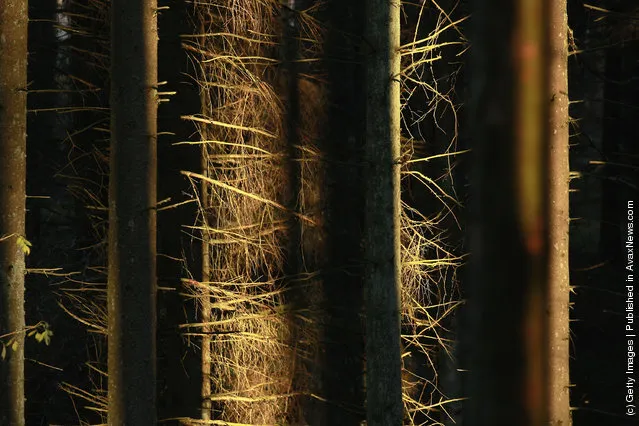
Tree trunks are seen in a forest on November 8, 2011 near Landau an der Isar, Germany. The German government is conducting a nationwide project to estimate the number, variety and geographic distribution of trees and forests in Germany, as well as their condition and health. Approximately a third of Germany is covered in woodlands, and though that territory has actually expanded since 1989, some analysts fear demand for wood will outstrip supply in coming years due to national growth in industry and bio-energy needs. (Photo by Johannes Simon/Getty Images)
Details
13 Nov 2011 11:07:00
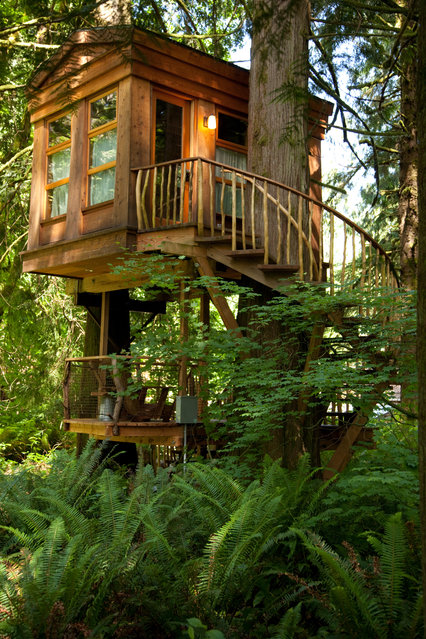
Bonbibi, Treehouse Point, Fall City, WA. The Bonbibi is balanced on two steel yokes. The yokes spread out the load and allow for tree growth and movement in the wind. A small deck hangs from the beams below and uses the treehouse itself to shelter guests. (Photo by Pete Nelson)

Bonbibi, Treehouse Point, Fall City, WA. The Bonbibi is balanced on two steel yokes. The yokes spread out the load and allow for tree growth and movement in the wind. A small deck hangs from the beams below and uses the treehouse itself to shelter guests. (Photo by Pete Nelson)
Details
16 May 2014 16:00:00
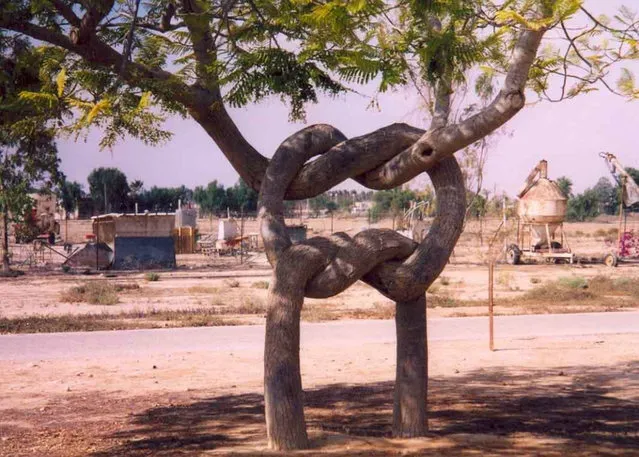
The Weird Shaped Trees Of Axel Erlandson

Axel Erlandson (December 15, 1884 – April 28, 1964) was a Swedish American farmer who shaped trees as a hobby, and opened a horticultural attraction in 1947 advertised as "See the World's Strangest Trees Here," and named "The Tree Circus."
The trees appeared in the column of Robert Ripley's Believe It or Not! twelve times. Erlandson sold his attraction shortly before his death. The trees were moved to Gilroy Gardens in 1985.
Details
20 Sep 2013 11:38:00