Loading...
Done
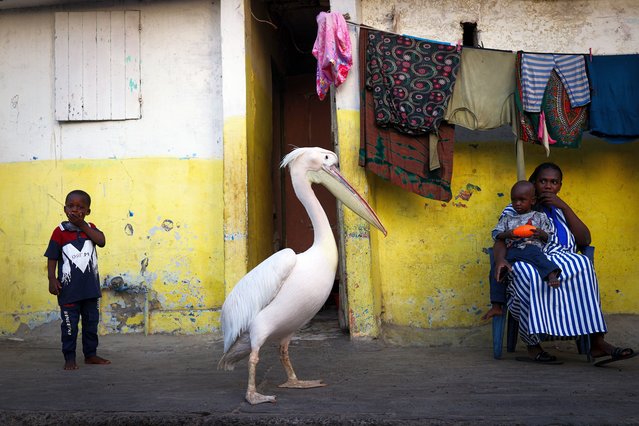
The pelican, named “Ndagabar”, which means pelican in the local Wolof language, begins visiting the neighborhood in the early hours of the day in Saint-Louis, Senegal on November 02, 2024. The pelican, which 62-year-old retired fisherman Madiop Gueye, has been keeping in front of his house for five years, has become the center of both the neighborhood and the region, attracting the attention of both local and foreign tourists. (Photo by Cem Ozdel/Anadolu via Getty Images)

The pelican, named “Ndagabar”, which means pelican in the local Wolof language, begins visiting the neighborhood in the early hours of the day in Saint-Louis, Senegal on November 02, 2024. The pelican, which 62-year-old retired fisherman Madiop Gueye, has been keeping in front of his house for five years, has become the center of both the neighborhood and the region, attracting the attention of both local and foreign tourists. (Photo by Cem Ozdel/Anadolu via Getty Images)
Details
10 Nov 2024 03:59:00
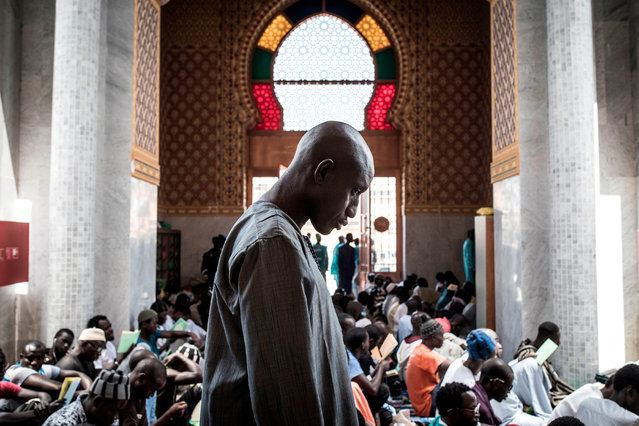
A Muslim worshipper attends a  mass prayer against COVID-19, the new coronavirus, in Dakar on March 4, 2020, after two cases were confirmed in Senegal in the previous days. Across the world, 3,155 people have died from the virus. More than 92,723 have been infected in 78 countries and territories, according to AFP's latest toll based on official sources at 1700 GMT on March 3, 2020. (Photo by John Wessels/AFP Photo)

A Muslim worshipper attends a mass prayer against COVID-19, the new coronavirus, in Dakar on March 4, 2020, after two cases were confirmed in Senegal in the previous days. Across the world, 3,155 people have died from the virus. More than 92,723 have been infected in 78 countries and territories, according to AFP's latest toll based on official sources at 1700 GMT on March 3, 2020. (Photo by John Wessels/AFP Photo)
Details
26 Mar 2020 00:01:00
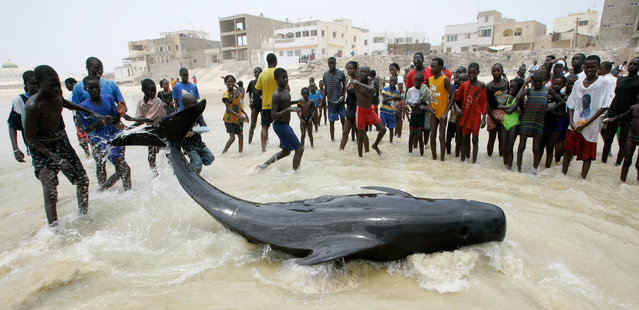
Onlookers gather around a struggling beached whale in the Yoff neighborhood of Dakar, Senegal Wednesday, May 21, 2008. Residents worked Wednesday morning to save some of the more than 80 whales that were stranded on the beach Tuesday night. This whale was successfully towed out to sea by a fishing boat, though at least 20 others lay dead on the beach by midday Wednesday. (Photo by Rebecca Blackwell/AP Photo)

Onlookers gather around a struggling beached whale in the Yoff neighborhood of Dakar, Senegal Wednesday, May 21, 2008. Residents worked Wednesday morning to save some of the more than 80 whales that were stranded on the beach Tuesday night. This whale was successfully towed out to sea by a fishing boat, though at least 20 others lay dead on the beach by midday Wednesday. (Photo by Rebecca Blackwell/AP Photo)
Details
26 Oct 2014 12:08:00
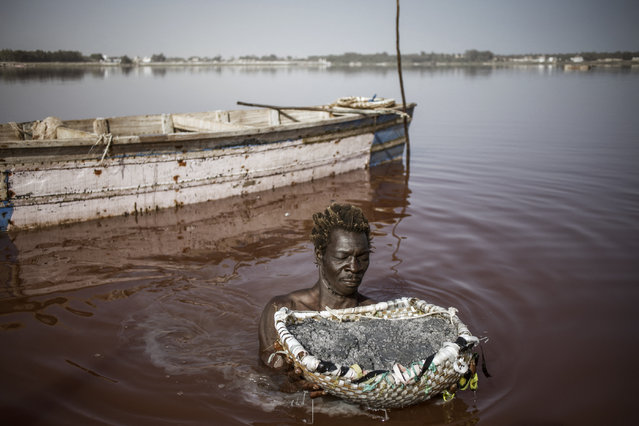
Toure, a Gambian salt harvester, holds a basket filled with  the salt collected from the crust of the bottom of the Lake Retba (Pink Lake) in Senegal on March 16, 2021. Lake Retba, divided from the Atlantic Ocean by a narrow corridor of dunes, owes its name to the pink waters caused by the Dunaliella salina algae and is known for its high salt content, up to 40% in some areas. (Photo by Marco Longari/AFP Photo)

Toure, a Gambian salt harvester, holds a basket filled with the salt collected from the crust of the bottom of the Lake Retba (Pink Lake) in Senegal on March 16, 2021. Lake Retba, divided from the Atlantic Ocean by a narrow corridor of dunes, owes its name to the pink waters caused by the Dunaliella salina algae and is known for its high salt content, up to 40% in some areas. (Photo by Marco Longari/AFP Photo)
Details
24 Mar 2021 10:29:00
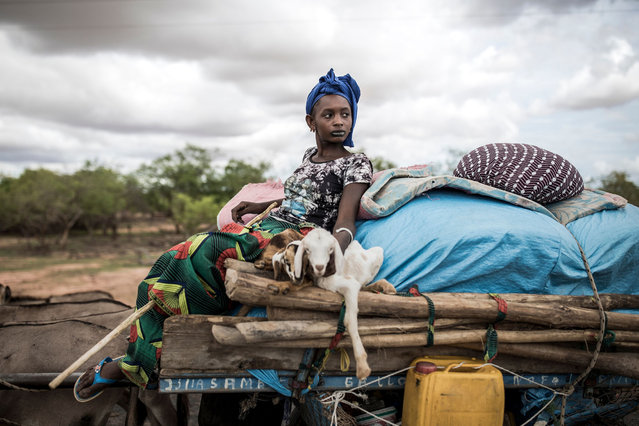
A Fulani Pastoralist carries two baby sheep on her donkey cart as her family move on northwards in Barkedji, Senegal on July 21, 2020. Thousands of Pastoralist families will start the movement north in the next weeks. With the first rains comes fresh grass and water for the Fulani herders' livestock, it also marks the point where most of the Pastoralist will move northwards until the dry season. (Photo by John Wessels/AFP Photo)

A Fulani Pastoralist carries two baby sheep on her donkey cart as her family move on northwards in Barkedji, Senegal on July 21, 2020. Thousands of Pastoralist families will start the movement north in the next weeks. With the first rains comes fresh grass and water for the Fulani herders' livestock, it also marks the point where most of the Pastoralist will move northwards until the dry season. (Photo by John Wessels/AFP Photo)
Details
04 Aug 2020 00:05:00
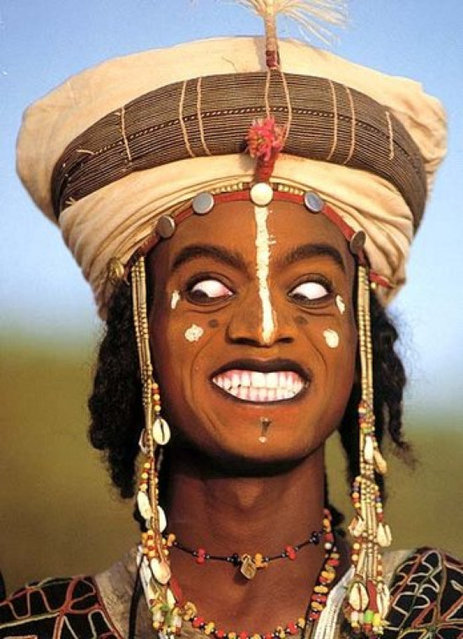
Beauty_By_Fulani

Fula people or Fulani or Fulbe are an ethnic group spread over many countries, predominantly in West Africa, but found also in Central Africa and Sudanese North Africa. African countries where they are present include Mauritania, Ghana, Senegal, Guinea, The Gambia, Mali, Nigeria, Sierra Leone, Benin, Burkina Faso, Guinea Bissau, Cameroon, Côte d'Ivoire, Niger, Chad, Togo, the Central African Republic, Liberia, and as far as Sudan and Egypt in the East. Fula people form a minority in every country they inhabit, but in Guinea they represent a plurality of the population (40%).
Details
25 Sep 2012 10:17:00
An employee works on the automobile assembly line of a Citroen C3 car at the PSA Peugeot Citroen plant in Poissy, near Paris, France, April 29, 2015. (Photo by Benoit Tessier/Reuters)

An employee works on the automobile assembly line of a Citroen C3 car at the PSA Peugeot Citroen plant in Poissy, near Paris, France, April 29, 2015. PSA Peugeot Citroen said on Wednesday its revenue rose in the first quarter as the recovering French carmaker's efforts to raise prices helped offset weaker volumes. (Photo by Benoit Tessier/Reuters)
Details
30 Apr 2015 11:36:00


Theridion grallator, also known as the "happy face spider", is a spider in the family Theridiidae. Its Hawaiian name is nananana makakiʻi (face-patterned spider). The specific epithet grallator is Latin for "stilt walker", a reference to the species' long, spindly legs.
Details
16 Mar 2013 16:08:00