Loading...
Done
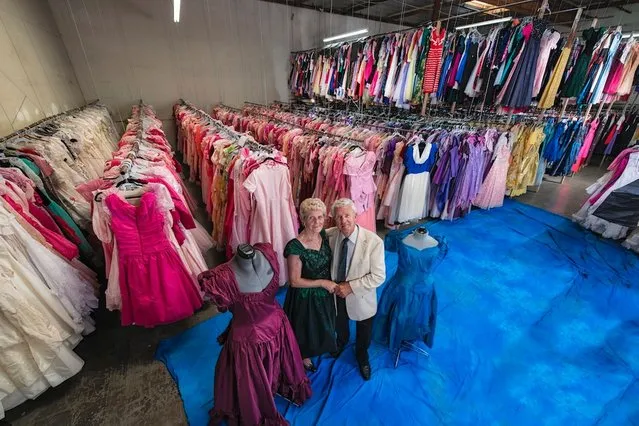
Paul Brockmans Collection Of 55,000 Dresses Bought For His Wife

There are many types of collections. Some are formed by purposefully collecting certain objects, such as stamps or coins. However, some collections are only a byproduct of an obsession, a quirk of mind. For example, Paul Brockmann got into the habit of buying his girlfriend and later his wife a dress every time they went ballroom dancing. It might seem excessive to some, but it was his way of showing his affection. Overtime, this collection grew to be enormous, counting 55,000 dresses in total. Basic math tells us that either they went ballroom dancing three times per day for every day of their lives, or he bought them in huge bundles every time.
Details
28 Mar 2015 10:11:00
Street Art Creations By 1010

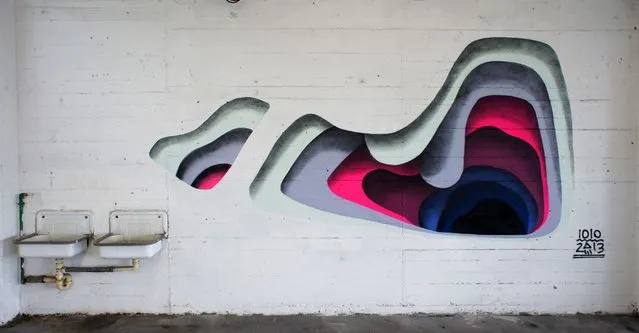
Street art started out as unintelligible words written on concrete walls with spray paint by gang members or silly kids. Now, however, it evolved into a unique form of art that might stun and inspire awe in the onlookers. For example, the artist that goes by the name 1010 specializes in creating optical illusions. His creations look like portals into other dimensions, without any hint that it might simply be a flat concrete wall painted over with multicolored paints. These pieces of art are so good that it is hard not to reach out into these ‘holes’ to find out whether or not they are real. (Photo by 1010)
Details
29 Oct 2014 12:16:00
Art by  Zdzisław Beksiński

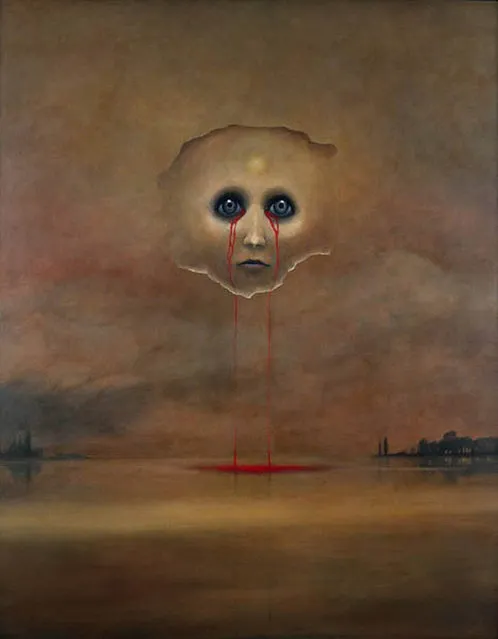
Zdzisław Beksiński, 24 February 1929 – 21 February 2005) was a renowned Polish painter, photographer, and sculptor. Beksiński executed his paintings and drawings either in what he called a 'Baroque' or a 'Gothic' manner. The first style is dominated by representation, with the best-known examples coming from his fantastic realism period when he painted disturbing images of a surrealistic, nightmarish environment. The second style is more abstract, being dominated by form, and is typified by Beksiński's later paintings.

Beksiński was murdered in 2005.
Details
31 Jul 2012 08:45:00
Animals Yawning

In animals, yawning can serve as a warning signal. For example, Charles Darwin, in his book The Expression of the Emotions in Man and Animals, mentioned that baboons yawn to threaten their enemies, possibly by displaying large canine teeth. Similarly, Siamese fighting fish yawn only when they see a conspecific (same species) or their own mirror-image, and their yawn often accompanies aggressive attack. Guinea pigs also yawn in a display of dominance or anger, displaying their impressive incisor teeth. This is often accompanied by teeth chattering, purring and scent marking.

Details
11 Aug 2012 09:12:00
Glass Paintings By Loren Stump

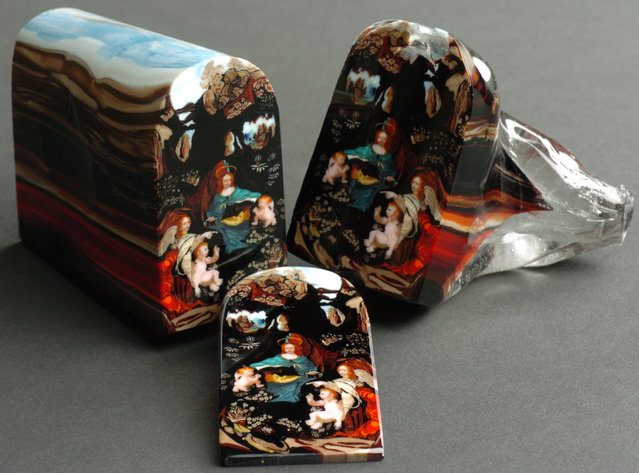
California-based glass artist Loren Stump specializes in a form of glasswork called murrine, where rods of glass are melted together and then sliced to reveal elaborate patterns and forms. While the murrina process appeared in the Mideast some 4,000 years ago, Stump has perfected his own technique over the past 35 years to the point where he can now layer entire portraits and paintings in glass before slicing them to see the final results. His most complex piece to date is a detailed interpretation of Leonardo da Vinci’s Virgin of the Rocks, which involved hundreds of glass components that were melted into a final piece.
Details
11 Jun 2014 14:11:00
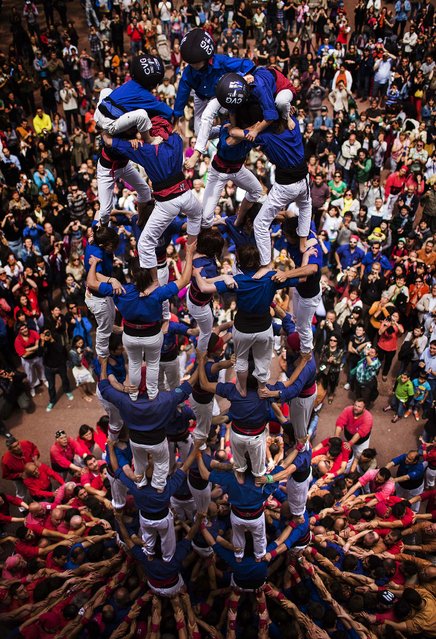
Members of the Castellers “Vila de Gracia” form their human tower. (Photo by Emilio Morenatti/Associated Press)

Members of the Castellers “Vila de Gracia” start forming their famous human tower called “castell” in the Barcelona neighborhood of Gracia, Catalonia, Spain on Sunday May 19 2013. A “castell” is a human tower traditionally built during festivals in many places in Catalonia. At these festivals, several "colles" or teams compete to build the most impressive towers they can. (Photo by Emilio Morenatti/Associated Press)
Details
22 May 2013 12:37:00
Ocean voyage

Do you think that history is a science? Well, not exactly. First, and foremost, history is the state's “legend of wars”, it’s official regalia. Of course, public historians are not interested in scientific truth – quite the opposite. In this respect, any attempt to present a state’s history as altruistic and benevolent as possible is welcomed and encouraged – as opposed to any revisionism attempts that may be more accurate. In this matter, Chinese have surpassed us all – they revised in highly creative manner (but rather shamelessly) the technology already invented by Europeans, a process that resulted in oldest state on the planet. Here is an interesting paradox: ask any sinologist about the Middle Kingdom during second century B.C., and he will describe it to you in such a vivid manner as if he has been living there all his life – but as soon as you will ask him to describe Chinese history in the 19-20th centuries… let's say, his eagerness will be greatly diminished. However, we will discuss China in a different article, and in the meantime we will try to understand how exactly historic “legend of wars” is formed and functions – based on a specific and well-known example. A great example is Ferdinand Magellan's first voyage around the world.
Details
14 Nov 2011 09:11:00
Concept Design Home Reversible Destiny Lofts MITAKA: In Memory Of Helen Keller By Reversible Destiny Foundation and Shusaku Arakawa

“The Reversible Destiny Lofts – Mitaka (In Memory of Helen Keller) is a nine-unit multiple dwelling. It was first completed example of procedural architecture put to residential use. These lofts reflexively articulate the residents’ operative tendencies and coordinating skills essential to and determinative of human thought and behavior; which means to say, the lofts manage, by virtue of how they are constructed, to reveal to their residents the ins and outs of what makes a person, in this case the resident. This is the same set of tendencies and skills to which Arakawa and Madeline Gins gave diagrammatic form in their decades-long research project The Mechanism of Meaning”. – Wikipedia

Photo: The exterior of the concept design home “Reversible Destiny Lofts MITAKA: In Memory of Helen Keller” is seen on October 27, 2005 in Tokyo, Japan. (Photo by Koichi Kamoshida/Getty Images)
Details
30 Nov 2011 11:58:00