Loading...
Done
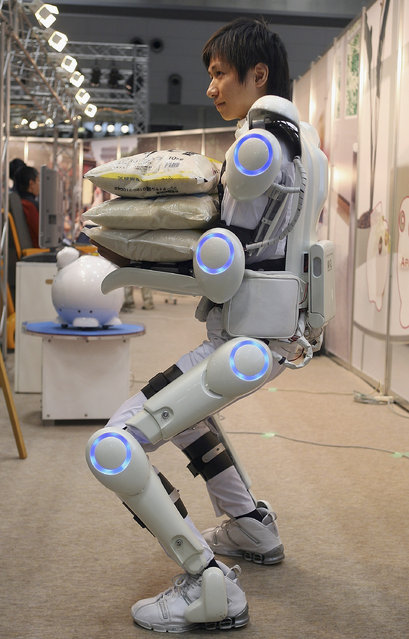
Robot suit "Hybrid Assistive Limb (HAL)" worn by a man developed by University of Tsukuba is seen lifting a 30kg weight during 2005 International Robot Exhibition on November 30, 2005 in Tokyo, Japan. By wearing the power suit, it makes it easier to move and lift heavy things. The Exhibition is on until December 3. (Photo by Koichi Kamoshida)

“A robot suit that can help the elderly or disabled get around was given its global safety certificate in Japan on February 27, 2013, paving the way for its worldwide roll-out”. Photo: Robot suit “Hybrid Assistive Limb (HAL)” worn by a man developed by University of Tsukuba is seen lifting a 30kg weight during 2005 International Robot Exhibition on November 30, 2005 in Tokyo, Japan. By wearing the power suit, it makes it easier to move and lift heavy things. (Photo by Koichi Kamoshida)
Details
11 Mar 2013 11:15:00
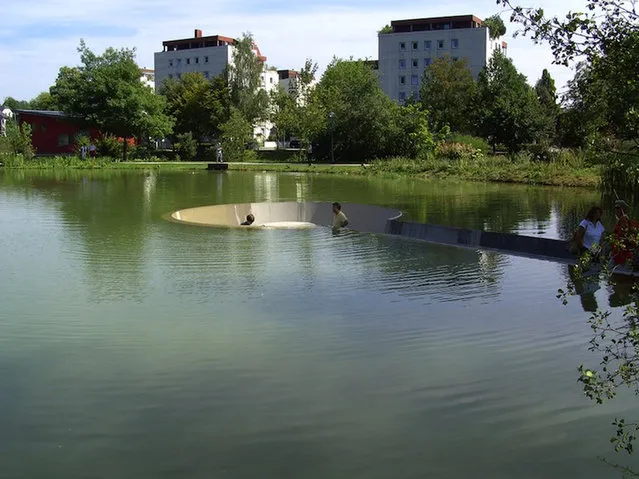
Vocklabruck Platform In The Middle Of A Lake

There's a wonderfully picturesque spot in Vöcklabruck, Austria where visitors are able to sit in the middle of a pond without getting wet. The scenic landscape includes a path leading down to a hollowed out circular area where people can take a seat and relax amongst nature. It's a surreal journey along the gradual ramp to the observational platform as the water level gains height either side. Once in the resting area, depending on perspective, visitors seem like they're wading in the lake without a drop of water on them.
Details
09 Apr 2013 09:23:00
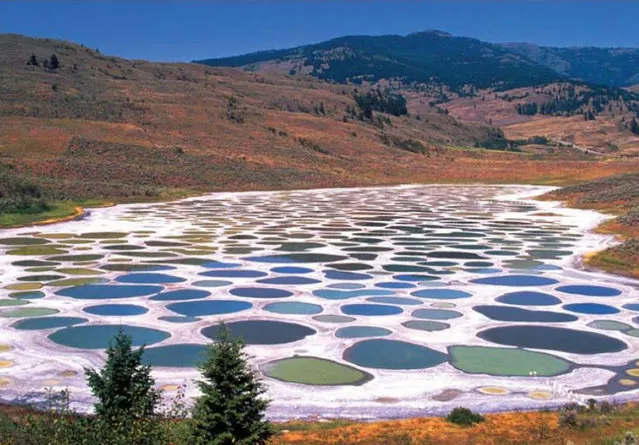
Kliluk, the Spotted Lake, Canada

Originally known to the First Nations of the Okanagan Valley as Khiluk, which was- and remains today revered as a sacred site producing therapeutic waters. During World War I the minerals of Spotted Lake were used in manufacturing ammunition. Later the area came under the control of the Ernest Smith Family, for a term of about 40 years. In 1979 Smith attempted to create interest in a spa at the lake. The First Nations responded with an effort to buy the lake; in October 2001 they finally struck a deal. First Nations arranged the purchase of 22 hectares of land for a total of $720,000, and contributed about 20% of the cost. The Indian Affairs Department paid the remainder.
Details
06 Mar 2015 12:59:00
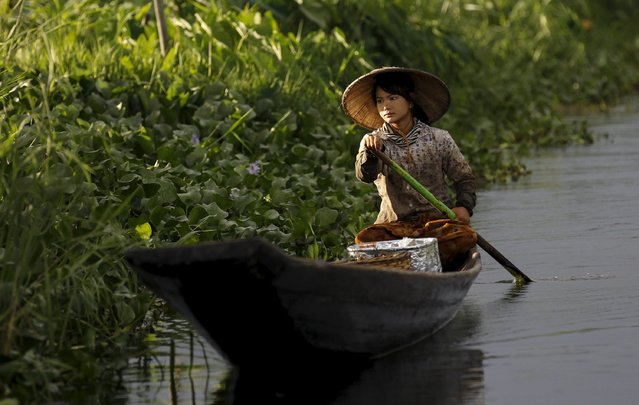
A woman rows her boat as she harvests tomatoes on Inle lake, in Myanmar's Shan State September 4, 2015. (Photo by Soe Zeya Tun/Reuters)

A woman rows her boat as she harvests tomatoes on Inle lake, in Myanmar's Shan State September 4, 2015. Inle is one of the country's most popular tourist sites. (Photo by Soe Zeya Tun/Reuters)
Details
06 Sep 2015 13:37:00
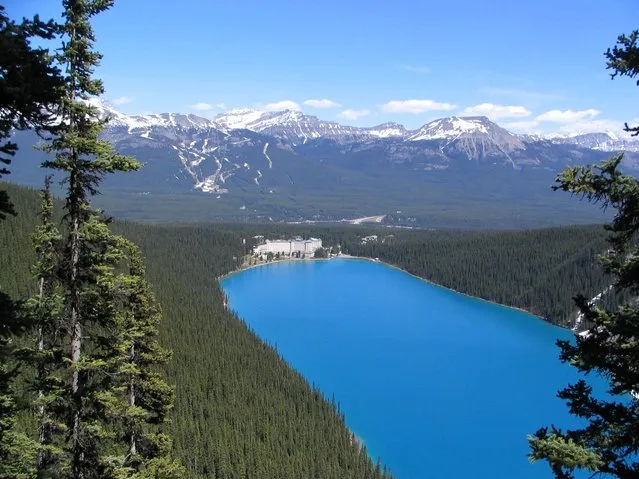
Lake Louise In  Canada

Lake Louise, named Lake of the Little Fishes by the Stoney Natoka First Nations people, is a glacial lake within Banff National Park in Alberta, Canada. It is located 5 km (3.1 mi) west of the Hamlet of Lake Louise and the Trans-Canada Highway (Highway 1).
Details
01 Oct 2013 04:42:00
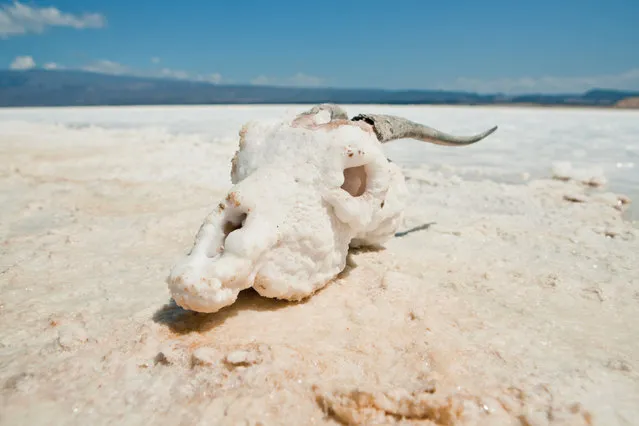
Lake Assal Crater Lake In The Central Djibouti

Lake Assal is a crater lake in central-western Djibouti. It is located at the western end of Gulf of Tadjoura in the Tadjoura Region, touching Dikhil Region, at the top of the Great Rift Valley, some 120 km (75 mi) west of Djibouti city. Lake Assal is a saline lake which lies 155 m (509 ft) below sea level in the Afar Triangle, making it the lowest point on land in Africa and the third-lowest land depression on Earth after the Dead Sea and Sea of Galilee.
Details
15 Jul 2015 10:19:00
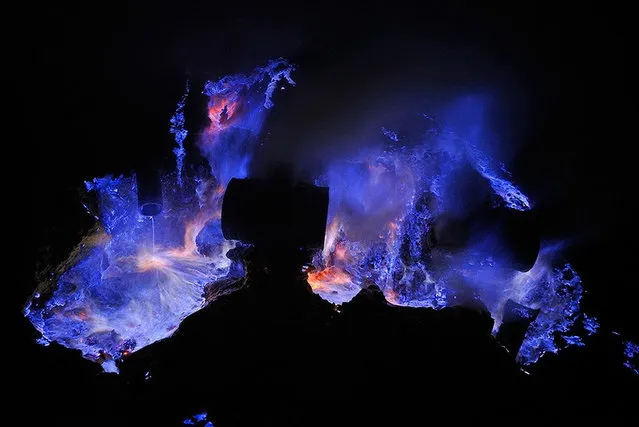
Sulfur mining in Kawah Ijen Lake

The Ijen volcano complex is a group of stratovolcanoes, in East Java, Indonesia. It is inside a larger caldera Ijen, which is about 20 kilometers wide. The Gunung Merapi stratovolcano is the highest point of that complex. The name of this volcano resembles that of a different volcano, Mount Merapi in central Java, also known as Gunung Merapi; there is also a third volcano named Marapi in Sumatra. The name "Merapi" means "fire" in the Indonesian language.
Details
03 Aug 2012 08:37:00
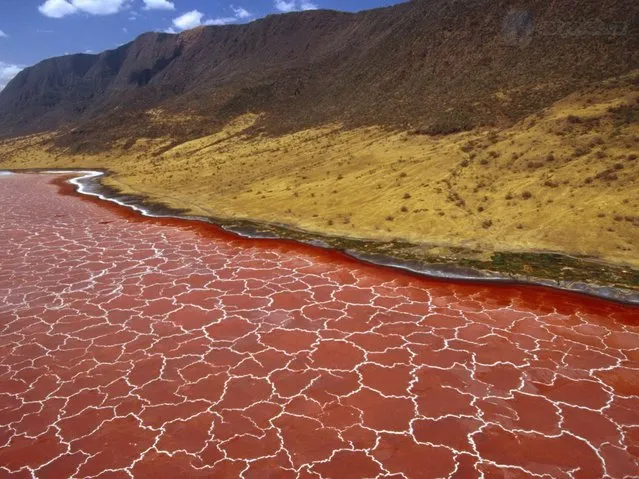
[Lake Natron in Tanzania

Lake Natron is a salt lake located in northern Tanzania, close to the Kenyan border, in the eastern branch of the East African Rift. The lake is fed by the Southern Ewaso Ng'iro River and also by mineral-rich hot springs. It is quite shallow, less than three meters (10 feet) deep, and varies in width depending on its water level, which changes due to high levels of evaporation, leaving concentrations of salt and other minerals, notably sodium carbonate (natron).
Details
05 Jun 2013 10:29:00