Loading...
Done
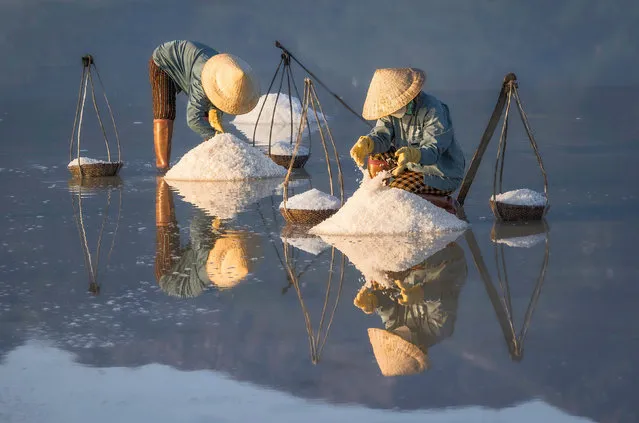
The colourful process of salt harvesting is captured at the Hon Khoi Salt Fields in Nha Trang, Vietnam in December 2022. (Photo by Hilton Chen/Solent News & Photo Agency)

The colourful process of salt harvesting is captured at the Hon Khoi Salt Fields in Nha Trang, Vietnam in December 2022. (Photo by Hilton Chen/Solent News & Photo Agency)
Details
30 Jan 2023 00:22:00
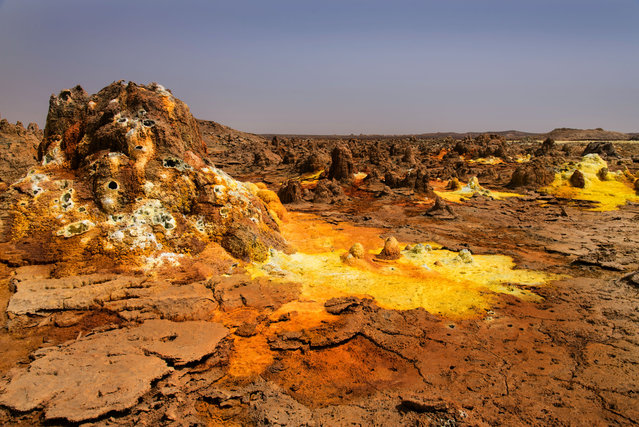
Thanks to plenty of salt minerals and heavy elements in the soil, the Dallol volcano in Ethiopia produces brilliantly colored pools of water at the top of its caldera. And, as if to add greater effect to the already stunning sights, the volcano stands apart from the salt plains around it like an island. This hotspot was created through phreatomagmatic eruptions caused by magma interacting with water, and was further altered due to the presence of salt water. (Photo by Francisco Pandolfo/Caters News)

Thanks to plenty of salt minerals and heavy elements in the soil, the Dallol volcano in Ethiopia produces brilliantly colored pools of water at the top of its caldera. And, as if to add greater effect to the already stunning sights, the volcano stands apart from the salt plains around it like an island. This hotspot was created through phreatomagmatic eruptions caused by magma interacting with water, and was further altered due to the presence of salt water. (Photo by Francisco Pandolfo/Caters News)
Details
10 Feb 2016 11:36:00
Tourists sit around a bonfire on the Makgadikgadi salt pan in Botswana. (Photo by Yang Mengxi/Xinhua News Agency/Barcroft Media)

Tourists sit around a bonfire on the Makgadikgadi salt pan in Botswana. (Photo by Yang Mengxi/Xinhua News Agency/Barcroft Media)
Details
27 Feb 2020 00:05:00
Fisherwomen laying barrels with salt in preparation for herring curing, 1937. (Photo by Topical Press Agency)

Fisherwomen laying barrels with salt in preparation for herring curing, 1937. (Photo by Topical Press Agency)
Details
04 Sep 2012 11:12:00
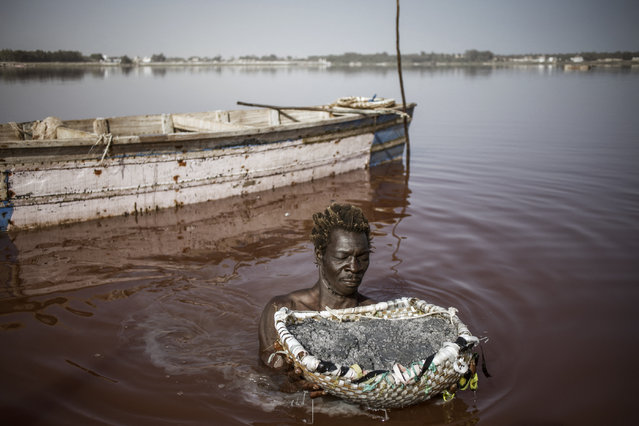
Toure, a Gambian salt harvester, holds a basket filled with  the salt collected from the crust of the bottom of the Lake Retba (Pink Lake) in Senegal on March 16, 2021. Lake Retba, divided from the Atlantic Ocean by a narrow corridor of dunes, owes its name to the pink waters caused by the Dunaliella salina algae and is known for its high salt content, up to 40% in some areas. (Photo by Marco Longari/AFP Photo)

Toure, a Gambian salt harvester, holds a basket filled with the salt collected from the crust of the bottom of the Lake Retba (Pink Lake) in Senegal on March 16, 2021. Lake Retba, divided from the Atlantic Ocean by a narrow corridor of dunes, owes its name to the pink waters caused by the Dunaliella salina algae and is known for its high salt content, up to 40% in some areas. (Photo by Marco Longari/AFP Photo)
Details
24 Mar 2021 10:29:00
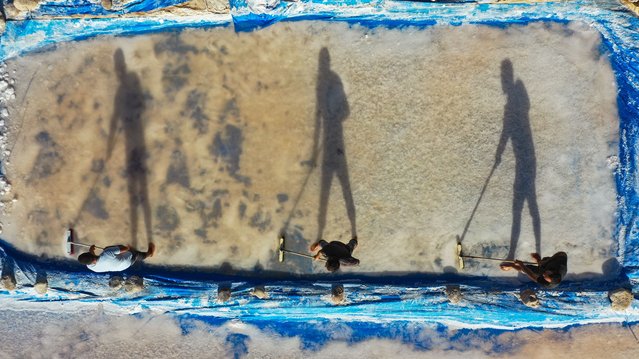
An aerial view of rock salt collection pool made of tarpaulin, where rock salt is obtained by collecting the natural spring water in the mountains and evaporating the water, in Kozluk District of Batman, Turkiye on August 22, 2022. The production of rock salt, passed down from generation to generation, became the sole source of income for 45 households in the village of Derince, with a population of about 400 of Batman. (Photo by Omer Yasin Ergin/Anadolu Agency via Getty Images)

An aerial view of rock salt collection pool made of tarpaulin, where rock salt is obtained by collecting the natural spring water in the mountains and evaporating the water, in Kozluk District of Batman, Turkiye on August 22, 2022. The production of rock salt, passed down from generation to generation, became the sole source of income for 45 households in the village of Derince, with a population of about 400 of Batman. (Photo by Omer Yasin Ergin/Anadolu Agency via Getty Images)
Details
18 Mar 2023 04:24:00
A pile of road salt

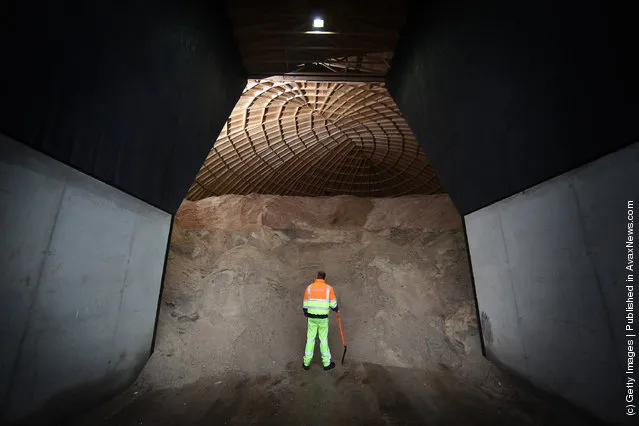
Route engineer Richard Winter stands in front of a pile of road salt at the Birchanger Depot on November 8, 2011 near Bishop's Stortford, England. (Photo by Peter Macdiarmid/Getty Images)
Details
10 Nov 2011 09:52:00
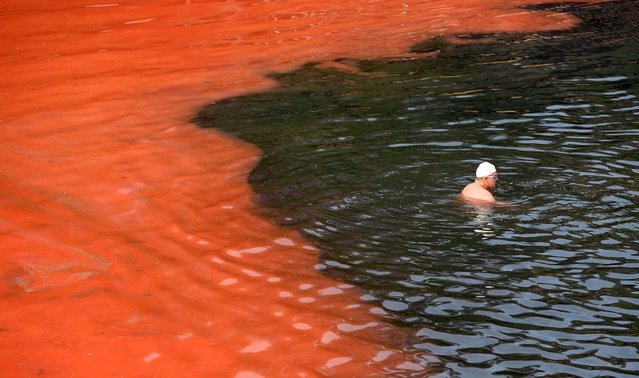
A swimmer stops short of a red algae bloom at Sydney's Clovelly Beach on November 27, 2012, which closed some beaches for swimming including Bondi Beach for a period of time.  While the red algae, known as Noctiluca scintillans or sea sparkle, has no toxic effects, people are still advised to avoid swimming in areas with discoloured water because the algae, which can be high in ammonia, can cause skin irritation. (Photo by William West/AFP Photo)

A swimmer stops short of a red algae bloom at Sydney's Clovelly Beach on November 27, 2012, which closed some beaches for swimming including Bondi Beach for a period of time. While the red algae, known as Noctiluca scintillans or sea sparkle, has no toxic effects, people are still advised to avoid swimming in areas with discoloured water because the algae, which can be high in ammonia, can cause skin irritation. (Photo by William West/AFP Photo)
Details
28 Nov 2012 09:52:00