Loading...
Done
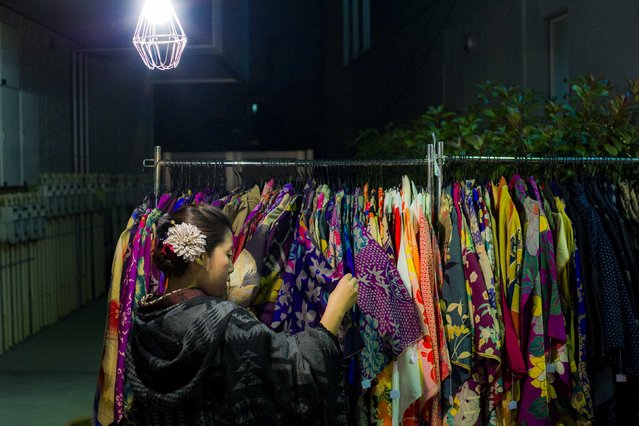
A woman browses through kimonos for sale at Boroichi flea market in Tokyo December 15, 2014. In the 16th century, Boroichi was a place for farmers to buy and sell rags, known as boro, for mending clothes and weaving sandals. Now in its 436th year, the original spirit lingers, with about 700 stands hawking fabric, used clothes and piles of rags. Others sell kitchen tools, pottery, seaweed and spices. (Photo by Thomas Peter/Reuters)

A woman browses through kimonos for sale at Boroichi flea market in Tokyo December 15, 2014. In the 16th century, Boroichi was a place for farmers to buy and sell rags, known as boro, for mending clothes and weaving sandals. Now in its 436th year, the original spirit lingers, with about 700 stands hawking fabric, used clothes and piles of rags. Others sell kitchen tools, pottery, seaweed and spices. About 200,000 people flock to the market, which is only open for four mid-winter days a year – two in December and two in January. (Photo by Thomas Peter/Reuters)
Details
19 Dec 2014 12:50:00
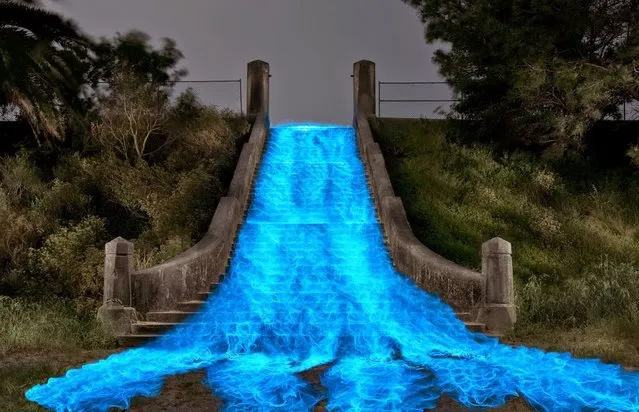
Winner of the NSW (New South Wales) prize: Peter Solness said: “I wanted to re-imagine the lost waterways, so I got my light-painting tools to work. In this image, water is being released from the top of the historic Centennial Park No. 2 Reservoir, which was built in 1925 and holds 90 megalitres of water. After 89 years of incarceration these waters now run free!”. (Photo by Peter Solness/Head On)

Touching and dramatic portraits and landscape shots have won prizes at Australia's prestigious photography prize. Photo: Winner of the NSW (New South Wales) prize: Peter Solness said: “I wanted to re-imagine the lost waterways, so I got my light-painting tools to work. In this image, water is being released from the top of the historic Centennial Park No. 2 Reservoir, which was built in 1925 and holds 90 megalitres of water. After 89 years of incarceration these waters now run free!”. (Photo by Peter Solness/Head On)
Details
21 May 2014 11:11:00
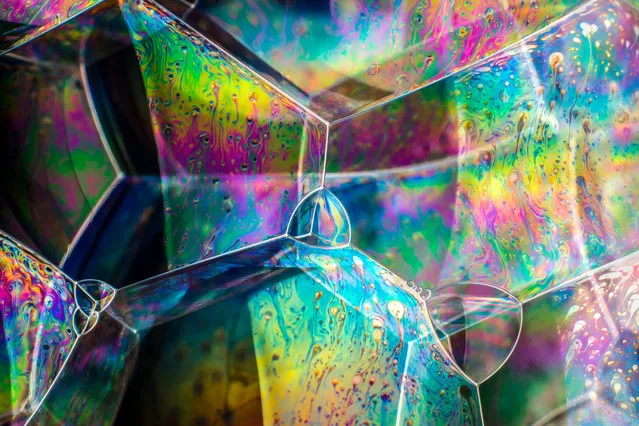
Soap Bubble Structures by Kym Cox. Bubbles optimise space and minimise their surface area for a given volume of air. This phenomenon makes them a useful tool in many areas of research, in particular, materials science and ‘packing’ – how things fit together. Bubble walls drain under gravity, thin at the top, thick at the bottom, which interferes with travelling lightwaves to create bands of colour. Black spots show the wall is too thin for interference colours, indicating the bubble is about to burst. (Photo by Kym Cox/2019 Science Photographer of the Year/RPS)

Soap Bubble Structures by Kym Cox. Bubbles optimise space and minimise their surface area for a given volume of air. This phenomenon makes them a useful tool in many areas of research, in particular, materials science and “packing” – how things fit together. Bubble walls drain under gravity, thin at the top, thick at the bottom, which interferes with travelling lightwaves to create bands of colour. Black spots show the wall is too thin for interference colours, indicating the bubble is about to burst. (Photo by Kym Cox/2019 Science Photographer of the Year/RPS)
Details
15 Aug 2019 00:03:00
Self-titled Pricasso – real name Tim Patch, 71, – is using his very own pen*s to create his masterpiece – and claims to have made close to £500k from his saucy paintings. Here: Pricasso gets to work with his tools - and paints The Sun's newspaper correspondent Amy Nickell with his bits in London, England on November 5, 2019. (Photo by Stewart Williams/The Sun)

Self-titled Pricasso – real name Tim Patch, 71, – is using his very own pen*s to create his masterpiece – and claims to have made close to £500k from his saucy paintings. Here: Pricasso gets to work with his tools - and paints The Sun's newspaper correspondent Amy Nickell with his bits in London, England on November 5, 2019. (Photo by Stewart Williams/The Sun)
Details
17 Jan 2020 00:05:00
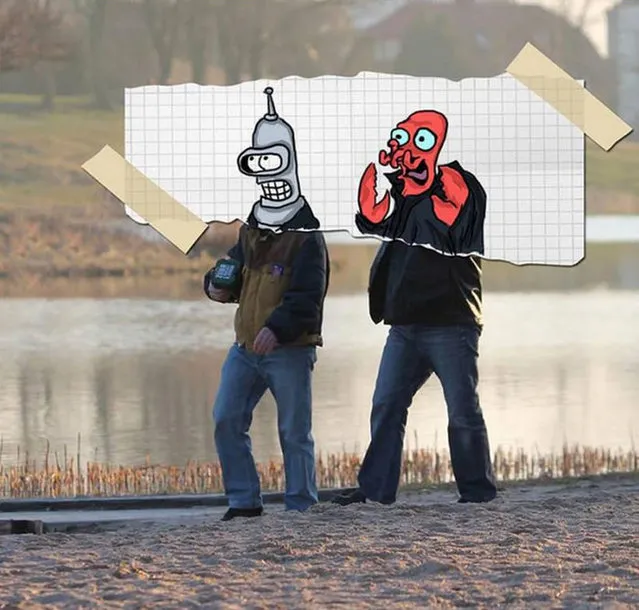
Funny Drawings By Aleks Nocny

How to make the world a brighter using pen? You just have to complement conventional photographs persons toon, and immediately transformed the world. Aleks Nocny uses simple tools: pens, scraps of paper and your imagination. And the most simple pictures of people on the streets are transformed into a work of art.
Details
10 Oct 2014 10:56:00
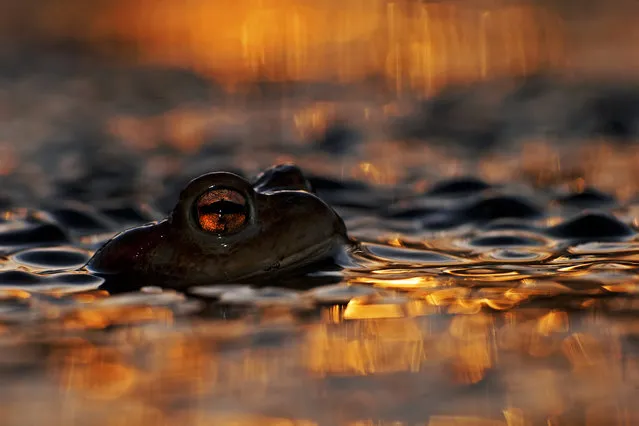
“Eye of a toad”. Animal Portraits, Łukasz Bożycki, Poland.  (Photo by Łukasz Bożycki)

“Eye of a toad”. Animal Portraits, Łukasz Bożycki, Poland. Early spring sees a pond near Łukasz’s home city of Warsaw, Poland, full of mating frogs and a few toads. On this March day, Łukasz shared the pond with them for an evening, sitting in the icy water in his chest-high waders, keeping as still as possible, despite the numbing cold, so that the amphibians could get used to him. “I wanted to find a fresh way of portraying the amphibians”, he says, “at water level”. Using a telephoto lens, he focused on one lone toad and waited for the sun to dip almost below the horizon before pressing the shutter, using flash to bring out the details in the shadow. His prize was “the glorious pool of sunset colour” and fiery glow of the toad’s eye. Nikon D80 + 70-300mm f4.5-5.6 lens + extension tube; 1/125 sec at f9 (-2.3 e/v); ISO 100; built-in flash. (Photo by Łukasz Bożycki)
Details
28 Aug 2013 11:45:00

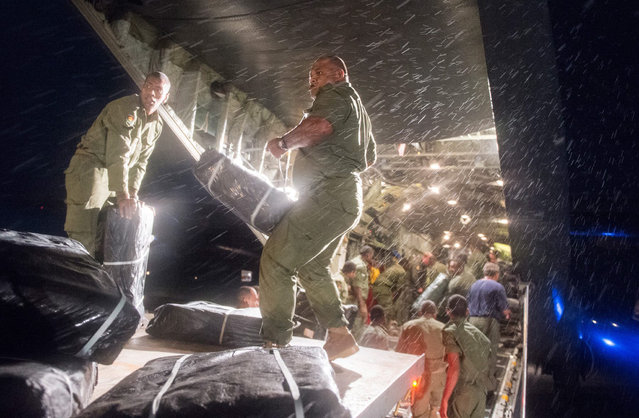
A handout image provided by the New Zealand Defence Force shows aid supplies being unloaded by Fijian soldiers from an Royal New Zealand Airforce C-130 Hercules plane in Suva, Fiji, 23 February 2016. Tool kits, generators, ration packs, water containers and chainsaws make up part of the New Zealand relief following Tropical Cyclone Winston. The death toll from the cyclone that hit Fiji over the weekend climbed to 29, local media reported ON 23 February. (Photo by Sam Shepherd/EPA/NZ Defence Force)

A handout image provided by the New Zealand Defence Force shows aid supplies being unloaded by Fijian soldiers from an Royal New Zealand Airforce C-130 Hercules plane in Suva, Fiji, 23 February 2016. Tool kits, generators, ration packs, water containers and chainsaws make up part of the New Zealand relief following Tropical Cyclone Winston. The death toll from the cyclone that hit Fiji over the weekend climbed to 29, local media reported ON 23 February. Cyclone Winston, the most powerful storm in Fiji's history, battered the country's main island of Viti Levu and other smaller surrounding islands on Saturday, the Fiji Broadcasting Corporation reported. (Photo by Sam Shepherd/EPA/NZ Defence Force)
Details
24 Feb 2016 12:56:00
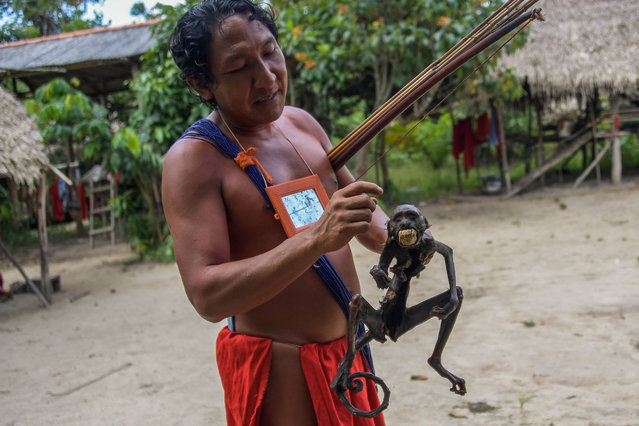
Chieftain Japarupi Waiapi shows a roasted monkey -part of Waiapi's diet, also based in Manioc and fruits- at the reserve in Amapa state in Brazil on October 13, 2017. When Waiapis walks into the Amazon forest surrounding their village, they do not see trees, but a kind of shopping mall providing medicine, food, shelter, tools and weapons  all under the eye of multiple spirits. (Photo by Apu Gomes/AFP Photo)

Chieftain Japarupi Waiapi shows a roasted monkey -part of Waiapi's diet, also based in Manioc and fruits- at the reserve in Amapa state in Brazil on October 13, 2017. When Waiapis walks into the Amazon forest surrounding their village, they do not see trees, but a kind of shopping mall providing medicine, food, shelter, tools and weapons all under the eye of multiple spirits. (Photo by Apu Gomes/AFP Photo)
Details
27 Oct 2017 08:39:00