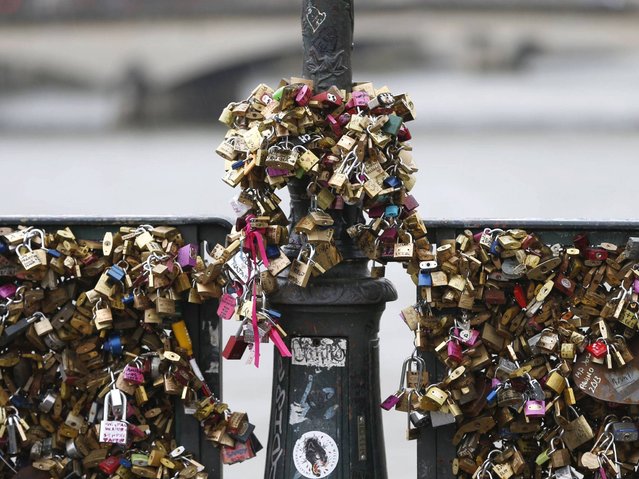
The love padlocks, called cadenas d’amour, multiplied until there were thousands of love tokens on the bridge, each engraved with a message of love. (Photo by Charles Platiau/Reuters)
Two visitors take pictures of autumn leaves at Rikugien Garden Tuesday, December 10, 2019, in the Bunkyo district of Tokyo. (Photo by Jae C. Hong/AP Photo)
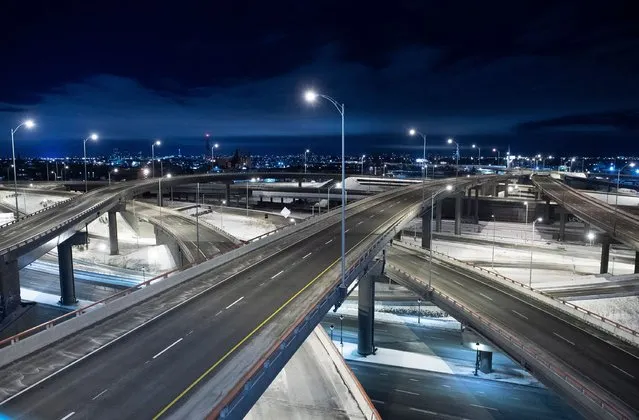
An empty Turcot Interchange is shown in Montreal, Saturday, January 9, 2021, as the Quebec government imposed a curfew to help stop the spread of COVID-19 starting at 8 p.m until 5 a.m and lasting until Feb. 8. (Photo by Graham Hughes/The Canadian Press via AP Photo)
A view of a bridge, which is usually submerged, over the dried bed of Llwyn-on Reservoir during a heatwave in Wales, Britain on July 18, 2022. (Photo by Carl Recine/Reuters)
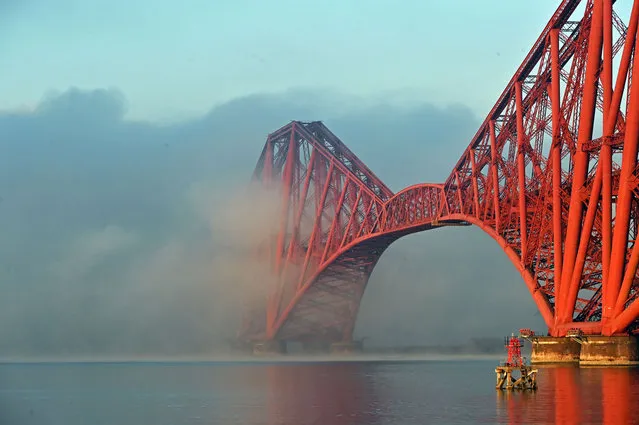
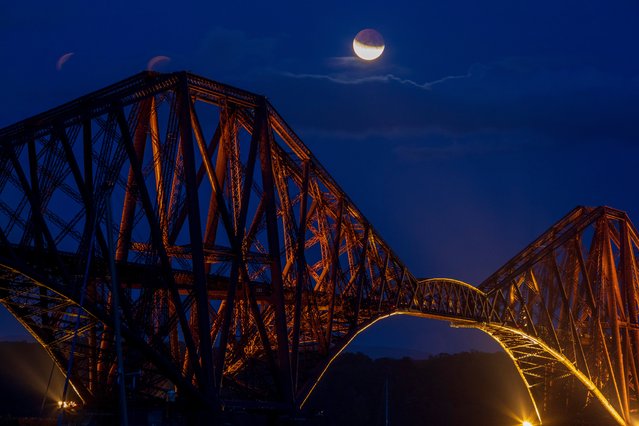
The Forth Bridge is engulfed by mist on one of the coldest days of the year, on December 12, 2022, in Edinburgh, Scotland. (Photo by Ken Jack/Getty Images)
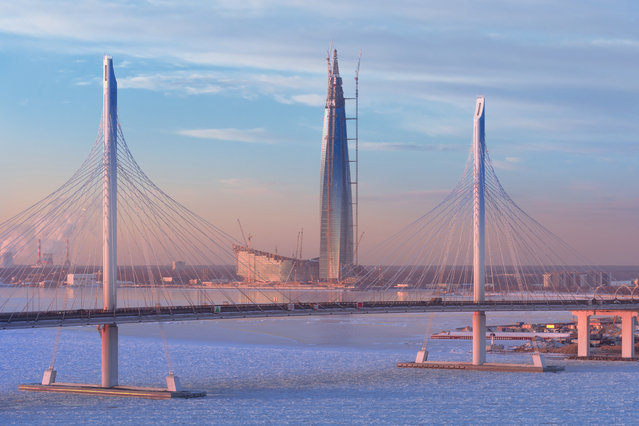
A view of the Lakhta Center multifunctional complex under construction in St Petersburg' s Primorsky District and a cable stayed bridge of the Western High- Speed Diameter toll motorway in St Petersburg, Russia on March 5, 2018. (Photo by EPA/EFE/Rex Features/Shutterstock)
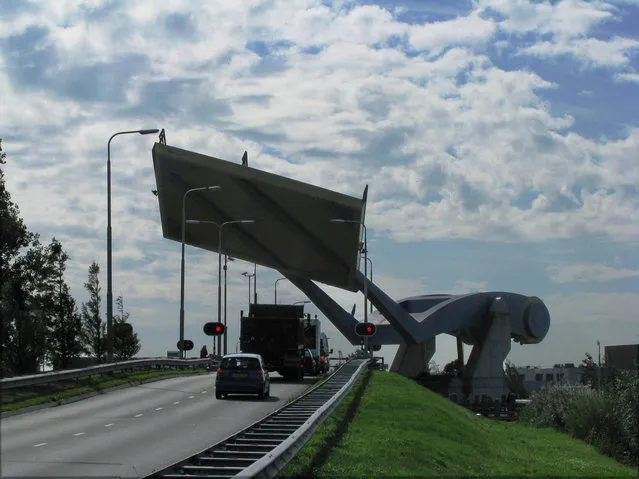
The Slauerhoffbrug (English: Slauerhoff Bridge) is a fully automatic bascule bridge (aka tail bridge) in the city of Leeuwarden in the Netherlands. It uses two arms to swing a section of road in and out of place within the road itself. It is also known as the “Slauerhoffbrug ‘Flying’ Drawbridge”. A tail bridge can quickly and efficiently be raised and lowered from one pylon (instead of hinges). This quickly allows water traffic to pass while only briefly stalling road traffic. The deck is 15 m by 15 m. It is painted in yellow and blue, representative of Leeuwarden's flag and seal.