Loading...
Done
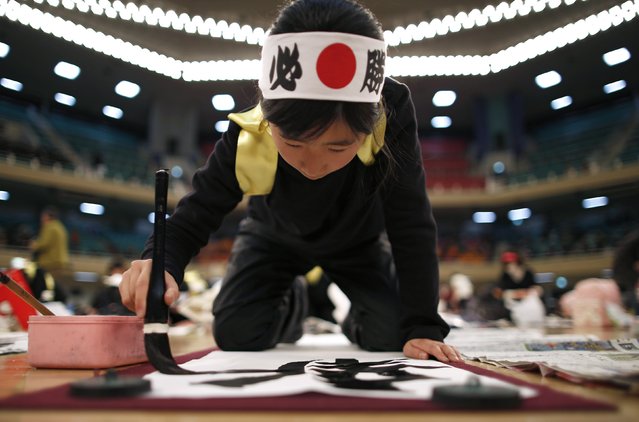
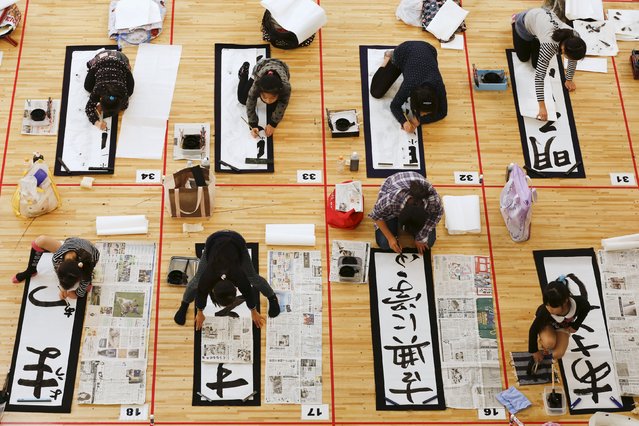
Pupils participate in a calligraphy contest to celebrate the New Year in Tokyo January 5, 2016. (Photo by Thomas Peter/Reuters)

Pupils participate in a calligraphy contest to celebrate the New Year in Tokyo January 5, 2016. Over 3,000 calligraphers who qualified in competitions throughout Japan wrote resolutions or wishes onto paper sheets during the annual contest that marks the start of the new year, according to organizers. (Photo by Thomas Peter/Reuters)
Details
07 Jan 2016 08:02:00
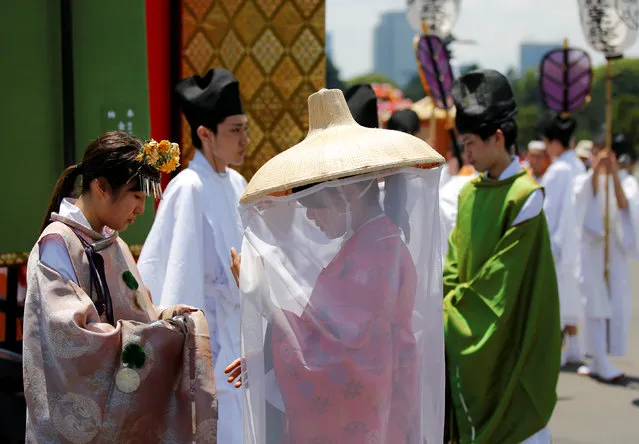
Participants dressed in ancient Japanese costumes take part in a parade at the Imperial Palace during the Sanno Festival in Tokyo, Japan June 10, 2016. (Photo by Toru Hanai/Reuters)

Participants dressed in ancient Japanese costumes take part in a parade at the Imperial Palace during the Sanno Festival in Tokyo, Japan June 10, 2016. (Photo by Toru Hanai/Reuters)
Details
11 Jun 2016 12:31:00
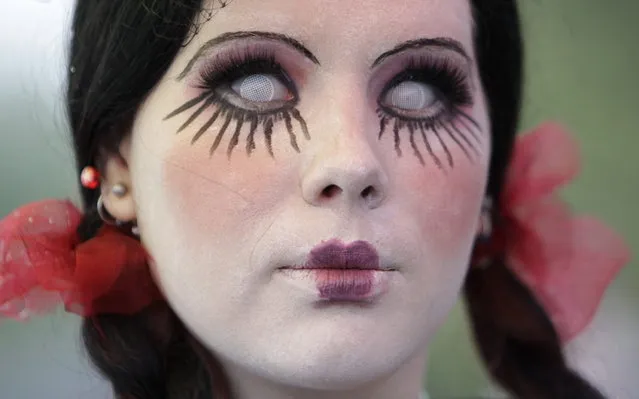
An enthusiast dressed as a zombie takes part in the annual Zombie Walk festival in Prague June 1, 2013. (Photo by David W. Cerny/Reuters)

An enthusiast dressed as a zombie takes part in the annual Zombie Walk festival in Prague June 1, 2013. (Photo by David W. Cerny/Reuters)
Details
02 Jun 2013 10:16:00
“Lip color”. Shibuya, 2012. (Asian (Street) Impressions)

“Lip color”. Shibuya, 2012. (Photo and caption by Asian (Street) Impressions)
Details
20 Oct 2013 09:11:00
“Milk Moustaches”. (Photo and caption by Ben Torode)

“Milk Moustaches”. (Photo and caption by Ben Torode)
Details
01 Nov 2013 12:02:00
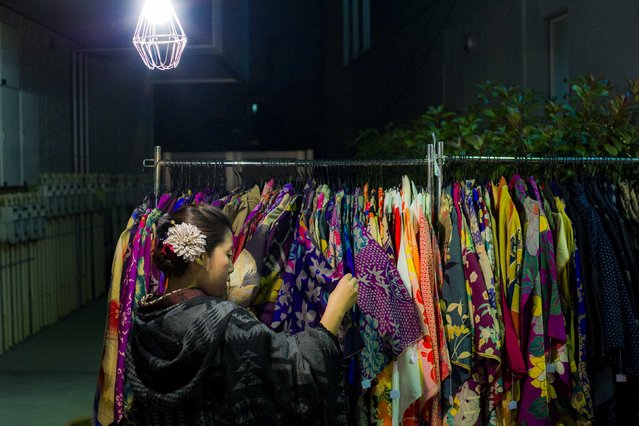
A woman browses through kimonos for sale at Boroichi flea market in Tokyo December 15, 2014. In the 16th century, Boroichi was a place for farmers to buy and sell rags, known as boro, for mending clothes and weaving sandals. Now in its 436th year, the original spirit lingers, with about 700 stands hawking fabric, used clothes and piles of rags. Others sell kitchen tools, pottery, seaweed and spices. (Photo by Thomas Peter/Reuters)

A woman browses through kimonos for sale at Boroichi flea market in Tokyo December 15, 2014. In the 16th century, Boroichi was a place for farmers to buy and sell rags, known as boro, for mending clothes and weaving sandals. Now in its 436th year, the original spirit lingers, with about 700 stands hawking fabric, used clothes and piles of rags. Others sell kitchen tools, pottery, seaweed and spices. About 200,000 people flock to the market, which is only open for four mid-winter days a year – two in December and two in January. (Photo by Thomas Peter/Reuters)
Details
19 Dec 2014 12:50:00
A Japanese girl participates in a calligraphy contest to the celebrate the New Year in Tokyo January 5, 2015. Over 3,000 calligraphers, having qualified in country wide competitions throughout Japan, took part in the annual contest to celebrate the new year. (Photo by Issei Kato/Reuters)

A Japanese girl participates in a calligraphy contest to the celebrate the New Year in Tokyo January 5, 2015. Over 3,000 calligraphers, having qualified in country wide competitions throughout Japan, took part in the annual contest to celebrate the new year. (Photo by Issei Kato/Reuters)
Details
06 Jan 2015 11:51:00
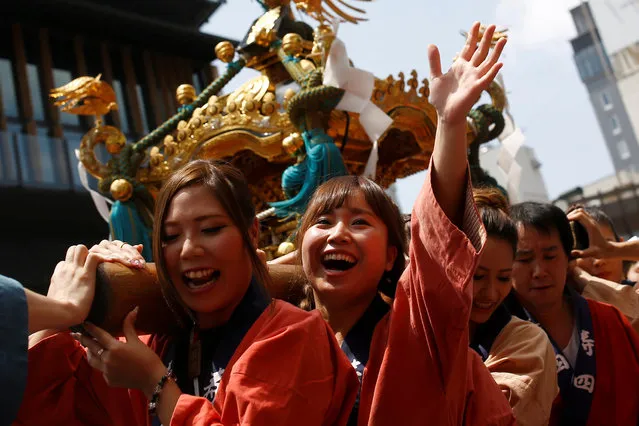
Women carry a portable shrine, a Mikoshi, through a street in Tokyo's Asakusa district during the Sanja festival, Japan, May 15, 2016. (Photo by Thomas Peter/Reuters)

Women carry a portable shrine, a Mikoshi, through a street in Tokyo's Asakusa district during the Sanja festival, Japan, May 15, 2016. (Photo by Thomas Peter/Reuters)
Details
16 May 2016 11:01:00