Loading...
Done
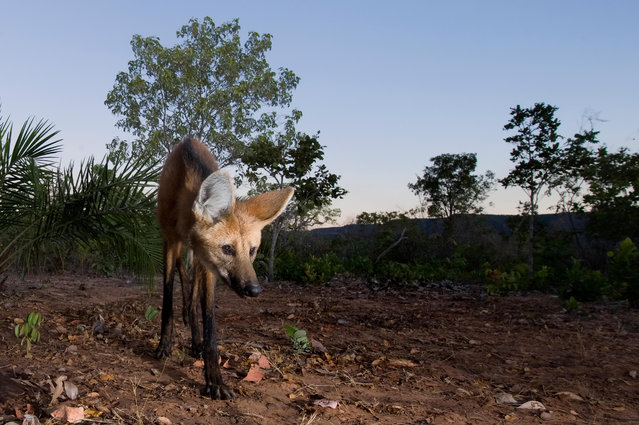
The maned wolf is among the large mammals in the Brazilian Cerrado that are threatened by the increasing conversion of grasslands into farmland for grazing and growing crops. (Photo by Ben Cranke/Nature Picture Library/Alamy Stock Photo)

Global wildlife populations will decline by 67% by 2020 unless urgent action is taken to reduce human impact on species and ecosystems, warns the biennial Living Planet Index report from WWF (World Wide Fund for Nature) and ZSL (Zoological Society of London). From elephants to eels, here are some of the wildlife populations most affected by human activity. Here: The maned wolf is among the large mammals in the Brazilian Cerrado that are threatened by the increasing conversion of grasslands into farmland for grazing and growing crops. (Photo by Ben Cranke/Nature Picture Library/Alamy Stock Photo)
Details
28 Oct 2016 10:47:00
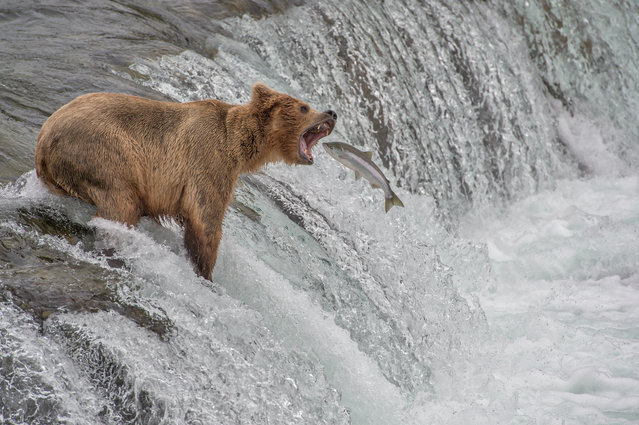
“Catch of the Decade”. Can you guess what happened next? Photo location: Katmai National Park, Alaska, USA. (Photo and caption by Aaron Baggenstos/National Geographic Photo Contest)

“Catch of the Decade”. Can you guess what happened next? Photo location: Katmai National Park, Alaska, USA. (Photo and caption by Aaron Baggenstos/National Geographic Photo Contest)
Details
30 Sep 2014 08:47:00
“Light Sleeper”. (Photo by Dani Diamond)

“Light Sleeper”. (Photo by Dani Diamond)
Details
23 May 2014 12:47:00
Second placed Kalex Moto2 Tito Rabat (rear R) of Spain and third placed Kalex Moto2 Alex Rins of Spain spray with champagne during the award ceremony for the Czech Grand Prix in Brno, Czech Republic, August 16, 2015. (Photo by David W. Cerny/Reuters)

Second placed Kalex Moto2 Tito Rabat (rear R) of Spain and third placed Kalex Moto2 Alex Rins of Spain spray with champagne during the award ceremony for the Czech Grand Prix in Brno, Czech Republic, August 16, 2015. (Photo by David W. Cerny/Reuters)
Details
17 Aug 2015 11:56:00
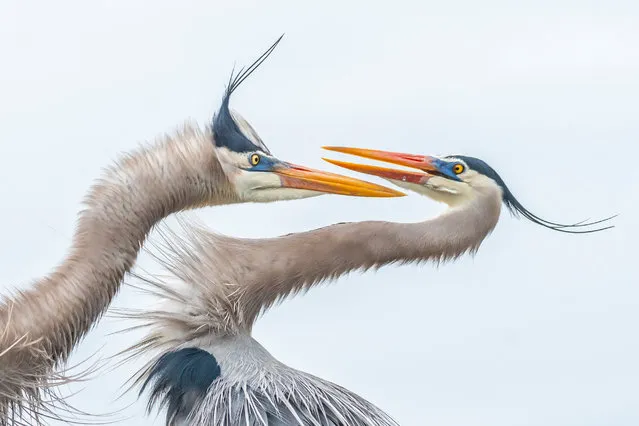
Melissa Rowell, amateur honourable mention. Wakodahatchee wetlands, Delray Beach, Florida, US. Equipped with sinewy necks and spear-like bills, great blue herons can lunge with fearsome speed to strike their aquatic prey. Adults will also employ rapid stabbing motions as one aspect of their complex courtship displays; they’re seemingly dangerous moves, but fitting to the intensity of mating season. (Photo by Melissa Rowell/Audubon photography awards)

Wakodahatchee wetlands, Delray Beach, Florida, US. Equipped with sinewy necks and spear-like bills, great blue herons can lunge with fearsome speed to strike their aquatic prey. Adults will also employ rapid stabbing motions as one aspect of their complex courtship displays; they’re seemingly dangerous moves, but fitting to the intensity of mating season. (Photo by Melissa Rowell/Audubon Photography Awards)
Details
17 Jul 2019 00:03:00
Mr Lordi aka Tomi Petteri Putaansuu of the Finnish hard rock band Lordi gets the second jab of his Covid-19 vaccination from nurse Paula Ylitalo (R) in Rovaniemi, Finland, on August 1, 2021, amid the novel coronavirus / COVID-19 pandemic. (Photo by Jouni Porsanger/Lehtikuva/AFP Photo)

Mr Lordi aka Tomi Petteri Putaansuu of the Finnish hard rock band Lordi gets the second jab of his Covid-19 vaccination from nurse Paula Ylitalo (R) in Rovaniemi, Finland, on August 1, 2021, amid the novel coronavirus / COVID-19 pandemic. (Photo by Jouni Porsanger/Lehtikuva/AFP Photo)
Details
03 Aug 2021 09:36:00
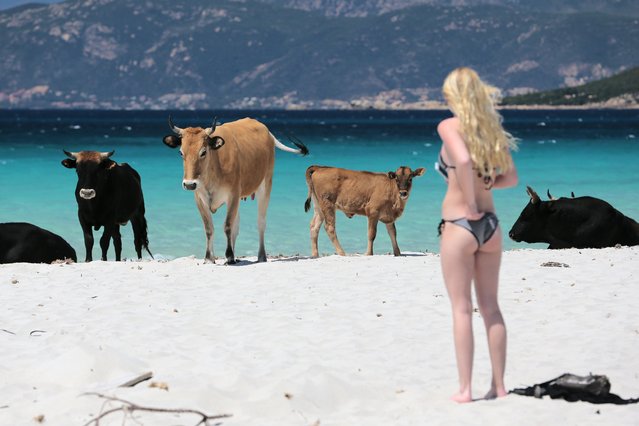
A woman looks at cows on the Mare e Sol beach in Coti-Chiavari, on the French Mediterranean island of Corsica, on May 17, 2017. A herd of some thirty wild cattle take up their summer residence on stretch of beach each year. (Photo by Pascal Pochard-Casabianca/AFP Photo)

A woman looks at cows on the Mare e Sol beach in Coti-Chiavari, on the French Mediterranean island of Corsica, on May 17, 2017. A herd of some thirty wild cattle take up their summer residence on stretch of beach each year. (Photo by Pascal Pochard-Casabianca/AFP Photo)
Details
19 May 2017 08:54:00
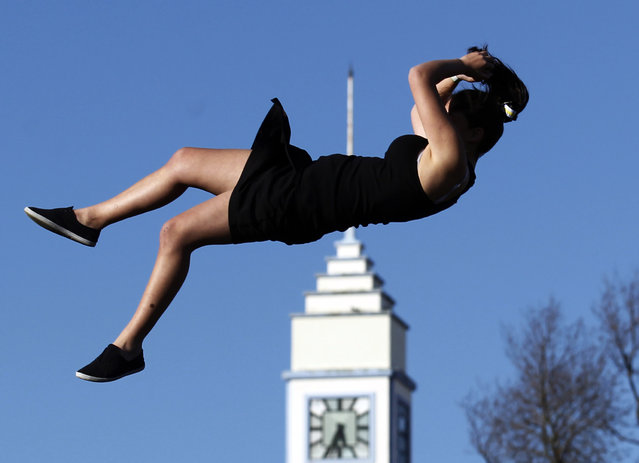
8. NEW ZEALAND: A woman dives from a platform into a giant air bed at a park in Palmerston North September 29, 2011. (Photo by Marcos Brindicci/Reuters)

The report, prepared by the Sustainable Development Solutions Network (SDSN) and the Earth Institute at Columbia University, showed Syria, Afghanistan and eight sub-Saharan countries as the 10 least happy places on earth to live. The top 10 this year were Denmark, Switzerland, Iceland, Norway, Finland, Canada, Netherlands, New Zealand, Australia, and Sweden. Denmark was in third place last year, behind Switzerland and Iceland. The bottom 10 were Madagascar, Tanzania, Liberia, Guinea, Rwanda, Benin, Afghanistan, Togo, Syria and Burundi. The United States came in at 13, the United Kingdom at 23, France at 32, and Italy at 50. Here: #8. NEW ZEALAND: A woman dives from a platform into a giant air bed at a park in Palmerston North September 29, 2011. (Photo by Marcos Brindicci/Reuters)
Details
26 Mar 2016 13:19:00