Loading...
Done
Aide Choque, wearing a mask amid the COVID-19 pandemic, jumps with her skateboard during a youth talent show in La Paz, Bolivia, Wednesday, September 30, 2020. Young women called “Skates Imillas”, using the Aymara word for girl Imilla, use traditional Indigenous clothing as a statement of pride of their Indigenous culture while playing riding their skateboards. (Photo by Juan Karita/AP Photo)

Aide Choque, wearing a mask amid the COVID-19 pandemic, jumps with her skateboard during a youth talent show in La Paz, Bolivia, Wednesday, September 30, 2020. Young women called “Skates Imillas”, using the Aymara word for girl Imilla, use traditional Indigenous clothing as a statement of pride of their Indigenous culture while playing riding their skateboards. (Photo by Juan Karita/AP Photo)
Details
10 Feb 2021 11:11:00
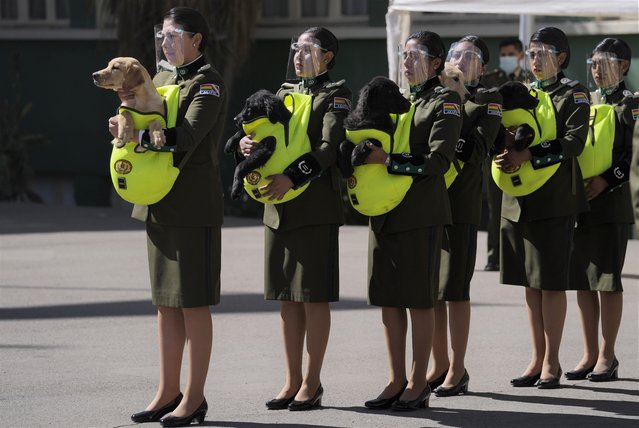
Police officers introduce a litter of golden retriever puppies to be trained as police dogs during a ceremony at the National Police Academy in La Paz, Bolivia, Monday, August 16, 2021, the date of the feast day for Saint Roch, considered the patron saint of dogs, among other things. (Photo by Juan Karita/AP Photo)

Police officers introduce a litter of golden retriever puppies to be trained as police dogs during a ceremony at the National Police Academy in La Paz, Bolivia, Monday, August 16, 2021, the date of the feast day for Saint Roch, considered the patron saint of dogs, among other things. (Photo by Juan Karita/AP Photo)
Details
21 Apr 2022 06:13:00
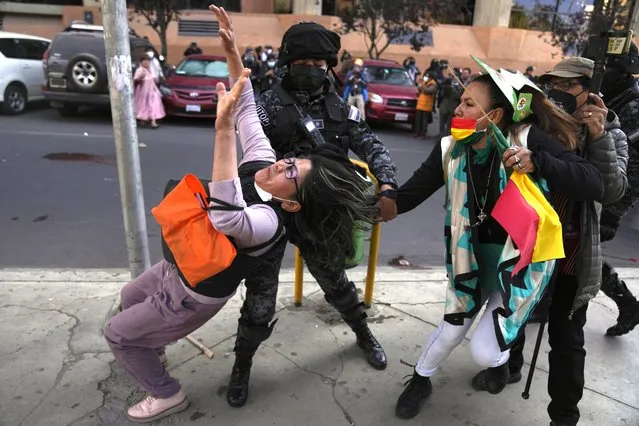
A police officer tries to prevent an anti-government protester from pulling the hair of a woman who is part of group that appeared to show their support for the government during a march of healthcare workers critical of the government, in La Paz, Bolivia, on July 21, 2022. (Photo by Juan Karita/AP Photo)

A police officer tries to prevent an anti-government protester from pulling the hair of a woman who is part of group that appeared to show their support for the government during a march of healthcare workers critical of the government, in La Paz, Bolivia, on July 21, 2022. (Photo by Juan Karita/AP Photo)
Details
06 Oct 2023 04:41:00
A Cucumber and a Chuta Cholero hug during the traditional festival “Desentierro del Pepino” (unearthing the Cucumber) to mark the beginning of carnival on January 21, 2024 in La Paz, Bolivia. People dug up the cucumber from the cemetery and walk through the streets with two characters, the Ch'uta and the Chola. (Photo by Gaston Brito/Getty Images)

A Cucumber and a Chuta Cholero hug during the traditional festival “Desentierro del Pepino” (unearthing the Cucumber) to mark the beginning of carnival on January 21, 2024 in La Paz, Bolivia. People dug up the cucumber from the cemetery and walk through the streets with two characters, the Ch'uta and the Chola. (Photo by Gaston Brito/Getty Images)
Details
29 Mar 2025 04:24:00
Road Wallah by Photographer Dougie Wallace

“Bombay’s once ubiquitous Premier Padmini taxis were introduced in the 60s and are dwindling at an alarming rate. This follows a decree banning vehicles over 25 years old from the streets to be replaced with “modern alternatives”. In a few years these iconic workhorses will be gone from Bombay’s streets altogether. It is important to capture this before it disappears and I see the road wallah's cabs as the time capsules that allow me to do this”. – Dougie Wallace, Bombay India, March, 2013. (Photo by Dougie Wallace)
Details
27 May 2013 12:01:00
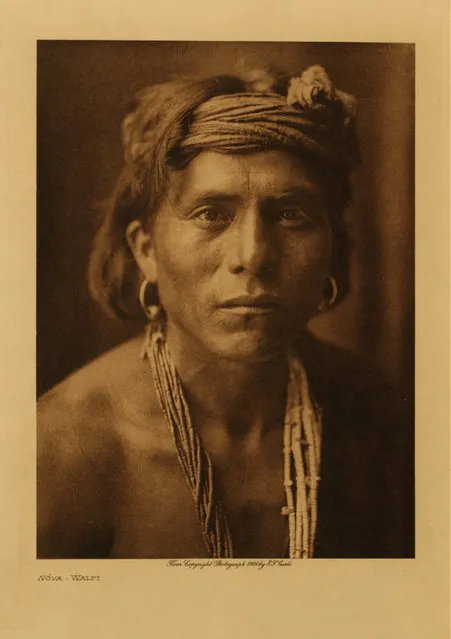
Nova, a Walpi, in 1906. (Photo by Edward S. Curtis)

At the beginning of the 20th century, Edward S. Curtis set out to document what he saw as a disappearing race: the Native American. From 1907 to 1930, Curtis took more than 2,000 photos of 80 tribes stretching from the Great Plains to the Pacific Northwest and Alaska. He then published and sold these photos, along with narrative text, in 20 volumes of work known as “The North American Indian”. It is one of the most significant collections of its kind, “probably the most important photographic document of its age and its topic,” said Jeffrey Garrett, associate university librarian for Special Libraries at Northwestern University. (Photo by Edward S. Curtis)
Details
07 Sep 2014 12:57:00
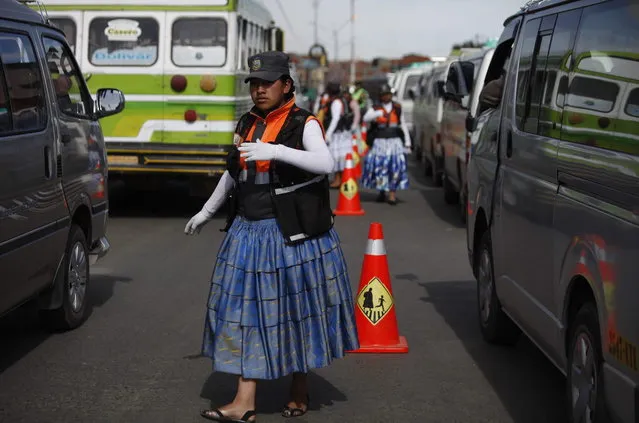
In this December 3, 2013 photo, an Aymara woman cops directs traffic on the streets of El Alto, Bolivia. The women wear the bright petticoats and shawls of indigenous women in the Andes, called cholitas in Bolivian slang, the main difference being that instead of bowler hats they wear khaki green police-style caps. Some don fluorescent traffic vests. (Photo by Juan Karita/AP Photo)

“This city in Bolivia's highlands has hired Aymara women dressed in traditional multilayered Andean skirts and brightly embroidered vests to work as traffic cops and bring order to its road chaos. About 20 of the “traffic cholitas” have been trained to direct cars and buses in El Alto, a teeming, impoverished sister city of La Paz in Bolivia's Andes mountains”. – El Alto via Associated Press. Photo: In this December 3, 2013 photo, an Aymara woman cops directs traffic on the streets of El Alto, Bolivia. The women wear the bright petticoats and shawls of indigenous women in the Andes, called cholitas in Bolivian slang, the main difference being that instead of bowler hats they wear khaki green police-style caps. Some don fluorescent traffic vests. (Photo by Juan Karita/AP Photo)
Details
25 Dec 2013 10:48:00
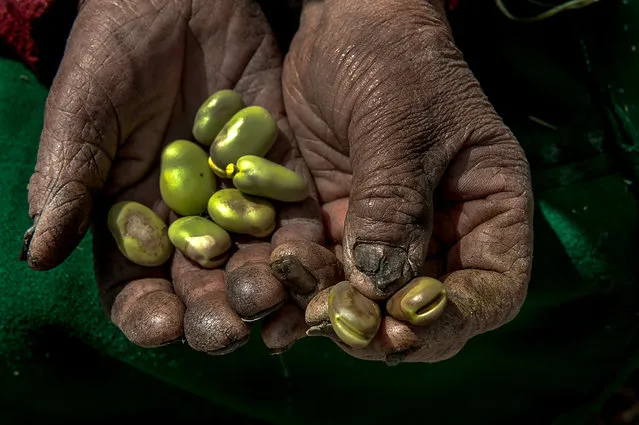
The hard-worked hands of Jacaba Coaquira, 80, holding the green beans she grew on her land. This year the production of her land was affected by lack of rain and early cold weather that froze the crops before they finished growing. Santiago de Okola, Bolivia. (Photo by Renée C. Byer/Living on a Dollar a Day)

The hard-worked hands of Jacaba Coaquira, 80, holding the green beans she grew on her land. This year the production of her land was affected by lack of rain and early cold weather that froze the crops before they finished growing. Santiago de Okola, Bolivia. (Photo by Renée C. Byer/Living on a Dollar a Day)
Details
16 Oct 2014 13:11:00