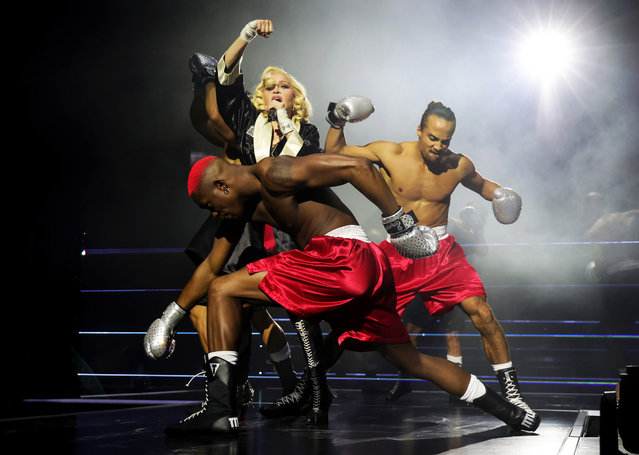
American singer-songwriter Madonna performs during opening night of The Celebration Tour at The O2 Arena on October 14, 2023 in London, England. (Photo by Kevin Mazur/WireImage for Live Nation)
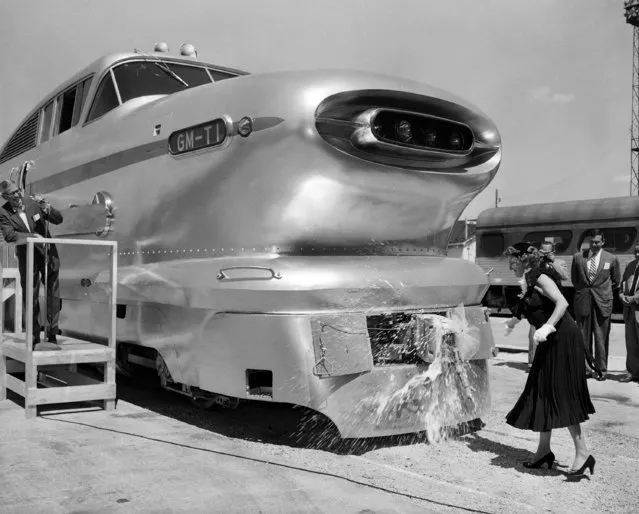
N.C. Dezendorf, wife of the general manager of the Electro-Motive division of General Motors, christens the new lightweight “Aerotrain” at the company's locomotive works in La Grange, Ill. on August 22, 1955. (Photo by Edward Kitch/AP Photo)
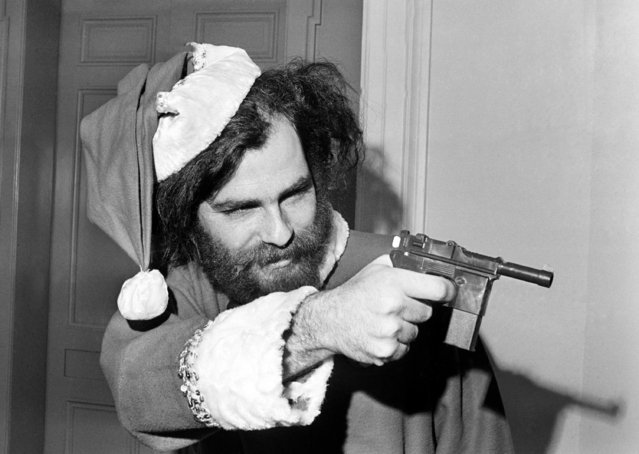
Yippie leader Jerry Rubin, barred on December 4, from House Un-American Activities subcommittee hearing, aims a toy gun in “self defense” outside the Washington hearing room on December 5, 1969. Rubin showed up in his Santa Clause suit because he believed it was typical of the committee which, he said, “is a total circus”. (Photo by Bob Daugherty/AP Photo)
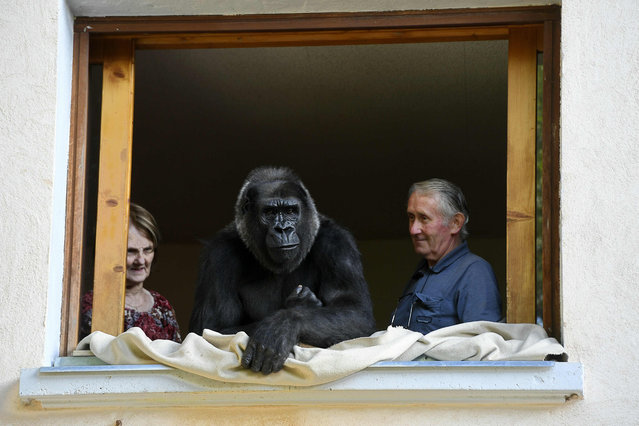
Pierre Thivillon (R), director of the zoological park of Saint-Martin-La-Plaine and his wife Eliane look at Digit, an 18-year-old female gorilla, on August 19, 2016, in Saint-Martin-La-Plaine between Lyon and Saint-Etienne, southeastern France. The zoological park of Saint-Martin-La-Plaine is a shelter for beasts seized by the justice. (Photo by Philippe Desmazes/AFP Photo)
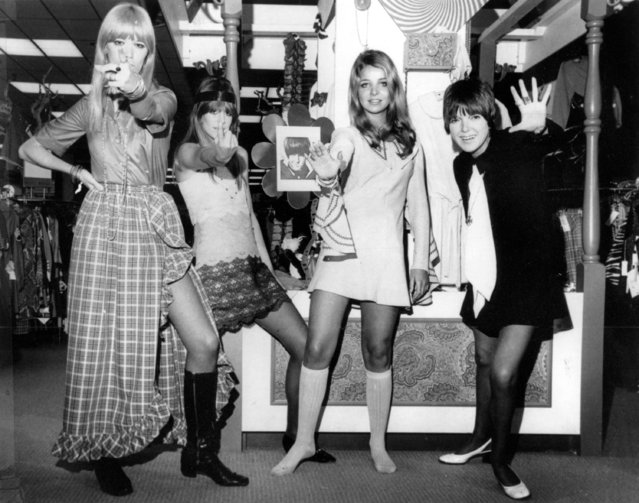
British fashion designer Mary Quant, right, waves as she poses with models wearing her Mod creations in Little Rock, Ark. on October 25, 1968. The models, from left, are, Amanda Tear, Rory Davis and Penny Yates. (Photo by AP Photo)
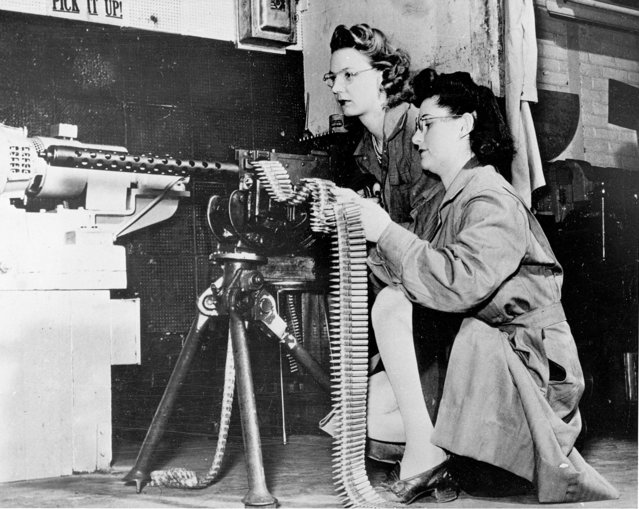
Mae Zelinsky, left, and Betty O'Beda test ammunition on a .30 caliber rifle at a Remington Arms plant on April 30, 1943. Many women took over jobs that were left vacant when men went overseas to fight in World War II. (Photo by AP Photo)
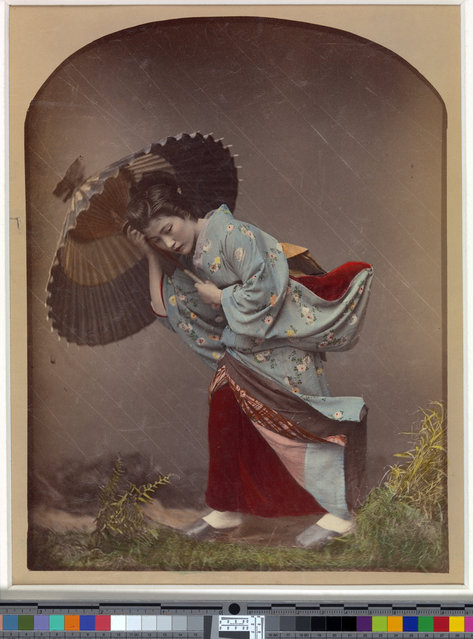
“Woman with Umbrella in Rain” by Raimund von Stillfried. Artist: Kusakabe Kimbei (Japanese, 1841–1934), 1870s. Commercial photography studios in Meiji-era Japan were renowned for the subtlety and refinement of their coloring techniques. This hand-tinted image of a young woman caught in a heavy rainstorm achieved its naturalistic effect by knitting together multiple strands of artifice: the greenery in the foreground was a studio prop; the flaps of the kimono were suspended by thin wires to create the impression of a strong wind; and long, diagonal marks were made on the negative to suggest streaks of rain. (Photo courtesy of The Metropolitan Museum of Art)