Loading...
Done
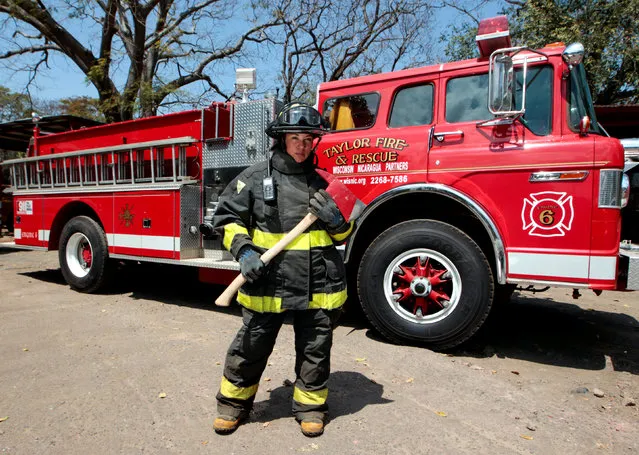
Yolaina Chavez Talavera, 31, a firefighter, poses for a photograph in front of a truck at a fire station in Managua, Nicaragua, February 22, 2017. “In my early days as a female firefighter, men, my team mates, thought that I would not last long in the organisation due to the hard training. However, in practice I showed them that I am able to take on tasks at the same level as men. I think women must fight to break through in all areas, in the midst of the machismo that still persists in Nicaragua and in Hispanic countries”, Talavera said. (Photo by Oswaldo Rivas/Reuters)

Wednesday March 8 marks International Women's Day, with festivals, concerts and exhibitions among the numerous events planned around the world to celebrate the achievements of women in society. The annual event has been held since the early 1900s and traditionally promotes a different theme each year, with this year's edition calling on people to #BeBoldForChange and push for a more gender-inclusive working world. Reuters photographers have been speaking with women in a range of professions around the world about their experiences of gender inequality. Here: Yolaina Chavez Talavera, 31, a firefighter, poses for a photograph in front of a truck at a fire station in Managua, Nicaragua, February 22, 2017. (Photo by Oswaldo Rivas/Reuters)
Details
04 Mar 2017 00:06:00
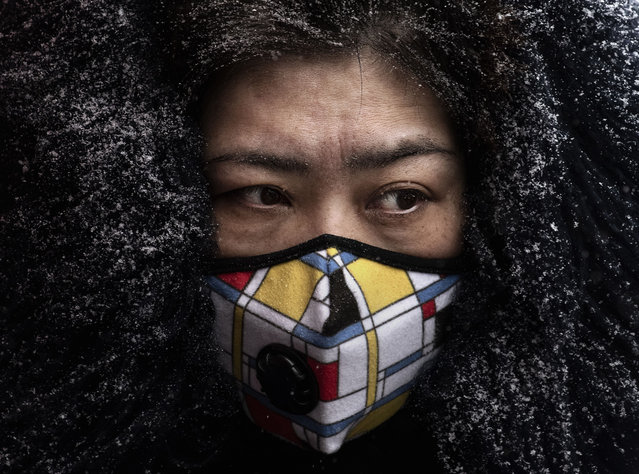
A Chinese woman wears a protective mask as she shops in a market on February 6, 2020 in Beijing, China. The number of cases of a deadly new coronavirus rose to more than 28000 in mainland China Thursday, days after the World Health Organization (WHO) declared the outbreak a global public health emergency. China continued to lock down the city of Wuhan in an effort to contain the spread of the pneumonia-like disease which medicals experts have confirmed can be passed from human to human. In an unprecedented move, Chinese authorities have put travel restrictions on the city which is the epicenter of the virus and municipalities in other parts of the country affecting tens of millions of people. The number of those who have died from the virus in China climbed to over 564 on Thursday, mostly in Hubei province, and cases have been reported in other countries including the United States, Canada, Australia, Japan, South Korea, India, the United Kingdom, Germany, France and several others. The World Health Organization has warned all governments to be on alert and screening has been stepped up at airports around the world. Some countries, including the United States, have put restrictions on Chinese travelers entering and advised their citizens against travel to China. (Photo by Kevin Frayer/Getty Images)

A Chinese woman wears a protective mask as she shops in a market on February 6, 2020 in Beijing, China. The number of cases of a deadly new coronavirus rose to more than 28000 in mainland China Thursday, days after the World Health Organization (WHO) declared the outbreak a global public health emergency. (Photo by Kevin Frayer/Getty Images)
Details
09 Feb 2020 00:07:00
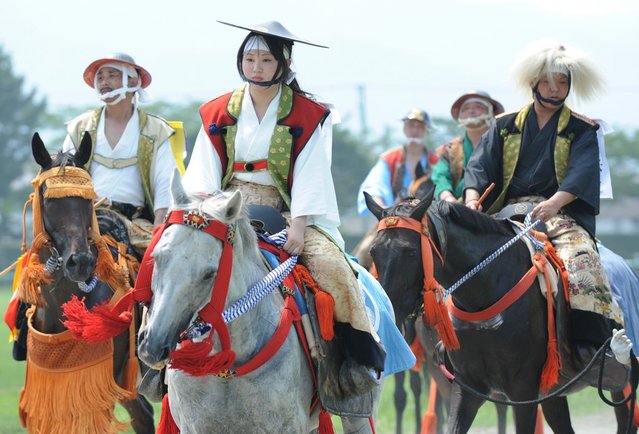
A young woman (C) clad in samurai costume leads other local poeple as she rides her horse during a parade at the annual Soma Nomaoi festival in Minamisoma, Fukushima Prefecture, on July 28, 2012.  The traditional full-scale festival kicked off for the first time after the accident of the Fukushima Dai-ichi Nuclear Power Plant following the massive earthquake and the tsunami on March 11, 2011. (Photo by Toru Yamanaka/AFP Photo)

Soma-Nomaoi is a festival that recreates a battle scene from more than 1,000 years ago. It is annually held for 4 days from July 22 to 25 in Haramachi City, Fukushima Prefecture, in the eastern part of Japan. In this historical event, 600 mounted samurai in traditional Japanese armor, with long swords at their side and ancestral flagstaffs streaming from their backs, ride across open fields. Soma-Nomaoi has been designated an Important Intangible Folk Cultural Property.

Photo: A young woman (C) clad in samurai costume leads other local poeple as she rides her horse during a parade at the annual Soma Nomaoi festival in Minamisoma, Fukushima Prefecture, on July 28, 2012. The traditional full-scale festival kicked off for the first time after the accident of the Fukushima Dai-ichi Nuclear Power Plant following the massive earthquake and the tsunami on March 11, 2011. (Photo by Toru Yamanaka/AFP Photo)
Details
02 Aug 2012 12:59:00
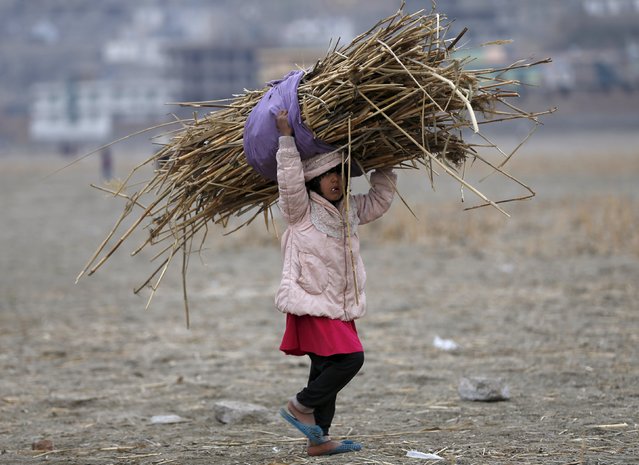
A girl carries on her head a pile of dried shrubs she gathered for cooking and heating, in Kabul, Afghanistan November 18, 2015. (Photo by Omar Sobhani/Reuters)

A girl carries on her head a pile of dried shrubs she gathered for cooking and heating, in Kabul, Afghanistan November 18, 2015. (Photo by Omar Sobhani/Reuters)
Details
05 Dec 2015 08:04:00


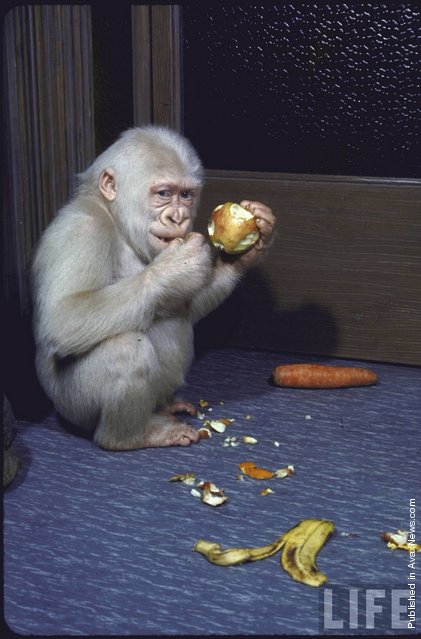
“Snowflake (c. 1964 – November 24, 2003) was an albino gorilla. He was the only known albino gorilla so far, and the most popular resident of the Barcelona Zoo in Catalonia, Spain. Originally named Nfumu Ngui in Fang language ("white gorilla") by his captor, he was then nicknamed Floquet de Neu (Catalan for little snowflake) by his keeper Jordi Sabater Pi. On his arrival to Barcelona where he was given an official reception by the then Mayor of Barcelona, Josep Maria de Porcioles, in November 1966, he was called Blancanieves (“Snow White”) in the newspaper Tele/Exprés. But he became famous with the name given to him by Sabater when National Geographic Magazine featured him on the main page in March 1967, with the English name Snowflake. This name spread among the press (Stern, Life, Paris-Match) and was later translated to Spanish as Copito de Nieve. Sabater himself called the gorilla Floquet or Copi, and in the later years Nfumu. The asteroid 95962 Copito, discovered by Catalan astronomer J. Manteca, is named in his honour”.
Details
07 Mar 2011 15:50:00
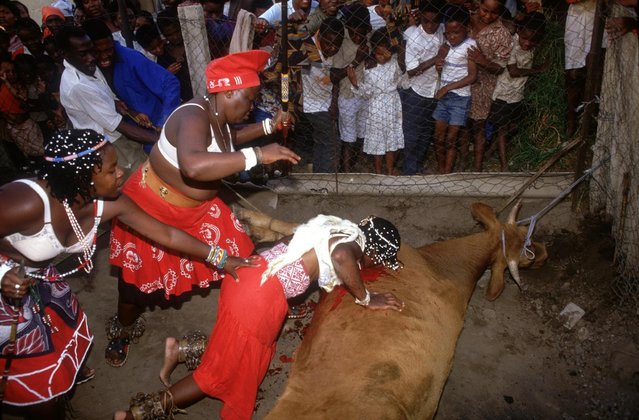
South African Sangomas are wizards and witches who are supposedly chosen by their ancestors to follow a traditional training and go through a rite of passage after which they become Sangomas and can cure and help people. They are so respected and trusted that western medical authorities have actually advised the government of South Africa to develop its cooperation with Sangomas in order to improve hygiene and health among the population. Today is graduation day for Trissa, 25, a Sangoma student in Tembisa, near Pretoria. Thanks to the help of the spirits of her ancestors, she has found a cow that had been hidden. The cow has then been killed by Sangoma Thelma and Trissa is now drinking its blood, thus becoming a Sangoma and changing her name to Nomadlozi. Location: Tembisa, near Pretoria, South Africa. (Photo by Patrick Durand/Sygma via Getty Images)

South African Sangomas are wizards and witches who are supposedly chosen by their ancestors to follow a traditional training and go through a rite of passage after which they become Sangomas and can cure and help people. They are so respected and trusted that western medical authorities have actually advised the government of South Africa to develop its cooperation with Sangomas in order to improve hygiene and health among the population. (Photo by Patrick Durand/Sygma via Getty Images)
Details
24 Feb 2017 00:05:00
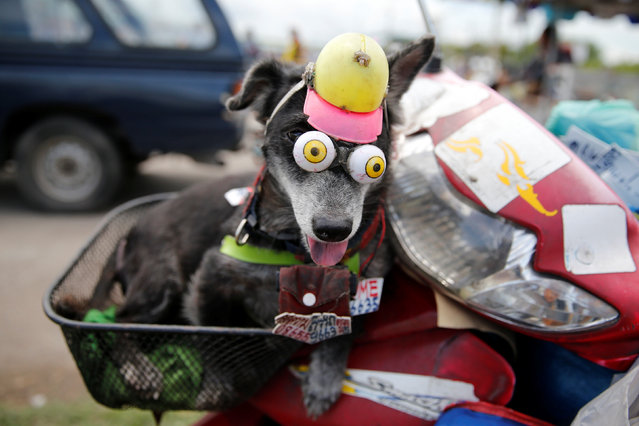
A dog wears fake eyes while riding a motorcycle in Samut Sakhon, Thailand June 23, 2016. (Photo by Jorge Silva/Reuters)

A dog wears fake eyes while riding a motorcycle in Samut Sakhon, Thailand June 23, 2016. (Photo by Jorge Silva/Reuters)
Details
24 Jun 2016 14:14:00
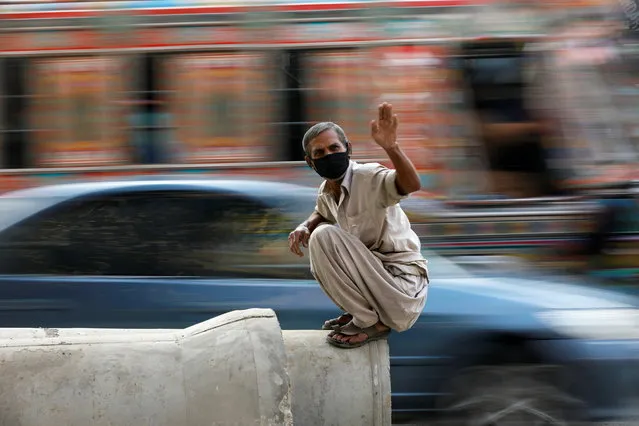
Vehicles move past a man wearing a protective mask against COVID-19 as he waits for the bus in Karachi, Pakistan on December 11, 2020. (Photo by Akhtar Soomro/Reuters)

Vehicles move past a man wearing a protective mask against COVID-19 as he waits for the bus in Karachi, Pakistan on December 11, 2020. (Photo by Akhtar Soomro/Reuters)
Details
12 Jan 2021 00:01:00