Loading...
Done
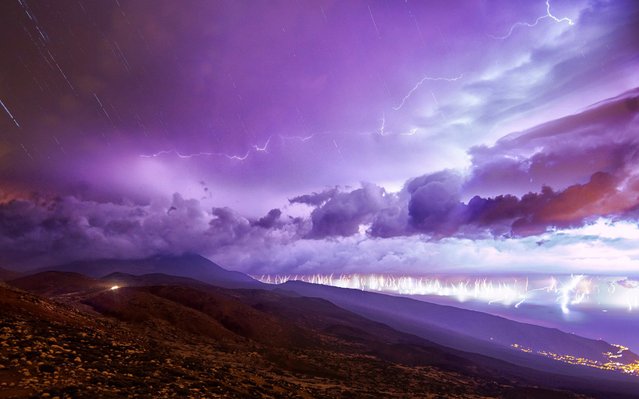
A handout photo made available by TeideLab shows an image composed of 200 pictures that shows the lightning activity between 3 am and 7am during a storm in Izana, Tenerife, Canary Islands, Spain, 27 October 2019. Over 2,000 lighting strikes fell mostly over Tenerife island last 26 October during a strong storm. (Photo by Daniel López/EPA/EFE/TeideLab)

A handout photo made available by TeideLab shows an image composed of 200 pictures that shows the lightning activity between 3 am and 7am during a storm in Izana, Tenerife, Canary Islands, Spain, 27 October 2019. Over 2,000 lighting strikes fell mostly over Tenerife island last 26 October during a strong storm. (Photo by Daniel López/EPA/EFE/TeideLab)
Details
29 Aug 2020 00:03:00
Actress Laila Rouass poses during a studio shoot ahead of the new series of “Footballers Wives” at a London studio on January 28, 2004 in London. Rouass plays Conrad's bisexual wife Amber, and the nine-part series begins on ITV1 on February 11, 2004. (Photo by Stephen Perry/Getty Images)

Actress Laila Rouass poses during a studio shoot ahead of the new series of “Footballers Wives” at a London studio on January 28, 2004 in London. Rouass plays Conrad's bisexual wife Amber, and the nine-part series begins on ITV1 on February 11, 2004. (Photo by Stephen Perry/Getty Images)
Details
03 Dec 2025 06:07:00
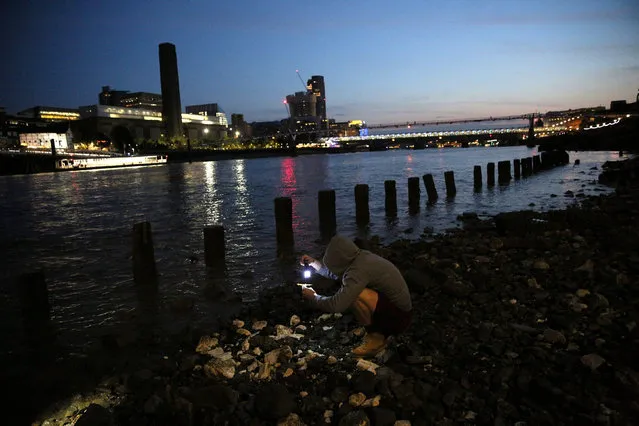
A mudlark uses a torch to look for items on the bank of the River Thames in London, Britain June 06, 2016. Mudlarking is believed to trace its origins to the 18th and 19th century, when scavengers searched the Thames' shores for items to sell. These days, history and archaeology fans are the ones hoping to find old relics such as coins, ceramics, artifacts or everyday items from across centuries. They wait for the low tide and then scour specific areas of exposed shores. "If you're in a field you could be out all day long, with the river you're restricted to about two or three hours," mudlark Nick Stevens said. While many just use the naked eye for their searches, others rely on metal detectors for which a permit from the Port of London Authority is needed. Digging also requires consent. (Photo by Neil Hall/Reuters)

A mudlark uses a torch to look for items on the bank of the River Thames in London, Britain June 06, 2016. Mudlarking is believed to trace its origins to the 18th and 19th century, when scavengers searched the Thames' shores for items to sell. These days, history and archaeology fans are the ones hoping to find old relics such as coins, ceramics, artifacts or everyday items from across centuries. their finds with the Portable Antiquities Scheme. Any item over 300 years old must be recorded. (Photo by Neil Hall/Reuters)
Details
27 Aug 2016 10:43:00
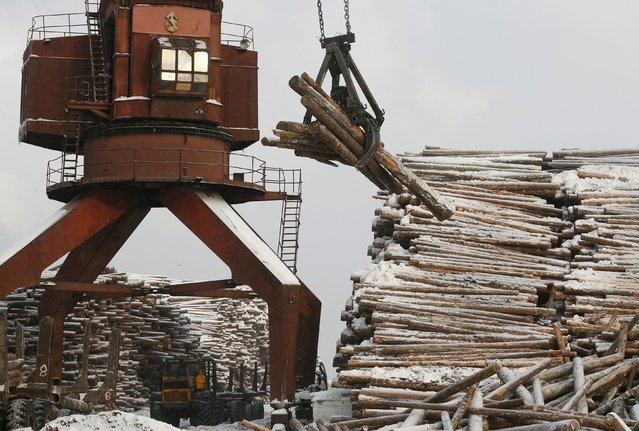
A crane loads logs at the Novoyeniseisk wood processing plant, with the air temperature at about minus 20 degrees Celsius (minus 4 degrees Fahrenheit), in the town of Lesosibirsk in Krasnoyarsk Region, Siberia, Russia, February 16, 2016. The plant exports timber to Europe, Northern Africa and Asia. The Taiga, also known as the boreal forest, on the coast of the Angara River and Yenisei River is one of the main areas for the industrial cutting of wood thanks to the high quality of the Angara pine. (Photo by Ilya Naymushin/Reuters)

A crane loads logs at the Novoyeniseisk wood processing plant, with the air temperature at about minus 20 degrees Celsius (minus 4 degrees Fahrenheit), in the town of Lesosibirsk in Krasnoyarsk Region, Siberia, Russia, February 16, 2016. The plant exports timber to Europe, Northern Africa and Asia. The Taiga, also known as the boreal forest, on the coast of the Angara River and Yenisei River is one of the main areas for the industrial cutting of wood thanks to the high quality of the Angara pine. Open air work continues all year around regardless to temperatures which can drop to minus 52 degrees Celsius (minus 61.6 degrees Fahrenheit), according to employees. (Photo by Ilya Naymushin/Reuters)
Details
18 Feb 2016 13:10:00
“The knight and his steed”. This picture was taken in a natural but controlled environment. There are pictures that can not be done in nature or that would imply a very high cost of both time and money, thats why photography workshops are run conducted at strategic locations and bringing EVERYONE who is interested, the basic notions (lighting, camera handling, composition, etc...) or the specimens, and afford them the opportunity to take pictures like this. (Photo and caption by Nicolas Reusens Boden (Sweden)/2014 Sony World Photography Awards)

“The knight and his steed”. This picture was taken in a natural but controlled environment. There are pictures that can not be done in nature or that would imply a very high cost of both time and money, thats why photography workshops are run conducted at strategic locations and bringing EVERYONE who is interested, the basic notions (lighting, camera handling, composition, etc...) or the specimens, and afford them the opportunity to take pictures like this. Although controlled, this shot was not prepared at all, I was performing a workshop with the agalychnis callidryas treefrog from Costa Rica when the frog managed to jump to the branch where this huge titan was sleeping... I had my gear ready so I only had to change a few settings and shoot... the rest is history. (Photo and caption by Nicolas Reusens Boden (Sweden)/2014 Sony World Photography Awards)
Details
10 Dec 2013 07:23:00
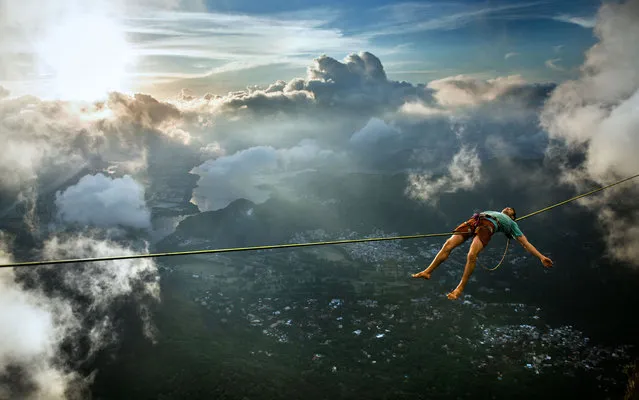
Pedra da Gavea highline, 850 meters above the city, 100 meters direct exposure, March 24, 2013. Brian Mosbaugh on the line. Carefully tiptoeing almost 3000 metres above Rio de Janeiro on a thin wire got a bit too much for this adrenaline junkie – so he decided to have a LIE DOWN. Fearless Brian Mosbaugh is so used to the perilous heights he decided he deserved a short break and proceeded to kick back and relax over the famous Brazilian city. (Photo by Scott Rogers/Caters)

Pedra da Gavea highline, 850 meters above the city, 100 meters direct exposure, March 24, 2013. Brian Mosbaugh on the line. Carefully tiptoeing almost 3000 metres above Rio de Janeiro on a thin wire got a bit too much for this adrenaline junkie – so he decided to have a LIE DOWN. Fearless Brian Mosbaugh is so used to the perilous heights he decided he deserved a short break and proceeded to kick back and relax over the famous Brazilian city. (Photo by Scott Rogers/Caters)

P.S. All pictures are presented in high resolution. To see Hi-Res images – just TWICE click on any picture. In other words, click small picture – opens the BIG picture. Click BIG picture – opens VERY BIG picture (if available; this principle works anywhere on the site AvaxNews).
Details
30 Mar 2013 12:00:00
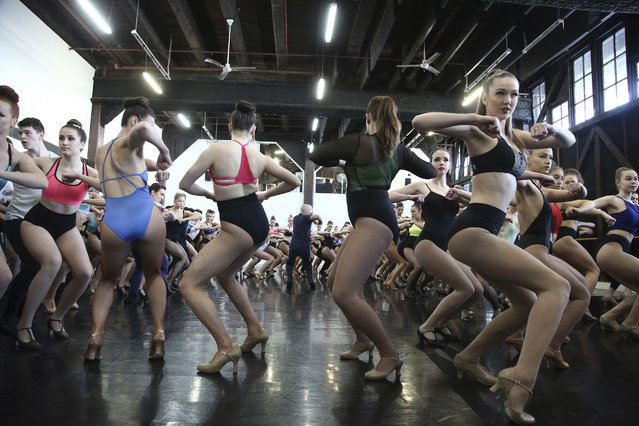
Auditioning performers follow resident choreographer Erik Sorensen, center back, at the Sydney Dance Company in a routine during castings in Moulin Rouge's current show “Féerie”, in Sydney, Australia, Thursday, July 28, 2016. (Photo by Rob Griffith/AP Photo)

Auditioning performers follow resident choreographer Erik Sorensen, center back, at the Sydney Dance Company in a routine during castings in Moulin Rouge's current show “Féerie”, in Sydney, Australia, Thursday, July 28, 2016. The show's artistic team is in Australia to choose new talent to perform with one of the most famous cabarets that has been illuminating Paris since 1889. (Photo by Rob Griffith/AP Photo)
Details
29 Jul 2016 13:05:00
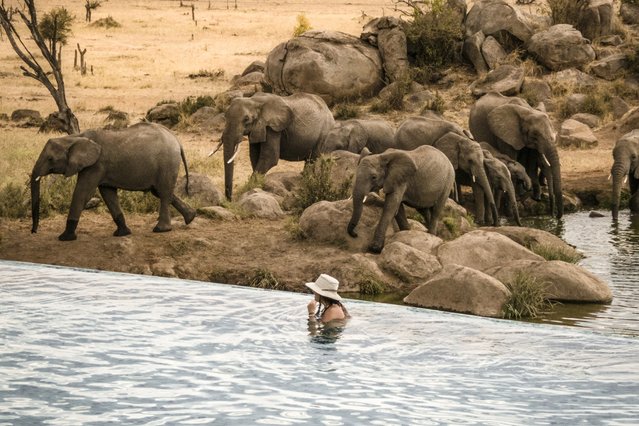
World's Greatest Swimming Pools: Four Seasons, Serengeti Pool, Tanzania. A show of elephants, buffalo and baboons awaits thanks to an active watering hole below the free-form infinity pool at this plush hideaway inside Serengeti National Park. Bonus: Because of infrared technology at the hole, guests can be notified on their bedroom TV when animals are approaching. When you've got word of wildlife on the horizon, catch them from your private terrace – or head back to the pool. (From $1,650). (Photo by Four Seasons)

World's Greatest Swimming Pools: Four Seasons, Serengeti Pool, Tanzania. A show of elephants, buffalo and baboons awaits thanks to an active watering hole below the free-form infinity pool at this plush hideaway inside Serengeti National Park. Bonus: Because of infrared technology at the hole, guests can be notified on their bedroom TV when animals are approaching. When you've got word of wildlife on the horizon, catch them from your private terrace – or head back to the pool. (From $1,650). (Photo by Four Seasons)
Details
06 Aug 2018 00:03:00