Loading...
Done
Lightning illuminates a thundercloud as a storm front hits the North Sea region near Westerhever, northern Germany, on August 11, 2014. (Photo by Daniel Reinhardt/AFP Photo/DPA)

Lightning illuminates a thundercloud as a storm front hits the North Sea region near Westerhever, northern Germany, on August 11, 2014. (Photo by Daniel Reinhardt/AFP Photo/DPA)
Details
15 Sep 2014 10:58:00
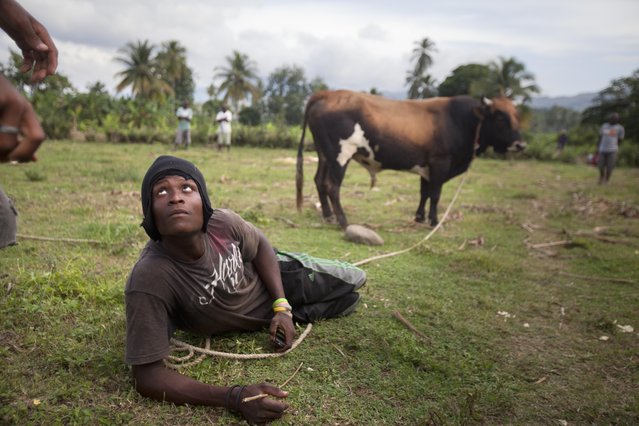
In this November 9, 2014 photo, a man sits on the rope holding his bull by the neck as he waits to enter it in a bull fight in Leogane, Haiti. The obscure Haitian practice of fighting bulls is brutal like a cock or dog fight, but on a larger scale. A casual pastime for some rural men, it is serious business for others looking to pay their children's school fees or even buy a car. (Photo by Dieu Nalio Chery/AP Photo)

In this November 9, 2014 photo, a man sits on the rope holding his bull by the neck as he waits to enter it in a bull fight in Leogane, Haiti. The obscure Haitian practice of fighting bulls is brutal like a cock or dog fight, but on a larger scale. A casual pastime for some rural men, it is serious business for others looking to pay their children's school fees or even buy a car. (Photo by Dieu Nalio Chery/AP Photo)
Details
18 Nov 2014 11:17:00
Carlos Bahia, dressed as Santa Claus, talks with boys at the Maresias beach, in the state of Sao Paulo December 9, 2014. In the Southern Hemisphere summer starts on December 1, so while countries in the north are experiencing a white Christmas with grey skies, those in the south are busy surfing and sunbathing in temperatures just shy of 100 degrees Fahrenheit (38 degrees Celsius). (Photo by Nacho Doce/Reuters)

Carlos Bahia, dressed as Santa Claus, talks with boys at the Maresias beach, in the state of Sao Paulo December 9, 2014. In the Southern Hemisphere summer starts on December 1, so while countries in the north are experiencing a white Christmas with grey skies, those in the south are busy surfing and sunbathing in temperatures just shy of 100 degrees Fahrenheit (38 degrees Celsius). (Photo by Nacho Doce/Reuters)
Details
21 Dec 2014 11:07:00
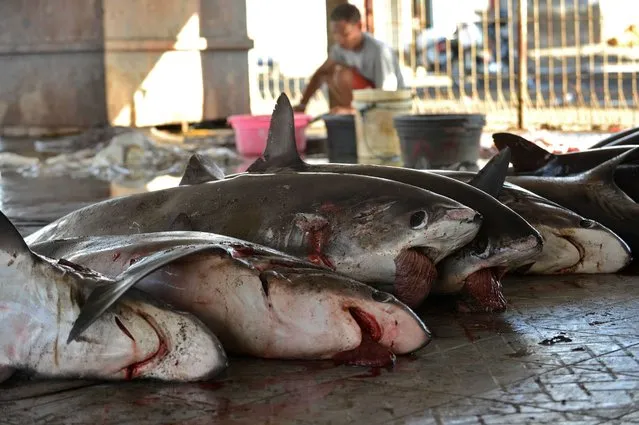
This picture taken on November 9, 2014 shows sharks for sale as a man removes the fins at a traditional market in Tanjung Luar in Lombok, West Nusa Teggara. Hundreds of sharks are hauled ashore every day at a busy market on the central Indonesian island of Lombok, the hub of a booming trade that provides a livelihood for local fishermen but is increasingly alarming environmentalists. (Photo by Sonny Tumbelaka/AFP Photo)

This picture taken on November 9, 2014 shows sharks for sale as a man removes the fins at a traditional market in Tanjung Luar in Lombok, West Nusa Teggara. Hundreds of sharks are hauled ashore every day at a busy market on the central Indonesian island of Lombok, the hub of a booming trade that provides a livelihood for local fishermen but is increasingly alarming environmentalists. The fins are sold to other Asian nations, including Singapore, Hong Kong and Taiwan, where shark-fin soup is considered a delicacy. (Photo by Sonny Tumbelaka/AFP Photo)
Details
23 Dec 2014 13:52:00
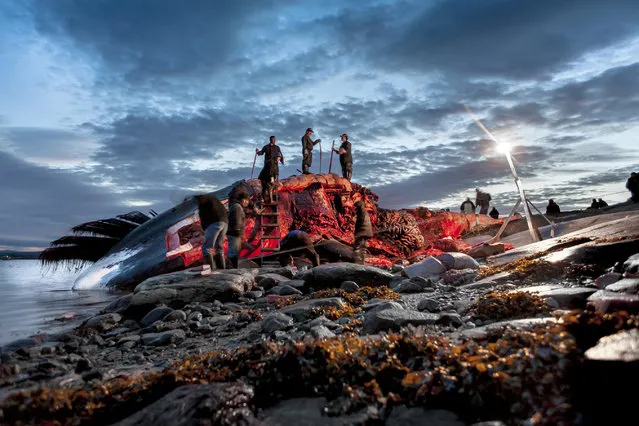
“Centuries ago, Inuit hunted the bowhead whale. At that time, whale hunting undoubtedly was part of a complex and very important ritual, if only because of the size of the catch. The position that the ancestors of today's Inuit occupied in the living world involved a relationship with the spirit that inhabited each animal but also their species”. (Photo by Robert Frechette/2014 Sony World Photography Awards)

“Centuries ago, Inuit hunted the bowhead whale. At that time, whale hunting undoubtedly was part of a complex and very important ritual, if only because of the size of the catch. The position that the ancestors of today's Inuit occupied in the living world involved a relationship with the spirit that inhabited each animal but also their species”. (Photo by Robert Frechette/2014 Sony World Photography Awards)
Details
16 Mar 2014 08:01:00
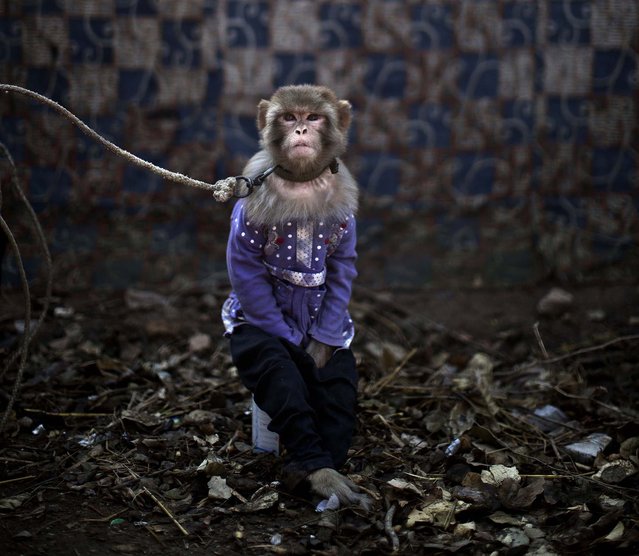
In this Tuesday, February 11, 2014, photo, a trained monkey, that makes a living for her Pakistani owner by performing to a crowd in public and private places, sits held by a leash, in Rawalpindi, Pakistan. For Pakistanis who raise and train the monkeys they are an important source of income in an impoverished country, and they form a strong bond with the animals. The monkeys are usually captured in the wild when they are babies and then trained. A trained monkey can fetch 20,000 to 30,000 rupees ($190 to $285). (Photo by Muhammed Muheisen/Associated Press)


In this Tuesday, February 11, 2014, photo, a trained monkey, that makes a living for her Pakistani owner by performing to a crowd in public and private places, sits held by a leash, in Rawalpindi, Pakistan. For Pakistanis who raise and train the monkeys they are an important source of income in an impoverished country, and they form a strong bond with the animals. The monkeys are usually captured in the wild when they are babies and then trained. A trained monkey can fetch 20,000 to 30,000 rupees ($190 to $285). (Photo by Muhammed Muheisen/Associated Press)
Details
23 Feb 2014 09:50:00
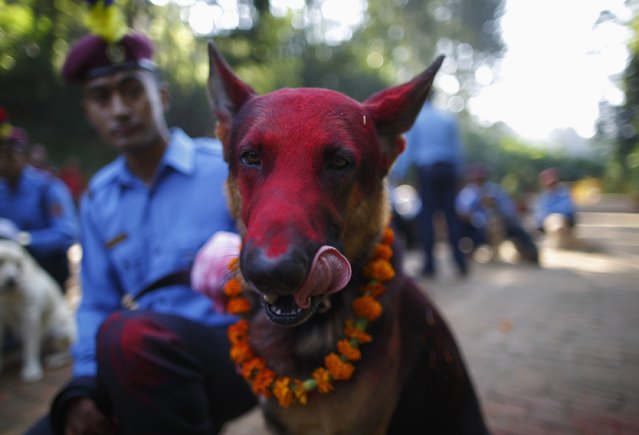
A police dog licks its face after receiving food during the dog festival, as part of celebrations of Tihar at Nepal Police Academy in Kathmandu October 22, 2014. Hindus all over Nepal are celebrating the Tihar festival, also called Diwali, during which they worship cows, which are considered a maternal figure, and other animals. (Photo by Navesh Chitrakar/Reuters)

A police dog licks its face after receiving food during the dog festival, as part of celebrations of Tihar at Nepal Police Academy in Kathmandu October 22, 2014. Hindus all over Nepal are celebrating the Tihar festival, also called Diwali, during which they worship cows, which are considered a maternal figure, and other animals. Also known as the festival of lights, devotees also worship the goddess of wealth Laxmi by illuminating and decorating their homes using garlands, oil lamps, candles and colourful light bulbs. (Photo by Navesh Chitrakar/Reuters)
Details
23 Oct 2014 11:57:00
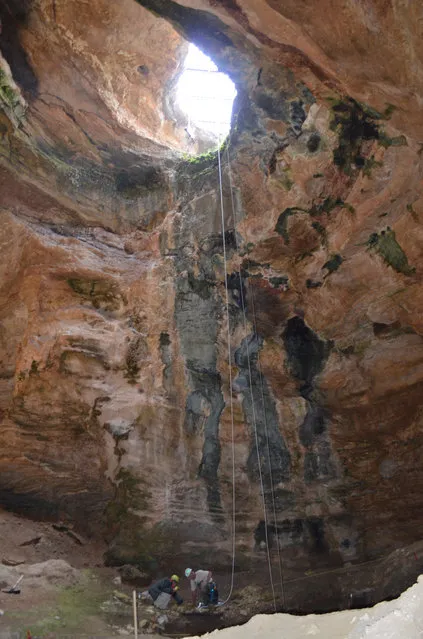
This July 2014 image provided by the Bureau of Land Management shows the interior of the Natural Trap Cave in north-central Wyoming. The cave holds the remains of tens of thousands of animals, including many now-extinct species, from the late Pleistocene period tens of thousands of years ago. Scientists have resumed digging for the first time in more than 30 years. (Photo by AP Photo/Bureau of Land Management)

This July 2014 image provided by the Bureau of Land Management shows the interior of the Natural Trap Cave in north-central Wyoming. The cave holds the remains of tens of thousands of animals, including many now-extinct species, from the late Pleistocene period tens of thousands of years ago. Scientists have resumed digging for the first time in more than 30 years. (Photo by AP Photo/Bureau of Land Management)
Details
10 Aug 2014 10:35:00