Loading...
Done
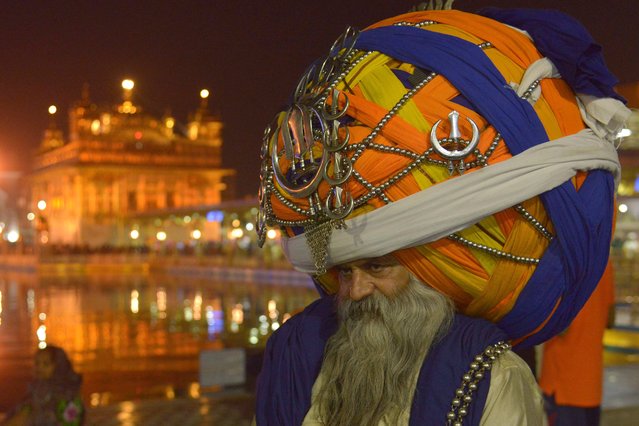
An Indian Sikh Nihang (a traditional Sikh religious warrior) Baba 'Avtar' Singh wears an oversized giant traditional turban as he pay respects at the Golden temple in Amritsar on November 10, 2015 on the eve of the Indian festival of Diwali, the festival of lights. (Photo by Narinder Nanu/AFP Photo)

An Indian Sikh Nihang (a traditional Sikh religious warrior) Baba 'Avtar' Singh wears an oversized giant traditional turban as he pay respects at the Golden temple in Amritsar on November 10, 2015 on the eve of the Indian festival of Diwali, the festival of lights. There will be no spectacular show of light and fireworks this Diwali at the Golden Temple as the Shiromani Gurdwara Parbandhak Committee (SGPC) has decided not to celebrate the festival in the wake of series of incidents of alleged desecration of the Guru Granth Sahib (Sikh holy book). (Photo by Narinder Nanu/AFP Photo)
Details
22 Nov 2015 08:05:00
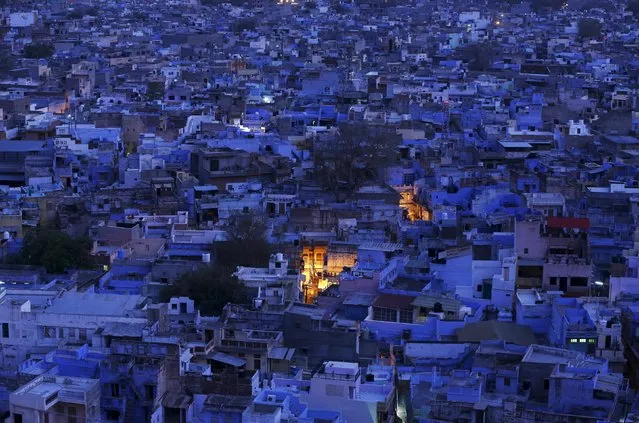
A general view of the residential area is pictured during dusk at Jodhpur in Rajasthan, April 5, 2015. Jodhpur, also known as the blue city in the desert Indian state of Rajasthan, which residents say originally, was used to show where the highest caste of priestly Hindus live, who wanted to set them apart from the rest of the population. Later the rest of the population followed suit. Another reason for the city to be blue is to keep the buildings cool during the summers, local residents said. (Photo by Adnan Abidi/Reuters)

A general view of the residential area is pictured during dusk at Jodhpur in Rajasthan, April 5, 2015. Jodhpur, also known as the blue city in the desert Indian state of Rajasthan, which residents say originally, was used to show where the highest caste of priestly Hindus live, who wanted to set them apart from the rest of the population. Later the rest of the population followed suit. Another reason for the city to be blue is to keep the buildings cool during the summers, local residents said. (Photo by Adnan Abidi/Reuters)
Details
12 Apr 2015 08:27:00
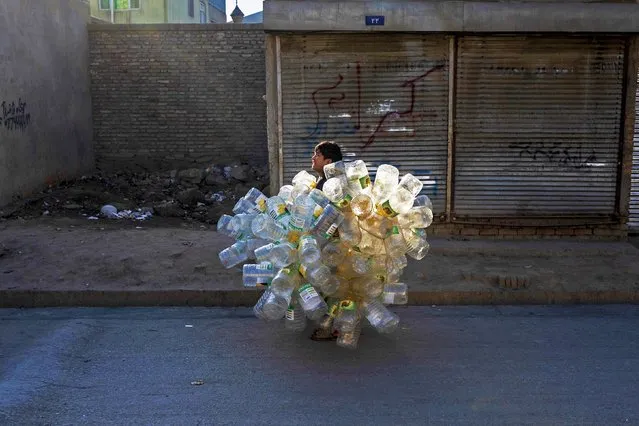
An Afghan boy carrying empty plastic cans, walks along a street in Kabul on December 21, 2023. (Photo by Wakil Kohsar/AFP Photo)

An Afghan boy carrying empty plastic cans, walks along a street in Kabul on December 21, 2023. (Photo by Wakil Kohsar/AFP Photo)

Details
24 Dec 2023 23:10:00
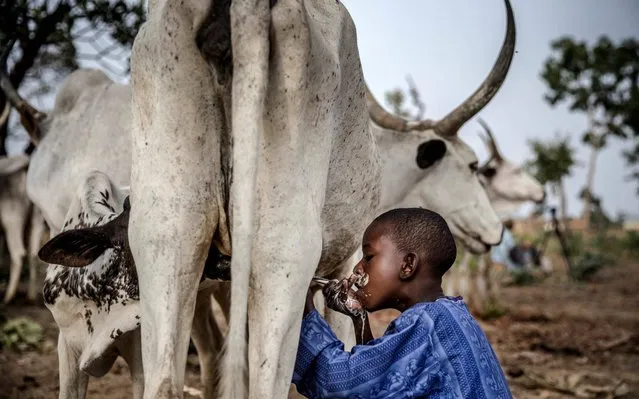
8-year-old Fulani boy Suleiman Yusuf drinks milk from a cow belonging to his father cattle near his family's house at Kachia Grazing Reserve, Kaduna State, Nigeria, on April 16, 2019. Kachia Grazing Reserve is an area set aside for the use of Fulani pastoralist and it is intended to be the foci of livestock development. The purpose for the grazing reserves is the settlement of nomadic pastoralists and inducement to sedentarisation through the provision of land for grazing and permanent water as way to avoid conflict. (Photo by Luis Tato/AFP Photo)

8-year-old Fulani boy Suleiman Yusuf drinks milk from a cow belonging to his father cattle near his family's house at Kachia Grazing Reserve, Kaduna State, Nigeria, on April 16, 2019. Kachia Grazing Reserve is an area set aside for the use of Fulani pastoralist and it is intended to be the foci of livestock development. The purpose for the grazing reserves is the settlement of nomadic pastoralists and inducement to sedentarisation through the provision of land for grazing and permanent water as way to avoid conflict. (Photo by Luis Tato/AFP Photo)
Details
10 Jul 2019 00:01:00


For a long time the laws of Canada have explicitly banned gambling in any form. This may be the reason why the country does not have so many gambling establishments as the USA - but their quality surely makes up for the quantity. The first Canadian casino was opened in Dawson City, Yukon, in 1972 - it was the first one after gambling has been banned in the country in 1892. The Diamond Tooth Gertie's Gambling Casino did not operate for long, though. The first permanent commercial casino was opened in 1989, and it was the first of many - there are currently 75 casinos operating on Canadian soil.
Details
16 Sep 2014 12:19:00
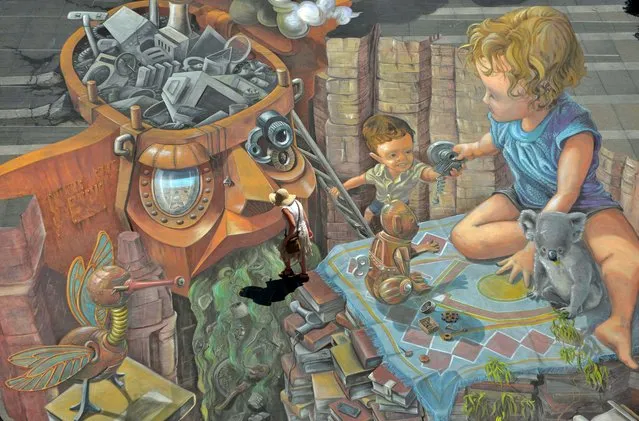
A visitor walks on a giant chalk artwork called “Wasting Time” at the Chalk Urban Arts Festival in Sydney on October 25, 2014. The picture is the biggest 3-D artwork created in Australia by two artists, Leon Keer from Holland and Jenny McCracken from Australia. (Photo by Peter Parks/AFP Photo)

A visitor walks on a giant chalk artwork called “Wasting Time” at the Chalk Urban Arts Festival in Sydney on October 25, 2014. The picture is the biggest 3-D artwork created in Australia by two artists, Leon Keer from Holland and Jenny McCracken from Australia. (Photo by Peter Parks/AFP Photo)
Details
25 Oct 2014 13:58:00


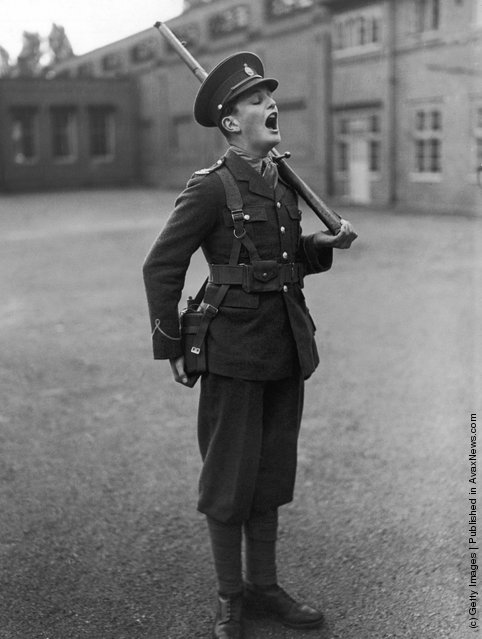
A member of the Eton public school O.T.C. (Officers Training Corps) practising shouting out orders during a training session, 20th January 1940. (Photo by Hulton Archive/Getty Images)
Details
04 Jun 2011 06:46:00


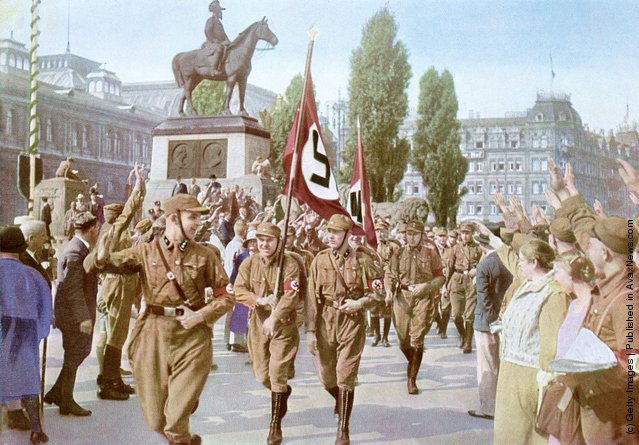
“Horst Ludwig Wessel (October 9, 1907 – February 23, 1930) was a German Nazi activist who was made a posthumous hero of the Nazi movement following his violent death in 1930. He was the author of the lyrics to the song “Die Fahne hoch” (“The Flag On High”), usually known as Horst-Wessel-Lied (“The Horst Wessel Song”), which became the Nazi Party anthem and, de facto, Germany's co-national anthem from 1933 to 1945”. – Wikipedia

Photo: German Nazi activist Horst Wessel (left) at the head of a parade of S.A. stormtroopers, or “brownshirts”, in Nuremberg, Germany, 1929. (Photo by Hulton Archive/Getty Images)
Details
08 Jul 2011 09:38:00