Loading...
Done
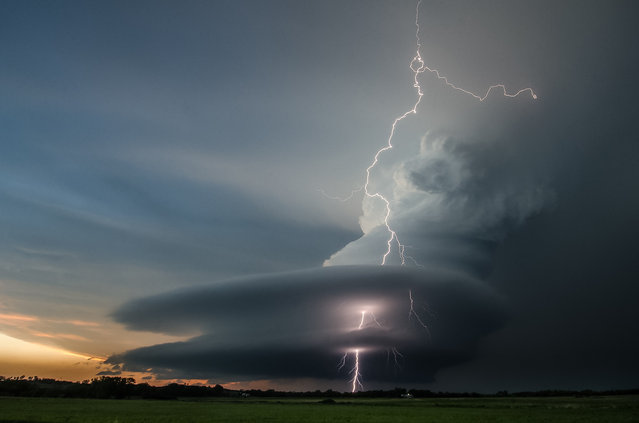
“Strike Through The Mothership”. Every May for the last 3 years I have driven down to Tornado Alley to capture some amazing storms. This supercell held so much promise to drop a tornado but one small shift in the atmosphere and all that it produced was an extreme lightning show. Photo location: Broken Bow, Nebraska. (Photo and caption by Vanessa Neufeld/National Geographic Photo Contest)

“Strike Through The Mothership”. Every May for the last 3 years I have driven down to Tornado Alley to capture some amazing storms. This supercell held so much promise to drop a tornado but one small shift in the atmosphere and all that it produced was an extreme lightning show. Photo location: Broken Bow, Nebraska. (Photo and caption by Vanessa Neufeld/National Geographic Photo Contest)
Details
06 May 2014 09:37:00
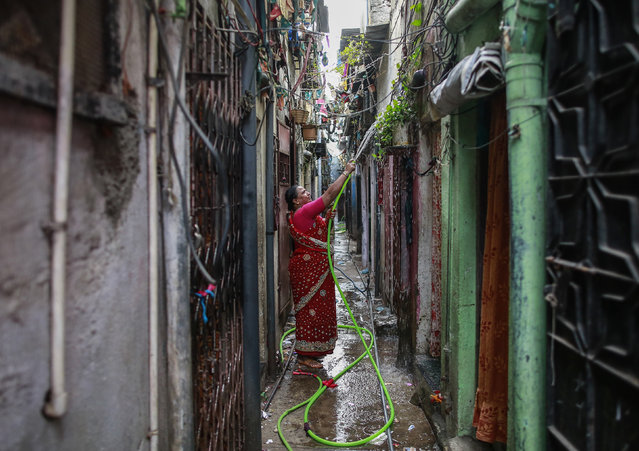
A woman waters the plants outside her house in an alley at a slum in Mumbai October 28, 2014. (Photo by Danish Siddiqui/Reuters)

A woman waters the plants outside her house in an alley at a slum in Mumbai October 28, 2014. (Photo by Danish Siddiqui/Reuters)
Details
29 Oct 2014 11:55:00
A striking funeral worker takes a break near a casket placed at a parking lot as they protest over changes to a host of procedures and regulations, during the coronavirus disease (COVID-19) outbreak outside the department of home affairs in Soweto, South Africa, September 16, 2020. (Photo by Siphiwe Sibeko/Reuters)

A striking funeral worker takes a break near a casket placed at a parking lot as they protest over changes to a host of procedures and regulations, during the coronavirus disease (COVID-19) outbreak outside the department of home affairs in Soweto, South Africa, September 16, 2020. (Photo by Siphiwe Sibeko/Reuters)
Details
18 Sep 2020 00:07:00
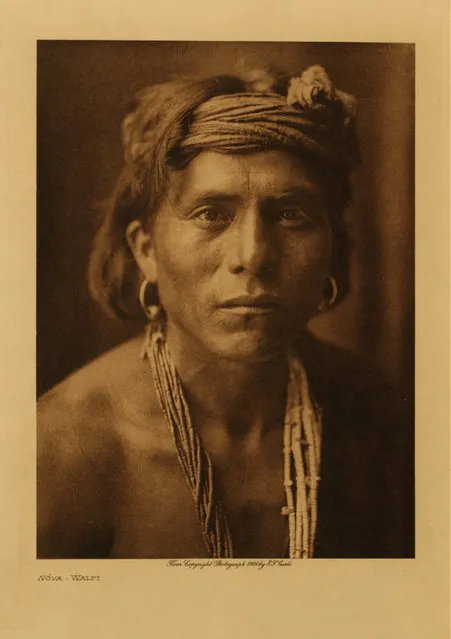
Nova, a Walpi, in 1906. (Photo by Edward S. Curtis)

At the beginning of the 20th century, Edward S. Curtis set out to document what he saw as a disappearing race: the Native American. From 1907 to 1930, Curtis took more than 2,000 photos of 80 tribes stretching from the Great Plains to the Pacific Northwest and Alaska. He then published and sold these photos, along with narrative text, in 20 volumes of work known as “The North American Indian”. It is one of the most significant collections of its kind, “probably the most important photographic document of its age and its topic,” said Jeffrey Garrett, associate university librarian for Special Libraries at Northwestern University. (Photo by Edward S. Curtis)
Details
07 Sep 2014 12:57:00
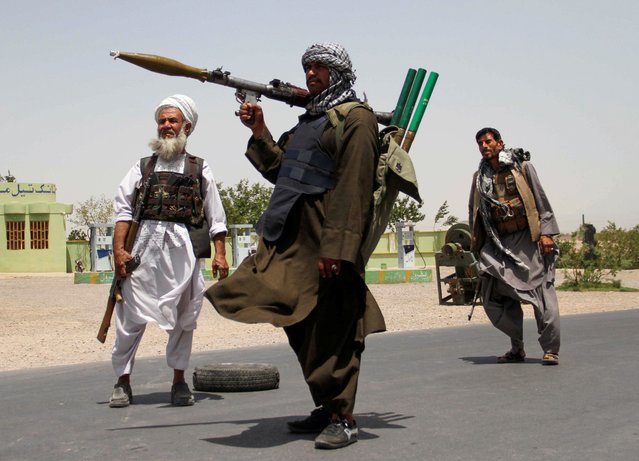
Former Mujahideen hold weapons to support Afghan forces in their fight against Taliban, on the outskirts of Herat province, Afghanistan on July 10, 2021. (Photo by Jalil Ahmad/Reuters)

Former Mujahideen hold weapons to support Afghan forces in their fight against Taliban, on the outskirts of Herat province, Afghanistan on July 10, 2021. (Photo by Jalil Ahmad/Reuters)
Details
13 Jul 2021 11:04:00
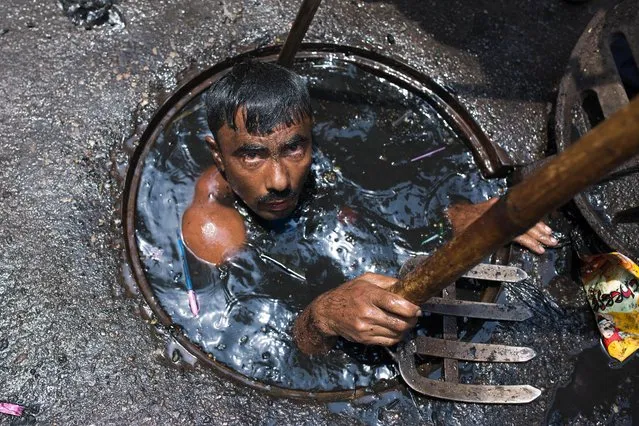
A sewer cleaner of Dhaka City Corporation cleaning out the city's sewers on May 03, 2017 in Dhaka, Bangladesh. Despite a rise in the number of deaths of manhole workers every year, workers regularly go into the manholes without any protective gear. (Photo by Zakir Chowdhury/Barcroft Images)

A sewer cleaner of Dhaka City Corporation cleaning out the city's sewers on May 03, 2017 in Dhaka, Bangladesh. Despite a rise in the number of deaths of manhole workers every year, workers regularly go into the manholes without any protective gear. (Photo by Zakir Chowdhury/Barcroft Images)
Details
06 May 2017 08:19:00
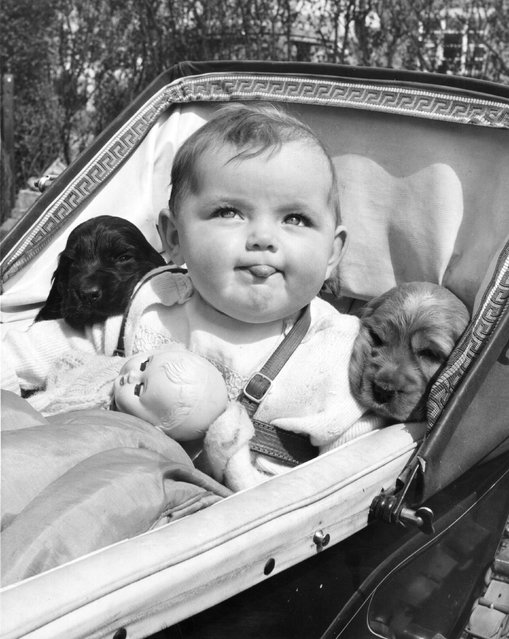
Seven month old Christine Joy shares her pram with two 5 week old Gunsure Golden Cherry's cocker spaniel pups from Gunsure Kennels in Ashford, Middlesex. 22nd May 1953. (Photo by Fred Morley/Fox Photos)

Seven month old Christine Joy shares her pram with two 5 week old Gunsure Golden Cherry's cocker spaniel pups from Gunsure Kennels in Ashford, Middlesex. 22nd May 1953. (Photo by Fred Morley/Fox Photos)
Details
08 Oct 2012 09:00:00
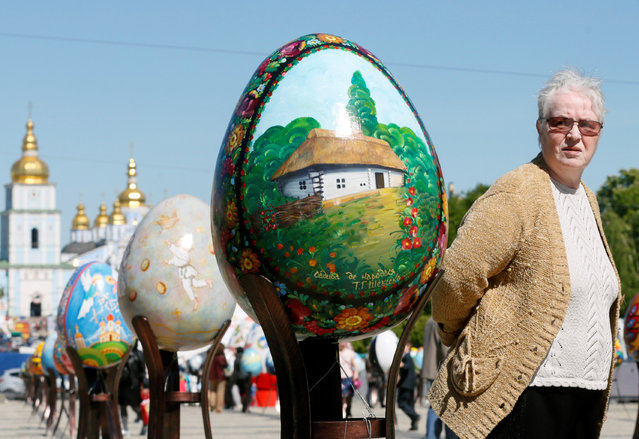
A woman looks at traditional Ukrainian Easter eggs “Pysanka”, installed as part of the upcoming celebrations of Easter, in central Kiev, Ukraine, April 29, 2016. A pysanka is a Ukrainian Easter egg, decorated with traditional Ukrainian folk designs using a wax-resist (batik) method. The word pysanka comes from the verb pysaty, “to write”, as the designs are not painted on, but written with beeswax. Many other eastern European ethnic groups decorate eggs using wax resist for Easter. These include the Belarusians, Bulgarians, Croats, Czechs, Hungarians, Lithuanians, Poles, Romanians, Serbs, Slovaks, Slovenes and Sorbs. (Photo by Valentyn Ogirenko/Reuters)

A woman looks at traditional Ukrainian Easter eggs “Pysanka”, installed as part of the upcoming celebrations of Easter, in central Kiev, Ukraine, April 29, 2016. A pysanka is a Ukrainian Easter egg, decorated with traditional Ukrainian folk designs using a wax-resist (batik) method. The word pysanka comes from the verb pysaty, “to write”, as the designs are not painted on, but written with beeswax. Many other eastern European ethnic groups decorate eggs using wax resist for Easter. These include the Belarusians, Bulgarians, Croats, Czechs, Hungarians, Lithuanians, Poles, Romanians, Serbs, Slovaks, Slovenes and Sorbs. (Photo by Valentyn Ogirenko/Reuters)
Details
30 Apr 2016 09:00:00