Loading...
Done
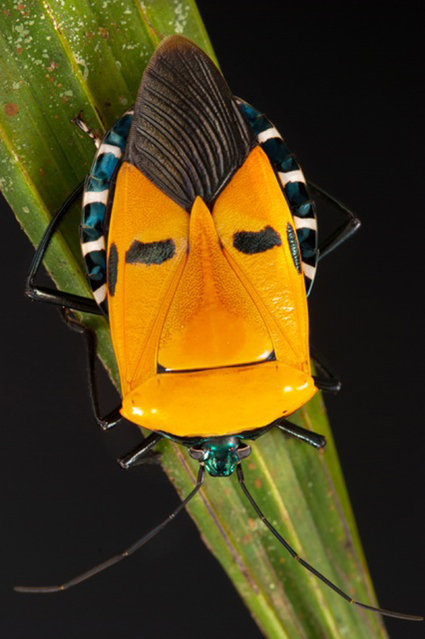
Pentomid bug. (Photo by Darlyne Murawsk/National Geographic Creative/Caters News)

It’s a bug’s life for these colorful insects – whose natural markings resemble incredible smiling faces. These dazzling insects, with their colorful patterns and markings, look as if they are living a happy bugs life. But they’re also the spitting image of a whole host of stars from stage and screen from a creeping Charlie Chaplin to Elvis Presley. Photo: Pentomid bug. (Photo by Darlyne Murawsk/National Geographic Creative/Caters News)
Details
29 Apr 2014 10:08:00
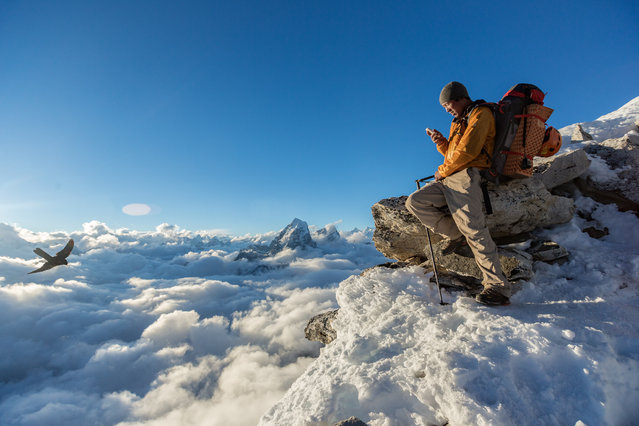
Finding just the right spot above the clouds at Camp 1 on Ama Dablam, Danuru Sherpa uses his iPhone to catch up with friends and family. Even at 18,500 feet (5,654 meters), climbers here can check their email and other dispatches from the world below. (Photo by Aaron Huey/National Geographic)

Finding just the right spot above the clouds at Camp 1 on Ama Dablam, Danuru Sherpa uses his iPhone to catch up with friends and family. Even at 18,500 feet (5,654 meters), climbers here can check their email and other dispatches from the world below. (Photo by Aaron Huey/National Geographic)
Details
28 Apr 2014 09:14:00
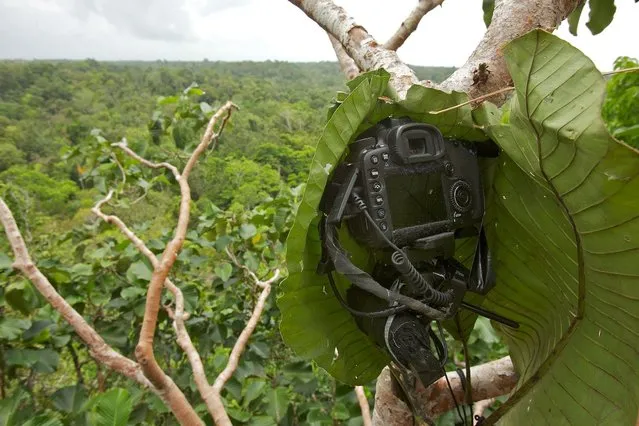
Tim Laman - Wildlife Photojournalist

Tim Laman is a field biologist and wildlife photojournalist. His pioneering research in the rain forest canopy in Borneo led to a PhD from Harvard and his first National Geographic article in 1997. Since then, he has pursued his passion for exploring wild places and documenting little-known and endangered wildlife by becoming a regular contributor to National Geographic. He has eighteen articles to his credit to date, all of which have had a conservation message. Some have focused on endangered species such as Orangutans or Hornbills, while others, such as a series of articles on Conservation International’s Biodiversity Hotspots, have highlighted regions under intense pressure.
Details
14 Sep 2013 10:13:00
Vietnam's Khuat Phuong Anh (R) celebrates winning the women's 800m final during the 31st Southeast Asian Games (SEA Games) at My Dinh National Stadium in Hanoi on May 16, 2022. (Photo by Navesh Chitrakar/Reuters)

Vietnam's Khuat Phuong Anh (R) celebrates winning the women's 800m final during the 31st Southeast Asian Games (SEA Games) at My Dinh National Stadium in Hanoi on May 16, 2022. (Photo by Navesh Chitrakar/Reuters)
Details
24 May 2022 05:50:00
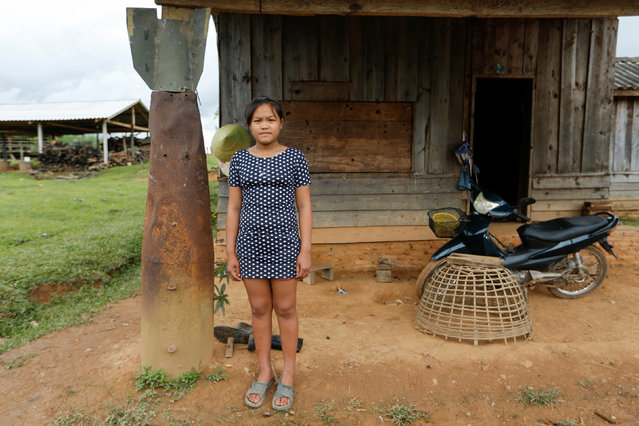
A girl poses at an entrance of her house next to a bomb dropped by the U.S. Air Force planes during the Vietnam War, in the village of Ban Napia in Xieng Khouang province, Laos September 3, 2016. (Photo by Jorge Silva/Reuters)

A girl poses at an entrance of her house next to a bomb dropped by the U.S. Air Force planes during the Vietnam War, in the village of Ban Napia in Xieng Khouang province, Laos September 3, 2016. From 1964 to 1973, U.S. warplanes dropped more than 270 million cluster munitions on Laos, one-third of which did not explode, according to the Lao National Regulatory Authority. (Photo by Jorge Silva/Reuters)
Details
06 Sep 2016 10:30:00
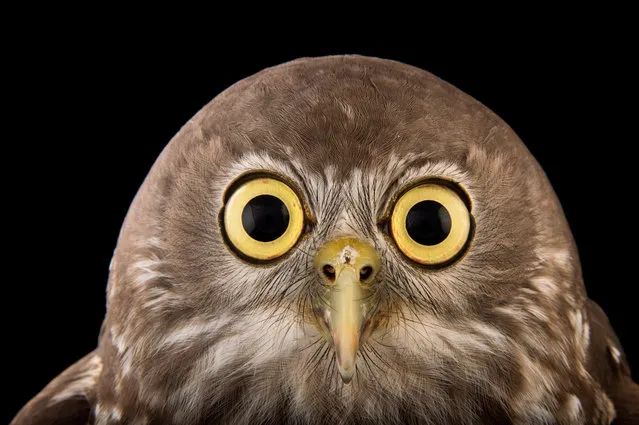
The National Geographic Photo Ark is a travelling exhibition of photographer Joel Sartore’s quest to create a photo archive of biodiversity around the world. So far, Sartore has captured studio portraits of more than 6,000 species – a number that he hopes to double. On 1 July, the ark will open at Melbourne zoo – the first time it has been exhibited in the southern hemisphere. More than 50 portraits will be on display, including many of Australian endangered animals being protected by programs at the zoo itself. These captions have been edited from text supplied by Melbourne zoo. Here: Barking owl. So-named because its call sounds like a barking dog, these birds are native to Australia, Indonesia and Papua New Guinea. In Victoria they are listed as an endangered species, and in 2003 there were estimated to be fewer than 50 breeding pairs. The main threat to the species in Victoria is loss of habitat, especially large trees with hollows in which they can nest and on which many of their prey depend. Apart from a bark, they may utter a chilling scream when they feel threatened. (Photo by Joel Sartore/National Geographic Photo Ark/The Guardian)

The National Geographic Photo Ark is a travelling exhibition of photographer Joel Sartore’s quest to create a photo archive of biodiversity around the world. So far, Sartore has captured studio portraits of more than 6,000 species – a number that he hopes to double. On 1 July, the ark will open at Melbourne zoo – the first time it has been exhibited in the southern hemisphere. More than 50 portraits will be on display, including many of Australian endangered animals being protected by programs at the zoo itself. These captions have been edited from text supplied by Melbourne zoo. Here: Barking owl. (Photo by Joel Sartore/National Geographic Photo Ark/The Guardian)
Details
01 Jul 2017 07:45:00
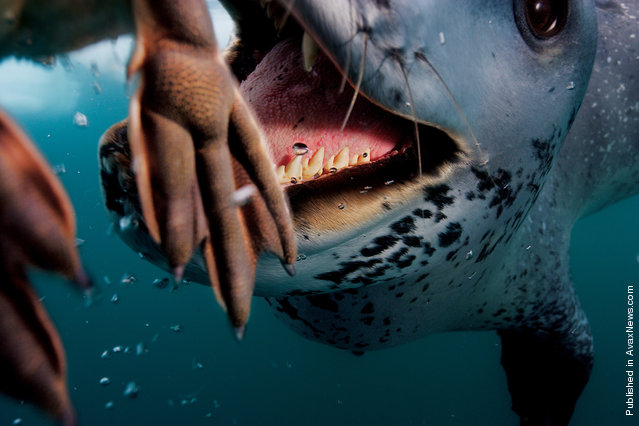
A leopard seal feeds Paul Nicklen a penguin

A leopard seal feeds Paul Nicklen a penguin. (Photo by Paul Nicklen/National Geographic). Antarctic Peninsula, 2011
Details
11 Apr 2012 13:39:00
Cubs of the Simba East pride: too young to kill but old enough to crave meat. Adult females, and sometimes males, do the hunting. Zebras and wildebeests rank high as chosen prey in the rainy season. (Photo by Michael Nichols/National Geographic via The Atlantic)

“Serengeti National Park encompasses 5,700 square miles of grassy plains and woodlands near the northern border of Tanzania, and is home to more than 3,500 lions grouped into a couple dozen prides. Photographer Nick Nichols and videographer Nathan Williamson made several extended trips to the Serengeti between July 2011 and January 2013, determined to break new visual ground in their coverage of the Serengeti Lions”. Photo: Cubs of the Simba East pride: too young to kill but old enough to crave meat. Adult females, and sometimes males, do the hunting. Zebras and wildebeests rank high as chosen prey in the rainy season. (Photo by Michael Nichols/National Geographic via The Atlantic)
Details
09 Aug 2013 08:15:00