Loading...
Done
Buddha

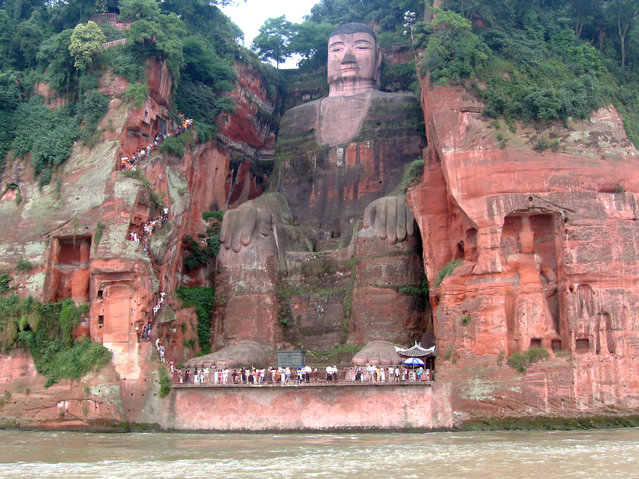
The Leshan Giant Buddha was built during the Tang Dynasty (618–907AD). It is carved out of a cliff face that lies at the confluence of the Minjiang, Dadu and Qingyi rivers in the southern part of Sichuan province in China, near the city of Leshan. The stone sculpture faces Mount Emei, with the rivers flowing below his feet. It is the largest carved stone Buddha in the world[1] and it is by far the tallest pre-modern statue in the world.
Details
14 Jul 2012 04:50:00
A partial Solar eclipse is seen just after sunrise over the Queens borough of New York across the East River on November 3, 2013 in New York. (Photo by Stan Honda/AFP Photo)

A partial Solar eclipse is seen just after sunrise over the Queens borough of New York across the East River on November 3, 2013 in New York. (Photo by Stan Honda/AFP Photo)
Details
04 Nov 2013 10:43:00
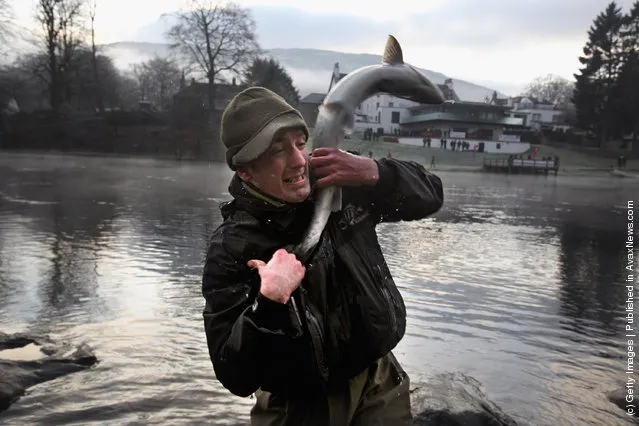
Fishing. Traditional Opening Of The Tay Salmon Season

Angler Thomas Rielly catches a fish during the opening of the salmon fishing season on the River Tay January 16, 2012 in Kenmore, Scotland. A procession with a pipe band and anglers made its way through Kenmore at the east end of Loch Tay to mark the start of the 2012 salmon season on the River Tay. (Photo by Jeff J. Mitchell/Getty Images)
Details
17 Jan 2012 10:21:00
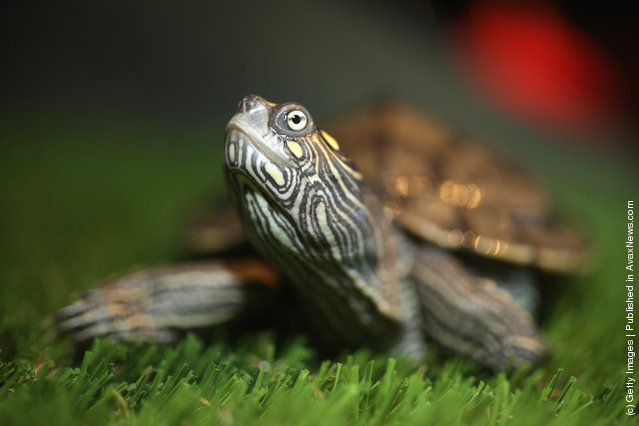
Jensen a two-year-old False Map turtle, from the Mississippi River, gets used to his new home at Blackpool Sea Life Centre

Jensen a two-year-old False Map turtle, from the Mississippi River, gets used to his new home at Blackpool Sea Life Centre on February 13, 2012 in Blackpool, England. (Photo by Christopher Furlong/Getty Images)
Details
13 Feb 2012 12:36:00
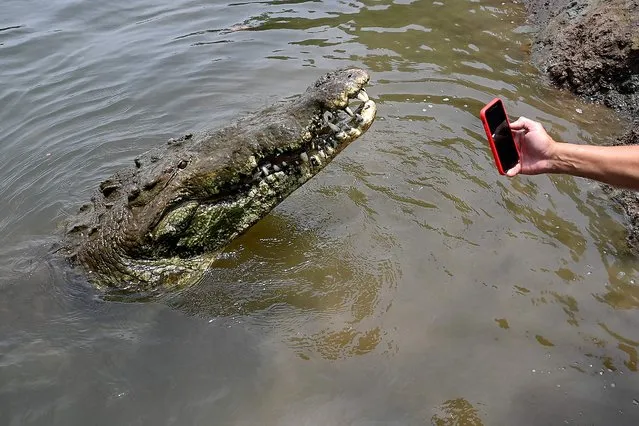
Jaison Vargas, crocodile tour guide, takes a picture of an American crocodile (Crocodylus acutus) during a tour at the Tarcoles river, in Tarcoles, Garabito municipality, Costa Rica, on March 31, 2022. Crocodile tours in the estuary of the Tarcoles River are a popular attraction for visitors to Costa Rica's Pacific coast, as the area gets back on its feet after being shaken by the pandemic. The river is home to nearly 500 species of birds and some 2,000 American crocodiles, many of which have been named after famous people. (Photo by Luis Acosta/AFP Photo)

Jaison Vargas, crocodile tour guide, takes a picture of an American crocodile (Crocodylus acutus) during a tour at the Tarcoles river, in Tarcoles, Garabito municipality, Costa Rica, on March 31, 2022. Crocodile tours in the estuary of the Tarcoles River are a popular attraction for visitors to Costa Rica's Pacific coast, as the area gets back on its feet after being shaken by the pandemic. The river is home to nearly 500 species of birds and some 2,000 American crocodiles, many of which have been named after famous people. (Photo by Luis Acosta/AFP Photo)
Details
10 Apr 2022 04:56:00
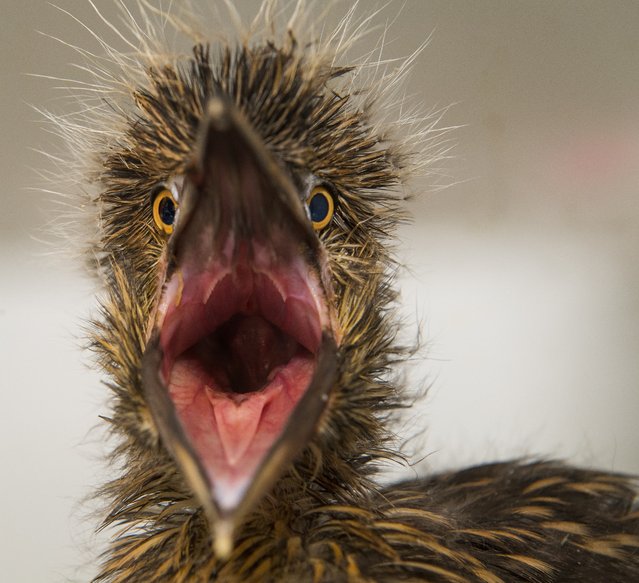
A baby Black-crowned Night Heron squawks in its incubator while being cared for at City Wildlife rescue and rehabilitation center in Washington, DC on May 31, 2017. The heron is one of several that have been brought to CW by the staff at The National Zoo over the past few years. The heron is a native bird and has made an established rookery inside the zoo grounds over a hundred years ago.  Every year at this time, some of the chicks get pushed or fall out of the nest and require human care.  Because the birds are native and not part of the Smithsonian collection, they partnered with CW to rehabilitate the herons for re-release back to the flock inside Zoo. They're reintroduced back to their flock so that they can migrate together in the Fall. The Black-crowned heron usually migrates from the DC area down to southeast North Carolina, some going as far as Jacksonville, FL in winter. The Black-crowned heron is the species of greatest conservation need in the District of Columbia because their numbers are in such rapid decline due to habitat loss. (Photo Linda Davidson/The Washington Post)

A baby Black-crowned Night Heron squawks in its incubator while being cared for at City Wildlife rescue and rehabilitation center in Washington, DC on May 31, 2017. The heron is one of several that have been brought to CW by the staff at The National Zoo over the past few years. (Photo Linda Davidson/The Washington Post)
Details
04 Jun 2017 08:04:00
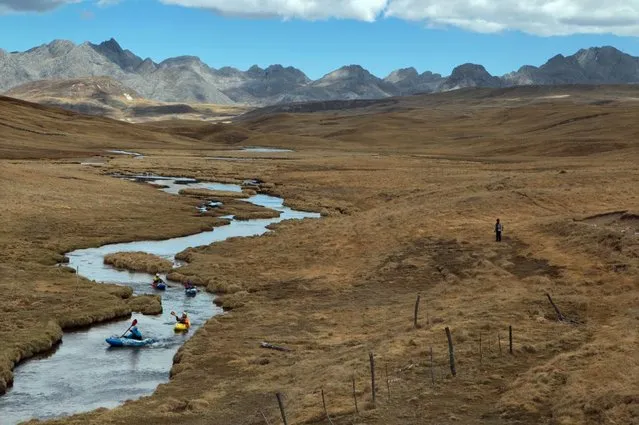
August 19, 2012 – Alpamarca, Peru – Amazon Express white water members Juan Antonio De Ugarte, of Peru, Rafael Ortiz, of Mexico, West Hansen, of the U.S., and Tino Specht, of the U.S., paddle down the Rio Gashan after leaving Lago Acucocha. Lago Acucocha is possibly the dry season source of the Amazon River. (Photo by Erich Schlegel/zReportage via ZUMA Press)

“The Amazon river has a newly discovered source. Completed last year and led by West Hansen and documented by award-winning freelance photographer Erich Schlegel, this is the first expedition to paddle from the furthest source of the earth's largest river to the ocean”. – zReportage. Photo: August 19, 2012 – Alpamarca, Peru – Amazon Express white water members Juan Antonio De Ugarte, of Peru, Rafael Ortiz, of Mexico, West Hansen, of the U.S., and Tino Specht, of the U.S., paddle down the Rio Gashan after leaving Lago Acucocha. Lago Acucocha is possibly the dry season source of the Amazon River. (Photo by Erich Schlegel/zReportage via ZUMA Press)
Details
29 Jul 2013 10:47:00
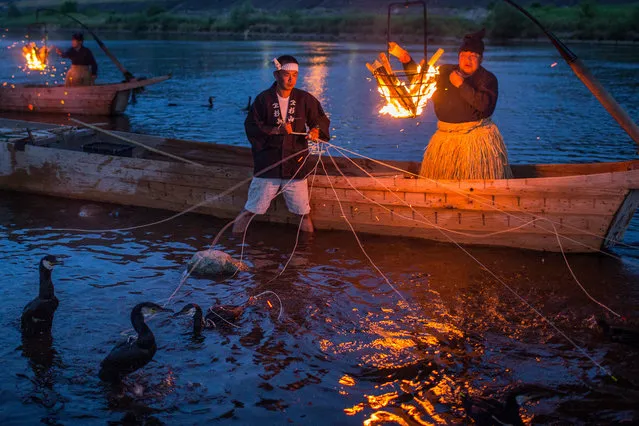
Cormorant masters and boatmen prepare sea cormorants for the nights “Ukai” on July 2, 2014 in Gifu, Japan. In this traditional fishing art “ukai”, a cormorant master called “usho” manages cormorants to capture ayu or sweetfish. The ushos of River Nagara have been the official staff of the Imperial Household Agency of Japan since 1890. Currently six imperial fishermen of Nagara River conduct special fishing to contribute to the Imperial family eight times a year, on top of daily fishing from mid-May to mid-October. (Photo by Chris McGrath/Getty Images)

Cormorant masters and boatmen prepare sea cormorants for the nights “Ukai” on July 2, 2014 in Gifu, Japan. In this traditional fishing art “ukai”, a cormorant master called “usho” manages cormorants to capture ayu or sweetfish. The ushos of River Nagara have been the official staff of the Imperial Household Agency of Japan since 1890. Currently six imperial fishermen of Nagara River conduct special fishing to contribute to the Imperial family eight times a year, on top of daily fishing from mid-May to mid-October. (Photo by Chris McGrath/Getty Images)
Details
04 Jul 2014 09:41:00