Loading...
Done
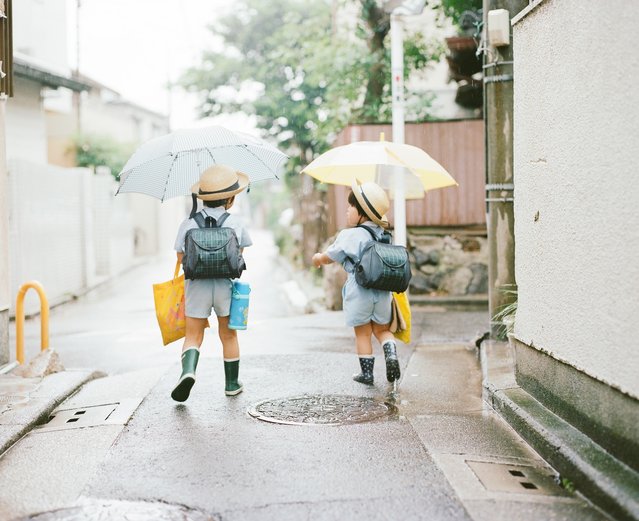
“Rainy days and mondays #1”. (Photo and caption by Hideaki Hamada)

“My children are not only my little darlings but off-shoots of myself. When I look at them, I have a strange feeling – as if I am watching myself re-living my life. What I want to show is their “living form”. – Hideaki Hamada. Photo: “Rainy days and mondays #1”. (Photo and caption by Hideaki Hamada)
Details
23 Mar 2015 09:56:00
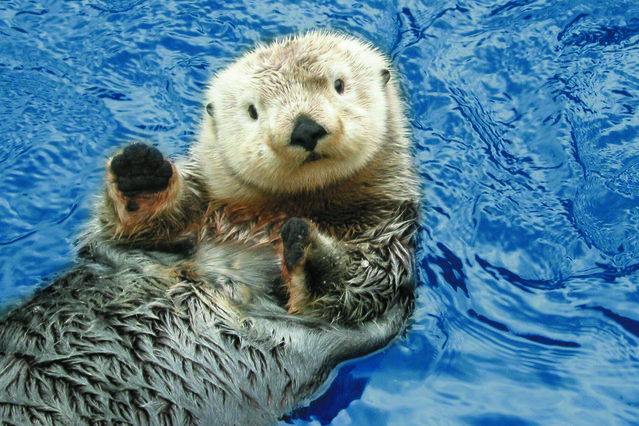
The Sea Otter

The sea otter (Enhydra lutris) is a marine mammal native to the coasts of the northern and eastern North Pacific Ocean. Adult sea otters typically weigh between 14 and 45 kg (31 and 99 lb), making them the heaviest members of the weasel family, but among the smallest marine mammals. Unlike most marine mammals, the sea otter's primary form of insulation is an exceptionally thick coat of fur, the densest in the animal kingdom. Although it can walk on land, the sea otter lives mostly in the ocean.
Details
26 Jan 2014 12:20:00
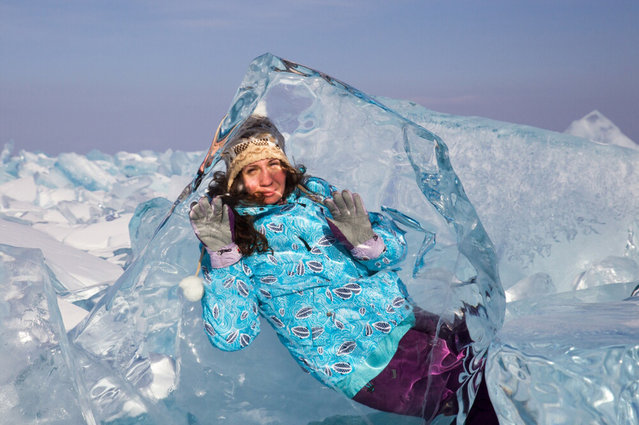
The Turquoise Ice Lake Baikal

Located in Siberia, Laka Baikal is the largest freshwater lake on the planet that contains approximately 20 percent of the Earth’s freshwater. Apart from being the oldest lake in the world at over 25 million years old, Lake Baikal is also home to over two thousand varieties of flora and fauna, of which almost 1,600 are endemic to the lake. The water of Lake Baikal is renowned for being some of the clearest in the world. When the lake freezes during the winter, an amazing phenomena takes place: large shards of transparent ice form on the surface of the lake, giving the amazing appearance of turquoise ice.
Details
02 May 2014 09:21:00
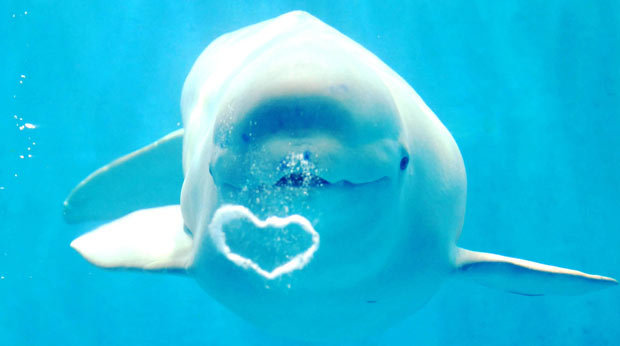
Beluga Whales Blowing Bubbles in Japan (video)

The talent in bubbles unfurled the white Beluga whales living in Shimane Aquarium in Japan.As shown in the picture, have learned to make bubble rings, indicative of high intelligence.Whales blowing air from the mouth to create a stream and immediately after xanafysoun powerfully in the same place so that the bubbles to form a ring.Beluga whales are organized in groups and are social animals. They live in Arctic and sub​​-Arctic and known as "sea canaries" and mimic a wide range of sounds.
Details
28 Oct 2016 22:52:00
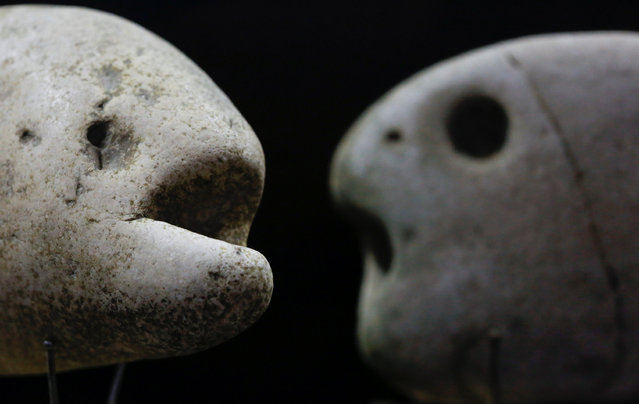
Stones collected and categorised by shape (fish) are seen at the home workshop of Luigi Lineri in Zevio, near Verona, Italy, June 10, 2016. (Photo by Alessandro Bianchi/Reuters)

Stones collected and categorised by shape (fish) are seen at the home workshop of Luigi Lineri in Zevio, near Verona, Italy, June 10, 2016. Luigi Lineri's home workshop is covered in stones – tens of thousands of them. They resemble animal heads, human faces and other forms, and the artist and poet believes may have been shaped by prehistoric humans. (Photo by Alessandro Bianchi/Reuters)
Details
17 Aug 2016 11:23:00
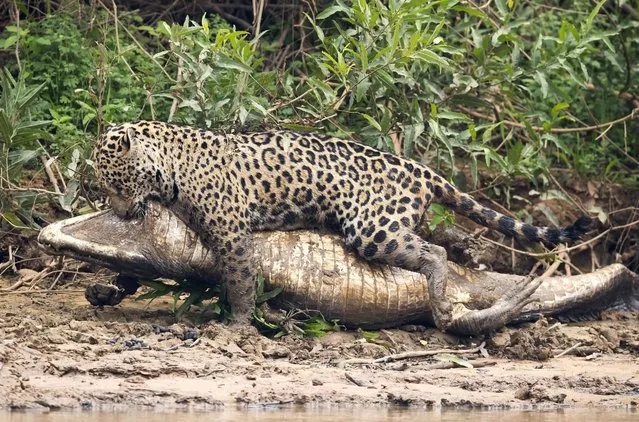
A jaguar ambushes a giant jacare caiman high up on the Three Brothers River in the Pantanal in Mato Grosso, Brazil. (Photo by Chris Brunskill Ltd/Getty Images)

A jaguar ambushes a giant jacare caiman high up on the Three Brothers River in the Pantanal in Mato Grosso, Brazil. The cat wrestled with the reptile for over twenty minutes in a death struggle witnessed by photographer Chris Brunskill just after ten o'clock in the morning on the 26th of September, 2017. Caimans form a large part of the jaguar's diet in the Pantanal but battles such as this are very rarely observed and seldom photographed. (Photo by Chris Brunskill Ltd/Getty Images)
Details
01 Oct 2017 06:37:00
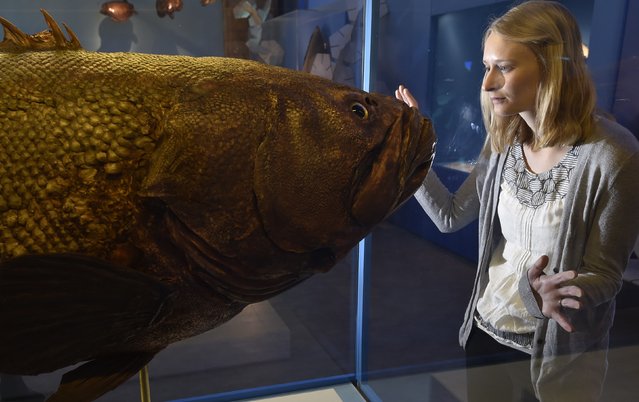
Museum employee Victoria views a giant grouper fish specimen at the Natural History Museum in west London March 25, 2015. (Photo by Toby Melville/Reuters)

Museum employee Victoria views a giant grouper fish specimen at the Natural History Museum in west London March 25, 2015. It forms part of a new exhibition, “Coral Reefs: Secret Cities of the Sea”, featuring a panoramic virtual dive and over 250 specimens from the Museum's coral, fish and marine invertebrate collection, which opens on March 27. (Photo by Toby Melville/Reuters)
Details
26 Mar 2015 11:38:00
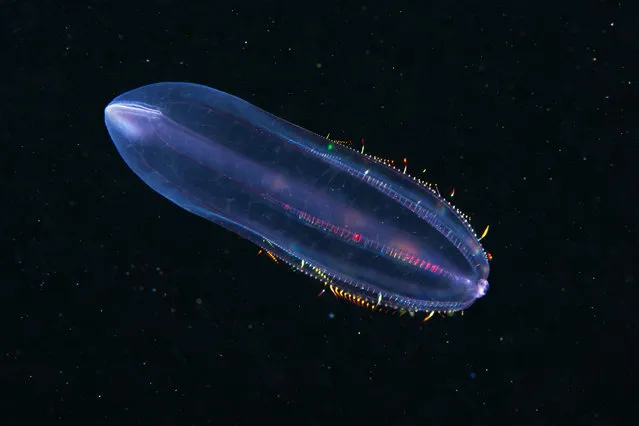
A Comb jelly – Beroe cucumis. (Photo by Alexander Semenovs/Caters News)

Underwater photographer Alexander Semenovs has snapped some of the most stunning, fragile life forms anywhere on planet Earth. Shot in deep, dark conditions, the images continue to provide an insight into what lies beneath, with glowing creatures appearing a lot like aliens in the pitch-black water. Semenovs has shot the likes of bioluminescent jellyfish, aggressive-looking worms and many species that leave a lot to the imagination. The 30-year-old from Moscow does the majority of his work in the White Sea, near the Arctic Circle. Here: A Comb jelly – Beroe cucumis. (Photo by Alexander Semenovs/Caters News)
Details
23 Nov 2015 08:06:00