Loading...
Done
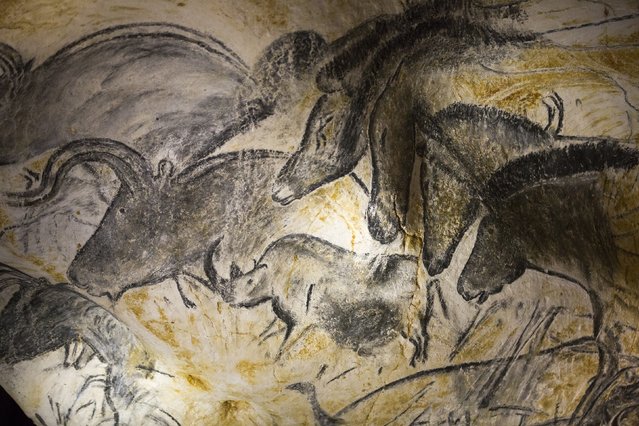
A replica of pre-historic drawings showing horses, rhinoceros and aurochs is seen on a wall during a press visit at the site of the Cavern of Pont-d'Arc project in Vallon Pont d'Arc April 8, 2015. (Photo by Robert Pratta/Reuters)

A replica of pre-historic drawings showing horses, rhinoceros and aurochs is seen on a wall during a press visit at the site of the Cavern of Pont-d'Arc project in Vallon Pont d'Arc April 8, 2015. The Cavern of Pont-d'Arc project is a replica of the pre-historic Decorated Cave of Pont-d'Arc known as Grotte Chauvet, in Vallon Pont-d'Arc in the Ardeche region, containing the world's earliest known art which was recently named a UNESCO World Heritage site. The facsimile cavern, which condenses some 8000m² of the original site into 3000m², will display faithful reproductions of paintings and engravings and will be inaugurated on April 10 and will open to the public on April 25. (Photo by Robert Pratta/Reuters)
Details
09 Apr 2015 14:23:00
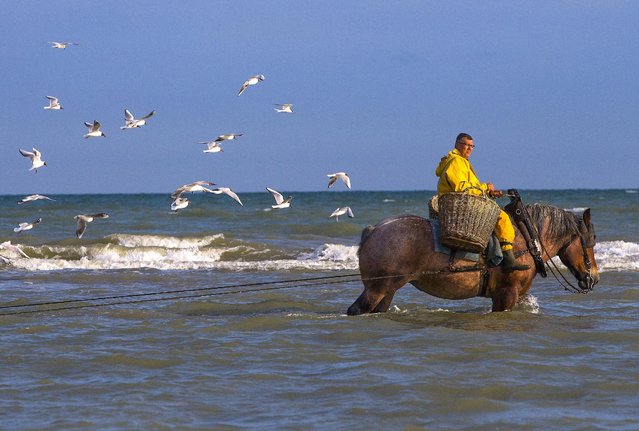
A Belgian shrimp fisherman rides a carthorse to haul a net out in the sea to catch shrimps during low tide at the coastal town of Oostduinkerke, Belgium July 3, 2015. (Photo by Yves Herman/Reuters)

A Belgian shrimp fisherman rides a carthorse to haul a net out in the sea to catch shrimps during low tide at the coastal town of Oostduinkerke, Belgium July 3, 2015. At the end of each fishing session, the fishermen and their mounts leave the water to empty the net's contents into two wicker baskets fixed on each side of the horse. This traditional method of catching shrimps along the North Sea coast, which dates back to some 500 years, attracts tourists every summer. In 2013, Unesco recognized shrimp fishing on horseback as an intangible cultural heritage. (Photo by Yves Herman/Reuters)
Details
04 Jul 2015 11:29:00
Disappointed Cat aka Foo-Chan

Disappointed Cat aka Foo-Chan is a three-year-old Chinchilla Golden has a heavy-set brow, causing him to appear depressed; his gloomy disposition has gone viral on a Japanese forum, where he's been praised as "cute, but troubled" or "worried all the time".

See also: Grumpy Cat
Details
03 Sep 2013 11:03:00


“The Ainu (アイヌ?), also called Aynu, Aino (アイノ), and in historical texts Ezo (蝦夷), are indigenous people or groups in Japan and Russia. Historically they spoke the Ainu language and related varieties and lived in Hokkaidō, the Kuril Islands, and much of Sakhalin. Most of those who identify themselves as Ainu still live in this same region, though the exact number of living Ainu is unknown. This is due to ethnic issues in Japan resulting in those with Ainu backgrounds hiding their identities and confusion over mixed heritages. In Japan, because of intermarriage over many years with Japanese, the concept of a 'pure Ainu' ethnic group is no longer feasible. Official estimates of the population are of around 25,000, while the unofficial number is upwards of 200,000 people”. – Wkipedia

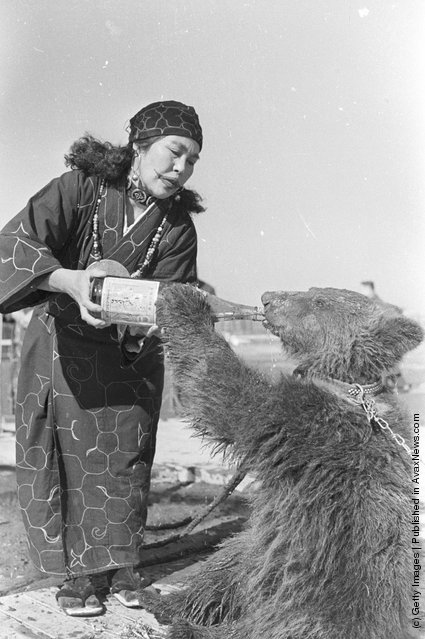
Photo: A captive bear drinking from a large bottle held by an Ainu tribeswoman. (Photo by Evans/Three Lions/Getty Images). Circa 1955
Details
24 Mar 2011 14:01:00
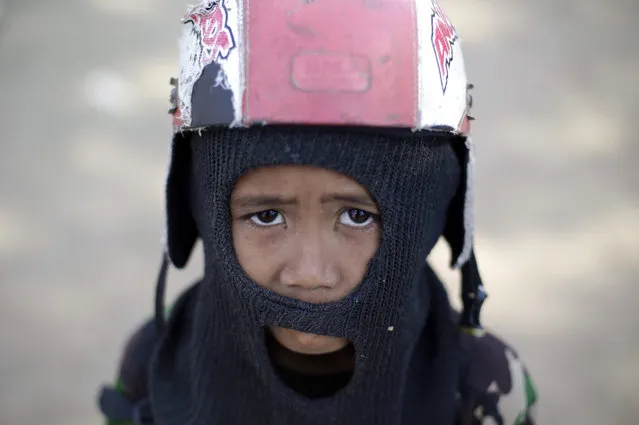
Indonesian child jockey Egi, 8, poses for photographs as he participates in a traditional horse race marking Indonesia's 70th independence anniversary, in Bima, West Nusa Tenggara province, Indonesia, 08 August 2015. (Photo by Mast Irham/EPA)

Indonesian child jockey Egi, 8, poses for photographs as he participates in a traditional horse race marking Indonesia's 70th independence anniversary, in Bima, West Nusa Tenggara province, Indonesia, 08 August 2015. Horse racing is the traditional sport in the area and a cultural heritage which continues to be preserved by the people of Bima, a small city on the east side of Sumbawa island. Similar races also held in Sumbawa Besar regency and Dompu regency. (Photo by Mast Irham/EPA)
Details
19 Sep 2015 12:32:00
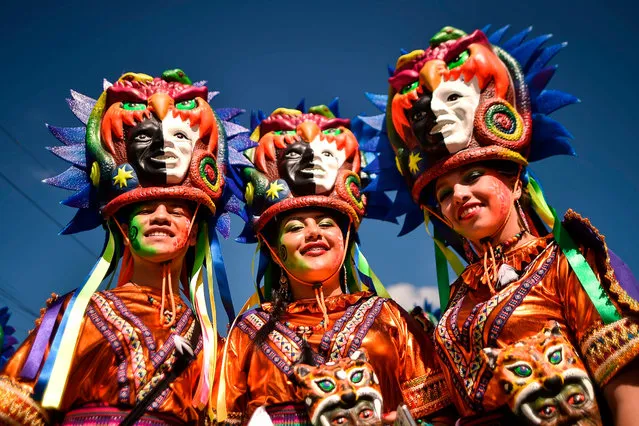
Revellers take part in the “Canto a la Tierra” parade on January 3, 2018, during the Carnival of Blacks and Whites in Pasto, Colombia, the largest festivity in the south- western region of the country. (Photo by Luis Robayo/AFP Photo)

Revellers take part in the “Canto a la Tierra” parade on January 3, 2018, during the Carnival of Blacks and Whites in Pasto, Colombia, the largest festivity in the south- western region of the country. More than 10,000 people among artists, craftsmen and revellers take part in the Blacks and Whites Carnival, which has its origins in the mix of the multiple Andean, Amazonian and Pacific cultural expressions. It is celebrated every year from January 2 to 6 in the city of Pasto and is part of UNESCO's Intangible Cultural Heritage of Humanity since 2009. (Photo by Luis Robayo/AFP Photo)
Details
10 Jan 2018 06:51:00
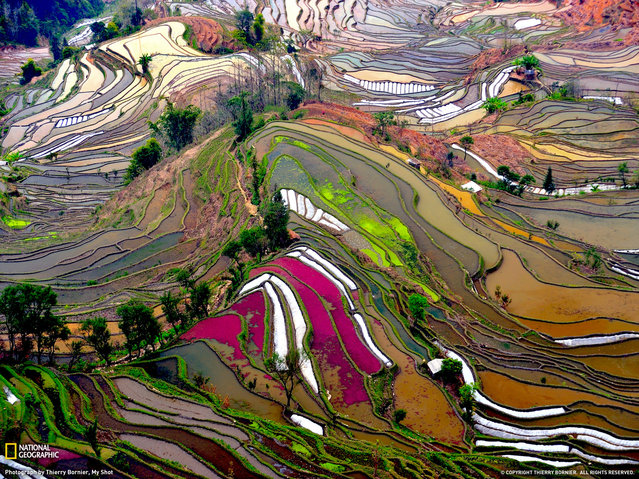
Longsheng Rice Terraces

The Longsheng Rice Terraces are located in Longsheng County, about 100 km (2 hours drive) from Guilin, Guangxi, China. The most popular are Ping An Rice Terrace and Jinkeng Rice Terrace. The terraced fields are built along the slope winding from the riverside up to the mountain top, the highest part being 880 m in elevation while the lowest part is 380 m[citation needed]. The coiling line that starts from the mountain foot up to the mountain top divides the mountain into layers of water glittering in the sun in spring, layers of green rice shoots in summer, layers of golden rice in fall, and layers of silvery frost in winter. The terraced fields were mostly built during the Ming Dynasty, about 500 years ago.
Details
18 Oct 2013 12:45:00


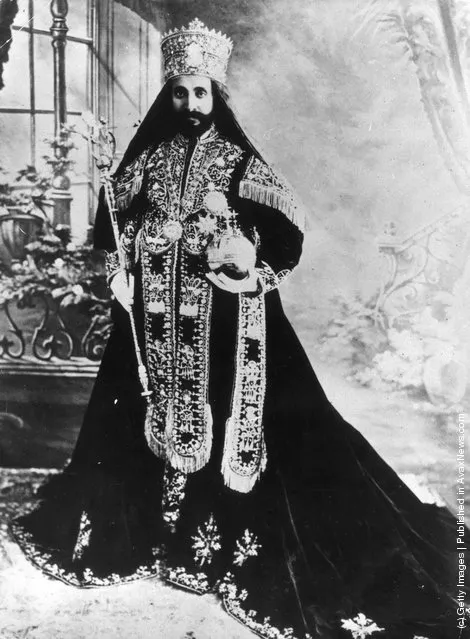
“Haile Selassie I (23 July 1892 – 27 August 1975), born Tafari Makonnen, was Ethiopia's regent from 1916 to 1930 and Emperor of Ethiopia from 1930 to 1974. The heir to a dynasty that traced its origins to the 13th century, and from there by tradition back to King Solomon and Queen Makeda, Empress of Axum, known in the Abrahamic tradition as the Queen of Sheba. Haile Selassie is a defining figure in both Ethiopian and African history.

Haile Selassie is revered as the returned Messiah of the Bible, God incarnate, among the Rastafari movement, the number of followers of which is estimated between 200,000 and 800,000. Begun in Jamaica in the 1930s, the Rastafari movement perceives Haile Selassie as a messianic figure who will lead a future golden age of eternal peace, righteousness, and prosperity. He himself remained an Ethiopian Orthodox Christian throughout his life”. – Wikipedia

Photo: Negusa Negasti, Emperor of Ethiopia Haile Selassie I, known as “Lord of Lords”, “The Conquering Lion of the tribe of Judah”, “Light of the world”, “Elect of God”, in full ceremonial regalia following his coronation. (Photo by Hulton Archive/Getty Images)
Details
21 Jun 2011 11:04:00