Loading...
Done
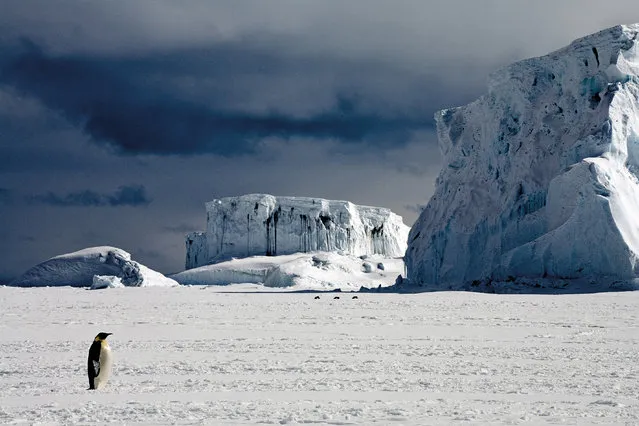
Image from Camille Seamans new book, “Melting Away”. (Photo by Camille Seaman/Barcroft Media)

Documenting the effects of climate change first hand over the past eight years, Camille Seaman fears we may be on the road to the last iceberg. Photographing the enormous frozen floats at both poles for the past eight years, the Californian adventurer has seen the receding ice shelves and experienced the changing warmer weather. Feeling that her intimate and emotional work documents a snapshot of history, Camille presents her series “The Last Iceberg” as a study of what she sees as the personality of each huge iceberg. Drawing parallels with the famous novel, “The Last of the Mohicans”, Camille, 42, wonders whether these unique, almost alien natural features will become a thing of the past or part of nature's renewal process. (Photo by Camille Seaman/Barcroft Media)
Details
02 Dec 2014 12:10:00
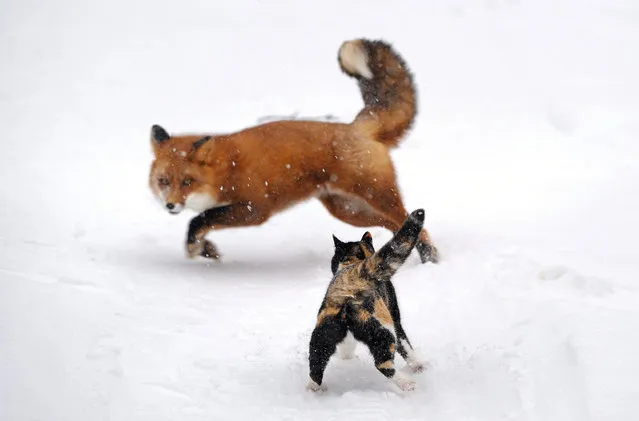
Respect, Kronotsky nature reserve, Russia. The photographer’s cat, Ryska – her name means little lynx in Russian – stands outside their cabin and with aggressive posturing warns off a fox. In winter, foxes would regularly visit the cabin searching for food. If one peered in at the window, possible when the snow was deep, Ryska would sit on the other side, fur raised, and growl. When outside, she would hold her ground. The foxes were not always frightened and so encounters could be a sort of dance. (Photo by Igor Shpilenok/Unforgettable Behaviour/NHM)

Respect, Kronotsky nature reserve, Russia. The photographer’s cat, Ryska – her name means little lynx in Russian – stands outside their cabin and with aggressive posturing warns off a fox. In winter, foxes would regularly visit the cabin searching for food. If one peered in at the window, possible when the snow was deep, Ryska would sit on the other side, fur raised, and growl. When outside, she would hold her ground. The foxes were not always frightened and so encounters could be a sort of dance. (Photo by Igor Shpilenok/Unforgettable Behaviour/NHM)
Details
08 Apr 2017 09:14:00
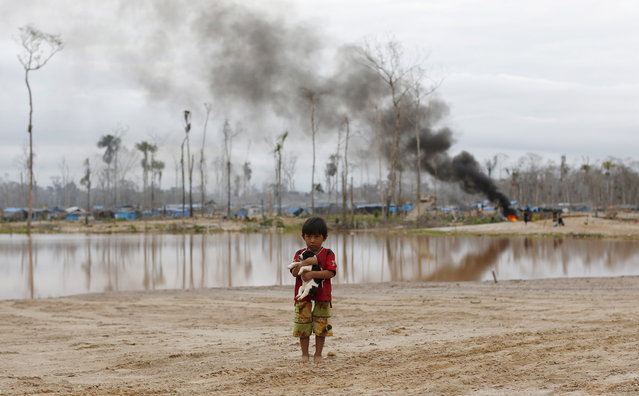
A boy carries a dog as he stands after a Peruvian police operation to destroy illegal gold mining camps in a zone known as Mega 14, in the southern Amazon region of Madre de Dios July 14, 2015. Peruvian police razed dozens of illegal gold mining camps at the edge of an Amazonian nature reserve this week, part of a renewed bid to halt the spread of wildcatting in a remote rainforest region. (Photo by Janine Costa/Reuters)

A boy carries a dog as he stands after a Peruvian police operation to destroy illegal gold mining camps in a zone known as Mega 14, in the southern Amazon region of Madre de Dios July 14, 2015. Peruvian police razed dozens of illegal gold mining camps at the edge of an Amazonian nature reserve this week, part of a renewed bid to halt the spread of wildcatting in a remote rainforest region. (Photo by Janine Costa/Reuters)
Details
18 Jul 2015 12:29:00
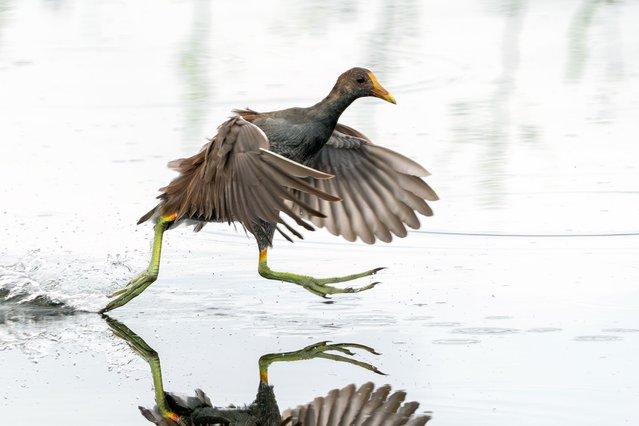
A common gallinule runs across the water to escape a nearby alligator at Green Cay Nature Center in Boynton Beach, Florida on September 4, 2025. Unlike most waterbirds, gallinules have long toes that allow them to walk on floating vegetation. The species is known for its loud, cackling calls that often echo through wetlands. (Photo by Ronen Tivony/NurPhoto/Rex Features/Shutterstock)

A common gallinule runs across the water to escape a nearby alligator at Green Cay Nature Center in Boynton Beach, Florida on September 4, 2025. Unlike most waterbirds, gallinules have long toes that allow them to walk on floating vegetation. The species is known for its loud, cackling calls that often echo through wetlands. (Photo by Ronen Tivony/NurPhoto/Rex Features/Shutterstock)
Details
21 Sep 2025 03:35:00
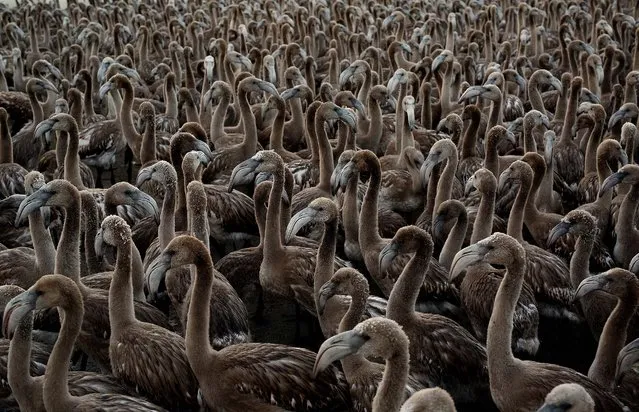
Flamingo chicks walk in an enclosure before they are tagged in Fuente de Piedra, Spain, on Jule 19, 2014. Fuente de Piedra lagoon is a natural reserve with more than 170 different species recorded and one of the main breeding grounds for flamingos in the Iberian Peninsule. Hundreds of flamingo chicks are tagged and checked annually to record the evolution of the species. (Photo by Pablo Blazquez Dominguez/Getty Images)

Flamingo chicks walk in an enclosure before they are tagged in Fuente de Piedra, Spain, on Jule 19, 2014. Fuente de Piedra lagoon is a natural reserve with more than 170 different species recorded and one of the main breeding grounds for flamingos in the Iberian Peninsule. Hundreds of flamingo chicks are tagged and checked annually to record the evolution of the species. (Photo by Pablo Blazquez Dominguez/Getty Images)
Details
21 Jul 2014 10:51:00
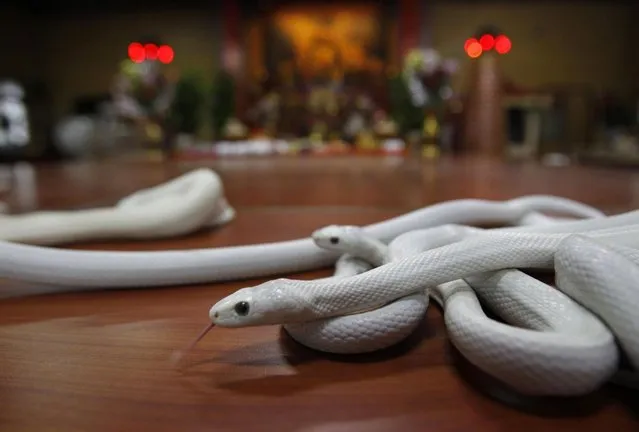
In this photo taken on Wednesday, January 9, 2013, ahead of the Chinese lunar new year of the Snake, following the Chinese zodiac, genetically modified, auspicious, white snakes slither across the altar at the Temple of White Snakes in Taoyuan county, in north western Taiwan. Director of the temple Mr. Lo Chin-shih says the new year of the snake would be a time of steady progress, in contrast to the more turbulent nature of the outgoing year of the dragon. The Chinese new year fall on February 10. (Photo by Wally Santana/AP Photo)

In this photo taken on Wednesday, January 9, 2013, ahead of the Chinese lunar new year of the Snake, following the Chinese zodiac, genetically modified, auspicious, white snakes slither across the altar at the Temple of White Snakes in Taoyuan county, in north western Taiwan. Director of the temple Mr. Lo Chin-shih says the new year of the snake would be a time of steady progress, in contrast to the more turbulent nature of the outgoing year of the dragon. The Chinese new year fall on February 10. (Photo by Wally Santana/AP Photo)
Details
09 Feb 2013 10:53:00
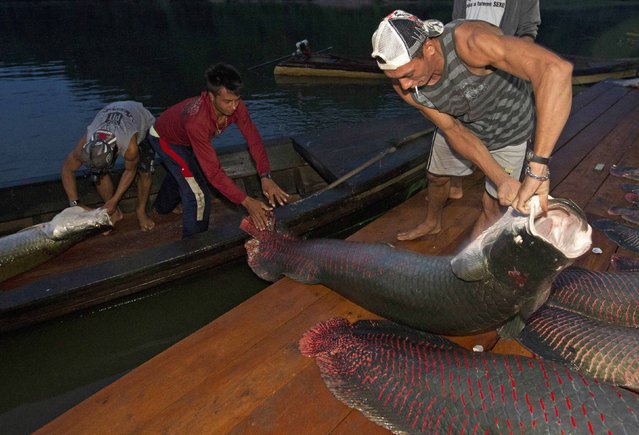
Villagers from the Medio Jurua nature reserve of Brazil's Amazon rainforest arrive with their catch of pirarucus, the largest freshwater fish in South America, after a night of fishing in Manaria Lake, Carauari municipality, September 3, 2012. Catching the pirarucu, a fish that is sought after for its meat and is considered by biologists to be a living fossil, is only allowed once a year by Brazil's environmental protection agency. (Photo by Bruno Kelly/Reuters)

Villagers from the Medio Jurua nature reserve of Brazil's Amazon rainforest arrive with their catch of pirarucus, the largest freshwater fish in South America, after a night of fishing in Manaria Lake, Carauari municipality, September 3, 2012. Catching the pirarucu, a fish that is sought after for its meat and is considered by biologists to be a living fossil, is only allowed once a year by Brazil's environmental protection agency. (Photo by Bruno Kelly/Reuters)
Details
19 Jul 2013 08:53:00
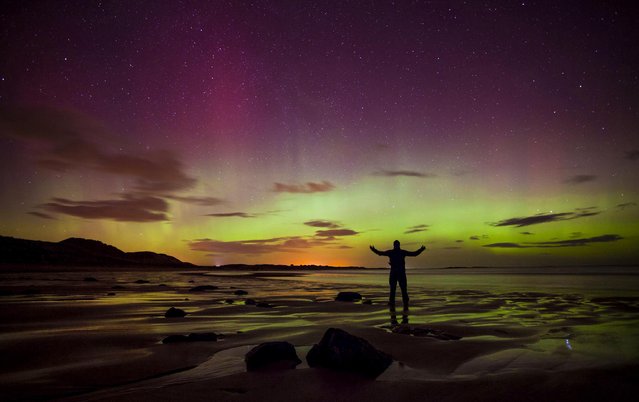
A man poses standing on a rock looking at the aurora borealis, or northern lights, illuminating the night sky at Embleton Bay in Northumberland, England, on February 27, 2014. The northern lights is a fantastical natural light display with fast moving light effects caused by particles charged by the sun colliding with particles in Earth's upper atmosphere. (Photo by Tom White/PA Wire)

A man poses standing on a rock looking at the aurora borealis, or northern lights, illuminating the night sky at Embleton Bay in Northumberland, England, on February 27, 2014. The northern lights is a fantastical natural light display with fast moving light effects caused by particles charged by the sun colliding with particles in Earth's upper atmosphere. (Photo by Tom White/PA Wire)
Details
02 Mar 2014 10:12:00