Loading...
Done
In this November 18, 2014 photo, Murshida, 12, sits on the lap of her mother Marjina as the train leaves for their village in West Bengal, at a railway station in New Delhi, India. Six months ago, Marjina stepped off a train in New Delhi with her two children, hoping to find a better life after her husband abandoned them without so much as a goodbye. (Photo by Altaf Qadri/AP Photo)

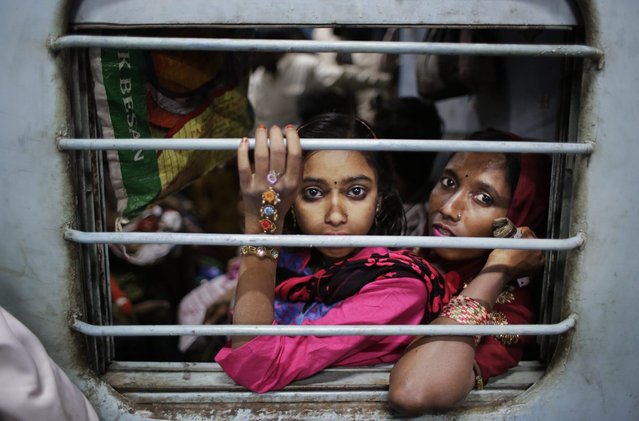
In this November 18, 2014 photo, Murshida, 12, sits on the lap of her mother Marjina as the train leaves for their village in West Bengal, at a railway station in New Delhi, India. Six months ago, Marjina stepped off a train in New Delhi with her two children, hoping to find a better life after her husband abandoned them without so much as a goodbye. The family spent their days at a landfill picking through other people’s garbage to find salvageable bits to resell or recycle. After six months of poverty, illness and shame, they returned to that train station in New Delhi, headed back to an uncertain future to their hometown in West Bengal. (Photo by Altaf Qadri/AP Photo)
Details
09 Dec 2014 09:47:00
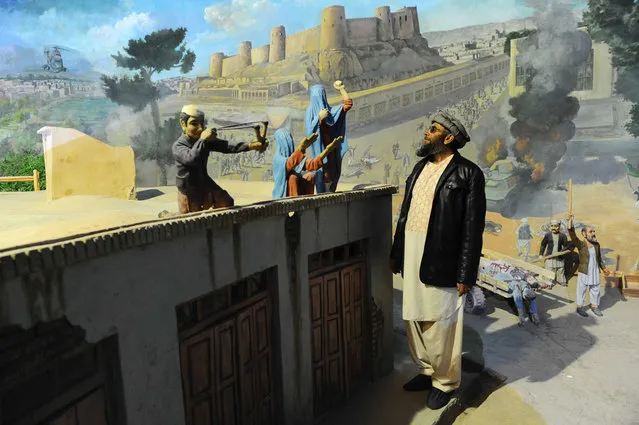
Museum assistant and former Soviet soldier, Sheikh Abdullah looks at a display in the Manzar-e Jahad, or Jihad Museum, which depicts the Soviet invasion of 1979 and the Afghan resistance, in Herat, on February 15, 2014. (Photo by Aref Karimi/AFP Photo via The Atlantic)

Museum assistant and former Soviet soldier, Sheikh Abdullah looks at a display in the Manzar-e Jahad, or Jihad Museum, which depicts the Soviet invasion of 1979 and the Afghan resistance, in Herat, on February 15, 2014. Sheikh Abdullah, who was a Soviet intelligence officer by the name of Khakimov Bakhrodin, was captured after being injured in battle with the Mujahideen. Abdullah stayed with his captors, converted to Islam and was renamed Abdullah. He never returned to his former homeland and now works at the Jihad Museum. (Photo by Aref Karimi/AFP Photo via The Atlantic)
Details
10 Mar 2014 09:08:00
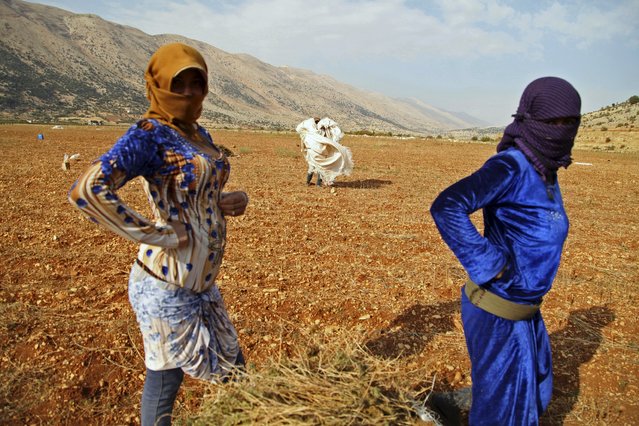
Aisha, 15, (L) (who asked to withhold her last name), a Syrian refugee from Raqqa, waits with a fellow refugee while harvesting cannabis in the Bekaa valley, Lebanon October 19, 2015. Syrian refugees work to harvest and process spiky-leafed cannabis plants in neighbouring Lebanon’s Bekaa Valley. (Photo by Alia Haju/Reuters)

Aisha, 15, (L) (who asked to withhold her last name), a Syrian refugee from Raqqa, waits with a fellow refugee while harvesting cannabis in the Bekaa valley, Lebanon October 19, 2015. Syrian refugees work to harvest and process spiky-leafed cannabis plants in neighbouring Lebanon’s Bekaa Valley. Often farmers of cotton and wheat back home in Raqqa province – now the de facto capital of Islamic State – the conflict in Syria drove them to seek safety in a region where Syrian migrant workers used to spend a few months a year before returning home. (Photo by Alia Haju/Reuters)
Details
24 Dec 2015 08:03:00
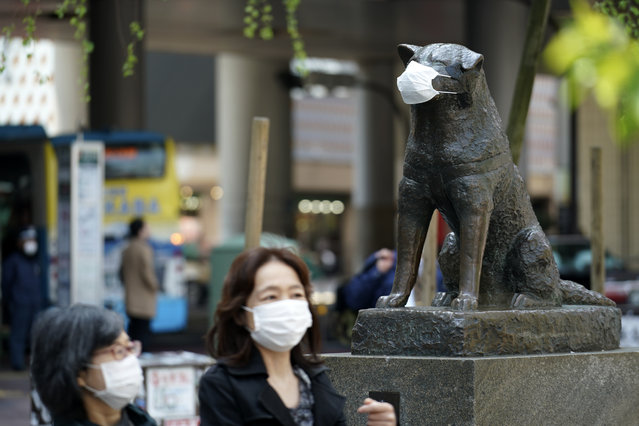
A statue of a Japanese Akita dog named “Hachiko” wearing a face mask is seen near Shibuya Station Wednesday, April 8, 2020, in Tokyo. Japanese Prime Minister Shinzo Abe declared a state of emergency on Tuesday for Tokyo and six other prefectures to ramp up defenses against the spread of the new coronavirus. Hachiko has waited for his owner University of Tokyo Prof. Eizaburo Ueno at the same place by the station every afternoon, expecting him to return home for nearly 11 years even after Ueno's death at work. (Photo by Eugene Hoshiko/AP Photo)

A statue of a Japanese Akita dog named “Hachiko” wearing a face mask is seen near Shibuya Station Wednesday, April 8, 2020, in Tokyo. Japanese Prime Minister Shinzo Abe declared a state of emergency on Tuesday for Tokyo and six other prefectures to ramp up defenses against the spread of the new coronavirus. Hachiko has waited for his owner University of Tokyo Prof. Eizaburo Ueno at the same place by the station every afternoon, expecting him to return home for nearly 11 years even after Ueno's death at work. (Photo by Eugene Hoshiko/AP Photo)
Details
15 Apr 2020 00:05:00
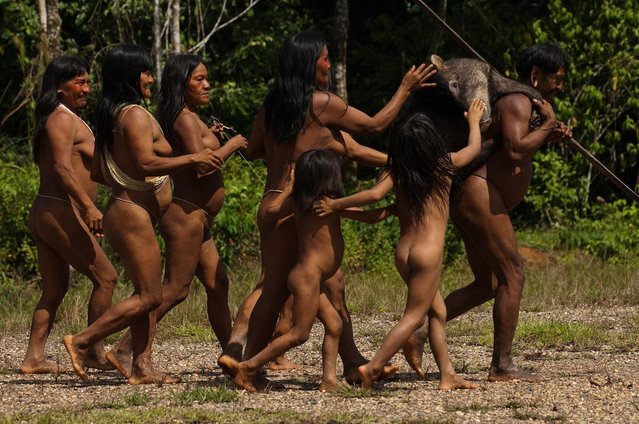
Spectacular images offering insight into the lives of the Huaorani people in the Ecuadorian Amazon have been revealed showing how they use traditional methods to hunt monkeys for food. The stunning pictures were taken by conservation photographer Pete Oxford from Torquay, Devon in the Ecuadorian Amazon. “The Huaorani Indians are a forest people highly in tune with their environment. Many are now totally acculturated since the 1950s by missionaries”, said Pete. “Today they face radical change to their culture to the proximity of oil exploration within their territory and the Yasuni National Park and Biosphere Reserve, they are vastly changed. Some still live very traditionally and for this shoot, through my Huaorani friend, a direct relative of those photographed he wanted to depict them as close to their original culture as possible. They still largely hunt with blow pipes and spears eating a lot of monkeys and peccaries”. The Huaorani are also known as the Waorani, Waodani or the Waos and are native Amerindians. Their lands are located between the Curaray and Napo rivers and speak the Huaorani language. Pete says that during his visit he was welcomed into the group and hopes that ancient cultures can be saved. Here: The tribe were seen celebrating after a hunter returned to camp with a wild pig. (Photo by Pete Oxford/Mediadrumworld.com)

Spectacular images offering insight into the lives of the Huaorani people in the Ecuadorian Amazon have been revealed showing how they use traditional methods to hunt monkeys for food. The stunning pictures were taken by conservation photographer Pete Oxford from Torquay, Devon in the Ecuadorian Amazon. Here: The tribe were seen celebrating after a hunter returned to camp with a wild pig. (Photo by Pete Oxford/Mediadrumworld.com)
Details
20 Jan 2017 07:58:00
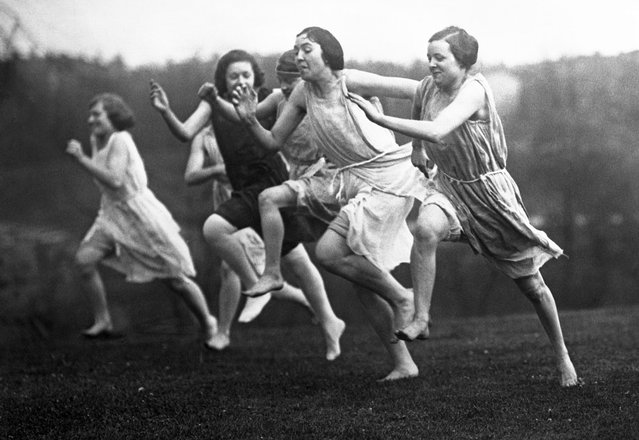
Girls of University of Cincinnati Stage Grecian Games on April 29, 1921. Garbed in costumes of ancient Greece, fair students of the University of Cincinnati, Ohio arranged a set of Grecian Games for the benefit of the University athletic fund. All of the girl students of the University, who take a great interest in outdoor games and athletics, took part in the games. The fund was greatly increased through the staging of the unique attraction and the girls purpose to give a return engagement. The accompanying photographs show the girl contestants in their Grecian costumes. Photo shows the start of the 100 yard dash. (Photo by Bettmann Archive/Getty Images)

Girls of University of Cincinnati Stage Grecian Games on April 29, 1921. Garbed in costumes of ancient Greece, fair students of the University of Cincinnati, Ohio arranged a set of Grecian Games for the benefit of the University athletic fund. All of the girl students of the University, who take a great interest in outdoor games and athletics, took part in the games. The fund was greatly increased through the staging of the unique attraction and the girls purpose to give a return engagement. The accompanying photographs show the girl contestants in their Grecian costumes. Photo shows the start of the 100 yard dash. (Photo by Bettmann Archive/Getty Images)
Details
09 May 2021 08:10:00
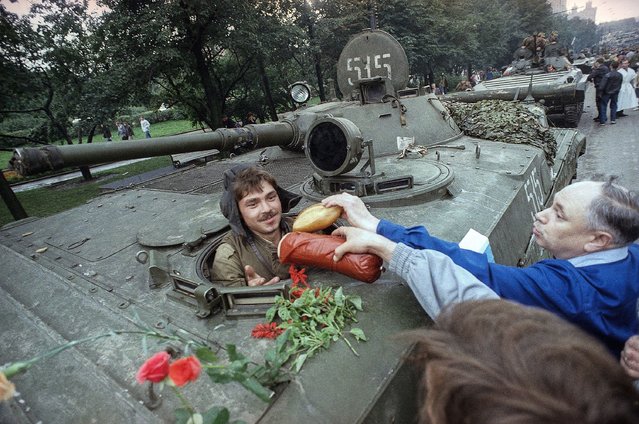
In this Wednesday, August 21, 1991 file photo, appreciative muscovites hand bread, sausages and flowers to a Soviet tank's driver who helped stop the failed hardline coup in Moscow, Russia. When a group of top Communist officials ousted Soviet leader Mikhail Gorbachev 30 years ago and flooded Moscow with tanks, the world held its breath, fearing a rollback on liberal reforms and a return to the Cold War confrontation. But the August 1991 coup collapsed in just three days, precipitating the breakup of the Soviet Union that plotters said they were trying to prevent. (Photo by Czarek Sokolowski/AP Photo/File)

In this Wednesday, August 21, 1991 file photo, appreciative muscovites hand bread, sausages and flowers to a Soviet tank's driver who helped stop the failed hardline coup in Moscow, Russia. When a group of top Communist officials ousted Soviet leader Mikhail Gorbachev 30 years ago and flooded Moscow with tanks, the world held its breath, fearing a rollback on liberal reforms and a return to the Cold War confrontation. But the August 1991 coup collapsed in just three days, precipitating the breakup of the Soviet Union that plotters said they were trying to prevent. (Photo by Czarek Sokolowski/AP Photo/File)
Details
23 Aug 2021 03:45:00
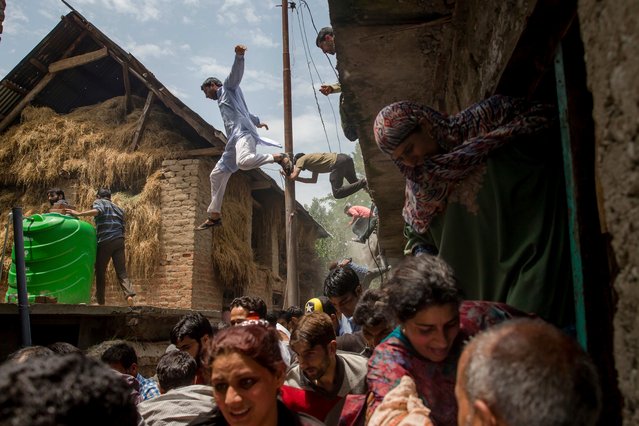
Kashmiri villagers inspecting a house damaged in a gun battle flee from it after hearing rumors of Indian army soldiers returning back to the site, which turned out to be false, in Kundalan village, some 60 Kilometres south of Srinagar, Indian controlled Kashmir, Tuesday, July 10, 2018. Government forces fired at protesters Tuesday in Indian-controlled Kashmir, killing a teenage boy and wounding at least 120 more who had been trying to reach the site of a gunbattle in which soldiers killed two rebels, police and residents said. (Photo by Dar Yasin/AP Photo)

Kashmiri villagers inspecting a house damaged in a gun battle flee from it after hearing rumors of Indian army soldiers returning back to the site, which turned out to be false, in Kundalan village, some 60 Kilometres south of Srinagar, Indian controlled Kashmir, Tuesday, July 10, 2018. Government forces fired at protesters Tuesday in Indian-controlled Kashmir, killing a teenage boy and wounding at least 120 more who had been trying to reach the site of a gunbattle in which soldiers killed two rebels, police and residents said. (Photo by Dar Yasin/AP Photo)
Details
16 Jul 2018 00:03:00