Loading...
Done
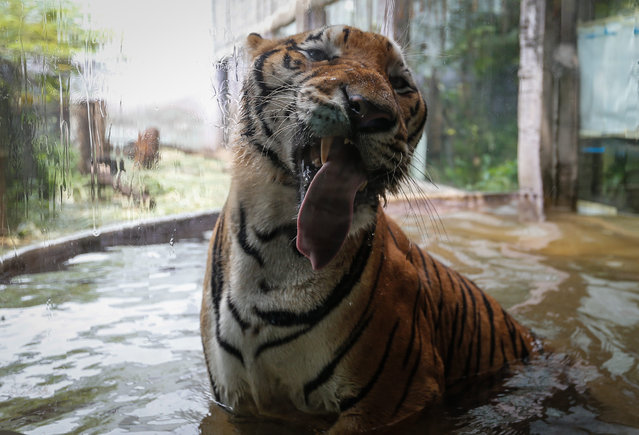
A Bengal tiger licks a glass enclosure during a presentation of Bengial tiger cubs at the Malabon Zoo in Malabon City, north of Manila, Philippines, 14 July 2016. The Bengal tiger cubs, which were born at the zoo, are two months old and named “Tiger Duterte” and “Tiger Leni”. The Malabon Zoo has one of the largest private collections of exotic and endemic animals in the Philippines. (Photo by Mark R. Cristino/EPA)

A Bengal tiger licks a glass enclosure during a presentation of Bengial tiger cubs at the Malabon Zoo in Malabon City, north of Manila, Philippines, 14 July 2016. The Bengal tiger cubs, which were born at the zoo, are two months old and named “Tiger Duterte” and “Tiger Leni”. The Malabon Zoo has one of the largest private collections of exotic and endemic animals in the Philippines. (Photo by Mark R. Cristino/EPA)
Details
17 Jul 2016 11:06:00
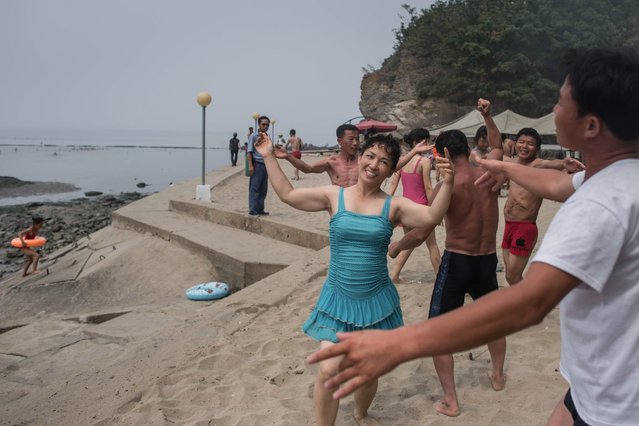
A photo taken on July 22, 2017 shows beach- goers dancing at the West Sea Barrage beach outside the coastal city of Nampo, southwest of Pyongyang. (Photo by Ed Jones/AFP Photo)

A photo taken on July 22, 2017 shows beach- goers dancing at the West Sea Barrage beach outside the coastal city of Nampo, southwest of Pyongyang. The West Sea Barrage beach features as a stopping point for foreign tourists, and is a destination for North Korean work groups from the neighbouring area. The beach lies at the end of an eight- kilometre- long barrage that separates the sea from the Taedong River, which runs through Pyongyang. (Photo by Ed Jones/AFP Photo)
Details
04 Aug 2017 09:09:00


Color dyed rabbits are seen in the markets of the Souq Waqif on January 12, 2011 in Doha, Qatar. (Photo by Robert Cianflone/Getty Images)
Details
16 Aug 2013 14:21:00


Winner of the Sandow bodybuilding competition, Mr. Murray. (Photo by Reinhold Thiele/Thiele/Getty Images). Circa 1905
Details
27 Jul 2011 12:35:00
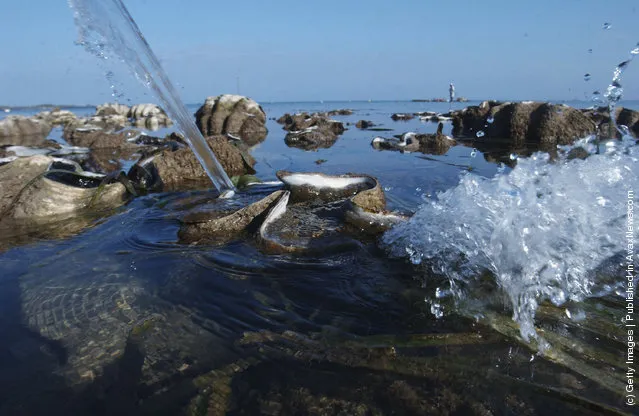
Tridacna Gigas, or Giant Clams

“The giant clam, Tridacna gigas (known as pā’ua in Cook Islands Māori), is the largest living bivalve mollusc. T. gigas is one of the most endangered clam species. It was mentioned as early as 1825 in scientific reports. One of a number of large clam species native to the shallow coral reefs of the South Pacific and Indian oceans, they can weigh more than 200 kilograms (440 lb) measure as much as 120 cm (47 in) across, and have an average lifespan in the wild of 100 years or more”. – Wikipedia

Photo: Tridacna Gigas, or Giant Clams spew water as a traditional fisherman passes by a small sanctuary on January 23, 2004 near Bolinao in the Northern Philippines. The clams, prime builders for coral reefs and providing shelter for spawning fish and other marine life, are exposed by low tides in the sanctuary. Overfishing and pollution throughout the country are not only threatening food security, but are also starting to choke one of the few working clam sanctuaries in the world. (Photo by David Greedy/Getty Images)
Details
01 Oct 2011 13:10:00
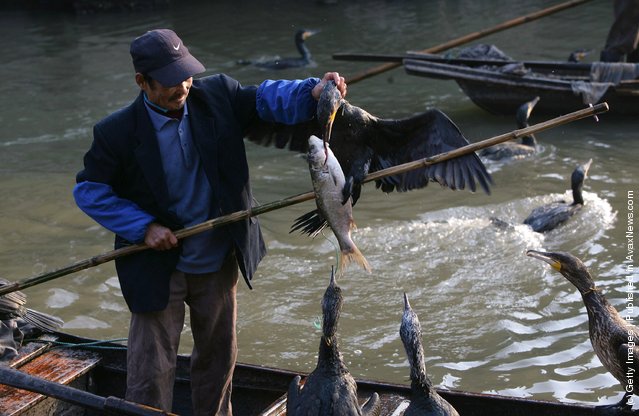
Cormorant Fishing

“Cormorant fishing is a traditional fishing method in which fishermen use trained cormorants to fish in rivers. Historically, cormorant fishing has taken place in Japan and China from around 960 AD. and recorded from other places throughout the world”. – Wikipedia

Photo: A cormorant raised by a fisherman catches a fish on a canal on November 27, 2007 in Xitang Town of Jiashan County, Zhejiang Province, China. (Photo by China Photos/Getty Images)
Details
07 Oct 2011 09:34:00
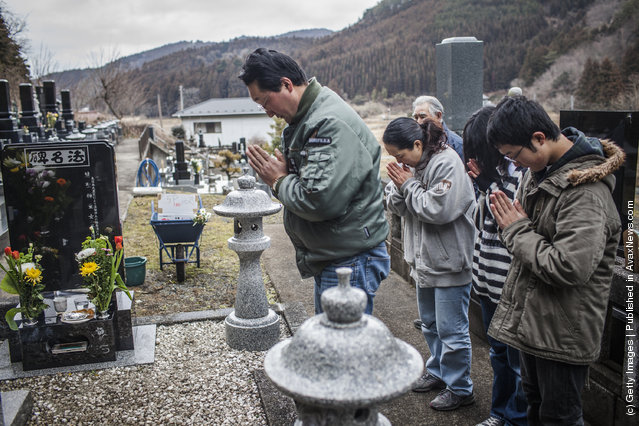
Takahiro Shito, 47, and his wife Sayomi Shito, 46, pray with their children Tomoka, 14, and Kenya 16, and their great uncle Akinori Takahashi, 76, as they pay respects to their daughter Chisato,12, buried in a nearby cemetery, victim of the Okowa Elementary School tragedy, who was killed during last year's tsunami on March 11, 2012 near Ishinomaki, Japan

Takahiro Shito, 47, and his wife Sayomi Shito, 46, pray with their children Tomoka, 14, and Kenya 16, and their great uncle Akinori Takahashi, 76, as they pay respects to their daughter Chisato,12, buried in a nearby cemetery, victim of the Okowa Elementary School tragedy, who was killed during last year's tsunami on March 11, 2012 near Ishinomaki, Japan. Teachers at the school weren't trained for tsunami evacuation and didn't to lead the children up the snow covered mountain behind the school after the tsunami warning was sounded. Out of 108 students at the school, 74 died and four remain missing; 10 of the school's 13 teachers were also killed. (Photo by Daniel Berehulak /Getty Images)
Details
11 Mar 2012 09:47:00
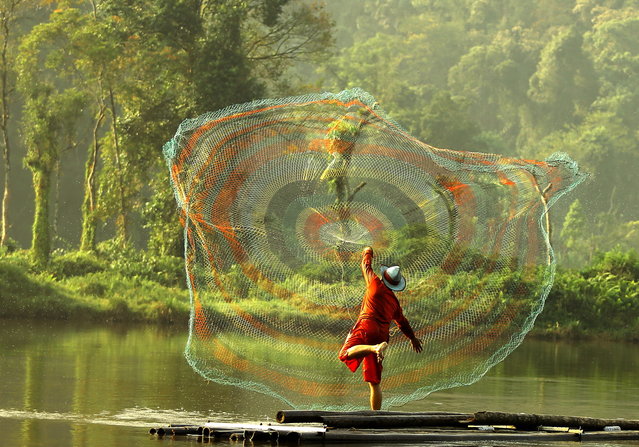
“The Net thrower”. The fisherman are conducting activities on Situgunung Lake. Photo location: Situgunung lake, Sukabumi, West Java, Indonesia. (Photo and caption by Dody Kusuma/National Geographic Photo Contest)

“The Net thrower”. The fisherman are conducting activities on Situgunung Lake. Photo location: Situgunung lake, Sukabumi, West Java, Indonesia. (Photo and caption by Dody Kusuma/National Geographic Photo Contest)
Details
13 May 2014 09:09:00