Loading...
Done
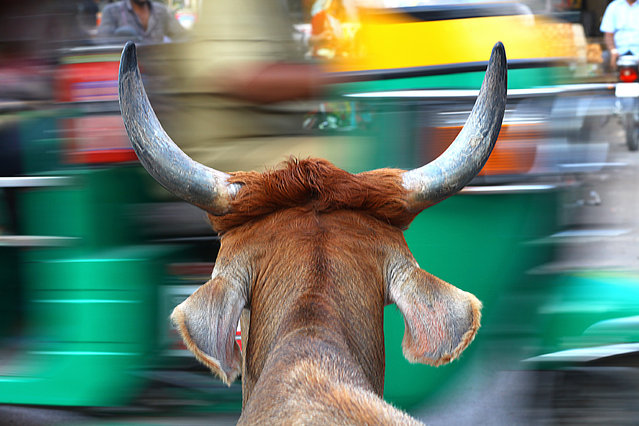
“Slow”. A calm cow in the messy streets of Jodhpur. Photo location: India. (Photo and caption by Matthias Troeger/National Geographic Photo Contest)

“Slow”. A calm cow in the messy streets of Jodhpur. Photo location: India. (Photo and caption by Matthias Troeger/National Geographic Photo Contest)
Details
20 May 2014 12:18:00
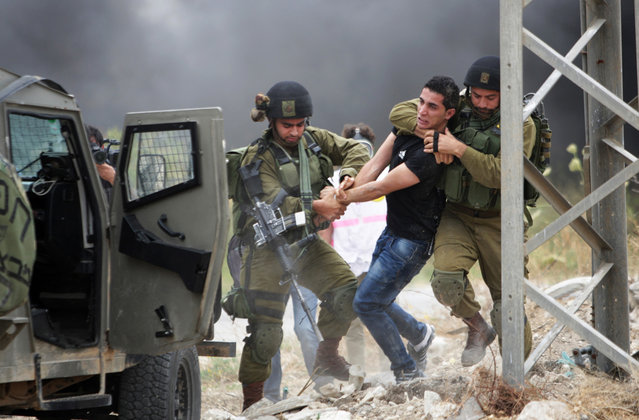
Israeli soldiers detain a protester during a demonstration by Palestinians protesting against the Israeli-built West Bank separation barrier and calling for the right of return for Palestinian refugees, in the northern West Bank city of Tulkarem, on May 31, 2014. (AP Photo/Nasser Ishtayeh)

Israeli soldiers detain a protester during a demonstration by Palestinians protesting against the Israeli-built West Bank separation barrier and calling for the right of return for Palestinian refugees, in the northern West Bank city of Tulkarem, on May 31, 2014. (AP Photo/Nasser Ishtayeh)
Details
02 Jun 2014 05:44:00
Talk-show host Oprah Winfrey interviewing cyclist Lance Armstrong during taping for the show "Oprah and Lance Armstrong: The Worldwide Exclusive" in Austin, Texas. The two-part episode of "Oprah's Next Chapter" will air nationally Thursday and Friday, Jan. 17-18, 2013. (AP Photo/Courtesy of Harpo Studios, Inc., George Burns)

Talk-show host Oprah Winfrey interviewing cyclist Lance Armstrong during taping for the show "Oprah and Lance Armstrong: The Worldwide Exclusive" in Austin, Texas. The two-part episode of "Oprah's Next Chapter" will air nationally Thursday and Friday, Jan. 17-18, 2013. (AP Photo/Courtesy of Harpo Studios, Inc., George Burns)
Details
16 Jul 2014 17:07:00
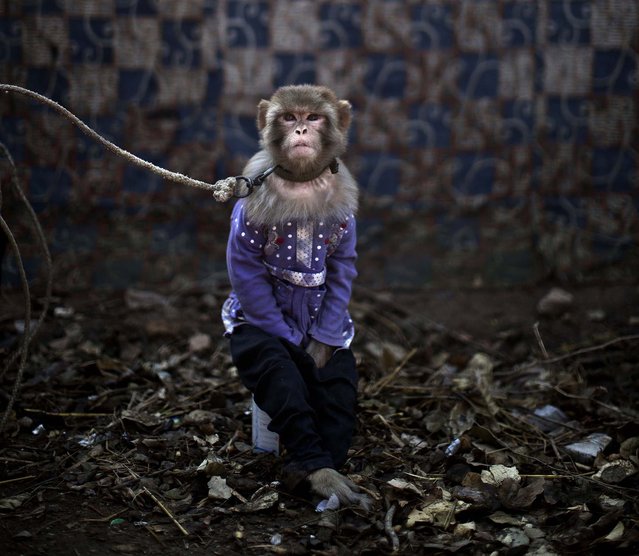
In this Tuesday, February 11, 2014, photo, a trained monkey, that makes a living for her Pakistani owner by performing to a crowd in public and private places, sits held by a leash, in Rawalpindi, Pakistan. For Pakistanis who raise and train the monkeys they are an important source of income in an impoverished country, and they form a strong bond with the animals. The monkeys are usually captured in the wild when they are babies and then trained. A trained monkey can fetch 20,000 to 30,000 rupees ($190 to $285). (Photo by Muhammed Muheisen/Associated Press)

In this Tuesday, February 11, 2014, photo, a trained monkey, that makes a living for her Pakistani owner by performing to a crowd in public and private places, sits held by a leash, in Rawalpindi, Pakistan. For Pakistanis who raise and train the monkeys they are an important source of income in an impoverished country, and they form a strong bond with the animals. The monkeys are usually captured in the wild when they are babies and then trained. A trained monkey can fetch 20,000 to 30,000 rupees ($190 to $285). (Photo by Muhammed Muheisen/Associated Press)
Details
23 Feb 2014 09:50:00
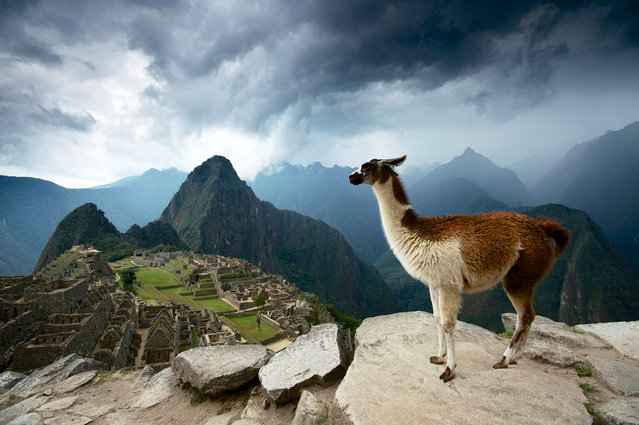
Machu Picchu, Peru. A llama’s-eye view of the legendary Inca settlement at Machu Picchu, isolated high in the Peruvian Andes. (Photo by Jim Turner/National Geographic)

Machu Picchu, Peru. A llama’s-eye view of the legendary Inca settlement at Machu Picchu, isolated high in the Peruvian Andes. (Photo by Jim Turner/National Geographic)
Details
16 Nov 2015 08:13:00
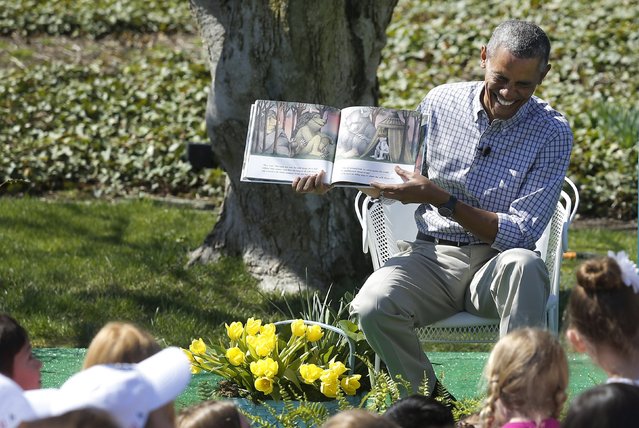
U.S. President Barack Obama laughs as he reads the storybook “Where the Wild Things Are” during the annual Easter Egg Roll at the White House in Washington April 6, 2015. (Photo by Jonathan Ernst/Reuters)

U.S. President Barack Obama laughs as he reads the storybook “Where the Wild Things Are” during the annual Easter Egg Roll at the White House in Washington April 6, 2015. Thousands of children gathered at the White House for the annual Easter Egg Roll. This year's event features live music, cooking stations, storytelling, and of course, some Easter egg roll. (Photo by Jonathan Ernst/Reuters)
Details
07 Apr 2015 11:28:00
Women labourers work at the construction site of a road in Kolkata January 8, 2015. Across towns and cities in India, it is not uncommon to see women cleaning building sites, carrying bricks and or shoveling gravel - helping construct the infrastructure necessary for the country's economic and social development. (Photo by Rupak De Chowdhuri/Reuters)

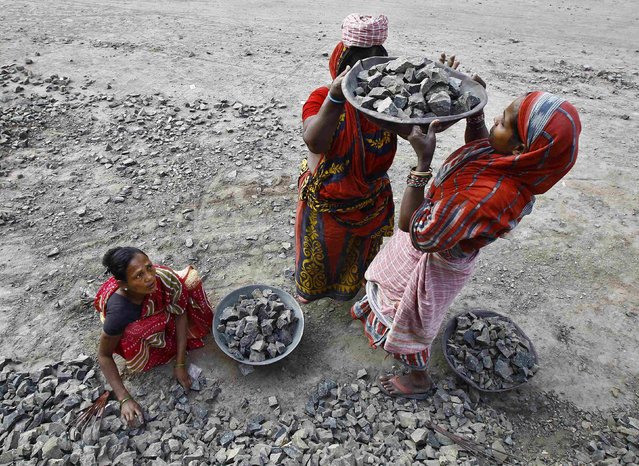
Women labourers work at the construction site of a road in Kolkata January 8, 2015. Across towns and cities in India, it is not uncommon to see women cleaning building sites, carrying bricks and or shoveling gravel – helping construct the infrastructure necessary for the country's economic and social development. They help build roads, railway tracks, airports, and offices. They lay pipes for clean water supplies, cables for telecommunications, and dig the drains for sewage systems. But although women make up at least 20 percent of India's 40 million construction workers, they are less recognized than male workers with lower pay and often prone to safety hazards and sexual harassment. They are often unaware of their rights or scared to complain, say activists now trying to campaign for better treatment of women in the construction industry. (Photo by Rupak De Chowdhuri/Reuters)
Details
15 Jan 2015 13:47:00
A Broto dancer prepares himself in a disused house of Bambari, in the centre of Central African Republic, before performing on March 14, 2019. The Broto, belonging to the Banda ethnic group, are known for their traditional dances accompanied by heavy horns made of tree roots. Today this tradition falls into disuse and its history is now forgotten by the new generations. (Photo by Florent Vergnes/AFP Photo)

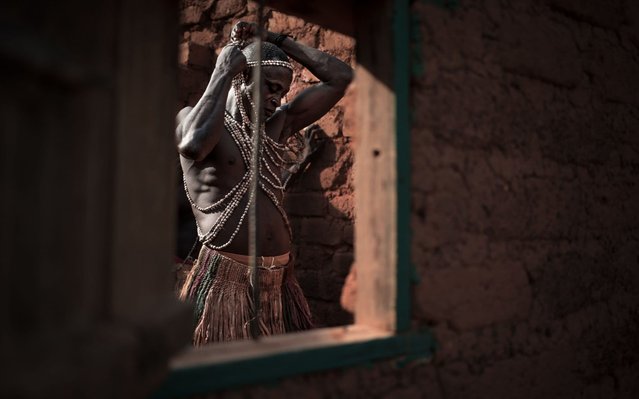
A Broto dancer prepares himself in a disused house of Bambari, in the centre of Central African Republic, before performing on March 14, 2019. The Broto, belonging to the Banda ethnic group, are known for their traditional dances accompanied by heavy horns made of tree roots. Today this tradition falls into disuse and its history is now forgotten by the new generations. (Photo by Florent Vergnes/AFP Photo)
Details
05 Apr 2019 00:01:00