Loading...
Done
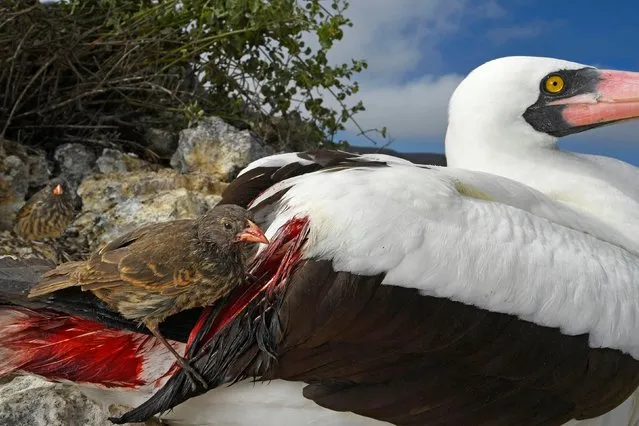
Bloodthirsty by Thomas P Peschak, Germany/South Africa — winner, Behaviour: birds. When rations run short on Wolf Island, in the remote northern Galápagos, the sharp-beaked ground finches become vampires. Their sitting targets are Nazca boobies and other large birds. The finches rely on a scant diet of seeds and insects, which regularly dries up, so they drink blood to survive. ‘I’ve seen more than half a dozen finches drinking from a single Nazca booby,’ says Tom. Rather than leave their nests the boobies tolerate the vampires, and the blood loss doesn’t seem to cause permanent harm. (Photo by Thomas P Peschak/2018 Wildlife Photographer of the Year)

Bloodthirsty by Thomas P. Peschak, Germany/South Africa — winner, Behaviour: birds. When rations run short on Wolf Island, in the remote northern Galápagos, the sharp-beaked ground finches become vampires. Their sitting targets are Nazca boobies and other large birds. The finches rely on a scant diet of seeds and insects, which regularly dries up, so they drink blood to survive. ‘I’ve seen more than half a dozen finches drinking from a single Nazca booby,’ says Tom. Rather than leave their nests the boobies tolerate the vampires, and the blood loss doesn’t seem to cause permanent harm. (Photo by Thomas P. Peschak/2018 Wildlife Photographer of the Year)
Details
19 Oct 2018 00:05:00
Breath of an Arctic fox by Marco Gaiotti, Italy. Marco was watching this little Arctic fox as it incessantly called another nearby. Gradually he noticed the fox’s wet breath was quickly freezing in the air after each call. It was late winter in Spitsbergen, Svalbard, and the air was -35C (-31F). Photographing Arctic foxes is often frustrating, as they are normally running around fast in search of food, but this one was very relaxed and let Marco get close enough to focus on it, with the light glowing perfectly in the background. (Photo by Marco Gaiotti/Wildlife Photographer of the Year 2021)

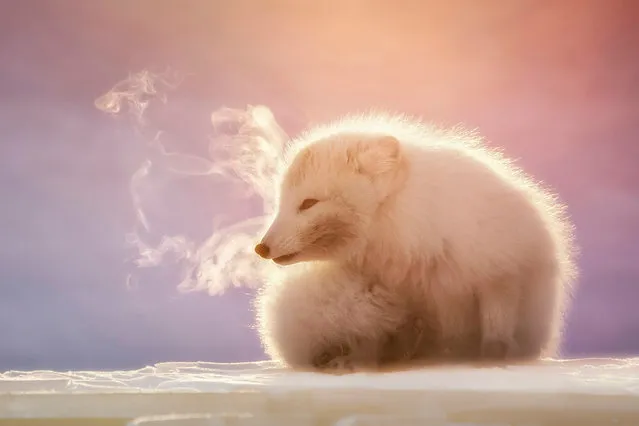
Breath of an Arctic fox by Marco Gaiotti, Italy. Marco was watching this little Arctic fox as it incessantly called another nearby. Gradually he noticed the fox’s wet breath was quickly freezing in the air after each call. It was late winter in Spitsbergen, Svalbard, and the air was -35C (-31F). Photographing Arctic foxes is often frustrating, as they are normally running around fast in search of food, but this one was very relaxed and let Marco get close enough to focus on it, with the light glowing perfectly in the background. (Photo by Marco Gaiotti/Wildlife Photographer of the Year 2021)
Details
05 Dec 2021 06:36:00
The first seal pup to be born this season at a major colony of grey seals on the Farne Islands sits beside its mother on Brownsman Island, England on September 30, 2015. (Photo by Owen Humphreys/PA Images)

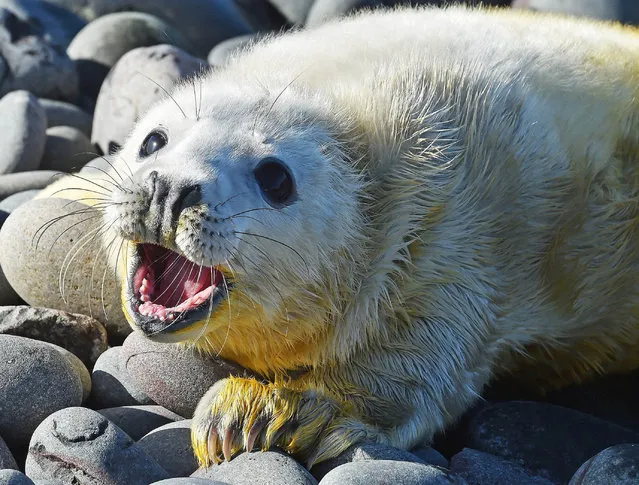
The first seal pup to be born this season at a major colony of grey seals on the Farne Islands sits beside its mother on Brownsman Island, England on September 30, 2015. (Photo by Owen Humphreys/PA Images)
Details
05 Oct 2015 08:03:00
A picture made available on 07 March 2016 shows visitors petting and holding a Fennec fox, native to the Sahara, in the petting room at the Little Zoo Cafe, a business built to capitalize on Thais' love for exotic animals, and food, on the outskirts of Bangkok, Thailand, 05 March 2016. (Photo by Barbara Walton/EPA)

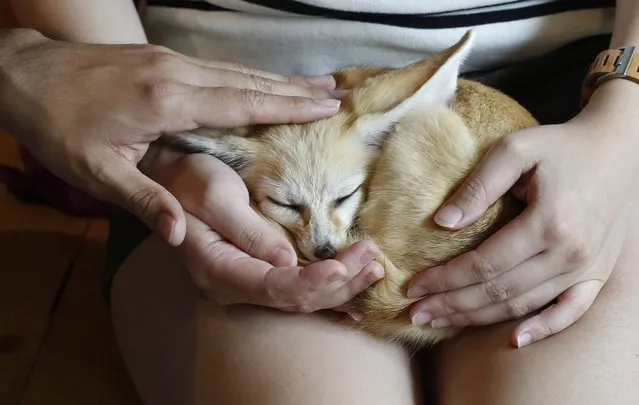
A picture made available on 07 March 2016 shows visitors petting and holding a Fennec fox, native to the Sahara, in the petting room at the Little Zoo Cafe, a business built to capitalize on Thais' love for exotic animals, and food, on the outskirts of Bangkok, Thailand, 05 March 2016. The cafe boasts Fennec foxes, Meerkat, native to parts of Africa, Silver Fox, Raccoon and Chinchillas, along with a menu of Thai food and Cheesecake, among other sweet deserts. Nature is a faraway fantasy in the bustling exhaust-filled cement city of Bangkok, fuelling a demand to own and be close to exotic pets. The trend to be near to a species that was once wild, in a city environment, far from the natural setting, has drawn criticism but continues to grow. (Photo by Barbara Walton/EPA)
Details
13 Mar 2016 09:38:00
A 6-month old female giant panda cub, an offspring of Xing Xing, formerly known as Fu Wa and Liang Liang, formerly known as Feng Yi, plays at the Giant Panda Conservation Center at the National Zoo in Kuala Lumpur, Malaysia, Thursday, February 18, 2016. (Photo by Joshua Paul/AP Photo)

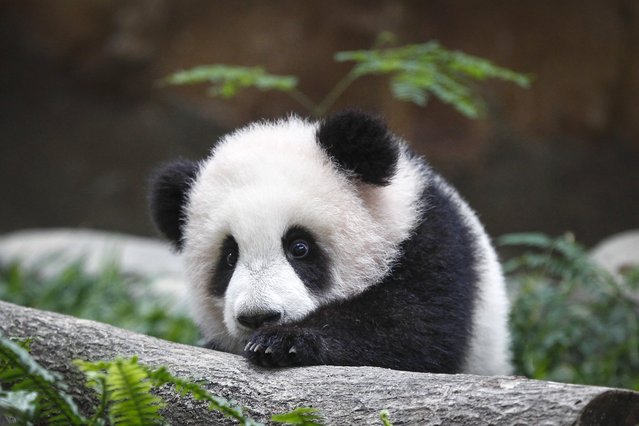
A 6-month old female giant panda cub, an offspring of Xing Xing, formerly known as Fu Wa and Liang Liang, formerly known as Feng Yi, plays at the Giant Panda Conservation Center at the National Zoo in Kuala Lumpur, Malaysia, Thursday, February 18, 2016. (Photo by Joshua Paul/AP Photo)
Details
21 Feb 2016 11:20:00
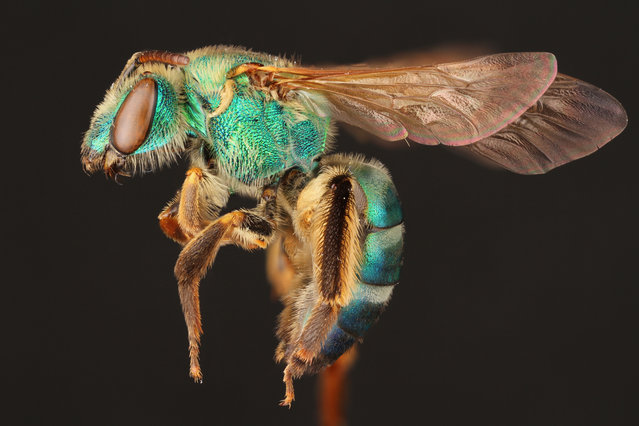
These macro images by Alejandro Santillana are being showcased in the Insects Unlocked project at the University of Texas at Austin. Here: A female sweat bee. (Photo by Alejandro Santillana/Insects Unlocked/Cover Images)

These macro images by Alejandro Santillana are being showcased in the Insects Unlocked project at the University of Texas at Austin. Here: A female sweat bee. (Photo by Alejandro Santillana/Insects Unlocked/Cover Images)
Details
21 Jul 2017 07:55:00
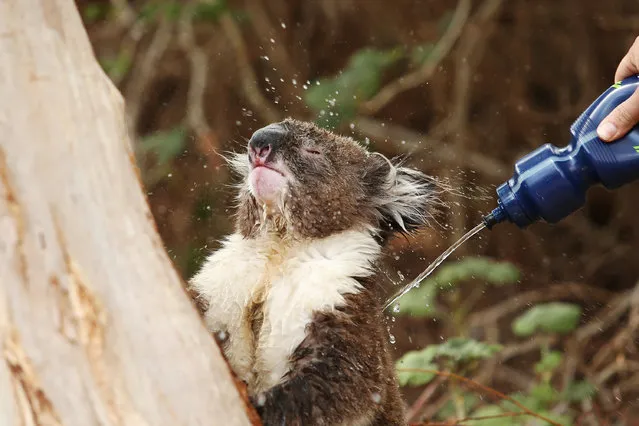
A heat-stressed koala waits as a resident pours water on its back on December 19, 2015 in Adelaide, Australia. Adelaide is experiencing an extreme heatwave, with temperatures reaching over 40 degrees for five consecutive days. (Photo by Morne de Klerk/Getty Images)

A heat-stressed koala waits as a resident pours water on its back on December 19, 2015 in Adelaide, Australia. Adelaide is experiencing an extreme heatwave, with temperatures reaching over 40 degrees for five consecutive days. (Photo by Morne de Klerk/Getty Images)
Details
26 Dec 2015 08:03:00
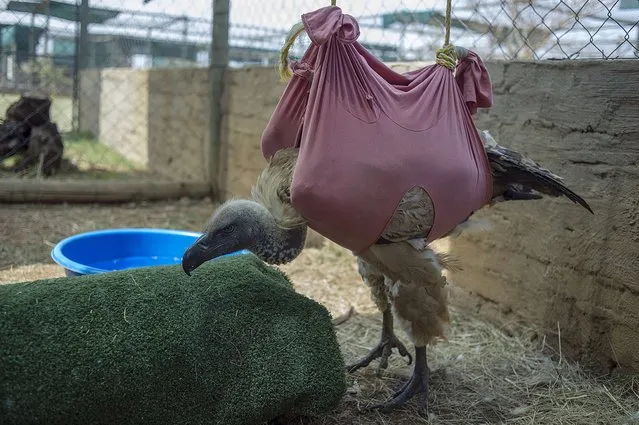
An injured vulture is treated at the VulPro Vulture Rehabilitation Centre in Hartebeepoortdam in the Magalisburg region on September 15, 2015. Confined to southern Africa, just under 4,000 breeding pairs of Cape Vultures remain in the wild, mostly in South Africa, Lesotho and Botswana. Unless conservation efforts are successful, Africa's largest vulture species may be facing eventual extinction. (Photo by Mujahid Safodien/AFP Photo)

An injured vulture is treated at the VulPro Vulture Rehabilitation Centre in Hartebeepoortdam in the Magalisburg region on September 15, 2015. Confined to southern Africa, just under 4,000 breeding pairs of Cape Vultures remain in the wild, mostly in South Africa, Lesotho and Botswana. Unless conservation efforts are successful, Africa's largest vulture species may be facing eventual extinction. (Photo by Mujahid Safodien/AFP Photo)
Details
19 Sep 2015 12:27:00