Loading...
Done
Maudy – Kalulushi, Zambia. Maudy was born in a hut in a small village close to Kalulushi, in Zambia. She grew up playing in the street with the other children in the village, who all attend the same school, where students ages 3 to 10 years old are in the same class. The village has no shops, restaurants or hotels, and just a few children are lucky enough to have toys. Maudy and her friends found a box full of sunglasses on the street, which quickly became their favorite toys. “Toy Stories” project. (Gabriele Galimberti)

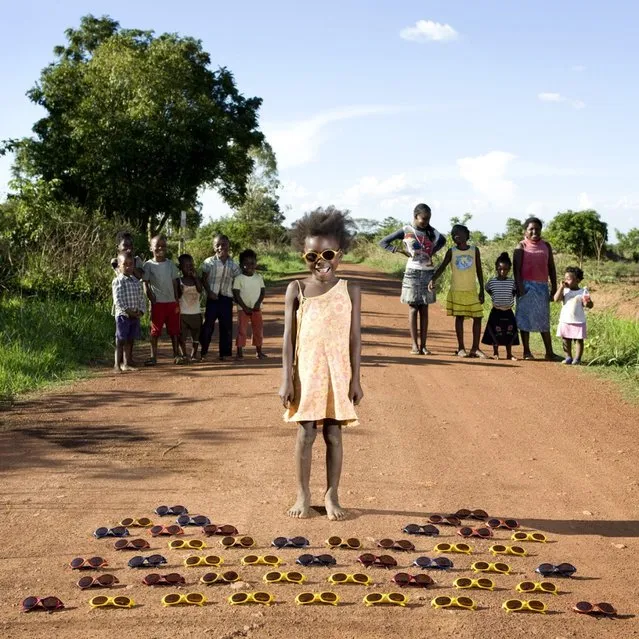
Maudy – Kalulushi, Zambia. Maudy was born in a hut in a small village close to Kalulushi, in Zambia. She grew up playing in the street with the other children in the village, who all attend the same school, where students ages 3 to 10 years old are in the same class. The village has no shops, restaurants or hotels, and just a few children are lucky enough to have toys. Maudy and her friends found a box full of sunglasses on the street, which quickly became their favorite toys. “Toy Stories” project. (Photo and caption by Gabriele Galimberti)
Details
05 Dec 2013 07:54:00
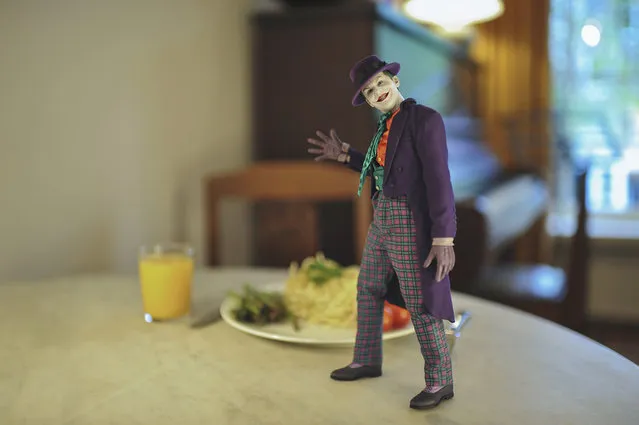
Toys Come to Life  By Russian Photographer VSE OK

Tumblr artist VSE OK has created a bizarre and often hilarious collection of photos that capture action figures in strange scenarios. VSE OK displays photos of everything from Bruce Lee using his martial arts skills to make breakfast to ruthless tricks pulled by the Joker (both Heath and Jack).
Details
03 Jun 2014 14:16:00
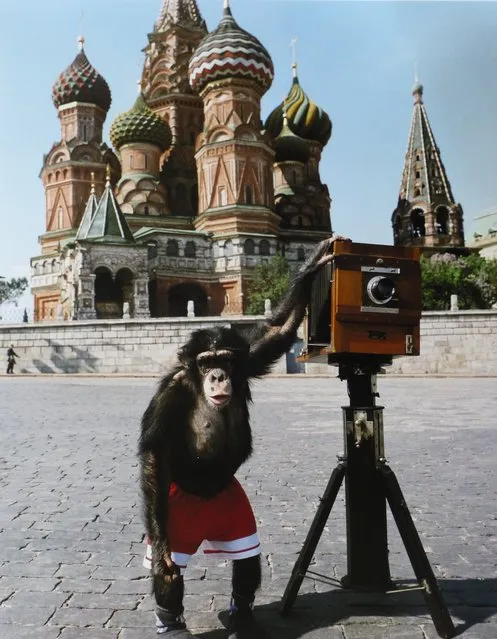
Picture by Guzelian GUZELIAN: SAY BANANAS! COLLECTION OF PHOTOGRAPHS TAKEN BY A MONKEY GO UNDER THE HAMMER. A collection of one-of-a-kind photographs is set to go under the hammer - so unique because the set was taken by a CHIMPANZEE. The pictures, which will be sold at Sotheby's Auction House, London, on June 5, are expected to fetch between £50,000 - £70,000.

“As is probably stated somewhere in the theory of infinity, if you give an infinite amount of monkeys an infinite number of old-timey Polaroid cameras, one will eventually take “artistic” blurry photos of historical sites in Moscow which will then be auctioned at Sotheby's for an estimated $75,000 – $100,000. Fortunately for every simian art fan with a spare $100k, we are currently living in the very universe in which that concept is reality. Eighteen photographs by – and of – Mikki The Chimpanzee are going to auction on June 5, 2013”. – Callie Beusman via Jezebel.com. (Photo by Guzelian)
Details
21 May 2013 09:31:00
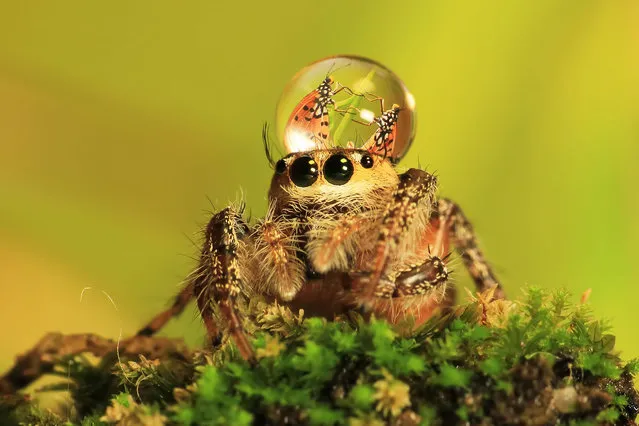
Incredible raindrops on spiders by photographer Uda Dennie

The amazing images, which show the balls of water reflecting an array of colours and even other insects, were snapped by photographer Uda Dennie in his garden. One of the massive droplets even stayed in shape for about a minute before the spider scurried off. Dennie, 33, from Batam Island, Indonesia, said: “I was really surprised to get such amazing pictures – it was really wonderful. I have a real passion for macro photography and after lots of trial and error I'm now able to produce good images – perseverance really paid off”. (Photo by Uda Dennie)
Details
28 Jul 2013 10:01:00
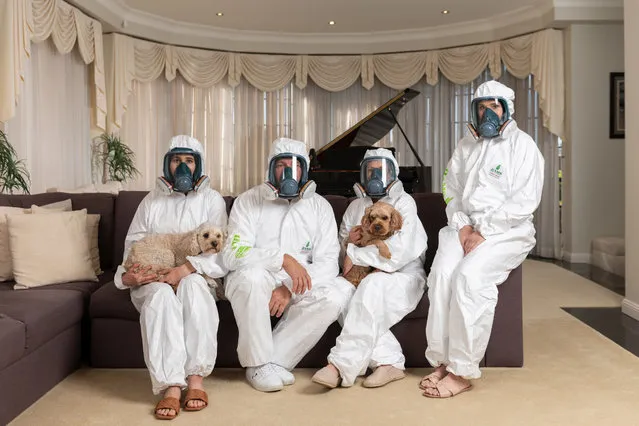
The Zammitt Family. “A portrait of the Zammitt family at their western Sydney home, with their dogs, Benji and Beau. Brian Zammitt (second from left) is the head of his booming family business, BAMS Hygiene Management, one of Australia’s leading deep cleaning companies, which specialises in disinfecting workplaces and locations contaminated with Covid-19. His wife, Sandra, and daughters Natalie and Louisa all play key frontline roles in the business”. (Photo by John Janson-Moore/Australia’s National Photographic Portrait Prize 2022)

The Zammitt Family. “A portrait of the Zammitt family at their western Sydney home, with their dogs, Benji and Beau. Brian Zammitt (second from left) is the head of his booming family business, BAMS Hygiene Management, one of Australia’s leading deep cleaning companies, which specialises in disinfecting workplaces and locations contaminated with Covid-19. His wife, Sandra, and daughters Natalie and Louisa all play key frontline roles in the business”. (Photo by John Janson-Moore/Australia’s National Photographic Portrait Prize 2022)
Details
09 Aug 2022 05:04:00
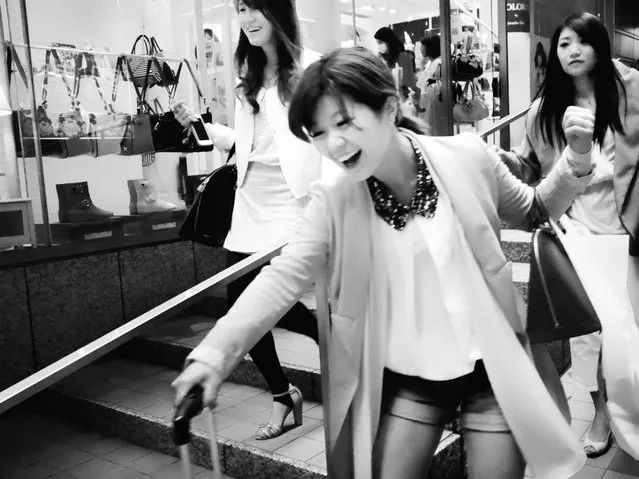
Daily Life in Tokyo by Photographer Tatsuo Suzuki. (Photo by Tatsuo Suzuki)

“Born in 1965 at Tokyo, living at Tokyo. Starting shooting since 2008. 2011: 1x Photo Awards Honorable Mention (Street). 2012: Black and White Spider Awards 2nd Place (Portrait), Honorable Mention (Fashion); PX3 Gold Awards (Press); Israel Harvanism Street Contest 1st Place. 2013: Urban Picnic Street Contest Top30 Finalist; PX3 3rd Place (Portrait), Gold (Portrait - Personality), Gold (Press - People/Personality); Photolux + PhotoVogue Photo Contest 1st Place. 2014: Sony World Photography Awards Commended (Smile Category)”. – Tatsuo Suzuki. Photo: “Spring”. (Photo by Tatsuo Suzuki)
Details
13 Apr 2014 10:19:00
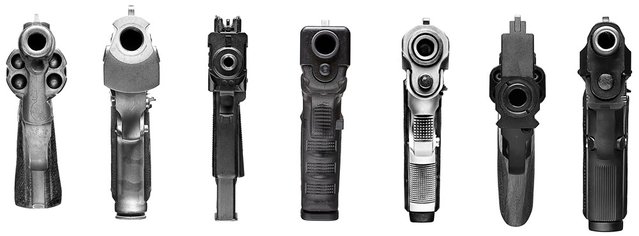
“Point Blank” – Gun Series by Peter Andrew. (Photo by Peter Andrew)

“Guns have a massive amount of power associated with them. They are designed to kill. We decided to photograph portraits of them in a similar way you might photograph a powerful person. Like powerful people, pistols have this “perfect” quality that we wanted to explore. As we started shooting them, we could see flaws in their design. Metal burring around the barrels, scratches in the metal. This imperfection and detail were very interesting to us; connecting us back to these images as portraits”. – Peter Andrew. (Photo by Peter Andrew/Simon Duffy/Derek Blais)
Details
26 Aug 2013 10:03:00
“Asaro from the Eastern Highlands”. The mudmen could not cover their faces with mud because the people of Papua New Guinea thought that the mud from the Asaro river was poisonous. So instead of covering their faces with this alleged poison, they made masks from pebbles that they heated and water from the waterfall, with unusual designs such as long or very short ears either going down to the chin or sticking up at the top, long joined eyebrows attached to the top of the ears, horns and sideways mouths. (Jimmy Nelson)

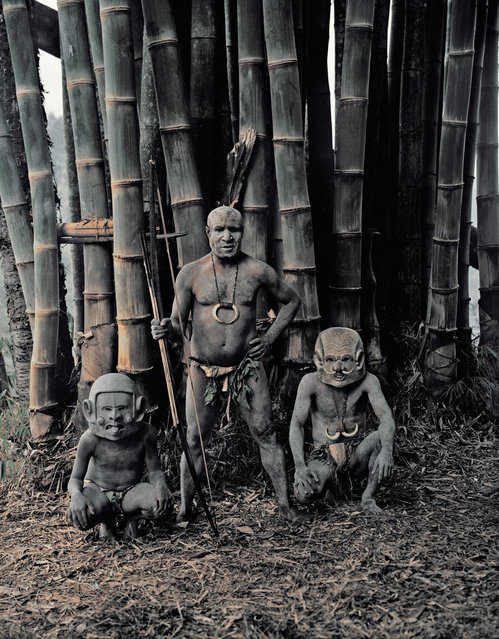
“Asaro from the Eastern Highlands”. The mudmen could not cover their faces with mud because the people of Papua New Guinea thought that the mud from the Asaro river was poisonous. So instead of covering their faces with this alleged poison, they made masks from pebbles that they heated and water from the waterfall, with unusual designs such as long or very short ears either going down to the chin or sticking up at the top, long joined eyebrows attached to the top of the ears, horns and sideways mouths. (Photo and caption by Jimmy Nelson)
Details
20 Oct 2013 08:54:00