Loading...
Done


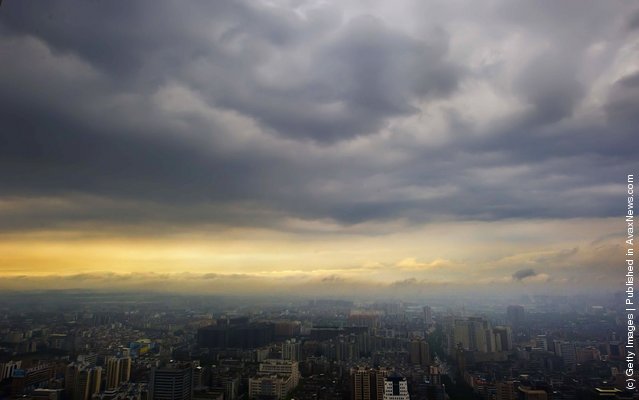
Dark clouds bearing down on the city on April 17, 2011 in Foshan, Guangdong Province of China. According to flood control authorities on Monday, gales as strong as 45.5 meters per second, accompanied by hailstorm, cloudburst and strong wind battered cities including Guangzhou, Foshan, Zhaoqing and Dongguan of south China's Guangdong Province on Sunday, has killed at least 17 people and injured 118. (Photo by ChinaFotoPress/Getty Images)
Details
18 Apr 2011 06:26:00
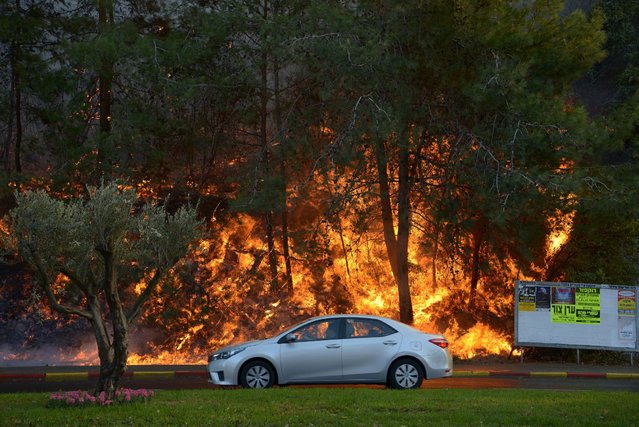
A car drives past burning trees as a wildfire rages in the northern city of Haifa, Israel November 24, 2016. (Photo by Gil Eliyahu/Reuters)

A car drives past burning trees as a wildfire rages in the northern city of Haifa, Israel November 24, 2016. Hundreds of Israelis fled their homes on the outskirts of the country's third city Haifa with others trapped inside as firefighters struggled to control raging bushfires, officials said. (Photo by Gil Eliyahu/Reuters)
Details
25 Nov 2016 11:17:00
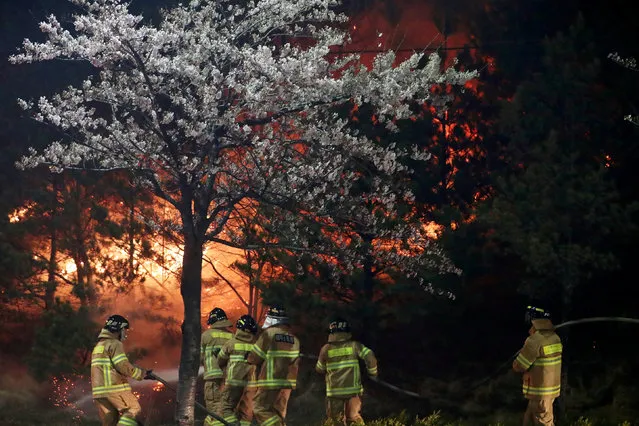
Firefighters work to put out flames during a wildfire in Sokcho, South Korea, April 5, 2019. (Photo by Yonhap via Reuters)

Firefighters work to put out flames during a wildfire in Sokcho, South Korea, April 5, 2019. South Korea grappled with the massive blaze that roared through forests and cities along the eastern coast, declaring a national emergency and mobilizing all available resources to bring the inferno under control. (Photo by Yonhap via Reuters)
Details
07 Apr 2019 00:07:00
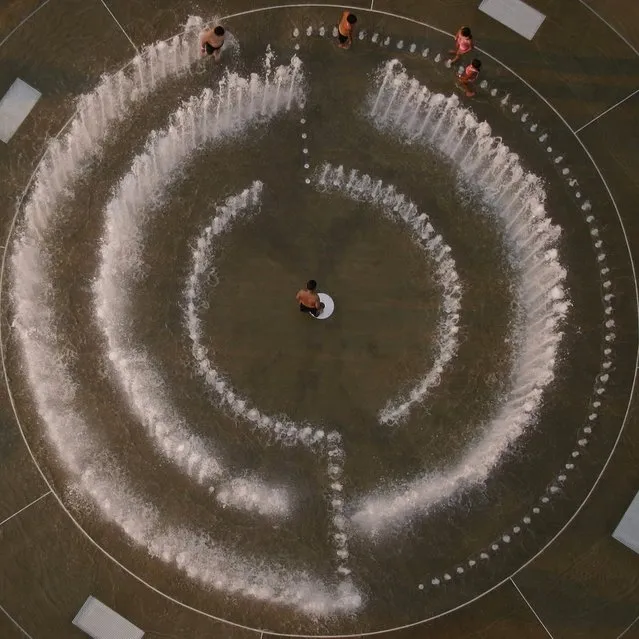
Kite Aerial By Seeing The World From New Heights

Kite Aerial photography (KAP) is a hobby and a type of photography. A camera is lifted using a kite and is triggered either remotely or automatically to take aerial photographs. The camera rigs can range from the extremely simple, consisting of a trigger mechanism with a disposable camera, to complex apparatus using radio control and digital cameras. On some occasions it can be a good alternative to other forms of aerial photography.
Details
17 Jan 2014 13:22:00
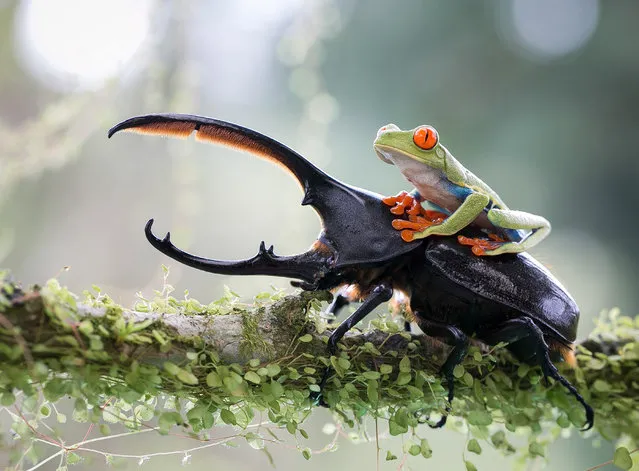
“The knight and his steed”. This picture was taken in a natural but controlled environment. There are pictures that can not be done in nature or that would imply a very high cost of both time and money, thats why photography workshops are run conducted at strategic locations and bringing EVERYONE who is interested, the basic notions (lighting, camera handling, composition, etc...) or the specimens, and afford them the opportunity to take pictures like this. (Photo and caption by Nicolas Reusens Boden (Sweden)/2014 Sony World Photography Awards)

“The knight and his steed”. This picture was taken in a natural but controlled environment. There are pictures that can not be done in nature or that would imply a very high cost of both time and money, thats why photography workshops are run conducted at strategic locations and bringing EVERYONE who is interested, the basic notions (lighting, camera handling, composition, etc...) or the specimens, and afford them the opportunity to take pictures like this. Although controlled, this shot was not prepared at all, I was performing a workshop with the agalychnis callidryas treefrog from Costa Rica when the frog managed to jump to the branch where this huge titan was sleeping... I had my gear ready so I only had to change a few settings and shoot... the rest is history. (Photo and caption by Nicolas Reusens Boden (Sweden)/2014 Sony World Photography Awards)
Details
10 Dec 2013 07:23:00
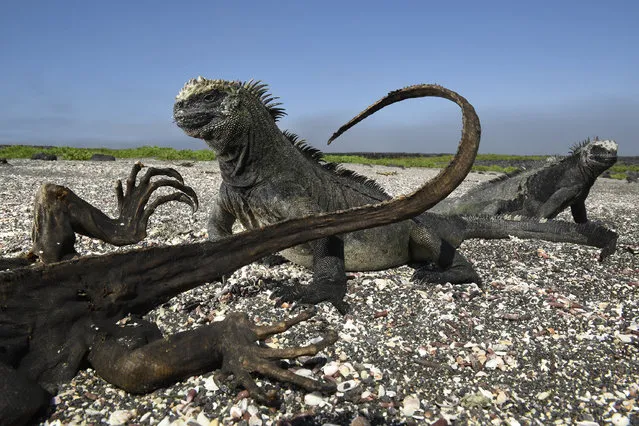
Galapagos – Rocking the Cradle: Four major ocean currents converge along the Galapagos archipelago, creating the conditions for an extraordinary diversity of animal life, April 25, 2016. The islands are home to at least 7,000 flora and fauna species, of which 97 percent of the reptiles, 80 percent of the land birds, 50 percent of the insects and 30 percent of the plants are endemic. The local ecosystem is highly sensitive to the changes in temperature, rainfall and ocean currents that characterize the climatic events known as El Niño and La Niña. These changes cause marked fluctuations in weather and food availability. Many scientists expect the frequency of El Niño and La Niña to increase as a result of climate change, making the Galapagos a possible early-warning location for its effects. (Photo by Thomas P. Peschak for National Geographic/World Press Photo)

Galapagos – Rocking the Cradle: Four major ocean currents converge along the Galapagos archipelago, creating the conditions for an extraordinary diversity of animal life, April 25, 2016. The islands are home to at least 7,000 flora and fauna species, of which 97 percent of the reptiles, 80 percent of the land birds, 50 percent of the insects and 30 percent of the plants are endemic. (Photo by Thomas P. Peschak for National Geographic/World Press Photo)
Details
16 Apr 2018 00:01:00
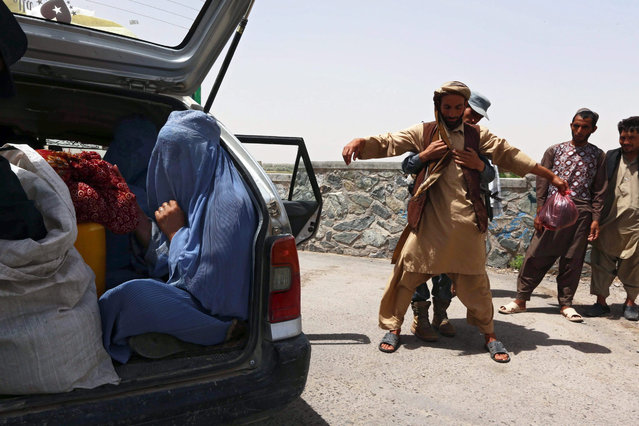
An Afghan policeman frisks a man while a burqa-cald woman sits in the trunk of a car on a roadside in Herat, Afghanistan, 05 July 2015. At least 18 police, two civilians and 30 rebels were killed in central Afghanistan during three days of fierce fighting, police said on 04 July. The clashes ended 04 July after security forces retook control of nine police checkpoints that had fallen to the rebels. (Photo by Jalil Rezayee/EPA)

An Afghan policeman frisks a man while a burqa-cald woman sits in the trunk of a car on a roadside in Herat, Afghanistan, 05 July 2015. At least 18 police, two civilians and 30 rebels were killed in central Afghanistan during three days of fierce fighting, police said on 04 July. The clashes ended 04 July after security forces retook control of nine police checkpoints that had fallen to the rebels. (Photo by Jalil Rezayee/EPA)
Details
06 Jul 2015 10:44:00
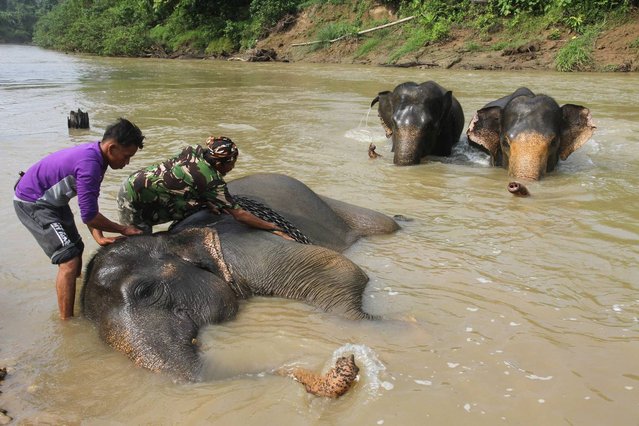
Indonesian mahouts (elephant masters) bathe elephants prior to a daily patrol at a Conservation Respons Unite (CRU) to control elephant-human conflicts in Serbajadi, East Aceh on April 7, 2016. Elephants have joined the front line in the fight against poaching and illegal logging in the dense jungles of Sumatra. Guided by their Indonesian mahouts, they trek alongside rivers, over rough terrain and deep into the rainforest in an area that is home to numerous endangered species, from orangutans to tigers, but which has suffered devastating deforestation in recent years. (Photo by AFP Photo/Januar)

Indonesian mahouts (elephant masters) bathe elephants prior to a daily patrol at a Conservation Respons Unite (CRU) to control elephant-human conflicts in Serbajadi, East Aceh on April 7, 2016. Elephants have joined the front line in the fight against poaching and illegal logging in the dense jungles of Sumatra. Guided by their Indonesian mahouts, they trek alongside rivers, over rough terrain and deep into the rainforest in an area that is home to numerous endangered species, from orangutans to tigers, but which has suffered devastating deforestation in recent years. (Photo by AFP Photo/Januar)
Details
11 Apr 2016 10:24:00