Supporters react as U.S. President Donald Trump walks from Marine One to the White House in Washington, U.S., October 3, 2019. (Photo by Tom Brenner/Reuters)
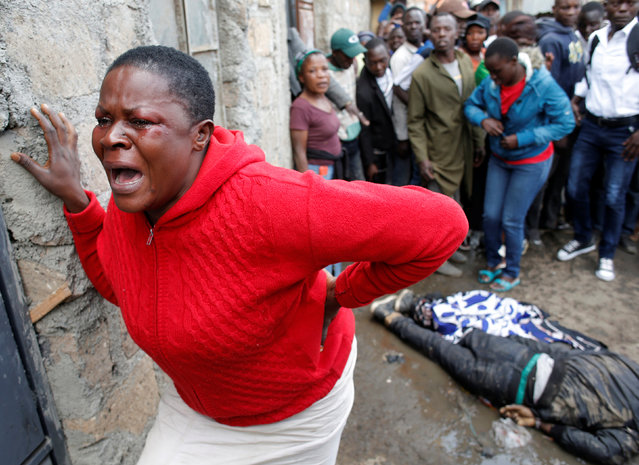
A woman cries after a supporter of opposition leader Raila Odinga was killed by police, witnesses said, in Mathare slum in Nairobi, Kenya August 9, 2017. (Photo by Goran Tomasevic/Reuters)
Women hold the Russian flags during an event organized by a group of Russia supporters to show solidarity with Moscow against Ukraine in Beirut, Lebanon, Saturday, April 9, 2022. (Photo by Hassan Ammar/AP Photo)
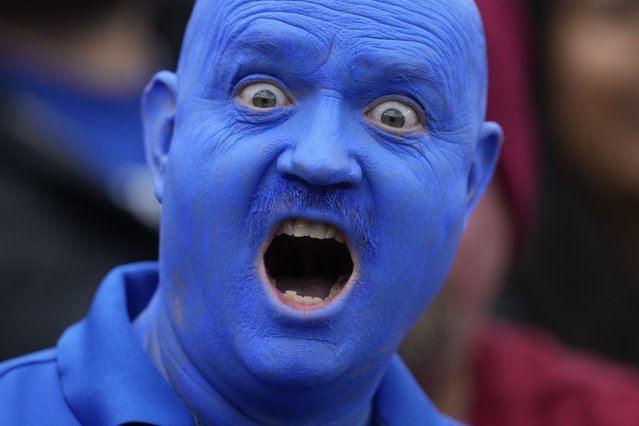
A BYU fan show his support during the first half of an NCAA college football game against Oklahoma, Saturday, November 18, 2023, in Provo, Utah. (Photo by Rick Bowmer/AP Photo)
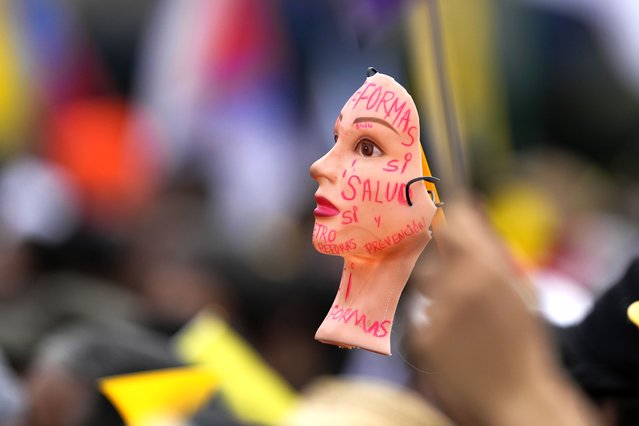
A doll's face is covered with supportive messages for government-proposed reforms during the International Workers' Day march in Bogota, Colombia, May 1, 2024. (Photo by Fernando Vergara/AP Photo)
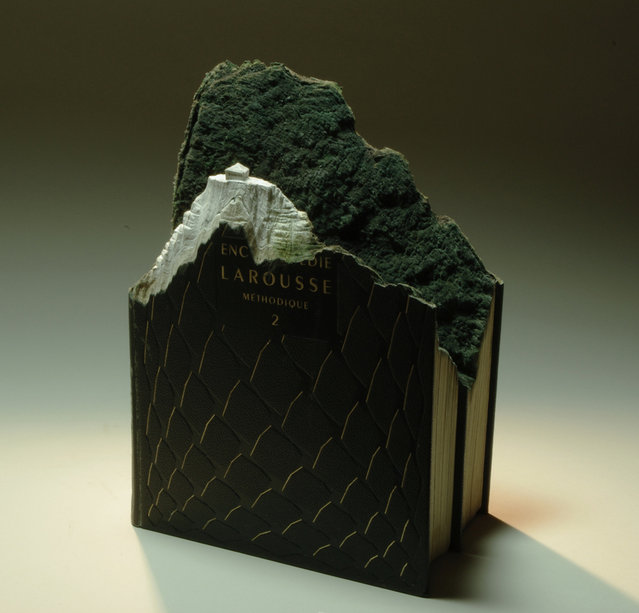
“So I carve landscapes out of books and I paint Romantic landscapes”, says interdisciplinary artist Guy Laramee who, in the course of his 30 years of practice, found his way through such varied and numerous disciplines as : stage writing, stage directing, contemporary music writing, musical instrument design and building, singing, video, scenography, sculpture, installation, painting and literature. Laramee uses books that are slowly falling apart, such as old encyclopedias and dictionaries to create dramatic landscapes.
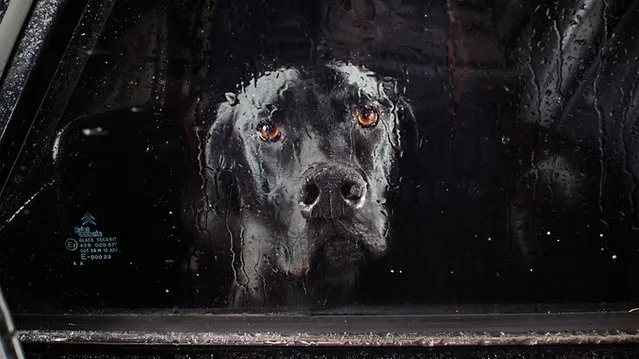
At first, British photographer Martin Usborne just wanted to do some reporting on people who leave their dogs locked up in cars. But as he went around scouring parking lots, “making barking noises to try and awaken sleeping dogs that were not actually there,” his project took on a new artistic direction. “The Silence of Dogs in Cars” was inspired by a “childhood memory of waiting in a car whilst his parents were shopping in a supermarket, and the youthful fear that they would not return.”
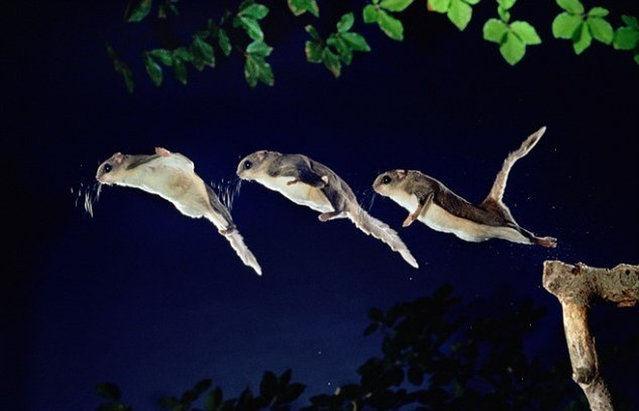
Flying squirrels are not capable of powered flight like birds or bats; instead, they glide between trees. They are capable of obtaining lift within the course of these flights, with flights recorded to 90 meters (295 ft). The direction and speed of the animal in midair is varied by changing the positions of its two arms and legs, largely controlled by small cartilaginous wrist bones. This changes the tautness of the patagium, a furry parachute-like membrane that stretches from wrist to ankle. It has a fluffy tail that stabilizes in flight. The tail acts as an adjunct airfoil, working as an air brake before landing on a tree trunk.