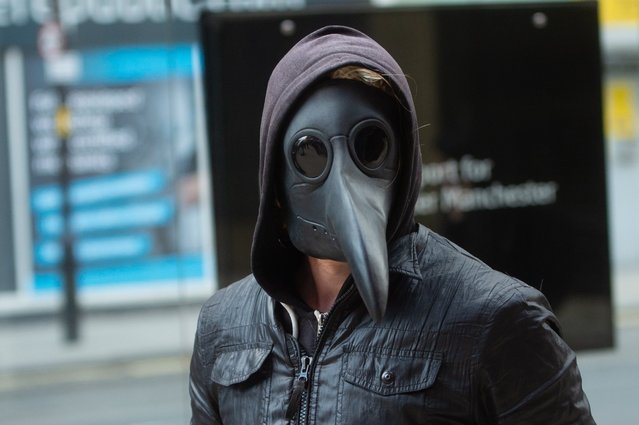
Shoppers and commuters in Manchester wearing face masks on February 28, 2020, including plague doctor masks due to the Coronavirus crisis in the UK. (Photo by Mario Forshow/Cavendish Press)
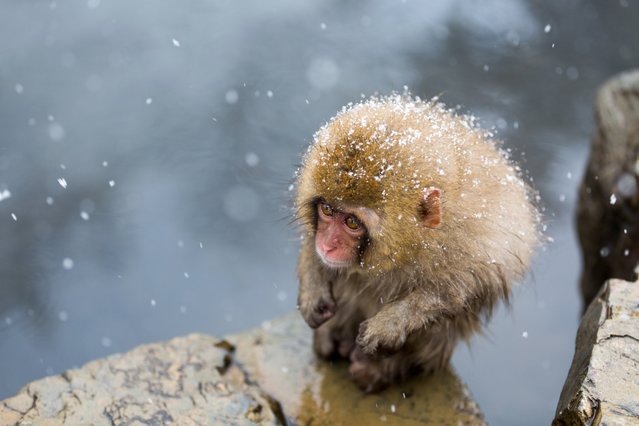
“A Little Monkey on the Cliff”. “A cold front hit the Nagano prefecture. I saw a little monkey enduring the cold in Jigokudani Monkey Park. This little monkey is really cute”. (Photo by Hidetoshi Ogata/Smithsonian Photo Contest)
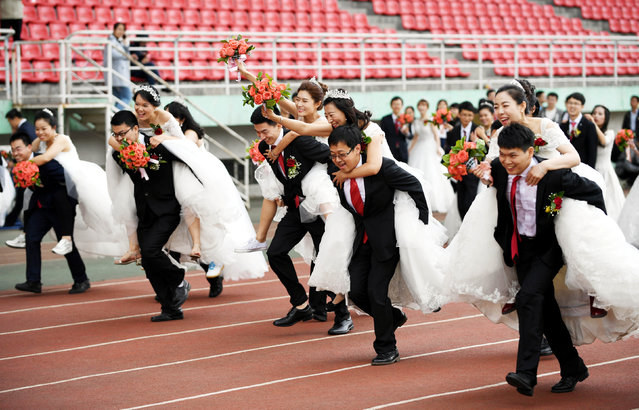
Couples take part in a competition during a mass wedding of 64 doctoral student couples at Harbin Institute of Technology, a university in Harbin, Heilongjiang province, China, June 4, 2017. (Photo by Reuters/Stringer)
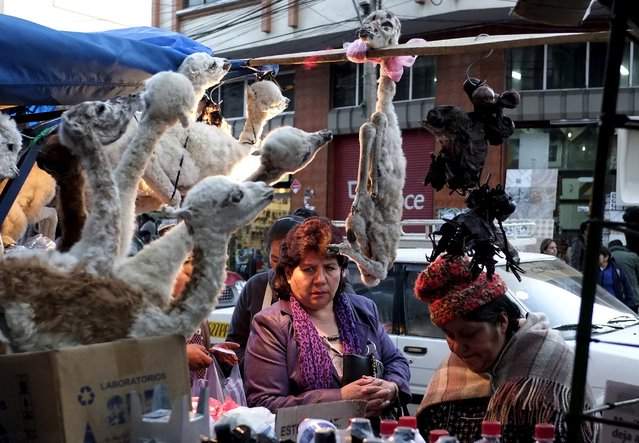
A woman (C) shops for an offering at the witch doctor's street in La Paz, July 31, 2015. According to Andean culture, the all the month of August is a time to give offerings to “Pachamama” to give thanks for their farms and health. The Aymaras use coca leaves, candies, animal fat, llama fetuses, some dried fruits, powdered minerals and alcohol during these rituals. (Photo by David Mercado/Reuters)
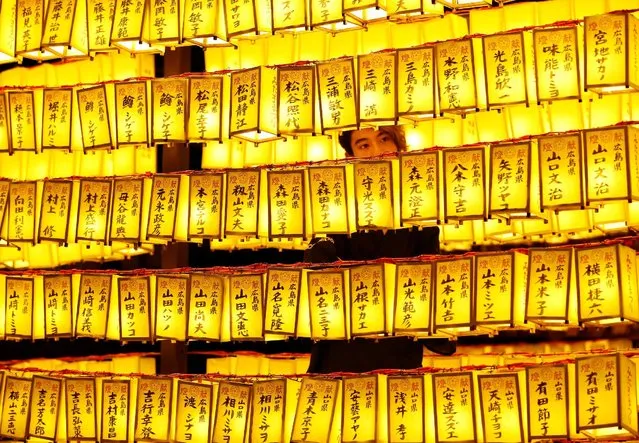
A man stands between thousands of paper lanterns, which were displayed and lit up the precincts of the shrine, where more than 2.4 million war-dead are enshrined, during the Mitama Festival at Yasukuni Shrine in Tokyo, Japan July 13, 2016. “Mitama” is a respectful word that means “the soul of a dead person” in Japanese, and this “Soul Festival” honors just that. (Photo by Issei Kato/Reuters)
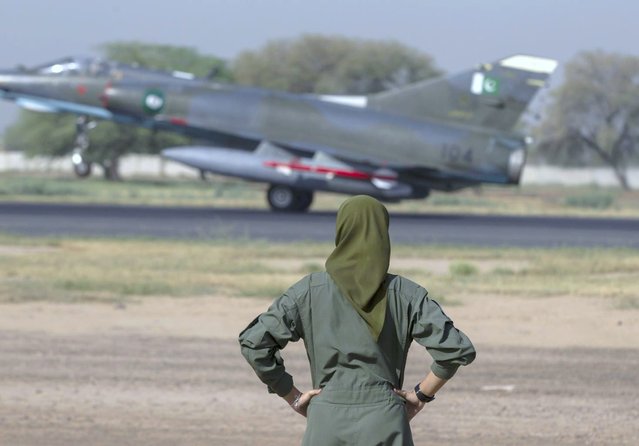
Ayesha Farooq, 26, Pakistan's only female war-ready fighter pilot watches an airforce jet about to take off at Mushaf base in Sargodha, north Pakistan June 7, 2013. Farooq, from Punjab province's historic city of Bahawalpur, is one of 19 women who have become pilots in the Pakistan Air Force over the last decade – there are five other female fighter pilots, but they have yet to take the final tests to qualify for combat. A growing number of women have joined Pakistan's defence forces in recent years as attitudes towards women change. (Photo by Zohra Bensemra/Reuters)
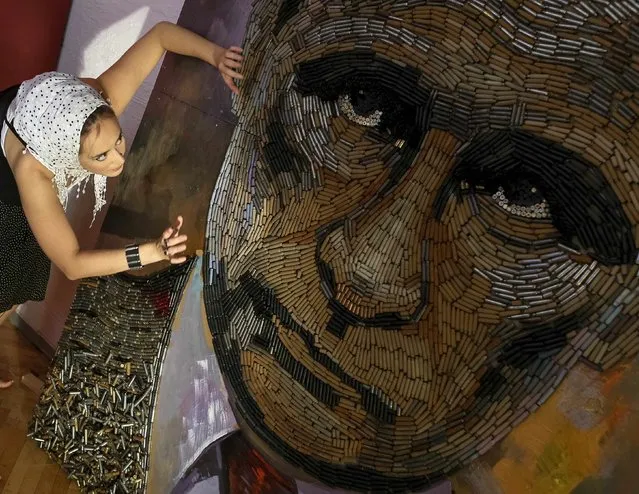
Ukrainian artist Dariya Marchenko works on a portrait of Russian President Vladimir Putin named “The Face of War” which is made out of 5,000 cartridges brought from the frontline in eastern Ukraine, in Kiev, July 23, 2015. The portrait will be presented along with a novel which will tell personal stories of six people involved in this project including Daria's own story and stories of people who helped her to collect shells from the frontline. Daria Marchenko calls her art approach philosophic symbolism where every element has its hidden meaning. In her works cartridges mean human's life that was brutally ended. (Photo by Gleb Garanich/Reuters)