Loading...
Done
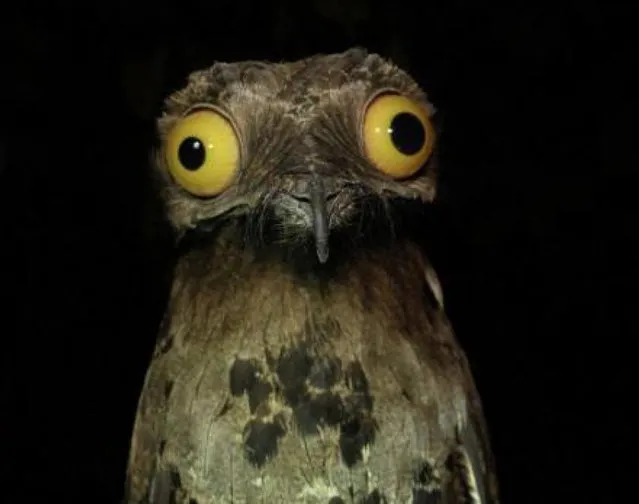
Nightjars And Pooto Bird

Potoos (family Nyctibiidae) are a group of near passerine birds related to the nightjars and frogmouths. They are sometimes called Poor-me-ones, after their haunting calls. There are seven species in one genus, Nyctibius, in tropical Central and South America.
These are nocturnal insectivores which lack the bristles around the mouth found in the true nightjars. They hunt from a perch like a shrike or flycatcher. During the day they perch upright on tree stumps, camouflaged to look like part of the stump. The single spotted egg is laid directly on the top of a stump.
Details
20 Jan 2014 14:34:00
A woman wearing a four-leaf clover-like hairpin takes a selfie nearby Nanluoguxiang street in Beijing, China, September 16, 2015. (Photo by Kim Kyung-Hoon/Reuters)

A woman wearing a four-leaf clover-like hairpin takes a selfie nearby Nanluoguxiang street in Beijing, China, September 16, 2015. Wearing antenna styled hairpins in the shape of various flowers and plants at scenic spots has become a new trend in Beijing. (Photo by Kim Kyung-Hoon/Reuters)
Details
18 Sep 2015 15:08:00
Bioluminescent sea fireflies glittering like diamonds on the rocks and sand. Okayama, Japan. July 2016. (Photo by Trevor Williams/Jonathan Galione/Getty Images)

Those lights are actually bioluminescent shrimp, better known as sea fireflies, or, in Japan, as “umibotaru”. Visible every year from May until the end of October, they live in the sand around very shallow sea water and are often seen floating between the extremes of high and low tides. Here: Bioluminescent sea fireflies glittering like diamonds on the rocks and sand. Okayama, Japan. July 2016. (Photo by Trevor Williams/Jonathan Galione/Getty Images)
Details
23 Aug 2016 10:13:00
Belgian Hotel CasAnus

Hotel CasAnus has all the elements of a great weekend getaway. It's just shaped like a giant human colon. On a small island, nestled between Antwerp and Ghent in Flanders, Belgium, this quaint structure is designed like a humongous intestinal tract, complete with an anus replica.
Originally an art sculpture created by the Dutch designer Joep Van Lieshout, CasAnus is now a part of the Verbeke Foundation art park, one of Western Europe’s edgiest art venues.
Details
01 Jun 2015 04:45:00
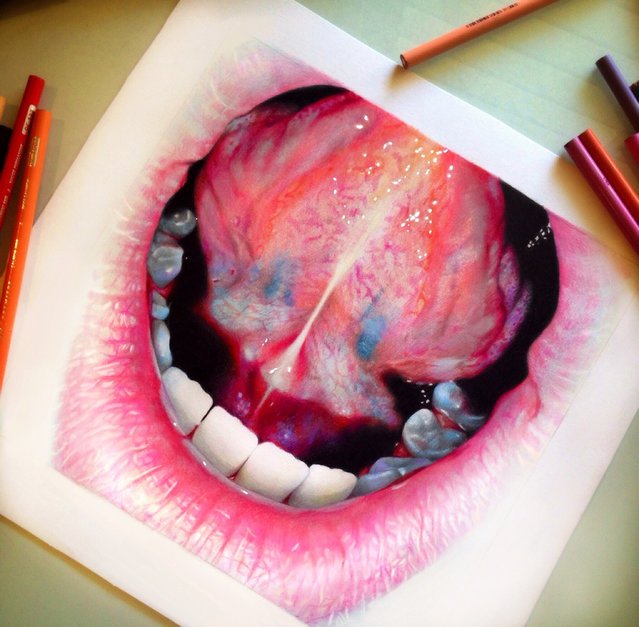
Colored Pencil Illustrations By Morgan Davidson" alt="Colored Pencil Illustrations By Morgan Davidson

Morgan Davidson is a twenty one year old artist who specializes in highly saturated, realistic color pencil illustrations. Her work includes detailed studies of body parts like the mouth, eye and heart. It also includes still life portraits like the one of herself in this series where the artist's hair is adorned with various found objects. Morgan's work is not simply realism, instead she stylizes the images to fit her own creative vision.
Details
01 May 2014 12:59:00
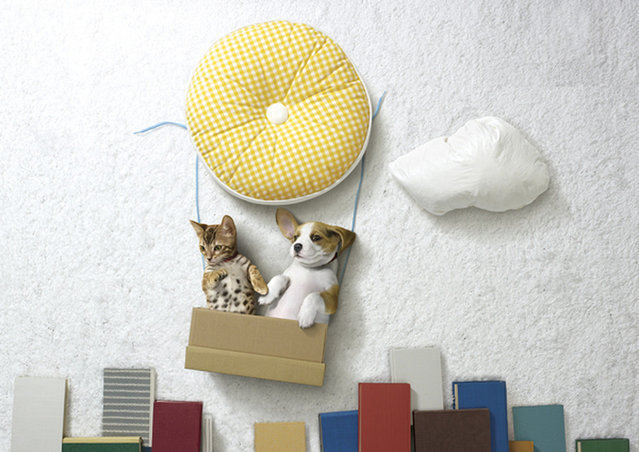
Life Is Adventure by Marek Farkas

This series cannot get any cuter! Entitled Life is Adventure, the images portray little kittens and puppies playfully placed within elaborate scenes. To create each setting, the creative team first sketched out ideas and then used everyday household items like books, pillows, and a broom, to bring the imaginative moments to life. In the compositions, kittens ride camels, puppies sail off to sea, upside-down hangars look like seagulls, and a ring of yellow rubber gloves form a sun shining overhead.
Details
29 Aug 2013 09:00:00
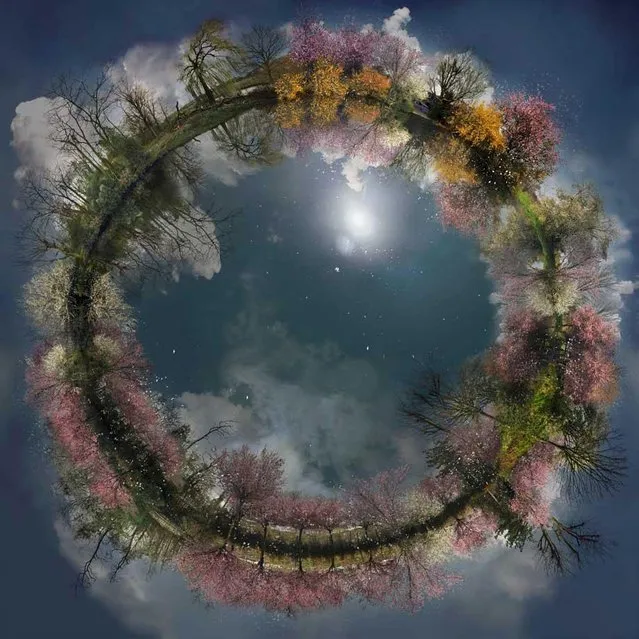
Miniature Worlds by Catherine Nelson

Catherine Nelson is a visual artist who uses the digital medium to paint images together into personal and imaginary landscapes. Trained as a painter in Sydney and London and with years of experience in the creation of visual effects for feature films like Moulin Rouge and Harry Potter, she now has dedicated her skills to her own art work combining the techniques from both these worlds into a new contemporary art medium. Her latest series have been exhibited in Australia, New Zealand, China, Korea, USA and Europe and have captivated audiences and art collectors in cities like Sydney, Paris, Los Angeles, Beijing and Seoul.
Details
26 May 2013 11:00:00
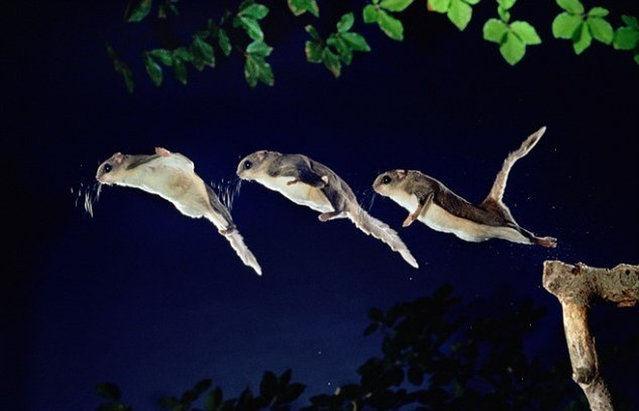
 Flying Squirrel

Flying squirrels are not capable of powered flight like birds or bats; instead, they glide between trees. They are capable of obtaining lift within the course of these flights, with flights recorded to 90 meters (295 ft). The direction and speed of the animal in midair is varied by changing the positions of its two arms and legs, largely controlled by small cartilaginous wrist bones. This changes the tautness of the patagium, a furry parachute-like membrane that stretches from wrist to ankle. It has a fluffy tail that stabilizes in flight. The tail acts as an adjunct airfoil, working as an air brake before landing on a tree trunk.
Details
07 Aug 2012 16:29:00