Loading...
Done
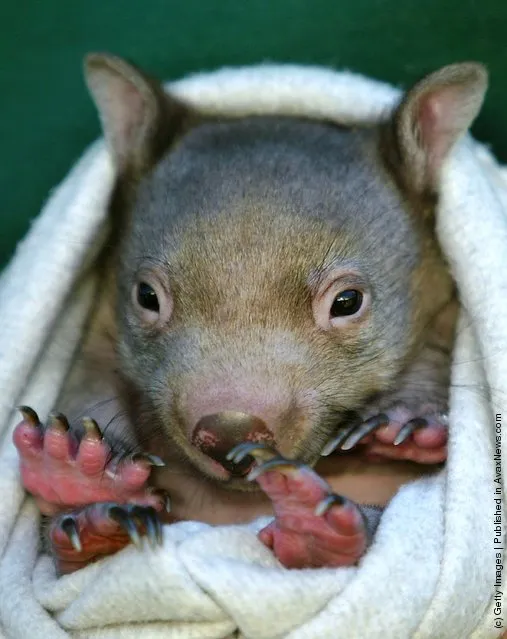
A baby Common Wombat

“Wombats are Australian marsupials; they are short-legged, muscular quadrupeds, approximately 1 metre (39 in) in length with a short, stubby tail. They are adaptable in their habitat tolerances, and are found in forested, mountainous, and heathland areas of south-eastern Australia, including Tasmania, as well as an isolated patch of about 300 ha in Epping Forest National Park in central Queensland”. – Wikipedia

Photo: “Abdul”, a baby Common Wombat, is one of the marsupials on show during the spring baby boom at Taronga Zoo September 1, 2005 in Sydney, Australia. “Abdul” was orphaned when his mother was killed by a car. (Photo by Mark Nolan/Getty Images)
Details
20 Aug 2011 11:23:00
A bull hits a reveller during the first running of the bulls of the San Fermin festival in Pamplona, Spain, July 7, 2018. (Photo by Vincent West/Reuters)

A bull hits a reveller during the first running of the bulls of the San Fermin festival in Pamplona, Spain, July 7, 2018. Each day at 8am hundreds of people race with six bulls, charging along a winding, 848.6-metre (more than half a mile) course through narrow streets to the city's bull ring, where the animals are killed in a bullfight or corrida, during this festival dating back to medieval times and also featuring religious processions, folk dancing, concerts and round-the-clock drinking. (Photo by Vincent West/Reuters)
Details
11 Jul 2018 00:05:00
Anti-nuclear activists demonstrate during a Say to Goodbye to Nuclear Energy protest in Kobe, Japan

Anti-nuclear activists demonstrate during a “Say to Goodbye to Nuclear Energy” protest on September 11, 2011 in Kobe, Japan. Japan is marking sixth months since a magnitude 9.0 earthquake struck Japan offshore on March 11 at 2:46pm local time, triggering a tsunami wave of up to ten metres which engulfed large parts of north-eastern Japan and also damaged the Fukushima nuclear plant, causing the worst nuclear crisis in decades. The current number of dead and missing is reportedly estimated to be 22,900. (Photo by Buddhika Weerasinghe/Getty Images)
Details
12 Sep 2011 10:16:00
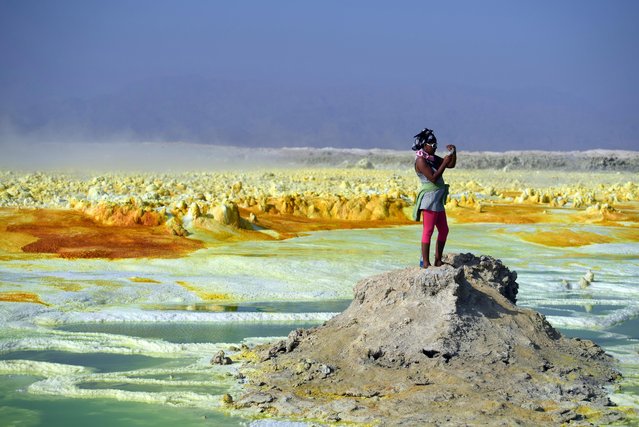
A tourist take a photograph of a sulphur lake in the Danakil Depression on January 23, 2017 near Dallol, Ethiopia. (Photo by Carl Court/Getty Images)

A tourist take a photograph of a sulphur lake in the Danakil Depression on January 23, 2017 near Dallol, Ethiopia. The depression lies 100 metres below sea level and is one of the hottest and most inhospitable places on Earth. Despite the gruelling conditions, Ethiopians continue a centuries old industry of mining salt from the ground by hand in temperatures that average 34.5 degrees centigrade but have risen to over 50 degrees. (Photo by Carl Court/Getty Images)
Details
25 Jan 2017 11:36:00
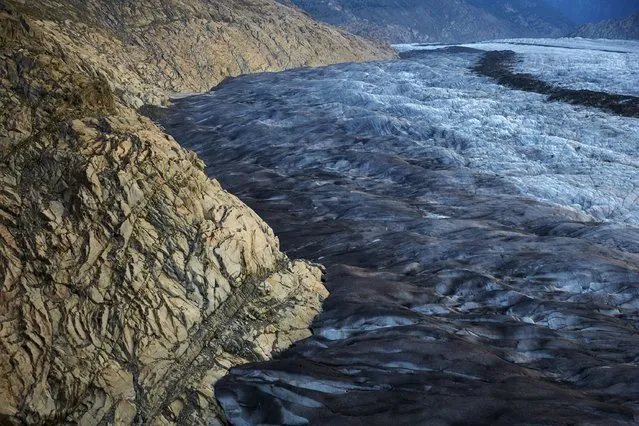
The Aletsch Glacier is pictured at dusk in Fiesch, Switzerland, August 11, 2015. (Photo by Denis Balibouse/Reuters)

The Aletsch Glacier is pictured at dusk in Fiesch, Switzerland, August 11, 2015. One of Europe's biggest glaciers, the Great Aletsch coils 23 km (14 miles) through the Swiss Alps – and yet this mighty river of ice could almost vanish in the lifetimes of people born today because of climate change. The glacier, 900 metres (2,950 feet) thick at one point, has retreated about 3 km (1.9 miles) since 1870 and that pace is quickening. (Photo by Denis Balibouse/Reuters)
Details
18 Oct 2015 08:05:00
Employees cover bacon on fried dranik, a potato pancake that is the national dish of Belarus, in the Sula History Park near the village of Sula, Belarus March 7, 2016. (Photo by Vasily Fedosenko/Reuters)

Employees cover bacon on fried dranik, a potato pancake that is the national dish of Belarus, in the Sula History Park near the village of Sula, Belarus March 7, 2016. According to the park's representatives, the two-metre-wide pancake was an attempt to enter the Guinness World Records as the world's largest dranik. (Photo by Vasily Fedosenko/Reuters)
Details
08 Mar 2016 13:41:00
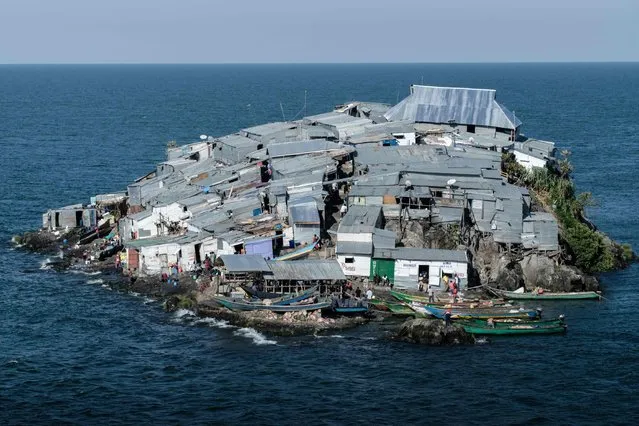
A picture taken on October 5, 2018, shows a general view of Migingo island which is densely populated by residents fishing mainly for Nile perch in Lake Victoria on the border of Uganda and Kenya. (Photo by Yasuyoshi Chiba/AFP Photo)

A picture taken on October 5, 2018, shows a general view of Migingo island which is densely populated by residents fishing mainly for Nile perch in Lake Victoria, the continent's largest lake, on the border of Uganda and Kenya. More than 500 people live on the island, which is barely 2,000-square-metres. (Photo by Yasuyoshi Chiba/AFP Photo)
Details
29 Oct 2018 00:03:00


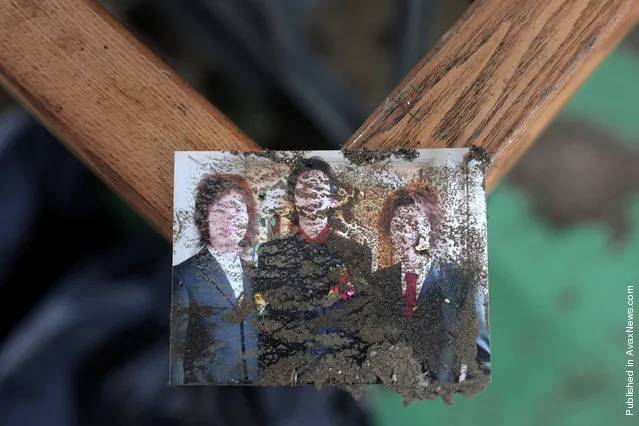
A muddied family photograph sits on a hallway stairwell in an apartment block on March 17, 2011 in Kensennuma, Japan. Residents were allowed back to their homes today and began the massive cleanup operation caused by a 9.0 magnitude strong earthquake that struck on March 11 off the coast of north-eastern Japan. The quake triggered a tsunami wave of up to 10 metres which engulfed large parts of north-eastern Japan. The death toll has risen past 5000 with at least 8600 people still missing. (Photo by Chris McGrath/Getty Images)
Details
17 Mar 2011 12:29:00