Loading...
Done
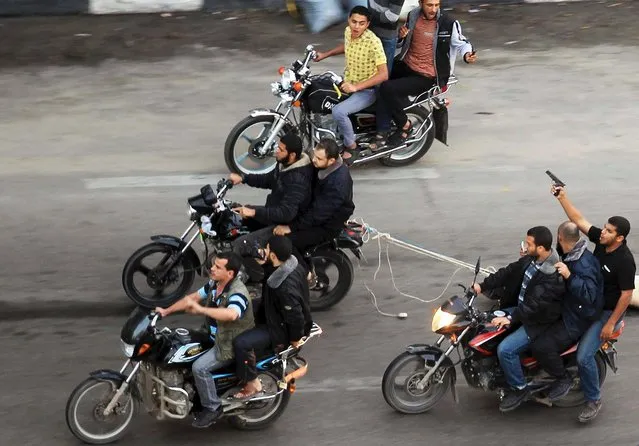
Palestinian gunmen ride motorcycles as they drag the body of a man, who was suspected of working for Israel, in Gaza City November 20, 2012. Palestinian gunmen shot dead six alleged collaborators in the Gaza Strip who “were caught red-handed”, according to a security source quoted by the Hamas Aqsa radio on Tuesday. (Photo by Suhaib Salem/Reuters)

“Masked gunmen publicly shot dead six suspected collaborators with Israel at a large Gaza City intersection Tuesday, witnesses said. An Associated Press reporter saw a mob surrounding five of the bloodied corpses shortly after the killing”. – Karin Laub via Associated Press

Photo: Palestinian gunmen ride motorcycles as they drag the body of a man, who was suspected of working for Israel, in Gaza City November 20, 2012. (Photo by Suhaib Salem/Reuters)
Details
21 Nov 2012 09:19:00
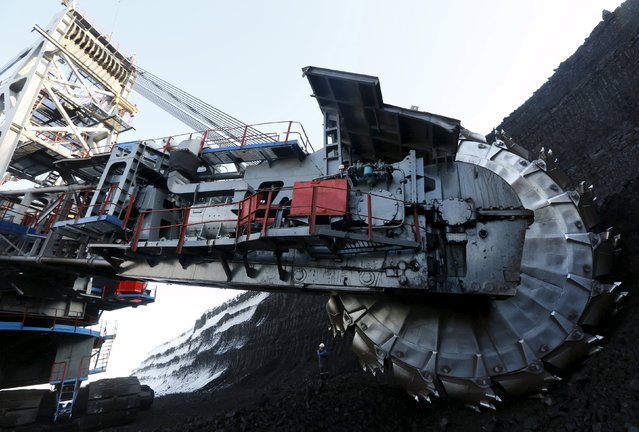
Master Sergey Suprun uses a portable radio set as he stands near a rotary dredge which works on the coal face of the Borodinsky opencast colliery, near the Siberian town of Borodino, east of Krasnoyarsk, Russia October 27, 2015. The Borodinsky colliery, 9 km (5.6 miles) long and more than 100 meters (328 feet) deep, annually produces more than 20 million tons of coal and is considered to be the biggest opencast coal mine in Russia, according to official representatives. (Photo by Ilya Naymushin/Reuters)

Master Sergey Suprun uses a portable radio set as he stands near a rotary dredge which works on the coal face of the Borodinsky opencast colliery, near the Siberian town of Borodino, east of Krasnoyarsk, Russia October 27, 2015. The Borodinsky colliery, 9 km (5.6 miles) long and more than 100 meters (328 feet) deep, annually produces more than 20 million tons of coal and is considered to be the biggest opencast coal mine in Russia, according to official representatives. (Photo by Ilya Naymushin/Reuters)
Details
31 Oct 2015 08:01:00
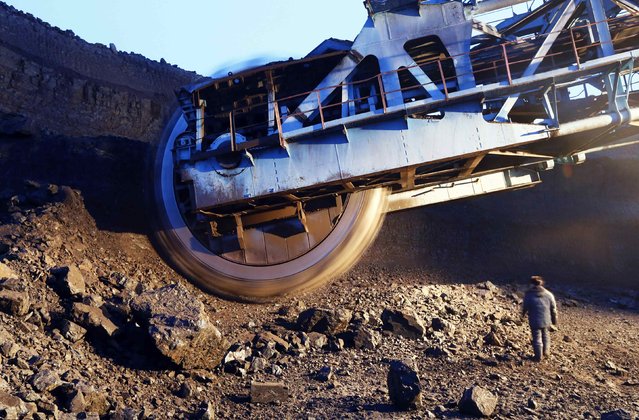
An employee walks near a rotary dredge which works on the coal face of the Borodinsky opencast colliery, near the Siberian town of Borodino, east of Krasnoyarsk, December 9, 2014. The Borodinsky colliery, 9 km (5.6 miles) long and more than 100 meters (328 feet) deep, annually produces more than 20 million tons of coal and is considered to be the biggest opencast coal mine in Russia, according to official representatives. (Photo by Ilya Naymushin/Reuters)

An employee walks near a rotary dredge which works on the coal face of the Borodinsky opencast colliery, near the Siberian town of Borodino, east of Krasnoyarsk, December 9, 2014. The Borodinsky colliery, 9 km (5.6 miles) long and more than 100 meters (328 feet) deep, annually produces more than 20 million tons of coal and is considered to be the biggest opencast coal mine in Russia, according to official representatives. (Photo by Ilya Naymushin/Reuters)
Details
11 Dec 2014 13:29:00
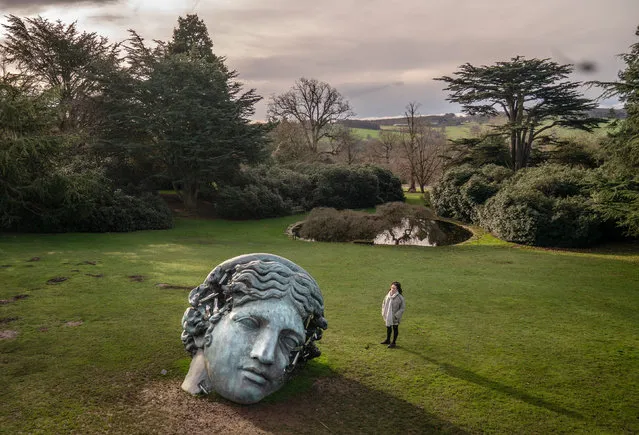
Dominique Lynch on Tuesday, February 20, 2024 views Daniel Arsham's Unearthed, Bronze Eroded Melpomene, on display during Daniel Arsham: Relics in the Landscape exhibition, the first UK museum display of work by the highly acclaimed North American, at the Yorkshire Sculpture Park in Wakefield, West Yorkshire. (Photo by Danny Lawson/PA Images via Getty Images)

Dominique Lynch on Tuesday, February 20, 2024 views Daniel Arsham's Unearthed, Bronze Eroded Melpomene, on display during Daniel Arsham: Relics in the Landscape exhibition, the first UK museum display of work by the highly acclaimed North American, at the Yorkshire Sculpture Park in Wakefield, West Yorkshire. (Photo by Danny Lawson/PA Images via Getty Images)
Details
14 Mar 2024 06:45:00
Staff members lead robot dogs during the 2025 AI Intelligent Robot Exhibition at Nanjing International Expo Centre on February 16, 2025 in Nanjing, Jiangsu Province of China. (Photo by Yang Bo/China News Service/VCG via Getty Images)

Staff members lead robot dogs during the 2025 AI Intelligent Robot Exhibition at Nanjing International Expo Centre on February 16, 2025 in Nanjing, Jiangsu Province of China. (Photo by Yang Bo/China News Service/VCG via Getty Images)
Details
01 Mar 2025 03:40:00
Medical residents, who removed their clothes to protest against working conditions, take part on a protest during a strike in Barcelona, Spain, Tuesday, October 20, 2020. Regional authorities across Spain continue to tighten restrictions against a sharp resurgence of coronavirus infections that is bringing the country’s cumulative caseload close to one million infections, the highest tally in western Europe. (Photo by Emilio Morenatti/AP Photo)

Medical residents, who removed their clothes to protest against working conditions, take part on a protest during a strike in Barcelona, Spain, Tuesday, October 20, 2020. Regional authorities across Spain continue to tighten restrictions against a sharp resurgence of coronavirus infections that is bringing the country’s cumulative caseload close to one million infections, the highest tally in western Europe. (Photo by Emilio Morenatti/AP Photo)
Details
23 Oct 2020 00:07:00
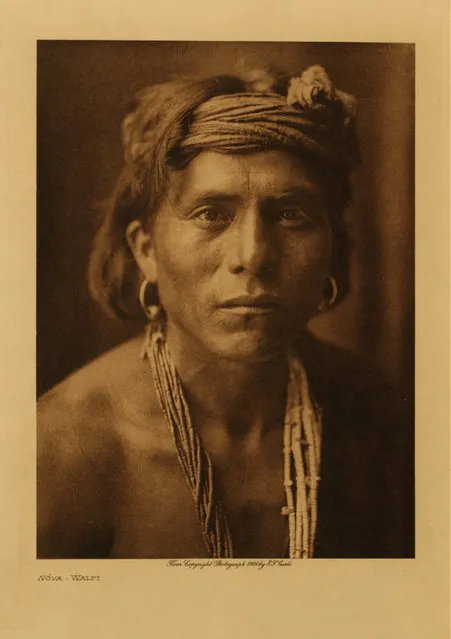
Nova, a Walpi, in 1906. (Photo by Edward S. Curtis)

At the beginning of the 20th century, Edward S. Curtis set out to document what he saw as a disappearing race: the Native American. From 1907 to 1930, Curtis took more than 2,000 photos of 80 tribes stretching from the Great Plains to the Pacific Northwest and Alaska. He then published and sold these photos, along with narrative text, in 20 volumes of work known as “The North American Indian”. It is one of the most significant collections of its kind, “probably the most important photographic document of its age and its topic,” said Jeffrey Garrett, associate university librarian for Special Libraries at Northwestern University. (Photo by Edward S. Curtis)
Details
07 Sep 2014 12:57:00
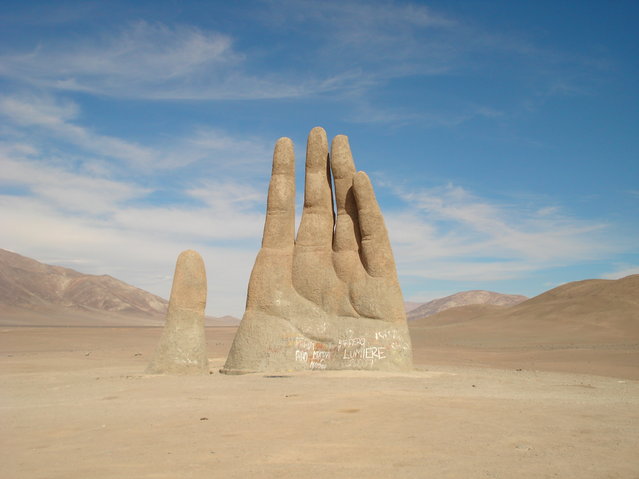
The Giant Hand of Atacama

The Mano de Desierto is a large-scale sculpture of a hand located in the Atacama Desert in Chile, 75 km to the south of the city of Antofagasta, on the Panamerican Highway. The nearest point of reference is the “Ciudad Empresarial La Negra” (La Negra Business City). The sculpture was constructed by the Chilean sculptor Mario Irarrázabal at an altitude of 1,100 meters above sea level. Irarrázabal used the human figure to express emotions like injustice, loneliness, sorrow and torture. Its exaggerated size is said to emphasize human vulnerability and helplessness. The work has a base of iron and cement, and stands 11 metres (36 ft) tall. Funded by Corporación Pro Antofagasta, a local booster organization, the sculpture was inaugurated on March 28, 1992.
Details
21 Dec 2013 10:18:00