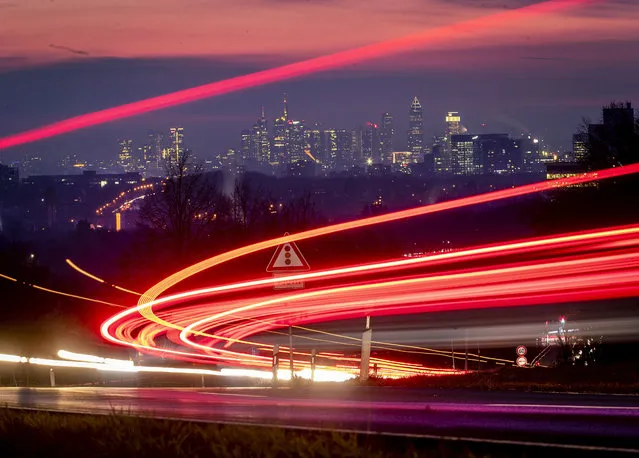
Commuters by with the buildings of the banking district in background in Frankfurt, Germany, Thursday, February 6, 2020. (Photo by Michael Probst/AP Photo)
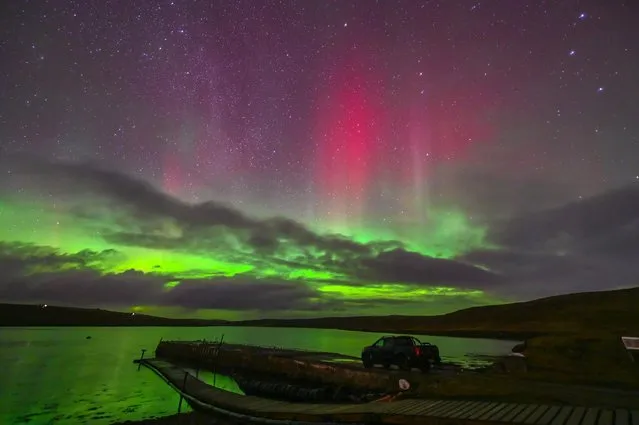
The northern lights as seen from from Yell in the Shetland Islands, Scotland on January 15, 2023. The aurora borealis is caused by collisions between electrically charged particles released from the sun that enter the Earth’s atmosphere and collide with gases such as oxygen and nitrogen. (Photo by Ryan Nisbet/Capture Media Agency)
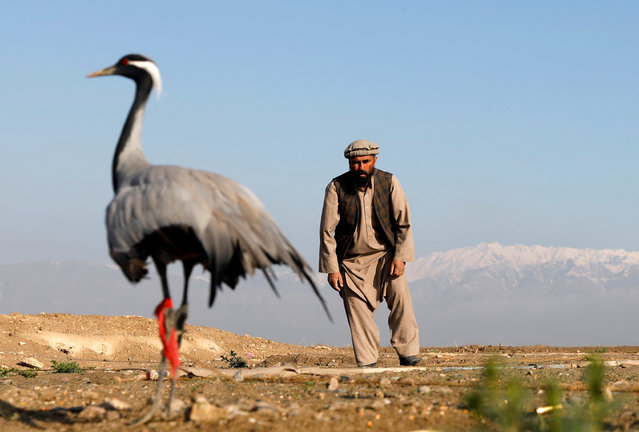
Jan Agha, 49, an Afghan hunter, tries to catch his crane at a field in Bagram, Parwan province, Afghanistan on April 10, 2019. As the early morning light breaks over the plain north of Kabul, bird hunter Jan Agha checks his snares as he has done for the past 30 years, hoping to catch a crane, using a tethered bird to lure others down to the nets. (Photo by Mohammad Ismail/Reuters)
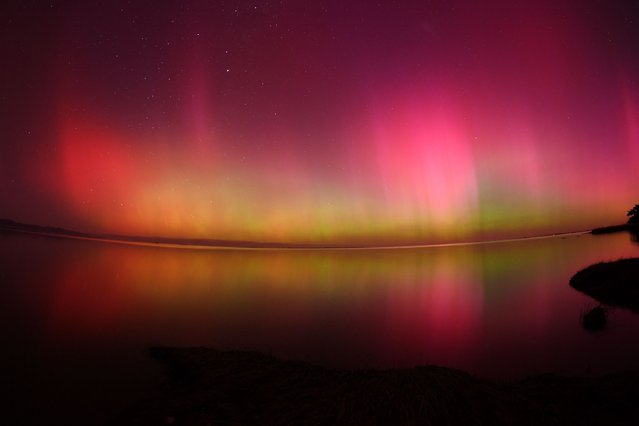
The Aurora Australis, also known as the Southern Lights, glow on the horizon over waters of Lake Ellesmere on the outskirts of Christchurch on May 11, 2024. (Photo by Sanka Vidanagama/AFP Photo)
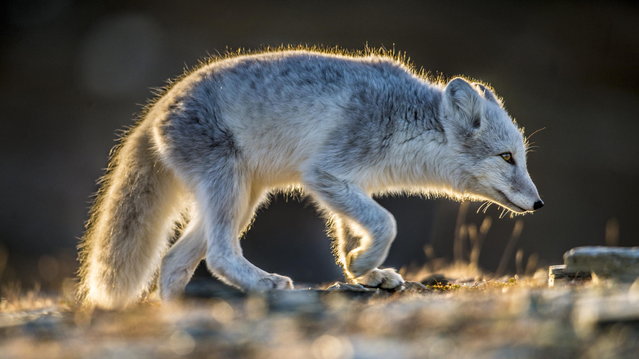
“The arctic fox (Vulpes lagopus), also known as the white fox, polar fox, or snow fox, is a small fox native to the Arctic regions of the Northern Hemisphere and is common throughout the Arctic tundra biome. It is well adapted to living in cold environments. It has a deep thick fur which is brown in summer and white in winter. It averages in size at about 85.3 cm (33.6 in) in body length, with a generally rounded body shape to minimize the escape of body heat. – Wikipedia. (Photo by Trond Eriksen)
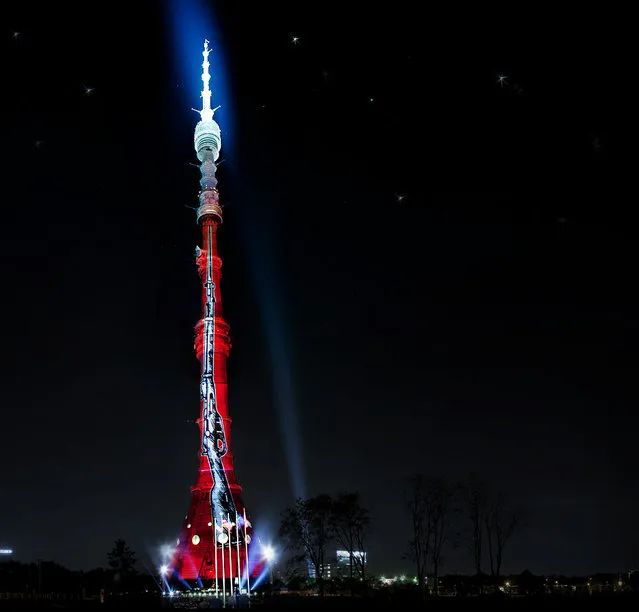
Ostankino Tower is a television and radio tower in Moscow, Russia. Standing 540.1 metres (1,772 ft) tall, Ostankino was designed by Nikolai Nikitin. It is currently the tallest freestanding structure in Europe and sixth tallest in the world. The tower was the first free-standing structure to exceed 500 m (1,600 ft) in height. Ostankino was built to mark the 50th anniversary of the October Revolution. It is named after the Ostankino district of Moscow in which it is located.
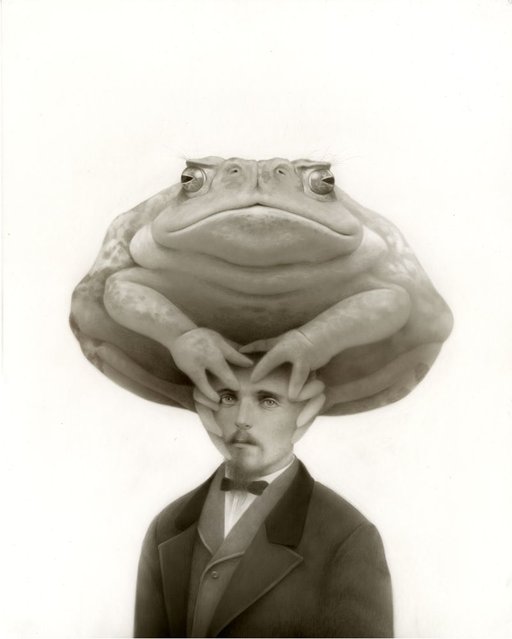
Travis Louie’s paintings are inspired by 19th-century portrait photographs. Instead of people, however, his subjects are goofy-looking monsters. His work is beyond mere art for children, however. There is a refined eeriness to his pieces that give them depth and an elusive quality that really makes them stand out.