Loading...
Done
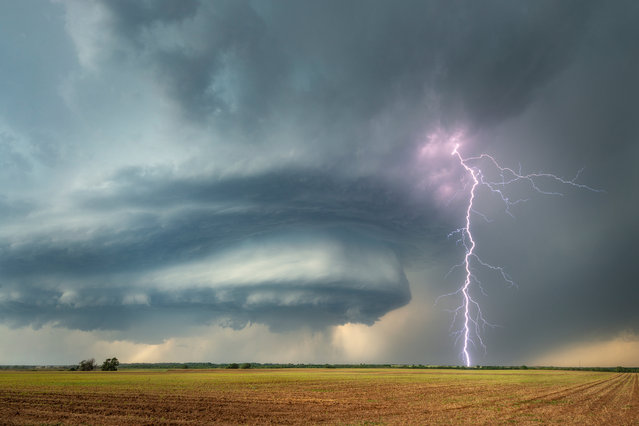
“The Supercell”. This shortlisted image by Dennis Oswald Huge farmland of was taken in south-west Oklahoma, US. (Photo by Dennis Oswald/2019 Weather Photographer of the Year/RMetS)

“The Supercell”. This shortlisted image by Dennis Oswald Huge farmland of was taken in south-west Oklahoma, US. (Photo by Dennis Oswald/2019 Weather Photographer of the Year/RMetS)
Details
30 Oct 2019 00:03:00
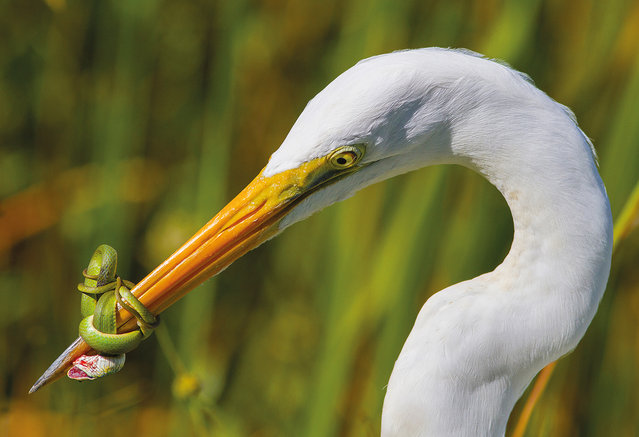
The battle by Jose Garcia, US. Category: bird behaviour. A great white heron (Ardea herodias occidentalis) fighting a green snake in the Florida Everglades. The fight lasted for nearly 20 minutes with the heron having to release its prey. (Photo by Jose Garcia/2017 Bird Photographer of the Year Awards)

The battle by Jose Garcia, US. Category: bird behaviour. A great white heron (Ardea herodias occidentalis) fighting a green snake in the Florida Everglades. The fight lasted for nearly 20 minutes with the heron having to release its prey. (Photo by Jose Garcia/2017 Bird Photographer of the Year Awards)
Details
01 Sep 2017 05:42:00
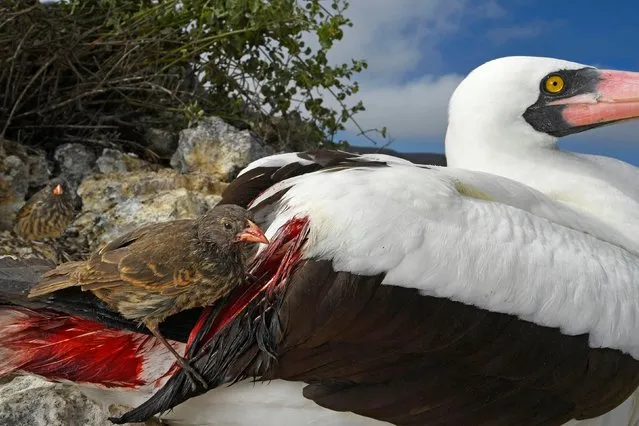
Bloodthirsty by Thomas P Peschak, Germany/South Africa — winner, Behaviour: birds. When rations run short on Wolf Island, in the remote northern Galápagos, the sharp-beaked ground finches become vampires. Their sitting targets are Nazca boobies and other large birds. The finches rely on a scant diet of seeds and insects, which regularly dries up, so they drink blood to survive. ‘I’ve seen more than half a dozen finches drinking from a single Nazca booby,’ says Tom. Rather than leave their nests the boobies tolerate the vampires, and the blood loss doesn’t seem to cause permanent harm. (Photo by Thomas P Peschak/2018 Wildlife Photographer of the Year)

Bloodthirsty by Thomas P. Peschak, Germany/South Africa — winner, Behaviour: birds. When rations run short on Wolf Island, in the remote northern Galápagos, the sharp-beaked ground finches become vampires. Their sitting targets are Nazca boobies and other large birds. The finches rely on a scant diet of seeds and insects, which regularly dries up, so they drink blood to survive. ‘I’ve seen more than half a dozen finches drinking from a single Nazca booby,’ says Tom. Rather than leave their nests the boobies tolerate the vampires, and the blood loss doesn’t seem to cause permanent harm. (Photo by Thomas P. Peschak/2018 Wildlife Photographer of the Year)
Details
19 Oct 2018 00:05:00
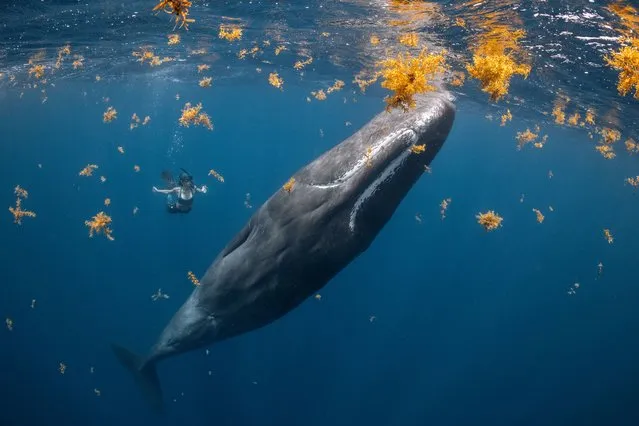
Human Connection Award: People and Planet Ocean – Winner – Steve Woods. A free diver interacts with a sperm whale among a cloud of sargassum weed, Dominica. (Photo by Steve Woods/Ocean Photographer of the Year 2022)

Human Connection Award: People and Planet Ocean – Winner – Steve Woods. A free diver interacts with a sperm whale among a cloud of sargassum weed, Dominica. (Photo by Steve Woods/Ocean Photographer of the Year 2022)
Details
09 Oct 2022 03:56:00
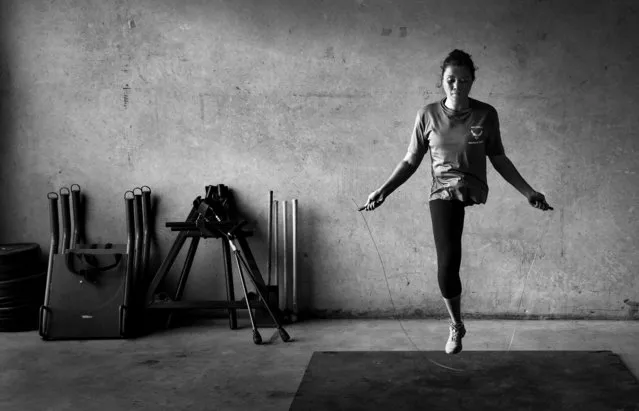
U.S. Air Force wounded warrior, Capt. Sarah Evans, jumps rope in a gym in San Antonio, Texas. Evans was diagnosed with cancer while deployed to Afghanistan and was medically evacuated back to the United States where her leg was amputated. (Photo by Master Sgt. Jeffrey Allen/U.S. Air Force)

U.S. Air Force wounded warrior, Capt. Sarah Evans, jumps rope in a gym in San Antonio, Texas. Evans was diagnosed with cancer while deployed to Afghanistan and was medically evacuated back to the United States where her leg was amputated. (Photo by Master Sgt. Jeffrey Allen/U.S. Air Force)
Details
26 Mar 2015 11:43:00
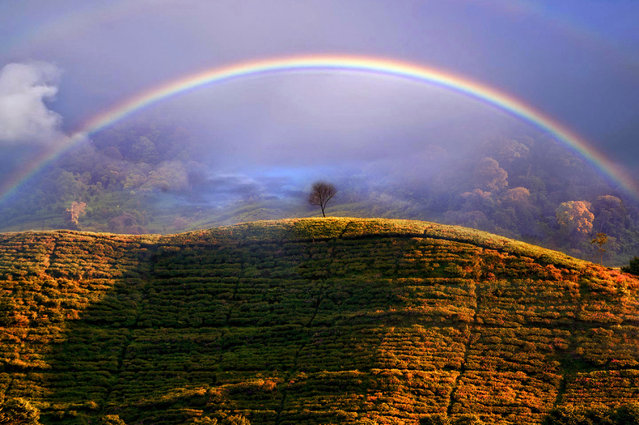
“Misty Rainbow”. A rainbow appears over tea fields in Tangerang Selatan, Indonesia. (Photo by Dani Agus Purnomo/Royal Meteorological Society’s Weather Photographer of the Year Awards)

“Misty Rainbow”. A rainbow appears over tea fields in Tangerang Selatan, Indonesia. (Photo by Dani Agus Purnomo/Royal Meteorological Society’s Weather Photographer of the Year Awards)
Details
28 Oct 2021 06:09:00
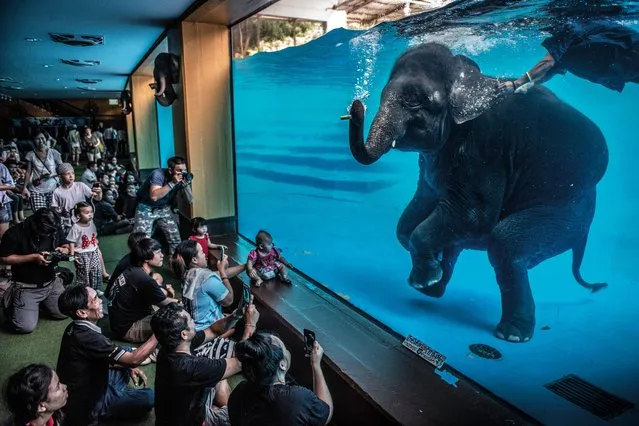
Winner, photojournalism. Elephant in the room, by Adam Oswell, Australia Zoo. Visitors watch a young elephant performing underwater. Oswell was disturbed by this scene, and organisations concerned with the welfare of captive elephants say performances like this encourage unnatural behaviour. In Thailand, there are now more elephants in captivity than in the wild. With the Covid pandemic causing tourism to collapse, elephant sanctuaries are becoming overwhelmed with animals that can no longer be looked after by their owners. (Photo by Adam Oswell/Wildlife Photographer of the Year 2021)

Winner, photojournalism. Elephant in the room, by Adam Oswell, Australia Zoo. Visitors watch a young elephant performing underwater. Oswell was disturbed by this scene, and organisations concerned with the welfare of captive elephants say performances like this encourage unnatural behaviour. In Thailand, there are now more elephants in captivity than in the wild. With the Covid pandemic causing tourism to collapse, elephant sanctuaries are becoming overwhelmed with animals that can no longer be looked after by their owners. (Photo by Adam Oswell/Wildlife Photographer of the Year 2021)
Details
30 Oct 2021 08:40:00
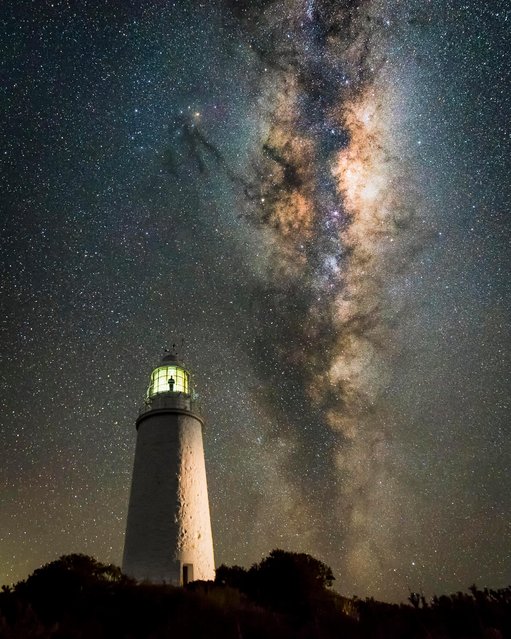
The Milky Way rises above an isolated lighthouse in Tasmania. Shot by James Stone of Australia. (Photo by James Stone/Astronomy Photographer of the Year 2018)

The competition is run by Royal Observatory Greenwich sponsored by Insight Investment and in association with BBC Sky at Night Magazine. This year astrophotographers from 91 countries sent in more than 4,200 spectacular entries. Here: The Milky Way rises above an isolated lighthouse in Tasmania. Shot by James Stone of Australia. (Photo by James Stone/Astronomy Photographer of the Year 2018)
Details
20 Jul 2018 00:05:00