Loading...
Done
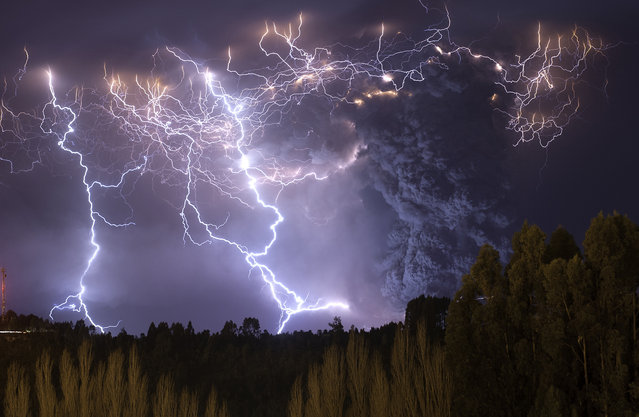
The eruption of Cordon Caulle began on June 4, 2011, located in the Region of Los Rios in Chile. For about 12 months, people and animals became accustomed to living with the daily fall of ash, which also caused problems in the air traffic in South America. The explosions and lightning during first days of the eruption could be seen from hundreds of miles around. This photograph was taken on the second night of eruption from the town of Lago Ranco. (Photo and caption by Francisco Negroni/National Geographic Traveler Photo Contest)

The eruption of Cordon Caulle began on June 4, 2011, located in the Region of Los Rios in Chile. For about 12 months, people and animals became accustomed to living with the daily fall of ash, which also caused problems in the air traffic in South America. The explosions and lightning during first days of the eruption could be seen from hundreds of miles around. This photograph was taken on the second night of eruption from the town of Lago Ranco. (Photo and caption by Francisco Negroni/National Geographic Traveler Photo Contest)

ATTENTION! All pictures are presented in high resolution. To see Hi-Res images – just TWICE click on any picture. In other words, click small picture – opens the BIG picture. Click BIG picture – opens VERY BIG picture.
Details
23 Jun 2013 11:24:00
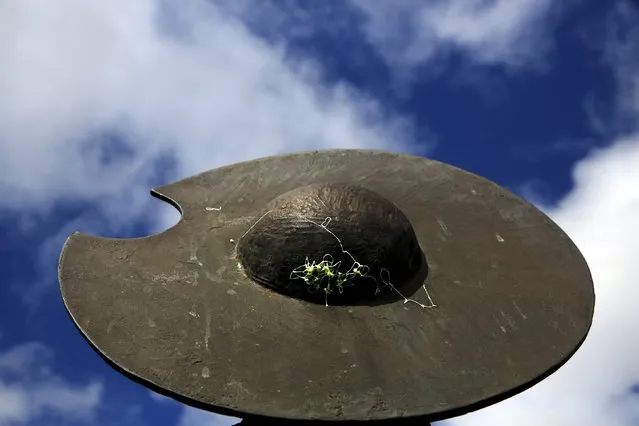
A sculpture of Don Quixote shows him wearing the basin he mistook for the enchanted helmet of the fictional Moorish king Mambrino in Alcazar de San Juan, Spain, April 5, 2016. (Photo by Susana Vera/Reuters)

A sculpture of Don Quixote shows him wearing the basin he mistook for the enchanted helmet of the fictional Moorish king Mambrino in Alcazar de San Juan, Spain, April 5, 2016. The arid central Spanish region of La Mancha is the setting for “Don Quixote”, the seventeenth-century novel by Miguel de Cervantes. Four hundred years after his death, references to the characters of Don Quixote, his loyal squire Sancho Panza and his beautiful lady Dulcinea abound in the surrounding villages from sweet treats to theatre productions involving livestock. Cervantes did not give away the name of the birthplace of Don Quixote, a middle-aged gentleman who becomes obsessed with chivalrous ideals. But many identify the village of Argamasilla de Alba as his hometown. The anniversary of Cervantes’ death is marked on the 23 April. (Photo by Susana Vera/Reuters)
Details
21 Apr 2016 12:32:00
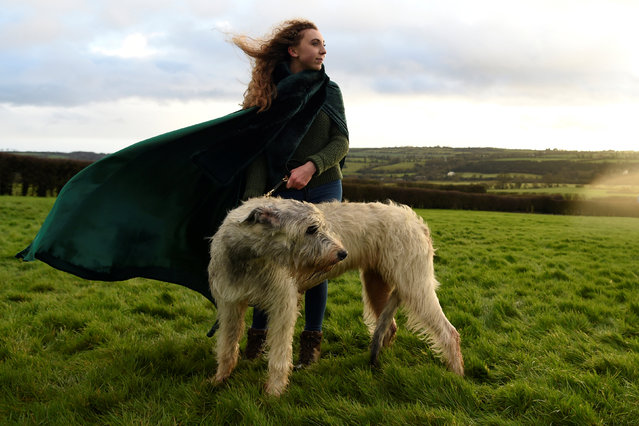
Rebecca Smith poses for a photograph during winter solstice with her Irish Wolfhound dog called Amazing Grace at the 5000 year old stone age tomb of Newgrange (not in view) in the Boyne Valley at sunrise in Newgrange, Ireland, December 21, 2016. (Photo by Clodagh Kilcoyne/Reuters)

Rebecca Smith poses for a photograph during winter solstice with her Irish Wolfhound dog called Amazing Grace at the 5000 year old stone age tomb of Newgrange (not in view) in the Boyne Valley at sunrise in Newgrange, Ireland, December 21, 2016. (Photo by Clodagh Kilcoyne/Reuters)
Details
23 Dec 2016 08:14:00
A real life Robinson Crusoe – David Glasheen

David Glasheen faces eviction from his remote tropical paradise after losing a Supreme Court legal case.
Details
08 Nov 2012 17:42:00
Travel concept: commercial airplane flying with beautiful charming stewardess on  September 12, 2019. (Photo by  Volodymyr Tverdokhlib/Alamy Stock Photo)

Travel concept: commercial airplane flying with beautiful charming stewardess on September 12, 2019. (Photo by Volodymyr Tverdokhlib/Alamy Stock Photo)
Details
01 Jan 2022 08:57:00
An actor performs during the show “Paris de Nuit” in Santiago, Chile, 20 September 2016. The show is a combination of cabaret and circus, produced by the Recirquel Contemporary Circus Company from Budapest, and will be performed at the Mapocho Cultural station from 20 to 25 September. (Photo by Mario Ruiz/EPA)

An actor performs during the show “Paris de Nuit” in Santiago, Chile, 20 September 2016. The show is a combination of cabaret and circus, produced by the Recirquel Contemporary Circus Company from Budapest, and will be performed at the Mapocho Cultural station from 20 to 25 September. (Photo by Mario Ruiz/EPA)
Details
22 Sep 2016 10:17:00
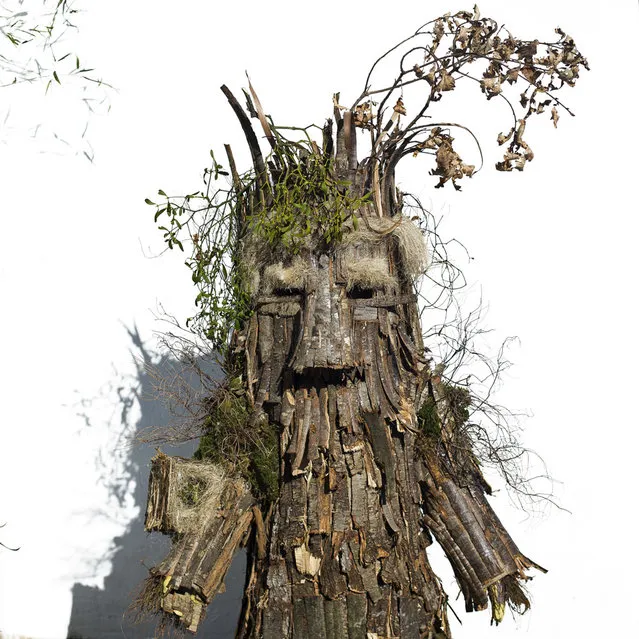
A man dressed as a  “Trapajon”, representing entities of nature, poses for a picture after taking part in the Vijanera Festival in Silio, northern Spain, Sunday, Jan. 6, 2013. The Vijanera masquerade, of pre-Roman origin, is the first carnival of the year in Europe symbolizing the triumph of good over evil and involving the participation of crowds of residents wearing different masks, animal skins and brightly colored clothing with its own complex function and symbolism and becoming the living example of the survival of archaic cults to nature. (Photo by Daniel Ochoa de Olza/AP Photo)

A man dressed as a “Trapajon”, representing entities of nature, poses for a picture after taking part in the Vijanera Festival in Silio, northern Spain, Sunday, Jan. 6, 2013. The Vijanera masquerade, of pre-Roman origin, is the first carnival of the year in Europe symbolizing the triumph of good over evil and involving the participation of crowds of residents wearing different masks, animal skins and brightly colored clothing with its own complex function and symbolism and becoming the living example of the survival of archaic cults to nature. (Photo by Daniel Ochoa de Olza/AP Photo)
Details
19 Jan 2013 13:01:00
“Kids of Sapa”. Four little beautiful Hmong girls from Lao Chai Village, near Sapa, Vietnam. (Photo and caption by Felipe Hanower/National Geographic Traveler Photo Contest)

“Kids of Sapa”. Four little beautiful Hmong girls from Lao Chai Village, near Sapa, Vietnam. (Photo and caption by Felipe Hanower/National Geographic Traveler Photo Contest)
Details
15 Jul 2013 09:14:00