Loading...
Done
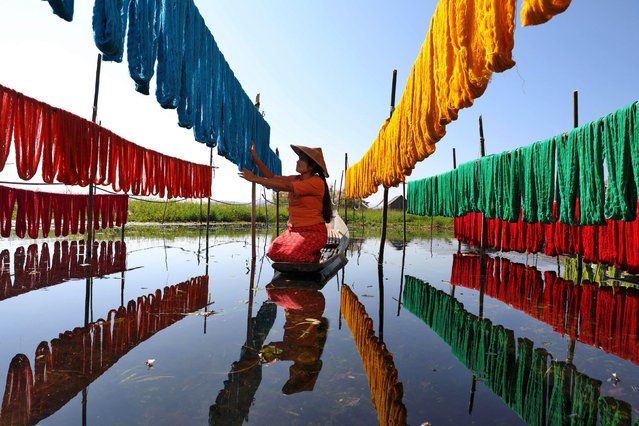
A woman makes use of a still day on Inle Lake in Burma on January 16, 2020 by drying newly-dyed threads made out of lotus stems. (Photo by Sabina Akter/Solent News)

A woman makes use of a still day on Inle Lake in Burma on January 16, 2020 by drying newly-dyed threads made out of lotus stems. (Photo by Sabina Akter/Solent News)
Details
20 Jun 2020 00:05:00
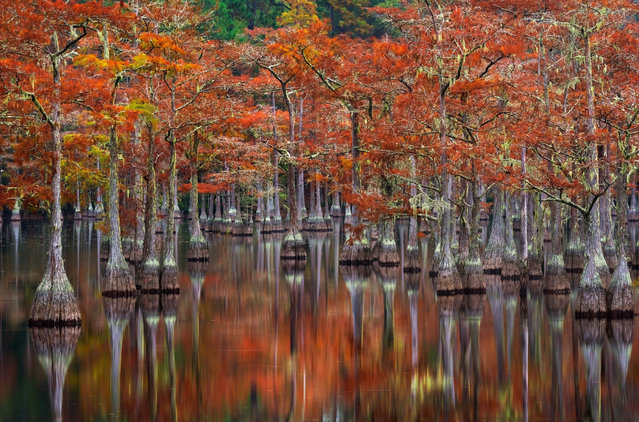
Trees are reflected on the surface of a lake in the Okefenokee swamp lands in Georgia, USA on October 21, 2017. (Photo by Chris Moore/Solent News & Photo Agency)

Trees are reflected on the surface of a lake in the Okefenokee swamp lands in Georgia, USA on October 21, 2017. (Photo by Chris Moore/Solent News & Photo Agency)
Details
02 Dec 2017 08:07:00
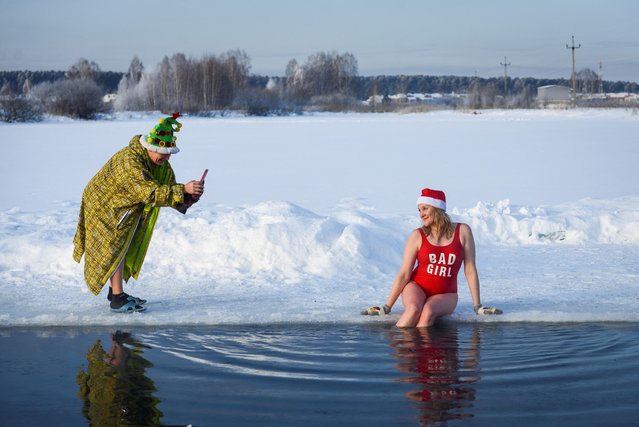
Members of a local winter swimming club photograph as they take part in festive bathing in the icy waters of Boyarskoye lake outside Tomsk, Russia, December 26, 2021. (Photo by Taisiya Vorontsova/Reuters)

Members of a local winter swimming club photograph as they take part in festive bathing in the icy waters of Boyarskoye lake outside Tomsk, Russia, December 26, 2021. (Photo by Taisiya Vorontsova/Reuters)
Details
01 Jan 2022 08:48:00
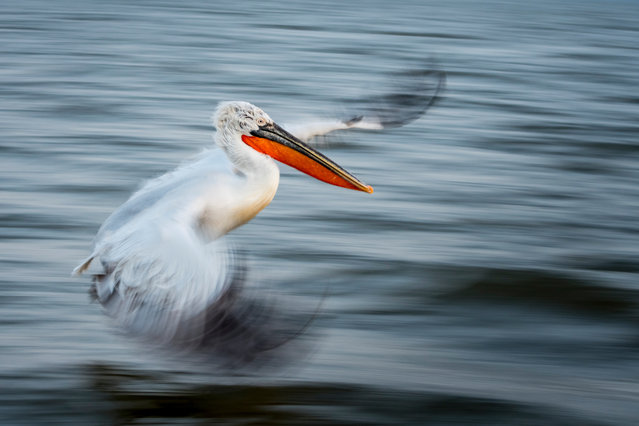
Overall winner: The Art of Flight by Alwin Hardenbol (University of Eastern Finland). A panning shot of a Dalmatian pelican in flight. The picture was taken on Lake Kerkini in Greece. (Photo by Alwin Hardenbol/2020 British Ecological Society Photography Competition)

Overall winner: The Art of Flight by Alwin Hardenbol (University of Eastern Finland). A panning shot of a Dalmatian pelican in flight. The picture was taken on Lake Kerkini in Greece. (Photo by Alwin Hardenbol/2020 British Ecological Society Photography Competition)
Details
01 Dec 2020 00:03:00
An air tanker flies low over a wildfire burning on the edge of the Cariboo region city of Williams Lake, British Columbia, Canada on July 21, 2024. (Photo by Spencer Stratton/Handout via Reuters)

An air tanker flies low over a wildfire burning on the edge of the Cariboo region city of Williams Lake, British Columbia, Canada on July 21, 2024. (Photo by Spencer Stratton/Handout via Reuters)
Details
29 Nov 2025 06:26:00
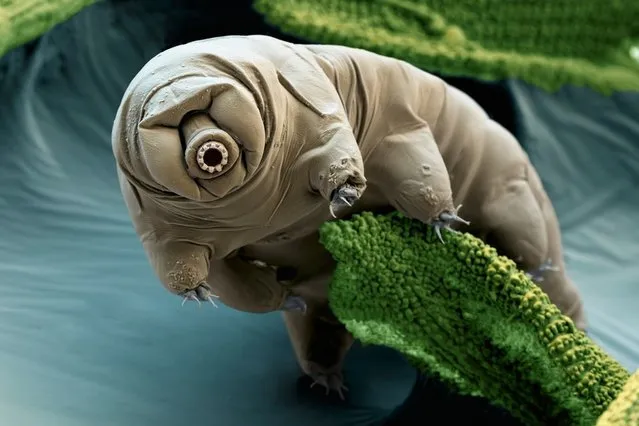
Tardigrades (commonly known as waterbears or moss piglets). (Photo by SPL/East News)

“Tardigrades (commonly known as waterbears or moss piglets) are small, water-dwelling, segmented animals with eight legs. Tardigrades were first discovered in 1773 by Johann August Ephraim Goeze, who called them kleiner Wasserbär, meaning “little water bear” in German. The name Tardigrada means “slow walker” and was given by Lazzaro Spallanzani in 1777. The name water bear comes from the way they walk, reminiscent of a bear's gait. The biggest adults may reach a body length of 1.5 millimetres (0.059 in), the smallest below 0.1 mm. Freshly hatched tardigrades may be smaller than 0.05 mm”. – Wikipedia. Photo: Tardigrades. (Photo by SPL/East News)
Details
26 Sep 2012 09:55:00
Security personnel patrol around West Lake in Hangzhou, Zhejiang Province, China, August 31, 2016. (Photo by Reuters/Stringer)

Security personnel patrol around West Lake in Hangzhou, Zhejiang Province, China, August 31, 2016. (Photo by Reuters/Stringer)
Details
04 Sep 2016 09:39:00
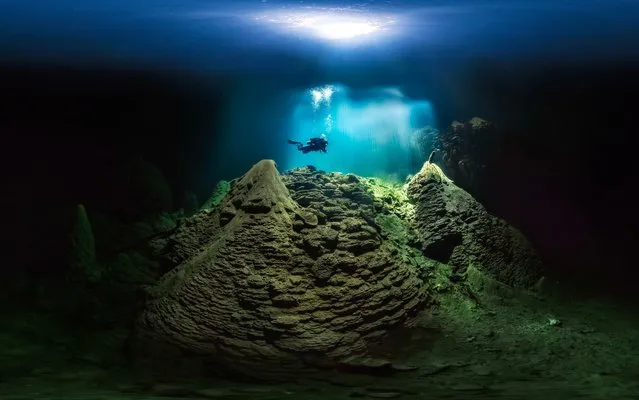
Cave Diver, Anhumas Abyss, Bonito, Brazil: The Anhumas Abyss is an underground cavern with a crystal-clear lake below, more than 260 feet (79 m) deep. A visitor must enter through a narrow opening at the top of the chamber and rappel into the cave. Snorkeling and scuba diving in the lake reveal amazing scenery. Distinctive, conical limestone stalagmites and stalactites occupy the lake and the surrounding area, some reaching 65 feet (20 m) high. “One must rappel about 235 feet (72 m) to get down into this deep lake. The photo was taken at a depth of 50 feet (15 m). It was a challenge to create the image because of the high contrast, plus the diver could not see into the darkness, making communication impossible”. (Photo by Marcio Cabral/Nature’s Best Photography Awards 2017)

Cave Diver, Anhumas Abyss, Bonito, Brazil: The Anhumas Abyss is an underground cavern with a crystal-clear lake below, more than 260 feet (79 m) deep. A visitor must enter through a narrow opening at the top of the chamber and rappel into the cave. Snorkeling and scuba diving in the lake reveal amazing scenery. Distinctive, conical limestone stalagmites and stalactites occupy the lake and the surrounding area, some reaching 65 feet (20 m) high. (Photo by Marcio Cabral/Nature’s Best Photography Awards 2017)
Details
26 Oct 2017 08:10:00