A Filipino devotee is carried by police officers outside the Quiapo church after she fainted during the Black Nazarene feast day in Manila, Philippines, January 9, 2020. (Photo by Willy Kurniawan/Reuters)
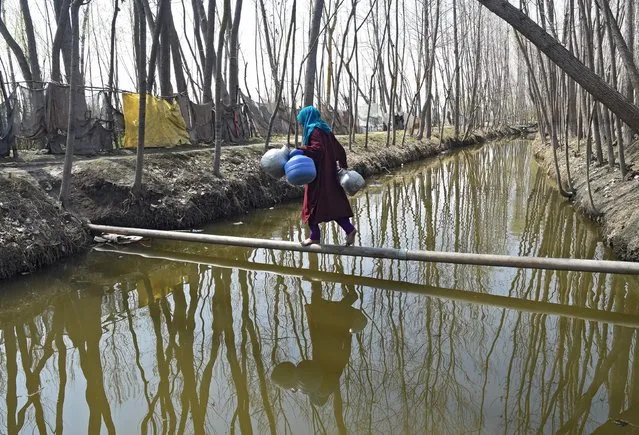
A Kashmiri Muslim woman balances on a water pipe before collecting water at Dasilpora village on March 22, 2018. World Water Day is held annually on 22 March as a means of focusing attention on the importance of freshwater and advocating for the sustainable management of freshwater resources. (Photo by Tauseef Mustafa/AFP Photo)
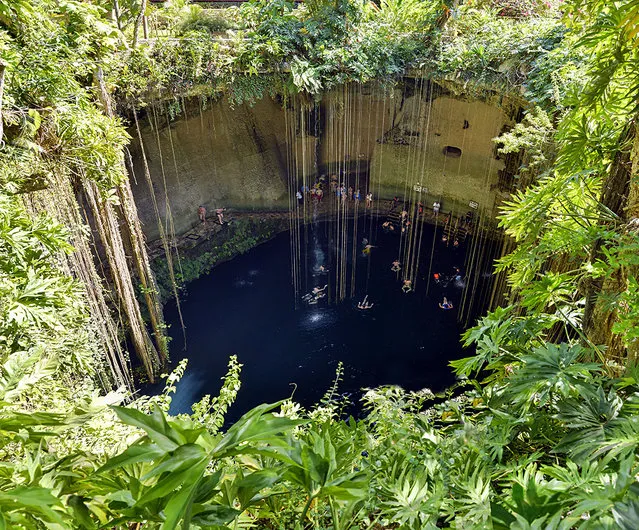
A cenote is a natural phenomenon, a sinkhole in the Earth’s surface. The Yucatan Peninsula in Mexico has an estimated 7,000 cenotes because it is primarily made up of porous limestone. For millions of years, rainfall slowly ate away at the limestone and a huge system of underground caves and caverns was formed. Many filled with water from rain or from the underground water table. When the roof of a water filled cave collapses, a cenote is born. The water found in a cenote may be fresh water, salt water, or both. Structurally it may be completely open, like a lake, almost completely closed with just a small opening at the top, or somewhere in between.
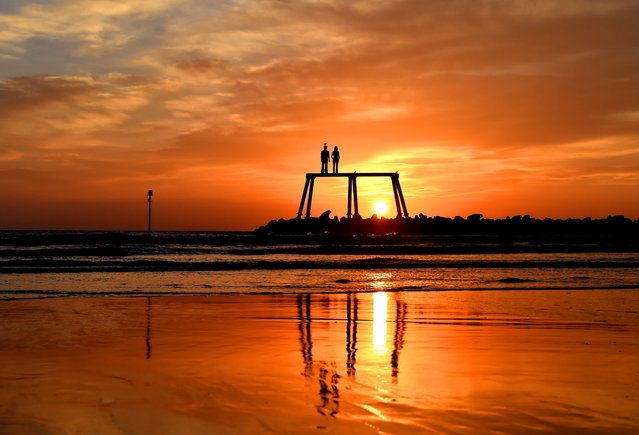
The sun rises over the north sea as The Couple by artist Sean Henery sits just of the coast at Newbiggin-by-the-Sea, England, Wednesday October 8, 2014. (Photo by Owen Humphreys/AP Photo/PA Wire)
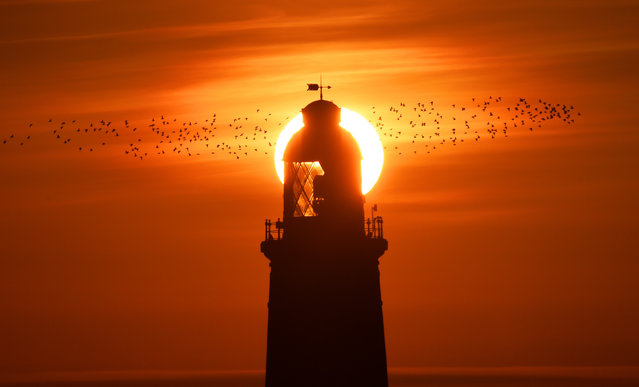
The sun rises over St Mary's Lighthouse in Whitley Bay on the Northumberland coast as a flock of Lapwing seabirds fly past on Wednesday, September 30, 2015. (Photo by Owen Humphreys/PA Wire)
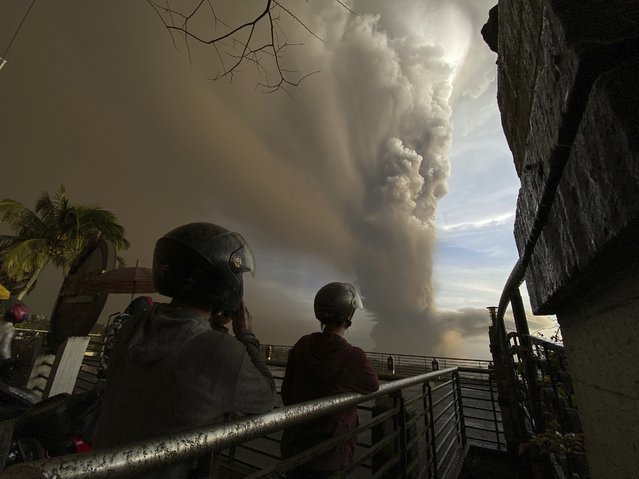
People watch plumes of smoke and ash rise from as Taal Volcano erupts Sunday January 12, 2020, in Tagaytay, Cavite province, outside Manila, Philippines. (Photo by Aaron Favila/AP Photo)
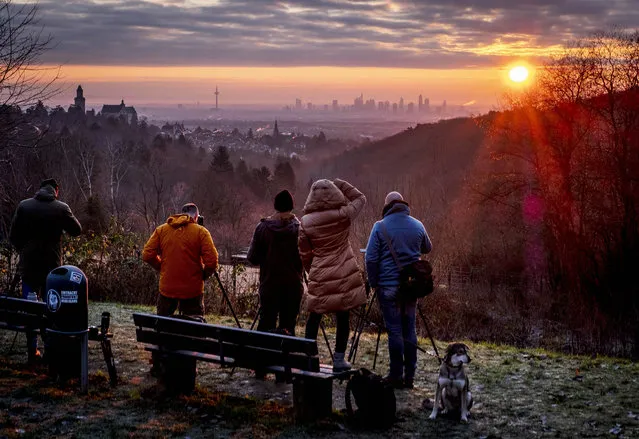
People take pictures of the sun rising next to the buildings of the banking district in Frankfurt, Germany, Saturday, December 28, 2019. (Photo by Michael Probst/AP Photo)