Loading...
Done
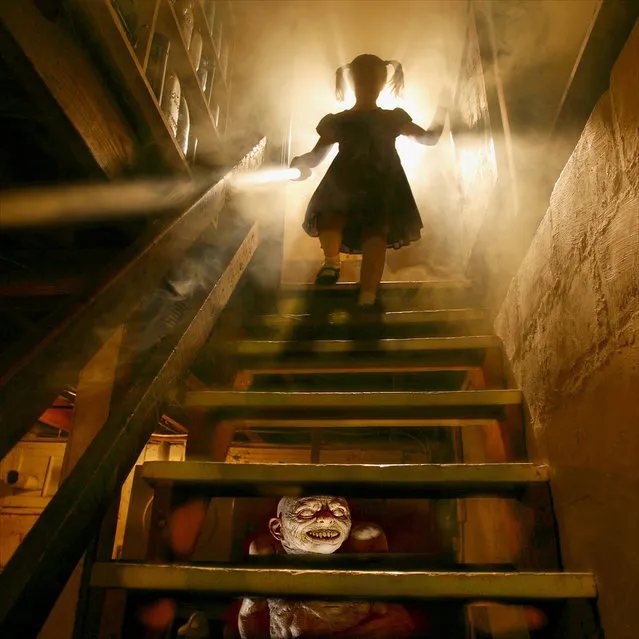
“Basement”. (Photo by Joshua Hoffine/The Washington Post)

Joshua Hoffine, based in Kansas City, Mo., and a self-proclaimed “Horror Photographer”, is interested in the psychology of fear. In his project “After Dark, My Sweet”, Hoffine’s surreal and staged images render these fears visible with the “visual grammar of a child”. Through elaborate sets, costumes, makeup and fog machines, Hoffine’s children act out these terrifying scenes in front of his camera. Here: “Basement”. (Photo by Joshua Hoffine/The Washington Post)
Details
29 Oct 2016 11:47:00
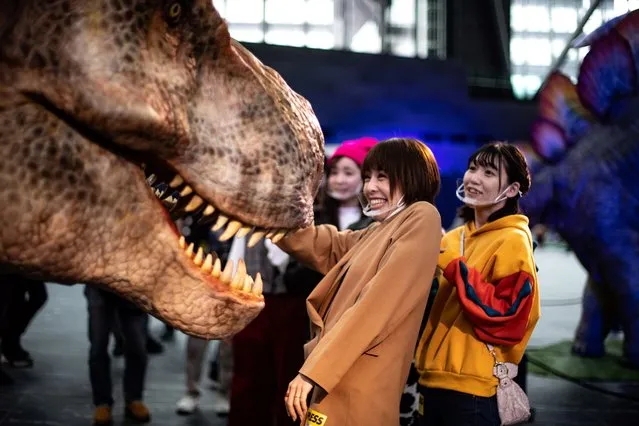
Members of the media touch a moving model of a Tyrannosaurus, which uses a dinosaur-type human-operated mechanical suit called “Dino-Techne” by Japanese firm On-Art, during a media preview of the Dinoa Live Exhibition / Amazing Dinosaur Art Exhibition in the Shinjuku district of Tokyo on December 10, 2020. (Photo by Philip Fong/AFP Photo)

Members of the media touch a moving model of a Tyrannosaurus, which uses a dinosaur-type human-operated mechanical suit called “Dino-Techne” by Japanese firm On-Art, during a media preview of the Dinoa Live Exhibition / Amazing Dinosaur Art Exhibition in the Shinjuku district of Tokyo on December 10, 2020. (Photo by Philip Fong/AFP Photo)
Details
19 Dec 2020 00:05:00
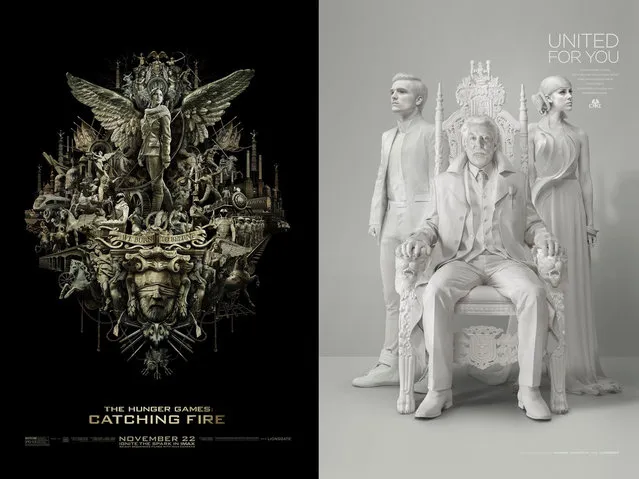
A poster for the IMAX presentation of “The Hunger Games: Catching Fire” (left), and a teaser poster for “The Hunger Games: Mockingjay, Part I”, both created by the Los Angeles-based design firm IGNITION. (Photo by Key Art Awards 2014)

A poster for the IMAX presentation of “The Hunger Games: Catching Fire” (left), and a teaser poster for “The Hunger Games: Mockingjay, Part I”, both created by the Los Angeles-based design firm IGNITION. Both are nominated for the 2014 Key Art Awards in the category of Theatrical Domestic One-Sheet. The Hollywood Reporter's annual competition for the best in film and TV advertising honors some of the most creative imagery used in movie posters. Here is a selection of some of this year's nominees. (Photo by Key Art Awards 2014)
Details
08 Oct 2014 12:25:00
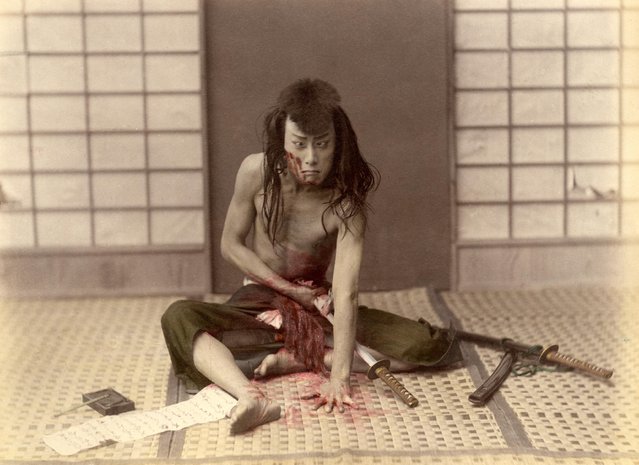
Samurai commiting seppuku (hara-kiri) in Japan, circa 1880. (Photo by adoc-photos/Corbis via Getty Images)

Samurai commiting seppuku (hara-kiri) in Japan, circa 1880. (Photo by adoc-photos/Corbis via Getty Images)
Details
27 Jan 2017 10:43:00
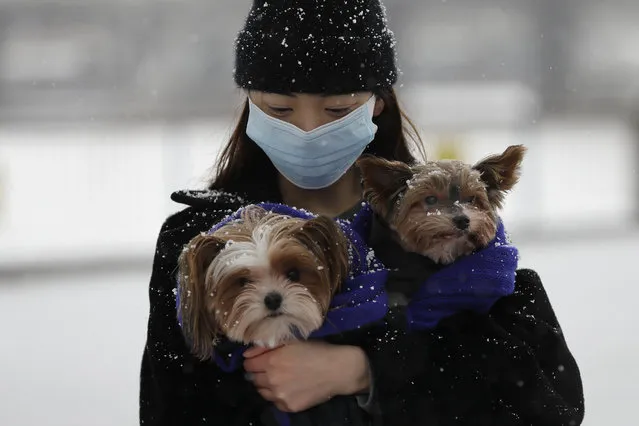
A woman holds her dogs during a snow flurry as temperatures dropped below freezing during the third coronavirus lockdown in London, Tuesday, February 9, 2021. (Photo by Kirsty Wigglesworth/AP Photo)

A woman holds her dogs during a snow flurry as temperatures dropped below freezing during the third coronavirus lockdown in London, Tuesday, February 9, 2021. (Photo by Kirsty Wigglesworth/AP Photo)
Details
10 Feb 2021 11:15:00
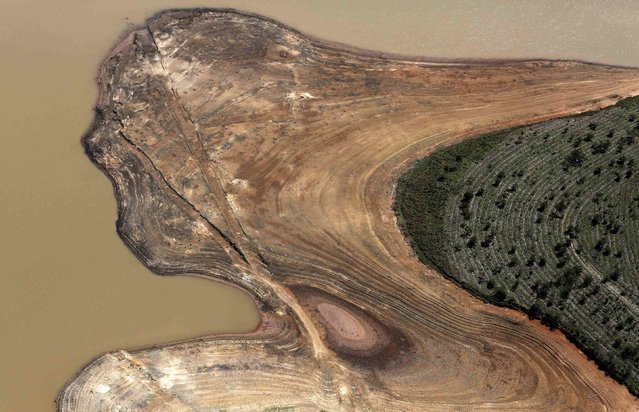
An aerial view of the Atibainha dam, part of the Cantareira reservoir, during a drought in Nazare Paulista, Sao Paulo state November 18, 2014. (Photo by Nacho Doce/Reuters)

An aerial view of the Atibainha dam, part of the Cantareira reservoir, during a drought in Nazare Paulista, Sao Paulo state November 18, 2014. Brazil's worst drought in 80 years has left the Cantareira system, that provides greater Sao Paulo with most of its water, with the lowest water level on record, with daily rationing becoming common in the region's smaller cities, according to the state authorities and the two main reservoirs serving metropolitan Sao Paulo, South America's largest city, could dry out by February if relief does not arrive in the upcoming rainy season. (Photo by Nacho Doce/Reuters)
Details
20 Nov 2014 12:19:00
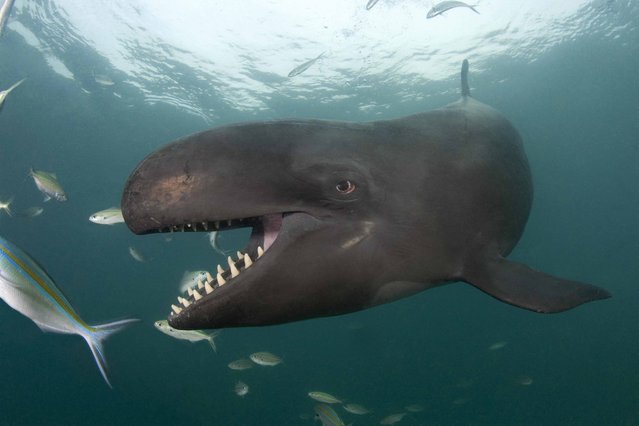
Smiley False Killer Whale

American photographer Doug Perrine, 60, snapped the shots last year while the False Killer Whale was out hunting for food. (Photo by Doug Perrine/Iber-Press)
Details
14 Feb 2014 10:53:00
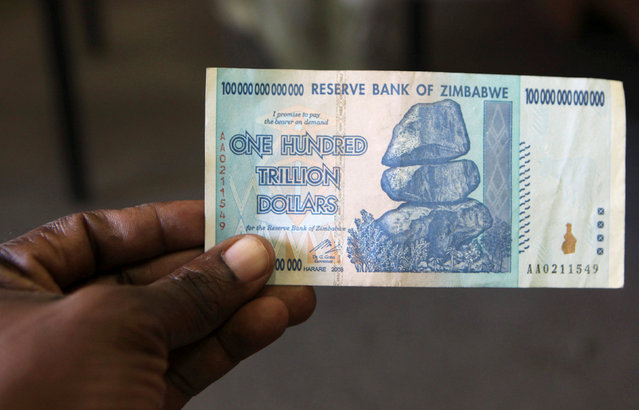
A man holds up for a picture a one hundred trillion Zimbabwean dollars note inside a shop in Harare, Zimbawe, June 12, 2015. (Photo by Philimon Bulawayo/Reuters)

A man holds up for a picture a one hundred trillion Zimbabwean dollars note inside a shop in Harare, Zimbawe, June 12, 2015. Hyperinflation in Zimbabwe was a period of currency instability that began in the late 1990s shortly after the confiscation of private farms from landowners, towards the end of Zimbabwean involvement in the Second Congo War. During the height of inflation from 2008 to 2009, it was difficult to measure Zimbabwe's hyperinflation because the government of Zimbabwe stopped filing official inflation statistics. However, Zimbabwe's peak month of inflation is estimated at 79.6 billion percent in mid-November 2008. (Photo by Philimon Bulawayo/Reuters)
Details
25 Oct 2016 10:08:00