Loading...
Done
The Craft And Art Of Clay By Chris Kapono

My name is Chris Kapono and I am a self-taught artist living in Missouri. I have been drawing and painting ever since I can remember and art has been a big part of my life. My love of animals and nature is reflected in my art and sometimes interesting things I find on walks in the woods will find their way into some of my pieces!

Chris Kapono

Details
26 Aug 2015 14:25:00
“Start your day with a good breakfast together”, 2009. “There was this trend of eating sushi from a woman’s naked body. So when I found the perfect papaya, I knew exactly how to shoot it”. (Photo by Pixy Liao/The Guardian)

“Start your day with a good breakfast together”, 2009. “There was this trend of eating sushi from a woman’s naked body. So when I found the perfect papaya, I knew exactly how to shoot it”. (Photo by Pixy Liao/The Guardian)
Details
02 Jun 2019 00:03:00
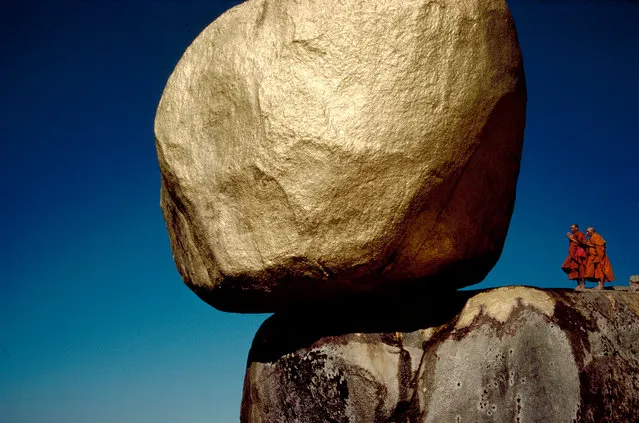
Kyaiktiyo, Burma, 1978. The Golden Rock at Shwe Pyi Daw (the Golden Country), the Buddhist holy place. Hiroji Kubota writes: “I was desperate to keep a distance from America for a while; luckily, I found Burma and its gentle and compassionate people. In the spring of 1978, on the top of the hill where I took this photo, I had two Leica bodies: the one with Tri-X and the other with Kodachrome 64. Soon after, I realised that the colour one looked very colourful and was more powerful. That was my decisive moment, to become a colour photographer”. (Photo by Hiroji Kubota/Magnum Photos)

Kyaiktiyo, Burma, 1978. The Golden Rock at Shwe Pyi Daw (the Golden Country), the Buddhist holy place. Hiroji Kubota writes: “I was desperate to keep a distance from America for a while; luckily, I found Burma and its gentle and compassionate people. In the spring of 1978, on the top of the hill where I took this photo, I had two Leica bodies: the one with Tri-X and the other with Kodachrome 64. Soon after, I realised that the colour one looked very colourful and was more powerful. That was my decisive moment, to become a colour photographer”. (Photo by Hiroji Kubota/Magnum Photos)
Details
10 Jun 2016 13:30:00
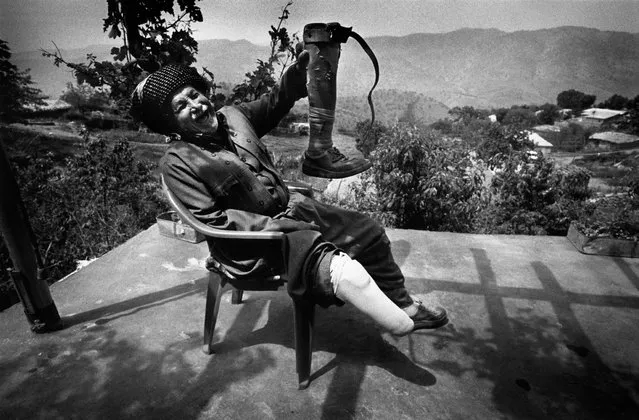
Ismail Mustafa, seen in 2007. “I was collecting mushrooms on the hill near here. I didn’t see the mine. There was a huge explosion. When I woke up I saw that both my legs were gone; I thought my life was over. My brother and another guy were with me. They made a stretcher from sticks and tied it together with clothing. It took two hours to get off the mountain. ‘My daughter has also been injured. She found a shell and brought it into the house and put it on the fire. She didn’t know what she was doing at the time – she was only three. She is blind and has lost an arm”. (Photo by Sean Sutton for the Mines Advisory Group/The Guardian)

Ismail Mustafa, seen in 2007. “I was collecting mushrooms on the hill near here. I didn’t see the mine. There was a huge explosion. When I woke up I saw that both my legs were gone; I thought my life was over. My brother and another guy were with me. They made a stretcher from sticks and tied it together with clothing. It took two hours to get off the mountain. ‘My daughter has also been injured. She found a shell and brought it into the house and put it on the fire. She didn’t know what she was doing at the time – she was only three. She is blind and has lost an arm”. (Photo by Sean Sutton for the Mines Advisory Group/The Guardian)
Details
08 Sep 2017 09:33:00
Faruk, 17, a Rohingya refugee trader holds betel leaves which are on sale at a stall in Palong Khali refugee camp near Cox's Bazar, Bangladesh, November 3, 2017. He left his village in Myanmar when the military opened fire towards the Rohingya. “I buy this betel leaf from Palong Khali market, in one bundle there are 160 pieces, I buy it for 80 taka and I sell it for 100 taka. Bangladeshi's and I sell for the same rate in the camp. Outside in the local market it is 80 taka per bundle. My problem is that I don't have money so I can't buy anything to eat, I can't buy fish to eat”, he said. (Photo by Hannah McKay/Reuters)

Faruk, 17, a Rohingya refugee trader holds betel leaves which are on sale at a stall in Palong Khali refugee camp near Cox's Bazar, Bangladesh, November 3, 2017. He left his village in Myanmar when the military opened fire towards the Rohingya. “I buy this betel leaf from Palong Khali market, in one bundle there are 160 pieces, I buy it for 80 taka and I sell it for 100 taka (1 Bangladeshi Taka = 0.012 US Dollar). Bangladeshi's and I sell for the same rate in the camp. Outside in the local market it is 80 taka per bundle. My problem is that I don't have money so I can't buy anything to eat, I can't buy fish to eat”, he said. (Photo by Hannah McKay/Reuters)
Details
27 Nov 2017 08:54:00
Drawings By Jennifer Healy

“I was born in the United States in 1985. As early as I can remember I’ve been a “doodler”. From even the early days I’ve always loved strange, offbeat, beautiful, and slightly melancholy things. Something about the mixed grabbed me. My love for sketching carried on throughout my high school days. Which is when I took a small class on watercolor. Watercolor is what birthed my passion for mixing colors and how a color can tell a story. In year 2009 I discovered digital painting and my new found passion for the medium. It’s been the favored medium for the past years since. I’ve used online tutorials and videos to help me learn along the way and then in late 2011 I took a workshop called Becoming a Better Artist. The beginning of 2013 I won a class from The Art Department which will start this spring.”
Jennifer Healy
Details
05 Dec 2013 12:04:00
Praia du Forte, Bahia. “This was the lead picture for a National Geographic story on Bahia, because it was both mysterious as well as a “geography” picture showing where the slaves arrived from Nigeria. Beach pictures seem like they should be easy to take, but for me they are actually quite difficult. Too easy to fall into cliche. When I saw the kid coming on the horse, I quickly ran to see if I could make something with a woman in a bikini that was not a bikini shot”. (Photo by David Alan Harvey/The Guardian)

Praia du Forte, Bahia. “This was the lead picture for a National Geographic story on Bahia, because it was both mysterious as well as a “geography” picture showing where the slaves arrived from Nigeria. Beach pictures seem like they should be easy to take, but for me they are actually quite difficult. Too easy to fall into cliche. When I saw the kid coming on the horse, I quickly ran to see if I could make something with a woman in a bikini that was not a bikini shot”. (Photo by David Alan Harvey/The Guardian)
Details
20 Aug 2016 11:35:00
Red Arrows

The Royal Air Force Red Arrows perform the “Gypo Split” during their first public aerobatic display since the tragic death of Flt Lt Jon Egging on September 2, 2011 in Chatsworth, England. (Photo by Christopher Furlong/Getty Images)
Details
04 Sep 2011 13:55:00