Loading...
Done
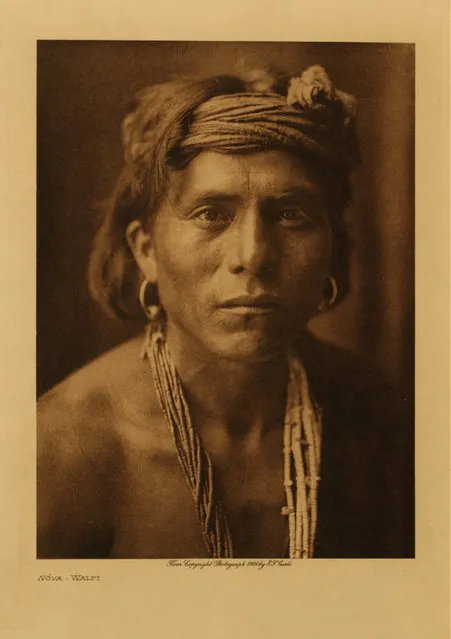
Nova, a Walpi, in 1906. (Photo by Edward S. Curtis)

At the beginning of the 20th century, Edward S. Curtis set out to document what he saw as a disappearing race: the Native American. From 1907 to 1930, Curtis took more than 2,000 photos of 80 tribes stretching from the Great Plains to the Pacific Northwest and Alaska. He then published and sold these photos, along with narrative text, in 20 volumes of work known as “The North American Indian”. It is one of the most significant collections of its kind, “probably the most important photographic document of its age and its topic,” said Jeffrey Garrett, associate university librarian for Special Libraries at Northwestern University. (Photo by Edward S. Curtis)
Details
07 Sep 2014 12:57:00
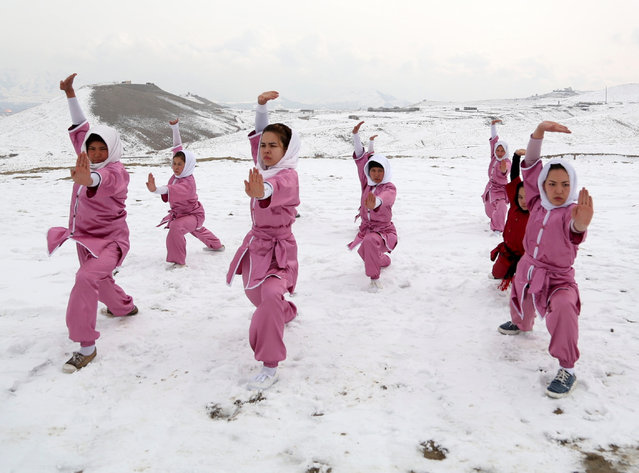
Afghan girl athletes perform Wushu on the top of a hill in Kabul, capital of Afghanistan, January 18, 2017. In the conservative Afghan society where people especially in the countryside deeply believe in the old traditions and don't allow their girls and female members of the family to go out of home, exercising sport in open is extremely risky, but a group of girls are broken the taboo and exercising Wushu on a hilltop where the temperature is minus 2 Celsius degrees. (Photo by Rahmat Alizadah/Xinhua/Barcroft Images)

Afghan girl athletes perform Wushu on the top of a hill in Kabul, capital of Afghanistan, January 18, 2017. In the conservative Afghan society where people especially in the countryside deeply believe in the old traditions and don't allow their girls and female members of the family to go out of home, exercising sport in open is extremely risky, but a group of girls are broken the taboo and exercising Wushu on a hilltop where the temperature is minus 2 Celsius degrees. (Photo by Rahmat Alizadah/Xinhua/Barcroft Images)
Details
21 Jan 2017 11:26:00
Male members of the Zeleziar folk dance group whip and water the local girls dressed in traditional clothing, during Easter in Bociar, Slovakia on April 1, 2024. Boys and younger men visit the houses of young girls, whip them with fresh-cut decorated wickers and sprinkle water on them. By tradition, the whipping should give the girls strength, health, and abundance throughout the whole year. (Photo by Robert Nemeti/Anadolu via Getty Images)

Male members of the Zeleziar folk dance group whip and water the local girls dressed in traditional clothing, during Easter in Bociar, Slovakia on April 1, 2024. Boys and younger men visit the houses of young girls, whip them with fresh-cut decorated wickers and sprinkle water on them. By tradition, the whipping should give the girls strength, health, and abundance throughout the whole year. (Photo by Robert Nemeti/Anadolu via Getty Images)
Details
18 Aug 2025 03:18:00
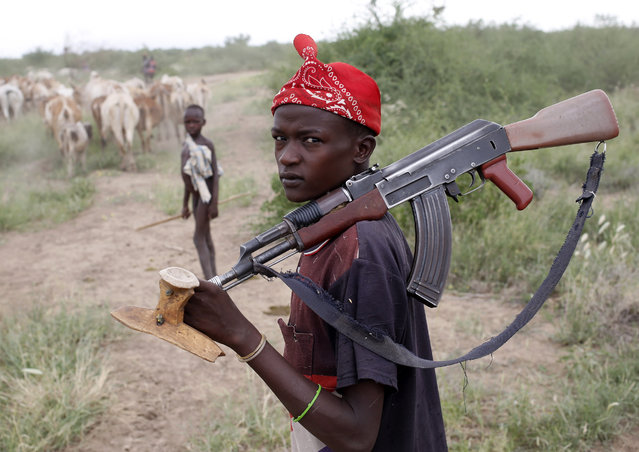
A Turkana boy herds cows as he carries a rifle in north western Kenya near the town of Kibish inside the Turkana region of the Ilemy Triangle September 26, 2014. (Photo by Goran Tomasevic/Reuters)

A Turkana boy herds cows as he carries a rifle in north western Kenya near the town of Kibish inside the Turkana region of the Ilemy Triangle September 26, 2014. The Turkana people have historically clashed over ethnic differences and precious resources such as fishing, pasture and fresh water with other tribes bordering their territory, such as the Dassanach from southern Ethiopia. (Photo by Goran Tomasevic/Reuters)
Details
26 Sep 2014 13:08:00
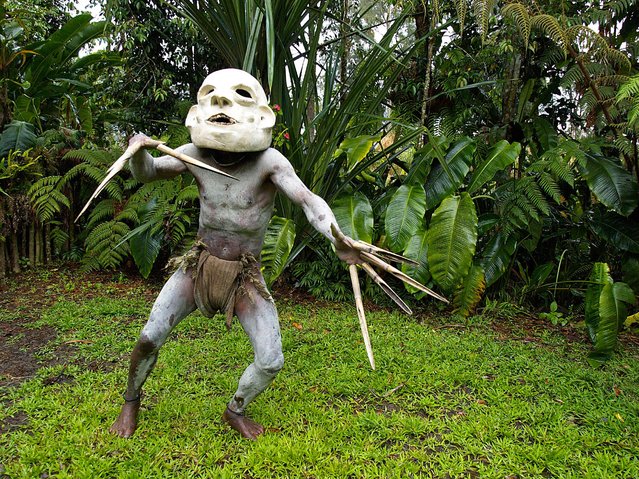
The mudmen come from the country’s western highlands, where there are virtually no roads, cars, electricity or shops. (Photo by Jeremy Hunter/Exclusivepix Media)

For centuries the Highlands peoples of Papua New Guinea fought over land, women and pigs. Sorcery and battle skills could elevate a clan to Bigmanship, where the bigger the “presentation”, the bigger the man. Clans therefore would paint their bodies and create fearsome masks as part of their psy. Here: These are the terrifying tribe of “mudmen” from a remote part of Papua New Guinea. (Photo by Jeremy Hunter/Exclusivepix Media)
Details
08 May 2017 08:12:00
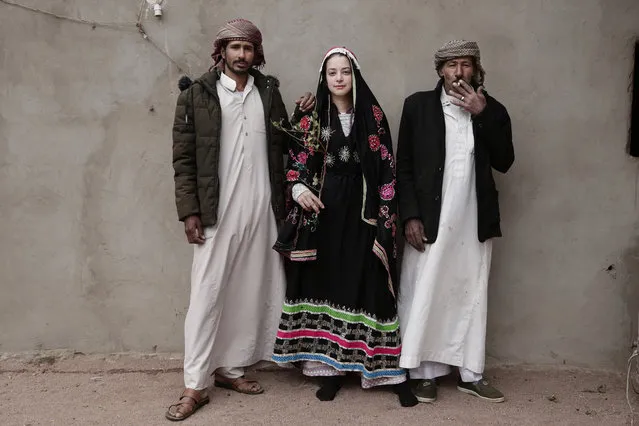
In this March 31, 2019 photo, an Egyptian student borrows a Bedouin wedding dress to pose for a photograph with Bedouin men from the Hamada tribe, in Wadi Sahw, Abu Zenima, in South Sinai, Egypt. Four Bedouin women are for the first time leading tours in Egypt’s Sinai Peninsula, breaking new ground in their deeply conservative community, where women almost never work outside the home or interact with outsiders.  The tourists can only be women, and the tours can’t go overnight. Each day before the sun sets, the group returns to the Hamada’s home village in Wadi Sahu, a narrow desert valley. (Photo by Nariman El-Mofty/AP Photo)

In this March 31, 2019 photo, an Egyptian student borrows a Bedouin wedding dress to pose for a photograph with Bedouin men from the Hamada tribe, in Wadi Sahw, Abu Zenima, in South Sinai, Egypt. Four Bedouin women are for the first time leading tours in Egypt’s Sinai Peninsula, breaking new ground in their deeply conservative community, where women almost never work outside the home or interact with outsiders. The tourists can only be women, and the tours can’t go overnight. Each day before the sun sets, the group returns to the Hamada’s home village in Wadi Sahu, a narrow desert valley. (Photo by Nariman El-Mofty/AP Photo)
Details
11 Apr 2019 00:01:00
Monster girl Crazy Sa-ya, an iconic Harajuku girl and a staff member of the cafe, wearing a face mask poses for a photograph at Kawaii Monster Cafe, amid the coronavirus disease (COVID-19) outbreak, in Tokyo, Japan on January 31, 2021. (Photo by Issei Kato/Reuters)

Monster girl Crazy Sa-ya, an iconic Harajuku girl and a staff member of the cafe, wearing a face mask poses for a photograph at Kawaii Monster Cafe, amid the coronavirus disease (COVID-19) outbreak, in Tokyo, Japan on January 31, 2021. (Photo by Issei Kato/Reuters)
Details
05 Feb 2021 09:32:00
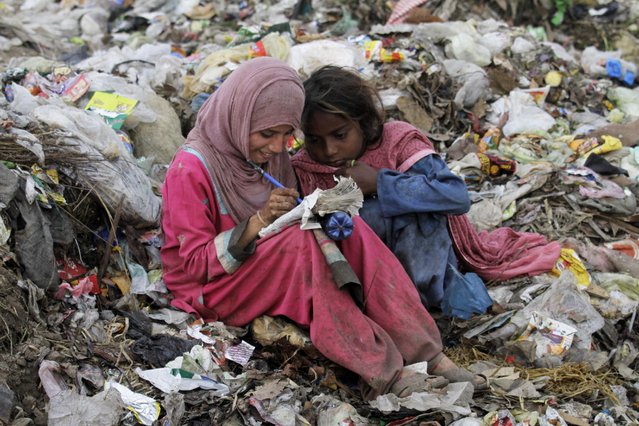
A Pakistani scavenger girl writes on a notebook she collected from a garbage, while another girl sits next to her in Lahore, Pakistan, Wednesday, April 1, 2015. Thousands of children pick recyclable items from waste dumping points to earn living for their poor families. (Photo by K. M. Chaudary/AP Photo)

A Pakistani scavenger girl writes on a notebook she collected from a garbage, while another girl sits next to her in Lahore, Pakistan, Wednesday, April 1, 2015. Thousands of children pick recyclable items from waste dumping points to earn living for their poor families. (Photo by K. M. Chaudary/AP Photo)
Details
05 Apr 2015 11:38:00