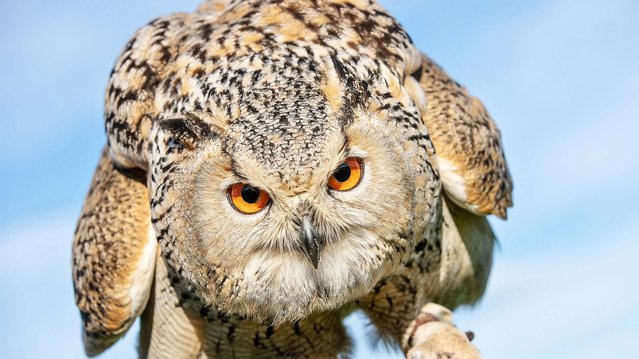
A Siberian eagle owl, which can grow up to 71cm tall, is among a collection of 60 birds of prey at SMJ Falconry near Oxenhope, West Yorkshire, England. (Photo by Charlotte Graham)
Four-year-old Solaris Arias (right) jumps through water spraying from an open fire hydrant in Providence, Rhode Island, on June 20, 2012. Much of the state remained under a heat advisory Tuesday afternoon because of the steamy air mass that has moved into the region resulting in temperatures in the 90s. (Photo by Steven Senne/AP Photo)
Lovot companion robots by Groove X wander in front their booth at CES Unveiled during the 2020 CES in Las Vegas, Nevada, January 5, 2020. (Photo by Steve Marcus/Reuters)
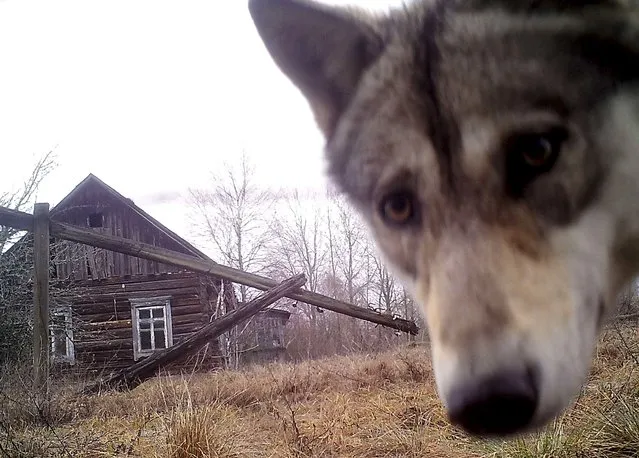
A wolf looks into the camera at the 30 km (19 miles) exclusion zone around the Chernobyl nuclear reactor in the abandoned village of Orevichi, Belarus, March 2, 2016. What happens to the environment when humans disappear? Thirty years after the Chernobyl nuclear disaster, booming populations of wolf, elk and other wildlife in the vast contaminated zone in Belarus and Ukraine provide a clue. (Photo by Vasily Fedosenko/Reuters)
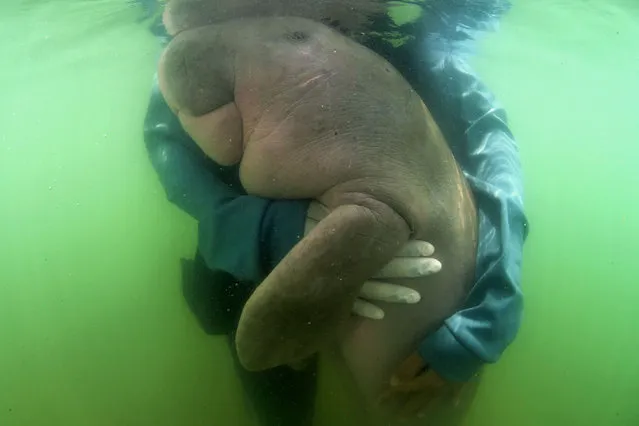
This picture taken on May 24, 2019 shows Mariam the dugong as she is cared for by park officials and veterinarians from the Phuket Marine Biological Centre on Libong island, Trang province in southern Thailand. An orphaned baby dugong rescued off a beach in Krabi province is Thailand's newest star, capturing the hearts of millions on social media and igniting an awarness for ocean conservation as authorities hand-raise the young mammal. (Photo by Sirachai Sirachai Arunrugstichai/AFP Photo)
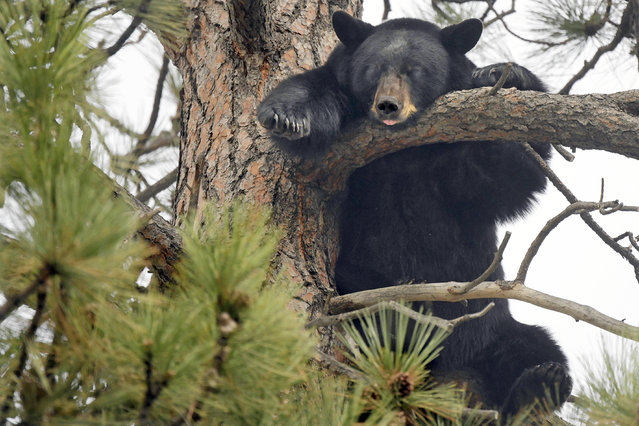
In this Thursday, October 3, 2019 photo, a female black bear sleeps with its tongue out high up in a Ponderosa pine tree near Clark Fork School in the Rattlesnake neighborhood of Missoula, Mont. The bear's cub, not pictured, was snoozing on a nearby branch. (Photo by Tommy Martino/The Missoulian via AP Photo)