Loading...
Done
“The Hero”. (Christophe Kiciak)

“I started photography in June 2009. At the time, I was searching for a way to express both the rigorous scientist and the creative artist in me. There are few hobbies that let these two approaches work together, so I really was enthusiastic about it: I am now spending all my free time studying various techniques, contemplating others' fantastic work, and of course, making pictures”. – Christophe Kiciak. Photo: “The Hero”. (Photo by Christophe Kiciak)
Details
11 Jan 2013 15:40:00
“You wont fool the children of the revolution”. (Photo by Andy Teo)

“You wont fool the children of the revolution”. (Photo by Andy Teo)
Details
13 Mar 2015 09:25:00
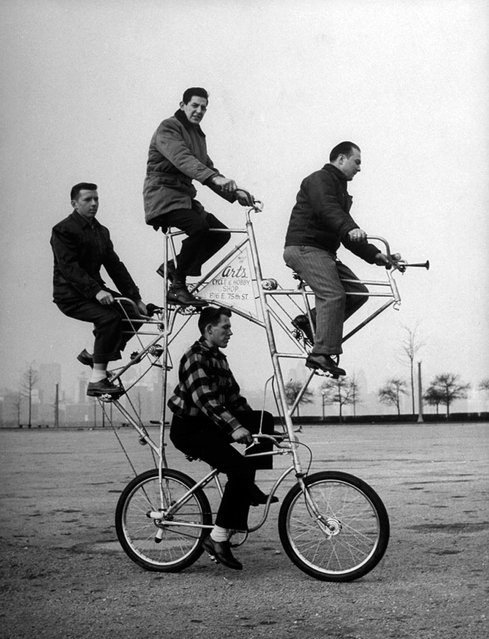
Four-man bicycle is powered by five chains and has brakes on both its wheels, 1948. The bike was built by Art Rothschild (top position) who broke three ribs while learning how to ride it. (Photo by Wallace Kirkland/Time & Life Pictures)

Four-man bicycle is powered by five chains and has brakes on both its wheels, 1948. The bike was built by Art Rothschild (top position) who broke three ribs while learning how to ride it. (Photo by Wallace Kirkland/Time & Life Pictures)
Details
05 May 2013 11:17:00
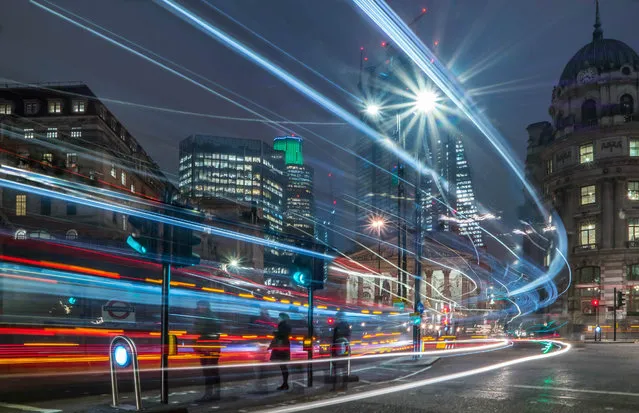
Runner-up. “The City of London, looking towards the Royal Exchange and the Bank of England. The ever-changing London skyline provides many excellent opportunities for cityscape photography, none more exciting than the ebb and flow of traffic at night”. MICK RYAN, JUDGE: “Sophisticated new camera sensors, sharp lenses and the ability to take hundreds of shots in a session and check your work have made night photography much easier than it ever used to be. The results, like this scene, can be spectacular”. (Photo by Mark Caldon/The Guardian)

Runner-up. “The City of London, looking towards the Royal Exchange and the Bank of England. The ever-changing London skyline provides many excellent opportunities for cityscape photography, none more exciting than the ebb and flow of traffic at night”. (Photo by Mark Caldon/The Guardian)
Details
10 Dec 2018 00:03:00
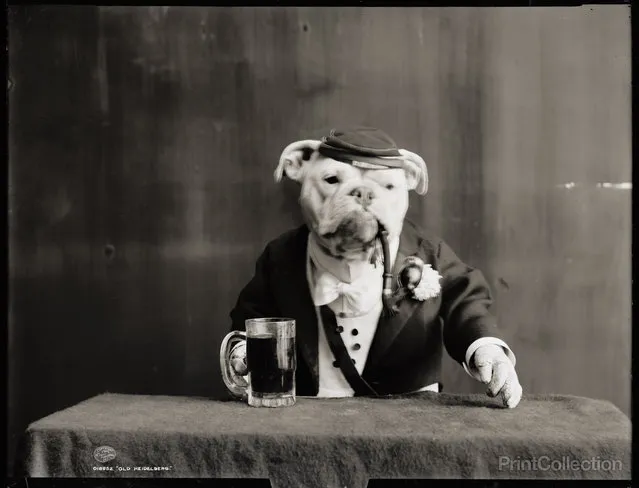
Old Heidelberg, Dog with Pipe, 1905. (Photo by Detroit Publishing Company)

Old Heidelberg, Dog with Pipe, 1905. (Photo by Detroit Publishing Company)
Details
13 Aug 2012 11:12:00
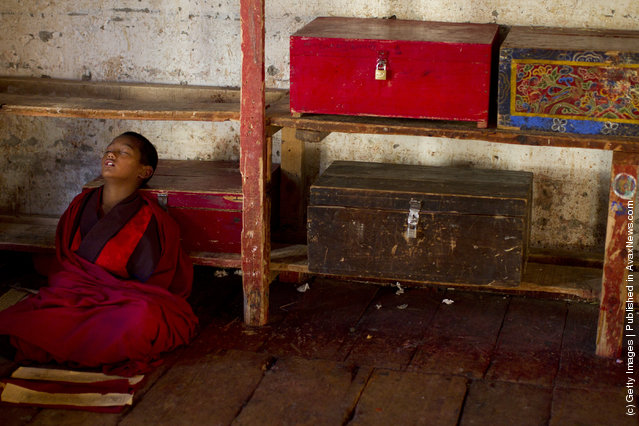
Monastic Life in Thimhu

A novice Bhutanese monk sleeps after hours of prayer waiting for class to be over at the Dechen Phodrang monastery October 18, 2011 in Thimphu, Bhutan. The monks average about 10 hours of study a day waking up at 5:00am. (Photo by Paula Bronstein/Getty Images)
Details
19 Oct 2011 10:31:00
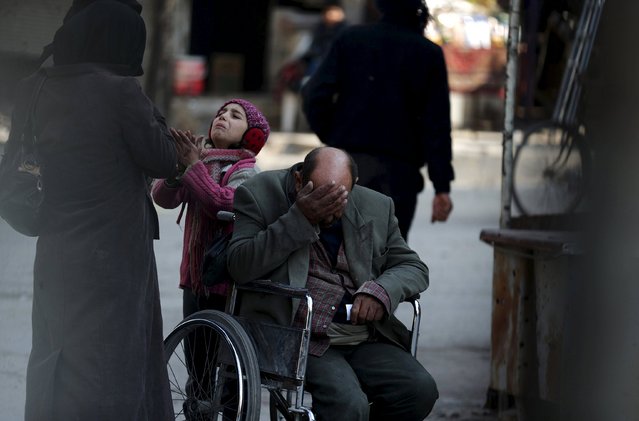
A girl asks a passerby for help to pay a medical bill as her father sits in his wheelchair in the Douma neighbourhood of Damascus Syria February 3, 2016. (Photo by Bassam Khabieh/Reuters)

Hadeel, 10, asks a passerby for help to pay a medical bill as her father Shahrour, 54, sits in his wheelchair in the Douma neighbourhood of Damascus Syria February 3, 2016. Shahrour said he developed diabetes at the beginning of the war in Syria. A lack of insulin led to his medical condition worsening and his right foot had to be amputated. Recently he also suffered a stroke that paralysed half his face. He and part of his extended family, a total of 18 people, live together and struggle to get by. (Photo by Bassam Khabieh/Reuters)
Details
12 Feb 2016 12:46:00
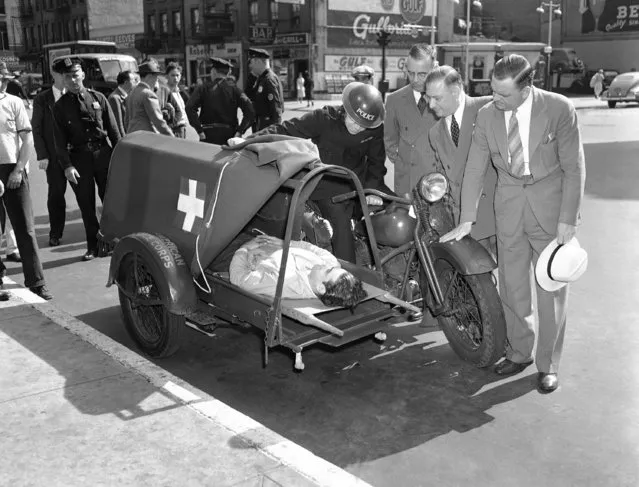
Developed for the British American Ambulance Corps, this new motorcycle ambulance is capable of speeding wounded soldiers 90 miles an hour from the front lines to field hospitals. Its springs are synchronized with the patient?s heartbeat to avoid increasing fever when traveling over various Terrain. Viewing it in New York  August 27, 1941, are left to right: constable Herbert Scott of England, driver; William E. Detlor, whose firm developed the vehicle; M. W. Stand, inspector-general of Civilian Defense, and Maj. Edward Riekert, also. (Photo by AP Photo)

Developed for the British American Ambulance Corps, this new motorcycle ambulance is capable of speeding wounded soldiers 90 miles an hour from the front lines to field hospitals. Its springs are synchronized with the patient's heartbeat to avoid increasing fever when traveling over various Terrain. Viewing it in New York August 27, 1941, are left to right: constable Herbert Scott of England, driver; William E. Detlor, whose firm developed the vehicle; M. W. Stand, inspector-general of Civilian Defense, and Maj. Edward Riekert, also. (Photo by AP Photo)
Details
28 Aug 2015 11:51:00