Loading...
Done
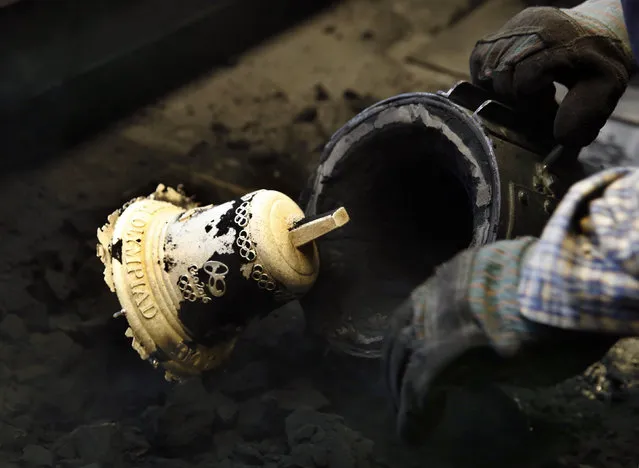
Serge Huguenin of the Blondeau foundry takes the newly melted bell out of the mould in La Chaux-de-Fonds, Switzerland January 21, 2016. At this year's Summer Olympics in Rio de Janeiro, no matter how elaborate the opening ceremony or how sophisticated the live broadcasts, the final lap of athletics races will be announced the traditional way by ringing an old-fashioned bell. (Photo by Denis Balibouse/Reuters)

Serge Huguenin of the Blondeau foundry takes the newly melted bell out of the mould in La Chaux-de-Fonds, Switzerland January 21, 2016. At this year's Summer Olympics in Rio de Janeiro, no matter how elaborate the opening ceremony or how sophisticated the live broadcasts, the final lap of athletics races will be announced the traditional way by ringing an old-fashioned bell. Omega, the official timekeeper of the event, has ordered 21 bells, forged almost entirely by hand by Blondeau's Bell Foundry in the Jura Mountains in Switzerland. Each last-lap bell is branded with the RIO 2016 logo and circled with the words “2016 GAMES OF THE XXXI OLYMPIAD”. (Photo by Denis Balibouse/Reuters)
Details
02 Feb 2016 13:51:00
This photo taken on July 13, 2023 shows a woman wearing traditional Uyghur attire posing for photos in the Old Kashgar tourist area in China's northwestern Xinjiang region. Chinese travellers throng the bazaars of old Kashgar, munching mutton kebabs and soaking up heavily commodified Uyghur culture – part of a government push to remould troubled Xinjiang into a tourism paradise. (Photo by Pedro Pardo/AFP Photo)

This photo taken on July 13, 2023 shows a woman wearing traditional Uyghur attire posing for photos in the Old Kashgar tourist area in China's northwestern Xinjiang region. Chinese travellers throng the bazaars of old Kashgar, munching mutton kebabs and soaking up heavily commodified Uyghur culture – part of a government push to remould troubled Xinjiang into a tourism paradise. (Photo by Pedro Pardo/AFP Photo)
Details
27 Sep 2023 02:44:00
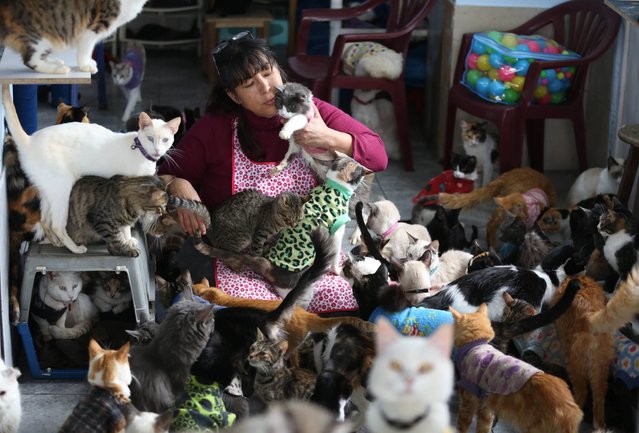
In this August 2, 2014 photo, Maria Torero, plays with a group of 175 cats with leukemia in her home in Lima, Peru. Torero says caring for cats with feline leukemia is her responsibility. Anybody else can care for healthy animals. (Photo by Martin Mejia/AP Photo)

“At her job, Maria Torero cares for sick human beings. At home, she lavishes love on slowly dying cats – 175 of them at last count. The 45-year-old nurse has turned her two-story, eight-room apartment into a hospice for cats with feline leukemia, scattering it with scores of feeding dishes and at least two dozen boxes litter boxes. Some have suggested she shelter healthy cats instead. “That's not my role”, she told The Associated Press. “I'm a nurse. My duty is to the cats that nobody cares about”. She said that “people don't adopt adult cats, especially if they are terminally ill”. – Franklin Briceno via Associated Press. (Photo by Martin Mejia/AP Photo)
Details
24 Aug 2014 09:28:00
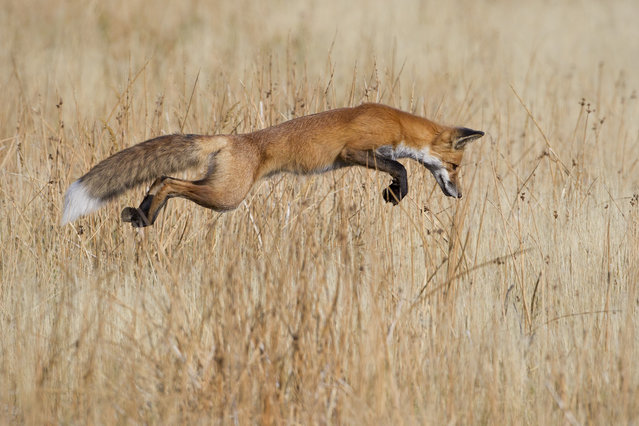
Canada: “Lucky pounce”. (Photo by Connor Stefanison/Wildlife Photographer of the Year 2013)

The winners of The London’s Natural History Museum's prestigious Wildlife Photographer of the Year for 2013 have finally been unveiled. Selected from almost 43,000 entries from 96 countries, the winners offer a glimpse of the stunning array of natural beauty on our planet. Photo: Canada: “Lucky pounce”. “Anticipating the pounce – that was the hardest part”, says Connor, who had come to Yellowstone National Park, Wyoming, USA, in search of wildlife as much as the spectacular landscape. He had found this fox, his first ever, on his last day in the park. It was so absorbed in hunting that Connor had plenty of time to get out of the car and settle behind a rock. It quartered the grassland, back and forth, and then started staring intently at a patch of ground, giving Connor just enough warning of the action to come. When it sprung up, Connor got his shot. And when it landed, the fox got his mouse. (Photo by Connor Stefanison/Wildlife Photographer of the Year 2013)
Details
17 Oct 2013 08:12:00
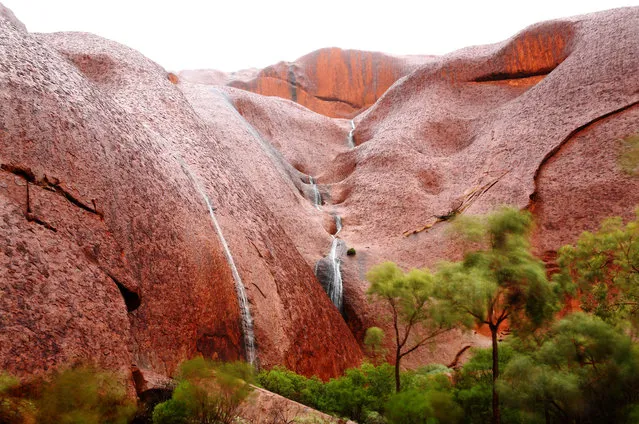
A general view of Uluru is seen as it rains on November 28, 2013 in Uluru-Kata Tjuta National Park, Australia. Uluru/ Ayers Rock is a large sandstone formation situated in central Australia approximately 335km from Alice Springs. The site and its surrounding area is scared to the Anangu people, the Indigenous people of this area and is visited by over 250,000 people each year.  (Photo by Mark Kolbe/Getty Images)

A general view of Uluru is seen as it rains on November 28, 2013 in Uluru-Kata Tjuta National Park, Australia. Uluru/ Ayers Rock is a large sandstone formation situated in central Australia approximately 335km from Alice Springs. The site and its surrounding area is scared to the Anangu people, the Indigenous people of this area and is visited by over 250,000 people each year. (Photo by Mark Kolbe/Getty Images)
Details
30 Jan 2014 13:27:00
Members of the 2013 'Jarl Squad' take part in the annual Up Helly Aa festival which culminates in the burning of a Viking Galley in Lerwick, Shetland Islands on January 29, 2013. Up Helly Aa celebrates the influence of the Scandinavian Vikings in the Shetland Islands and has employed this theme in the festival since 1870. The event culminates with up to 1,000 'guizers' (men in costume) throwing flaming torches into their Viking longboat. AFP PHOTO / ANDY BUCHANAN        (Photo credit should read Andy Buchanan/AFP/Getty Images)

Members of the 2013 “Jarl Squad” take part in the annual Up Helly Aa festival which culminates in the burning of a Viking Galley in Lerwick, Shetland Islands on January 29, 2013. Up Helly Aa celebrates the influence of the Scandinavian Vikings in the Shetland Islands and has employed this theme in the festival since 1870. The event culminates with up to 1,000 “guizers” (men in costume) throwing flaming torches into their Viking longboat. (Photo by Andy Buchanan/AFP Photo)
Details
30 Jan 2013 09:29:00
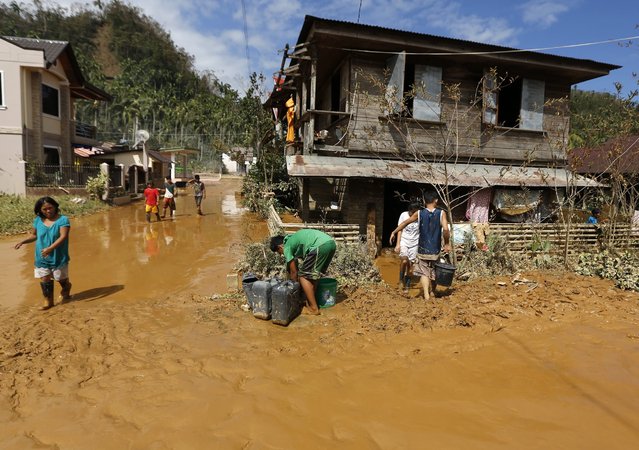
Filipino typhoon victims walk through heavy mud in the typhoon hit town of Taft, Samar island, Philippines, 08 December 2014. Typhoon Hagupit weakened into a tropical storm as it moved towards the Philippine capital after killing at least 27 people and displacing more than one million people in the eastern and central provinces. (Photo by Francis R. Malasig/EPA)

Filipino typhoon victims walk through heavy mud in the typhoon hit town of Taft, Samar island, Philippines, 08 December 2014. Typhoon Hagupit weakened into a tropical storm as it moved towards the Philippine capital after killing at least 27 people and displacing more than one million people in the eastern and central provinces. Hagupit slammed into the country's eastern coast on 06 December evening, bringing heavy rains and gale-force winds that flattened homes, ripped off roofs, and knocked out power and communications. (Photo by Francis R. Malasig/EPA)
Details
10 Dec 2014 11:37:00
People in traditional dance before competing in the 53rd Verdiales music contest in Malaga, southern Spain December 28, 2014. Verdiales is a form of traditional Flamenco music, which is common in the province of Malaga. Members of singing groups, known as “pandas”, wear traditional costumes decked with flowers and other accessories as they perform in the contest, which is held annually on December 28. (Photo by Jon Nazca/Reuters)

People in traditional dance before competing in the 53rd Verdiales music contest in Malaga, southern Spain December 28, 2014. Verdiales is a form of traditional Flamenco music, which is common in the province of Malaga. Members of singing groups, known as “pandas”, wear traditional costumes decked with flowers and other accessories as they perform in the contest, which is held annually on December 28. (Photo by Jon Nazca/Reuters)
Details
30 Dec 2014 11:48:00