Loading...
Done
Afghan Dog Fighting

“Dog fighting is a form of blood sport in which game dogs are made to fight, sometimes to the death. It is illegal in most developed countries. Dog fighting is used for entertainment and may also generate revenue from stud fees, admission fees and gambling”. – Wikipedia

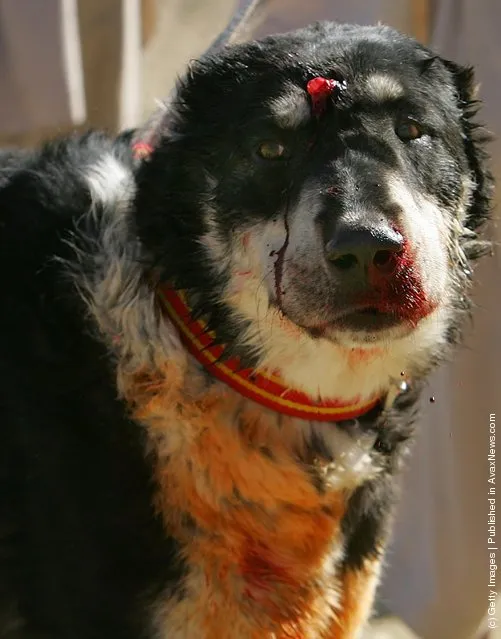
Photo: A bloody Afghan dog is bleeding with many wounds after he lost a dog fight November 24, 2006 in Kabul, Afghanistan. While the Afghan government is trying to ban the violent use of dogs for fighting, the unofficial sport remains a regular weekly event. Afghan dog fighting is popular among Afghan men who gamble on the dogs making upwards of 15,000 Afghanie (300 USD). (Photo by Paula Bronstein/Getty Images)
Details
07 Aug 2011 11:47:00
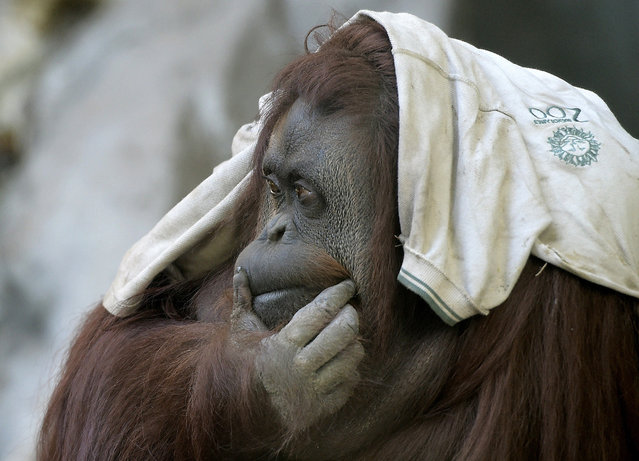
Sandra, a 29-year-old orangutan at Buenos Aires' zoo, on May 20, 2015. Sandra got cleared to leave a Buenos Aires zoo that was her home for 20 years, after a court ruled she was entitled to more desirable living conditions. (Photo by Juan Mabromata/AFP Photo)

Sandra, a 29-year-old orangutan at Buenos Aires' zoo, on May 20, 2015. Sandra got cleared to leave a Buenos Aires zoo that was her home for 20 years, after a court ruled she was entitled to more desirable living conditions. (Photo by Juan Mabromata/AFP Photo)
Details
23 May 2015 11:36:00
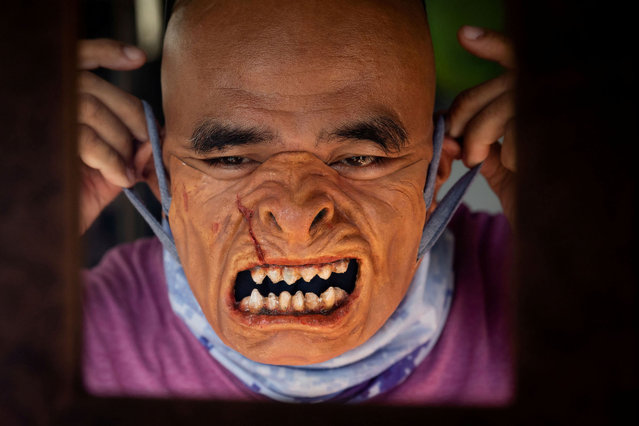
TV prosthetics artist Rene Abelardo tries on a sample of his prosthetic face mask, his latest creation as TV projects took a halt amid the coronavirus disease (COVID-19) outbreak, in San Pedro, Laguna, Philippines, June 17, 2020. (Photo by Eloisa Lopez/Reuters)

TV prosthetics artist Rene Abelardo tries on a sample of his prosthetic face mask, his latest creation as TV projects took a halt amid the coronavirus disease (COVID-19) outbreak, in San Pedro, Laguna, Philippines, June 17, 2020. (Photo by Eloisa Lopez/Reuters)
Details
31 Aug 2020 00:03:00
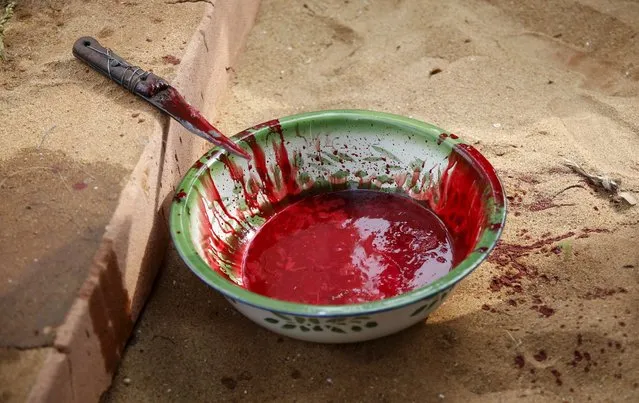
A knife is seen beside a bowl containing blood after a ram was killed as a sacrifice in front of a shrine at the annual voodoo festival in Ouidah, Benin, January 10, 2016. (Photo by Akintunde Akinleye/Reuters)

A knife is seen beside a bowl containing blood after a ram was killed as a sacrifice in front of a shrine at the annual voodoo festival in Ouidah, Benin, January 10, 2016. In Ouidah, a small town and former slave port in the West African country of Benin, the annual voodoo festival gathers visitors from far and wide. It's a week that brings together priests and dignitaries, rich and poor, locals and visitors from as far afield as the Caribbean and France. The festival commemorates the estimated 60 million people who lost their homelands and their freedom during the African slave trade. (Photo by Akintunde Akinleye/Reuters)
Details
23 Jan 2016 12:55:00
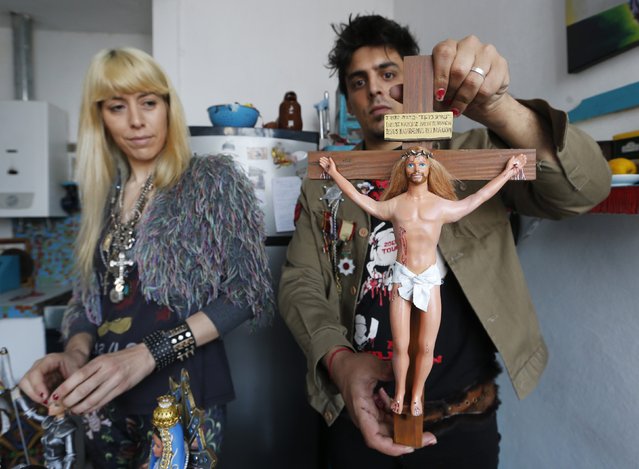
Artist Emiliano Paolini (R), and his partner Marianela Perelli, show their “Ken” doll that they have re-designed into the religious figure of Jesus Christ at their workshop in Rosario, north of Buenos Aires September 23, 2014. (Photo by Enrique Marcarian/Reuters)

Artist Emiliano Paolini (R), and his partner Marianela Perelli, show their “Ken” doll that they have re-designed into the religious figure of Jesus Christ at their workshop in Rosario, north of Buenos Aires September 23, 2014. Paolini and Perelli have adapted religious figures such as Jesus Christ, Moses and the Virgin of Guadalupe to Mattel's line of Barbie and Ken dolls and are working on more religious figures, although they say they will not be using the Prophet Muhammad to avoid controversy. They plan to have a gallery show in Buenos Aires next October. (Photo by Enrique Marcarian/Reuters)
Details
27 Sep 2014 11:47:00
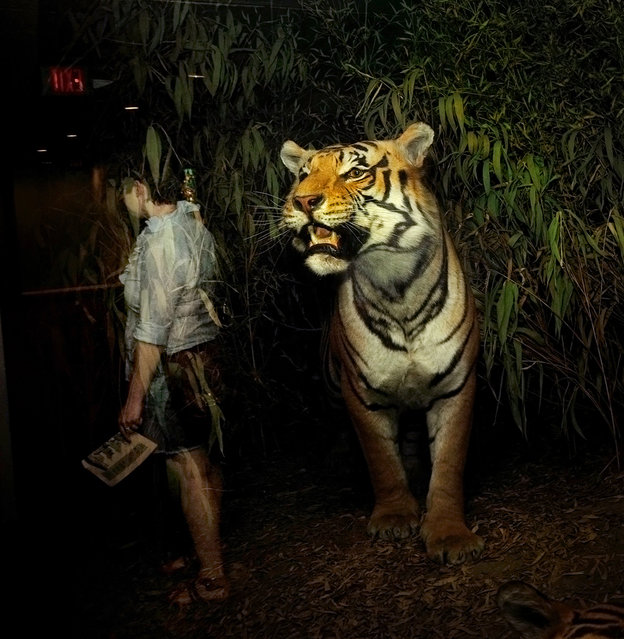
“Natural History”: Tiger. (Photo by Traer Scott)

“Natural History” is a series of completely candid single exposure images that merge the living and the dead to create allegorical narratives of our troubled co-existence with nature. Ghost-like reflections of modern visitors viewing wildlife dioramas are juxtaposed against the antique taxidermied subjects housed behind thick glass, their faces molded into permanent expressions of fear, aggression or fleeting passivity. After decades of over-hunting, climate change, poaching and destruction of habitat, many of these long dead diorama specimens now represent endangered or completely extinct species”. – Traer Scott. (Photo by Traer Scott)
Details
27 Oct 2014 11:39:00
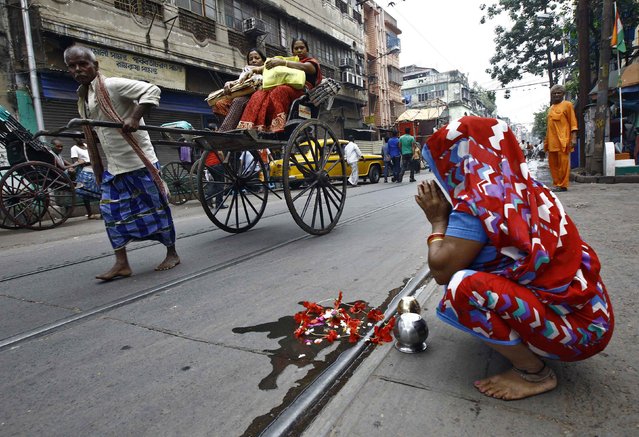
A woman offers prayers by a road as a rickshaw puller transports passengers in Kolkata October 28, 2014. (Photo by Rupak De Chowdhuri/Reuters)

A woman offers prayers by a road as a rickshaw puller transports passengers in Kolkata October 28, 2014. (Photo by Rupak De Chowdhuri/Reuters)
Details
01 Nov 2014 14:25:00
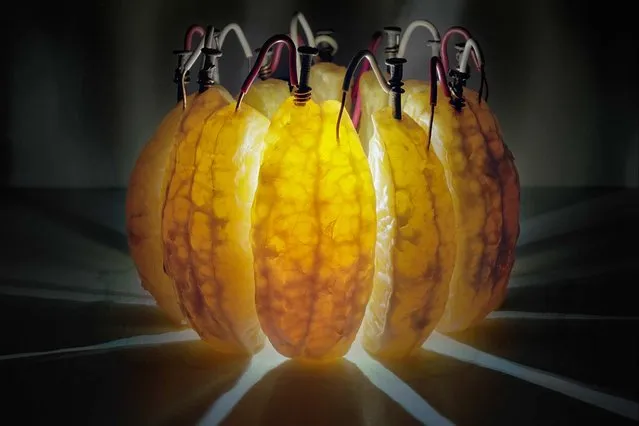
Wedges of an orange generate enough current and electrical juice – 3.5 volts – to power an LED. The fruit’s citric acid helps electrons flow from galvanized nails to copper wire in this 14-hour exposure. This image was published in September’s Visions of Earth, a trio of photos that appear in each issue of National Geographic. (Photo by Caleb Charland/National Geographic)

Wedges of an orange generate enough current and electrical juice – 3.5 volts – to power an LED. The fruit’s citric acid helps electrons flow from galvanized nails to copper wire in this 14-hour exposure. This image was published in September’s Visions of Earth, a trio of photos that appear in each issue of National Geographic. (Photo by Caleb Charland/National Geographic)
Details
06 Jan 2014 12:09:00