Loading...
Done
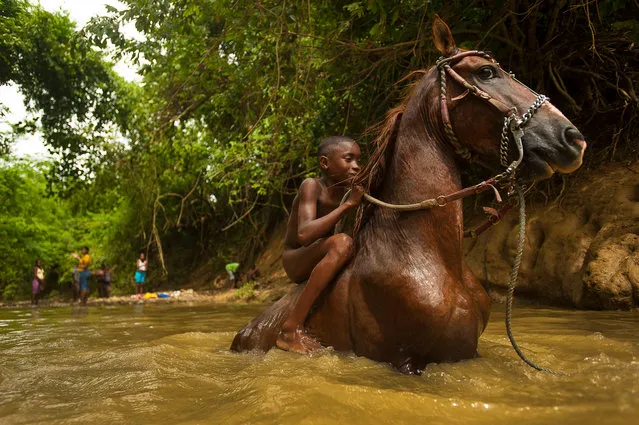
This image of a young bareback rider was taken in the village of Palenque de San Basilio, in Colombia’s Bolívar department. Founded by freed slaves in the 17th century, it became the first free town in the Americas, following a decree by the Spanish crown. Most of today’s inhabitants are direct descendants of those slaves and have preserved many of their customs, including their own language, Palenquero. (Photo by Sebastián Suki Beláustegui/The Guardian)

This image of a young bareback rider was taken in the village of Palenque de San Basilio, in Colombia’s Bolívar department. Founded by freed slaves in the 17th century, it became the first free town in the Americas, following a decree by the Spanish crown. Most of today’s inhabitants are direct descendants of those slaves and have preserved many of their customs, including their own language, Palenquero. (Photo by Sebastián Suki Beláustegui/The Guardian)
Details
07 Sep 2017 09:13:00
Behaviour: Mammals category. Giant Gathering by Tony Wu, USA. Dozens of sperm whales mingled noisily off Sri Lanka’s northeast coast, stacked as far down as Tony could see. This was a congregation of dozens of social units, like a gathering of the clans. Aggregations like this could be a critical part of the whales’ rich social lives but are rarely reported. Some two thirds of the population was wiped out before commercial whaling was banned in 1986. This kind of major gathering could be “a sign that populations are recovering”, says Tony. (Photo by Tony Wu/Wildlife Photographer of the Year 2017)

Behaviour: Mammals category. Giant Gathering by Tony Wu, USA. Dozens of sperm whales mingled noisily off Sri Lanka’s northeast coast, stacked as far down as Tony could see. This was a congregation of dozens of social units, like a gathering of the clans. Aggregations like this could be a critical part of the whales’ rich social lives but are rarely reported. Some two thirds of the population was wiped out before commercial whaling was banned in 1986. This kind of major gathering could be “a sign that populations are recovering”, says Tony. (Photo by Tony Wu/Wildlife Photographer of the Year 2017)
Details
19 Oct 2017 09:38:00
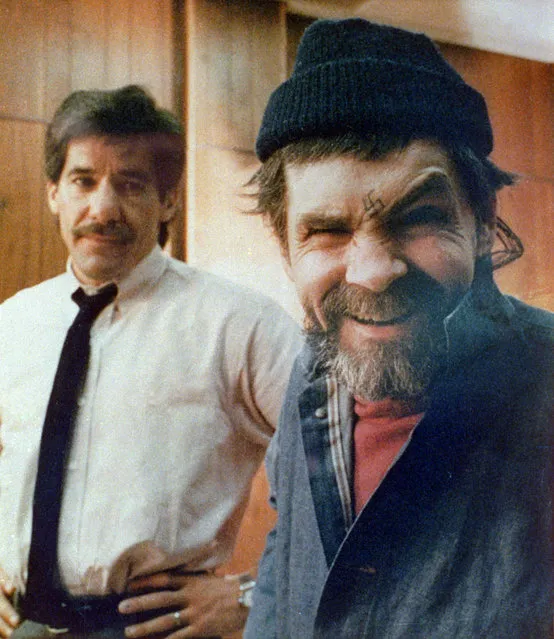
Charles Manson plays up to the camera during a 1988 interview with reporter Geraldo Rivera at San Quentin prison in 1988. Authorities say Manson, cult leader and mastermind behind 1969 deaths of actress Sharon Tate and several others, died on Sunday, Nov. 19, 2017. He was 83. (Photo by AP Photo)

Charles Manson plays up to the camera during a 1988 interview with reporter Geraldo Rivera at San Quentin prison in 1988. Authorities say Manson, cult leader and mastermind behind 1969 deaths of actress Sharon Tate and several others, died on Sunday, November 19, 2017. He was 83. (Photo by AP Photo)
Details
21 Nov 2017 09:11:00
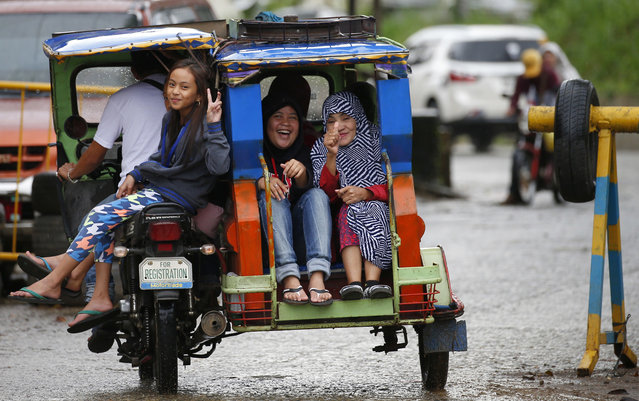
Residents recently returning to their area cleared by government troops react as they ride a tricycle a day after President Rodrigo Duterte declared the liberation of Marawi city in southern Philippines Wednesday, October 18, 2017. Sporadic explosions continue Wednesday as Philippine soldiers fought to gain control of the last pocket of Marawi controlled by Islamic militants. (Photo by Bullit Marquez/AP Photo)

Residents recently returning to their area cleared by government troops react as they ride a tricycle a day after President Rodrigo Duterte declared the liberation of Marawi city in southern Philippines Wednesday, October 18, 2017. Sporadic explosions continue Wednesday as Philippine soldiers fought to gain control of the last pocket of Marawi controlled by Islamic militants. (Photo by Bullit Marquez/AP Photo)
Details
08 Feb 2018 06:57:00
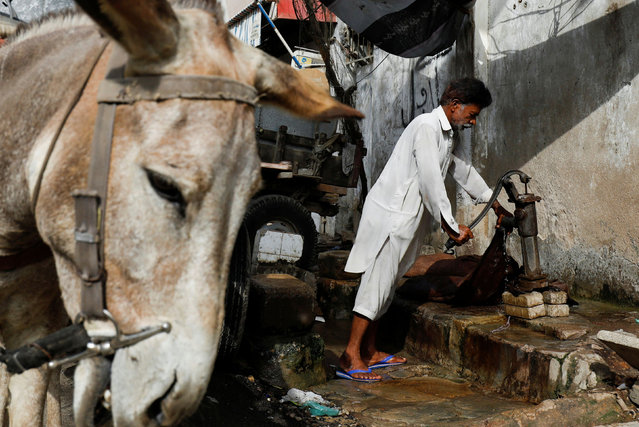
Mohammad Ramzan, 60, a traditional goatskin water carrier also known as a mashki, fills a bag with water from a handpump to deliver to nearby homes during the fasting month of Ramadan, as the outbreak of the coronavirus disease (COVID-19) continues, in Karachi, Pakistan on April 23, 2021. (Photo by Akhtar Soomro/Reuters)

Mohammad Ramzan, 60, a traditional goatskin water carrier also known as a mashki, fills a bag with water from a handpump to deliver to nearby homes during the fasting month of Ramadan, as the outbreak of the coronavirus disease (COVID-19) continues, in Karachi, Pakistan on April 23, 2021. (Photo by Akhtar Soomro/Reuters)
Details
29 May 2021 09:06:00
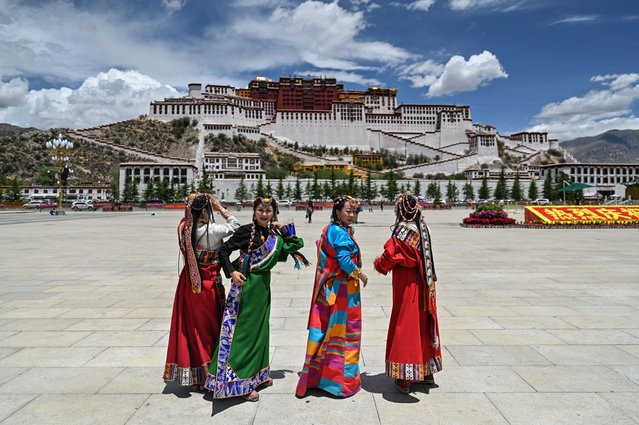
This photograph taken during a government organised media tour shows people in traditional costume standing in Potala Palace Square as the Potala Palace – classified as a World Heritage Site by Unesco in 1994 – is seen in the background in the regional capital Lhasa, in China's Tibet Autonomous Region, on June 1, 2021. (Photo by Hector Retamal/AFP Photo)

This photograph taken during a government organised media tour shows people in traditional costume standing in Potala Palace Square as the Potala Palace – classified as a World Heritage Site by Unesco in 1994 – is seen in the background in the regional capital Lhasa, in China's Tibet Autonomous Region, on June 1, 2021. (Photo by Hector Retamal/AFP Photo)
Details
11 Jun 2021 09:42:00
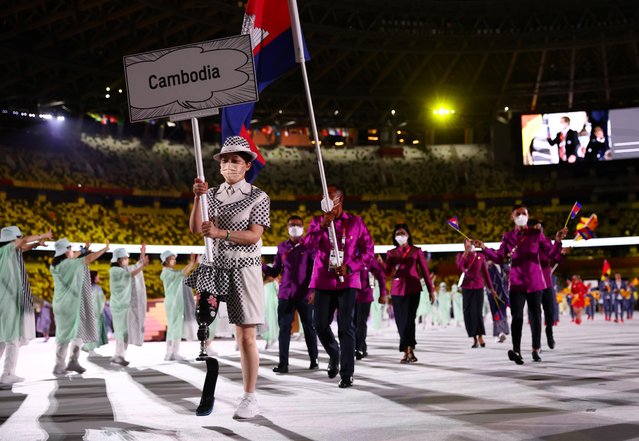
Flag bearers Bunpichmorakat Kheun and Sokong Pen of Team Cambodia during the Opening Ceremony of the Tokyo 2020 Olympic Games at Olympic Stadium on July 23, 2021 in Tokyo, Japan. (Photo by Kai Pfaffenbach/Reuters)

Flag bearers Bunpichmorakat Kheun and Sokong Pen of Team Cambodia during the Opening Ceremony of the Tokyo 2020 Olympic Games at Olympic Stadium on July 23, 2021 in Tokyo, Japan. (Photo by Kai Pfaffenbach/Reuters)
Details
24 Jul 2021 08:31:00
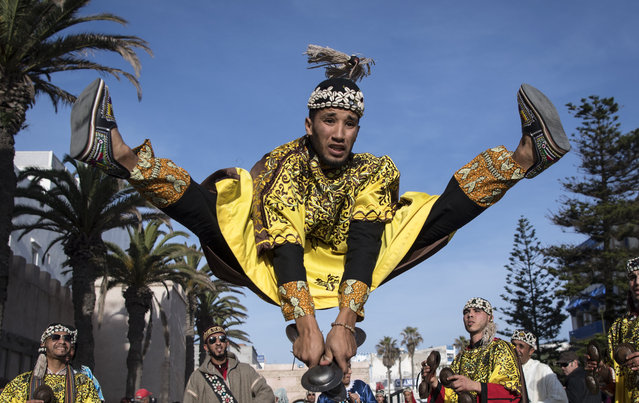
A Gnawa traditional group performs in the city of Essaouira on December 14, 2019, to celebrate the decision of adding the Gnawa culture to UNESCO's list of Intangible Cultural Heritage of Humanity. Gnawa culture, a centuries-old Moroccan practice rooted in music, African rituals and Sufi traditions, was added to UNESCO's list of Intangible Cultural Heritage of Humanity earlier in the week. Gnawa refers to a “set of musical productions, fraternal practices and therapeutic rituals where the secular mixes with the sacred”, according to the nomination submitted by Morocco. Often dressed in colourful outfits, Gnawa musicians play the guenbri, a type of lute with three strings, accompanied by steel castanets called krakebs. (Photo by Fadel Senna/AFP Photo)

A Gnawa traditional group performs in the city of Essaouira on December 14, 2019, to celebrate the decision of adding the Gnawa culture to UNESCO's list of Intangible Cultural Heritage of Humanity. Gnawa culture, a centuries-old Moroccan practice rooted in music, African rituals and Sufi traditions, was added to UNESCO's list of Intangible Cultural Heritage of Humanity earlier in the week. Gnawa refers to a “set of musical productions, fraternal practices and therapeutic rituals where the secular mixes with the sacred”, according to the nomination submitted by Morocco. Often dressed in colourful outfits, Gnawa musicians play the guenbri, a type of lute with three strings, accompanied by steel castanets called krakebs. (Photo by Fadel Senna/AFP Photo)
Details
18 Dec 2019 00:05:00