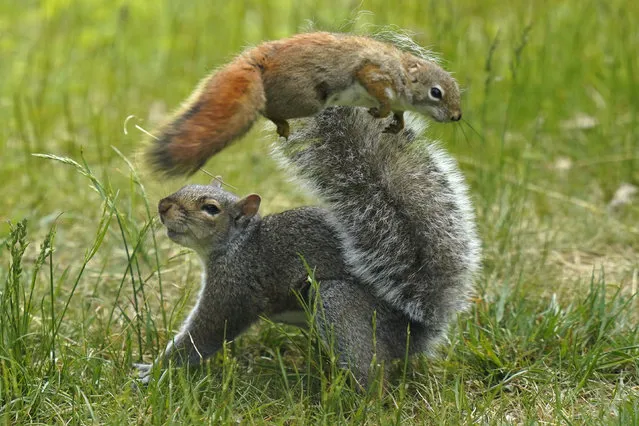
A red squirrel leaps over a gray squirrel after the larger squirrel became annoyed with its territory being encroached upon, Saturday, May 28, 2022, in Freeport, Maine. (Photo by Robert F. Bukaty/AP Photo)
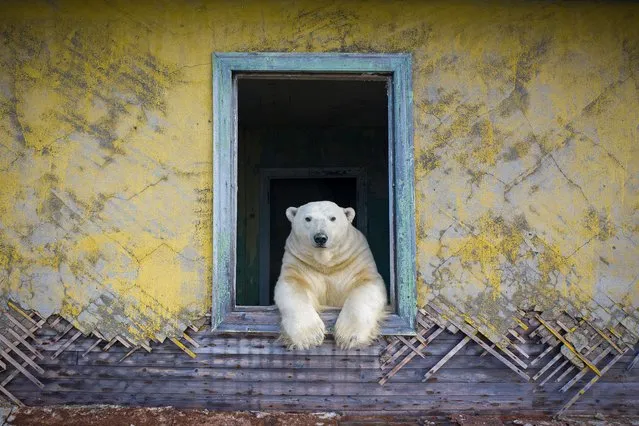
Polar frame, by Dmitry Kokh, Russia. When Kokh’s boat approached the small island of Kolyuchin in the Russian High Arctic, which had been abandoned by humans since 1992, he was surprised to spot movement in one of the houses. Binoculars revealed polar bears – more than 20 in total – exploring the ghost town. Dmitry used a low-noise drone to document them. (Photo by Dmitry Kokh/Wildlife Photographer of the Year 2022)
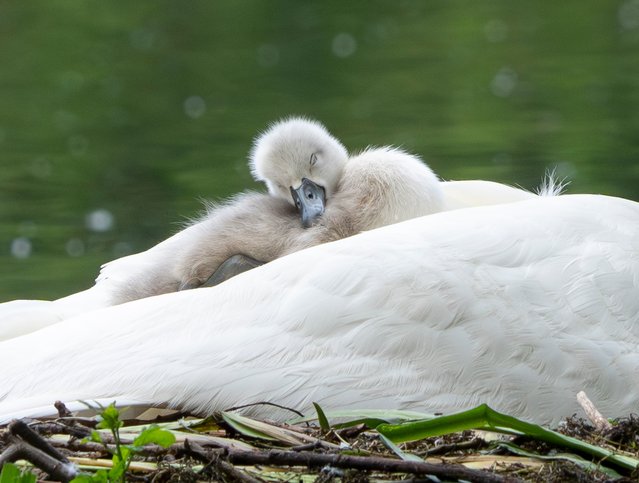
A cygnet keeps snug under its mother’s wing at Heronry Pond in Wanstead Park in east London in the last decade of May 2024. (Photo by Jeff Moore/The Times)
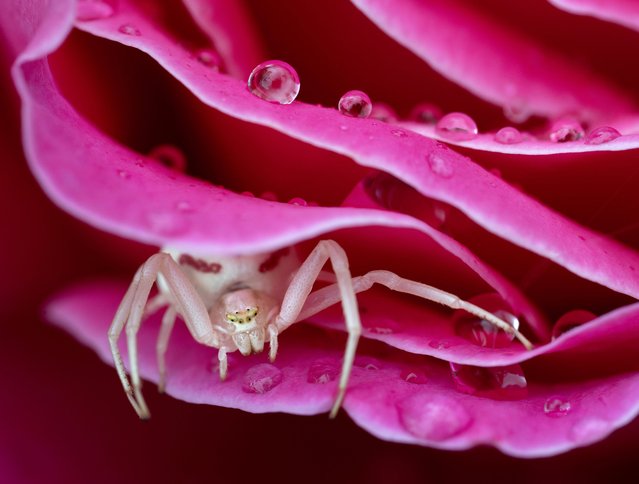
A white crab spider hides between the petals of a rain spotted rose blossom in the garden of a home near Oakland in southwestern Oregon on August 23, 2024. Crab spiders are ambush predators and wait patiently for their prey to approach. (Photo by Robin Loznak/ZUMA Press Wire/Rex Features/Shutterstock)
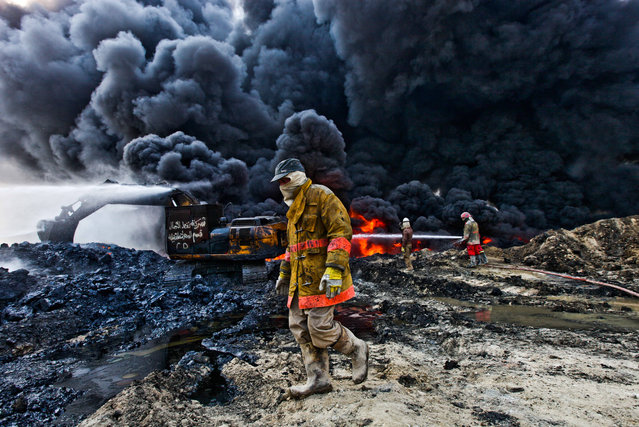
Firefighting teams try to extinguish an oil fire November 27, 2016 as smoke billows from one of the remaining oil wells set ablaze by ISIL in their retreat from Qayyarah at the start of the Mosul offensive which began more than a month prior. (Photo by Byron Smith/ZUMA Wire/Rex Features/Shutterstock)
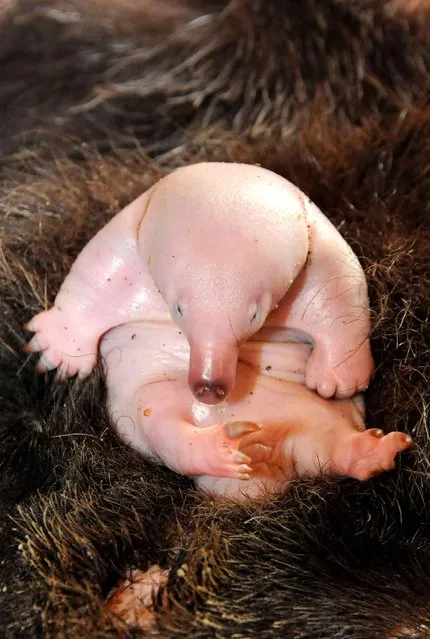
It's a 30-day-old Echidna baby, known as a “puggle” – one of only 24 ever bred in captivity. The proud parents are Tippy and Pickle of Australia Zoo. The tiny baby, whose s*x has not yet been identified, hatched from a soft egg and will continue to develop and nurse inside Tippy's warm pouch. (Photo by Australia Zoo/Rex/Sipa Press)
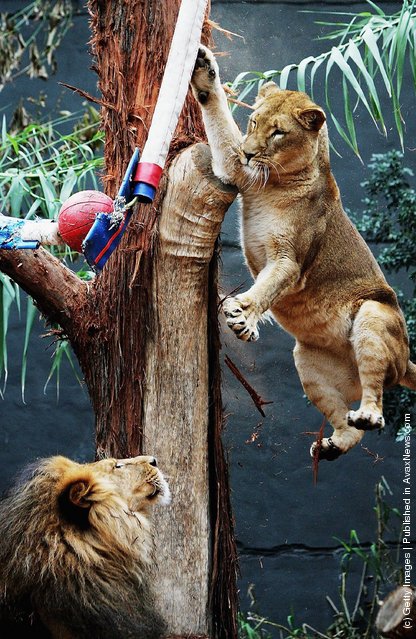
Young African lion Asali (R) jumps for a bungee-ball toy as her father Jambo or “Bruiser” looks on at the opening of a savannah-themed makeover of the lion enclosure at Taronga Zoo August 29, 2006 in Sydney, Australia. The renovation includes sandstone rock features, a wading pool, and red ochre crushed granite substrate in a move to make the enclosure more closely resemble the natural habitat of the African savannah. (Photo by Ian Waldie/Getty Images)