Loading...
Done


Greetings, our dear visitors!


Without mincing words we would like to present a feature: Self-Publishing, let's call it Samizdat. :-) Sure we aren't Flickr, StumbleUpon or add_whatever_you_like, we're really small in comparison with these giants but we have constant, very attentive and grateful audience. All we can offer you is a place on the main page and attention of all our visitors to your posts, the things that are hard to achieve on numerous social services. Who knows, maybe tiny and humble indie project like AvaxNews will be much more helpful in searching of your audience than facebook for example. %-)
Details
11 Oct 2013 10:17:00
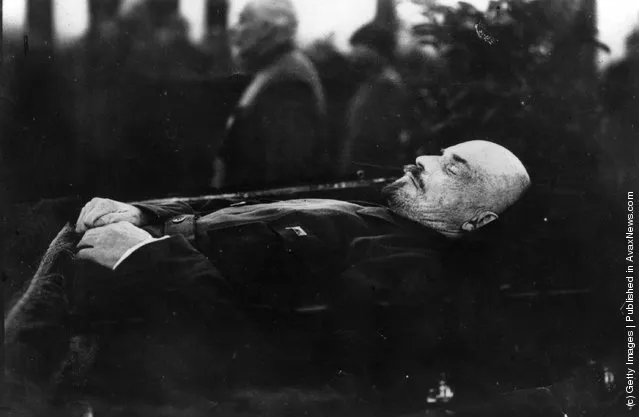
1924:  Vladimir Ilyich Lenin lying in state in the Kremlin

Photo: Vladimir Ilyich Lenin (1870 – 1924) lying in state in the Kremlin. (Photo by Hulton Archive/Getty Images). 1924

Important! For the same article in Russian language click here.

Something quite intriguing is happening within Russian-speaking internet during the last few – should you type a fully academic inquiry (at least, according to Russian academic requirements) in national search engines for "Lenin's mausoleum" – the first thing you get (even in top 10 searches) is website pages talking about black magic and occult. Website authors view this construction differently, but unconditionally agree on one thing: the mausoleum of the "leader of the world proletariat” – the essence of a magical artifact, a sort of “energy vampire”. It was built with a certain purpose: to drain the energy out of miserable Soviet citizens on one hand; and to poison the anthroposphere of one-sixth part of the earth with its vibes (the exact territory that was occupied by the former Soviet Union), depriving the Russian people of will to resist on the other hand. Complete nonsense? No doubt. Nevertheless, an intriguing one. Well, probably because some oddities do exist in mausoleum's history. These oddities are the thing we are going to discuss this time. First, let me refresh you memory on the subject.
Details
16 Oct 2011 11:27:00
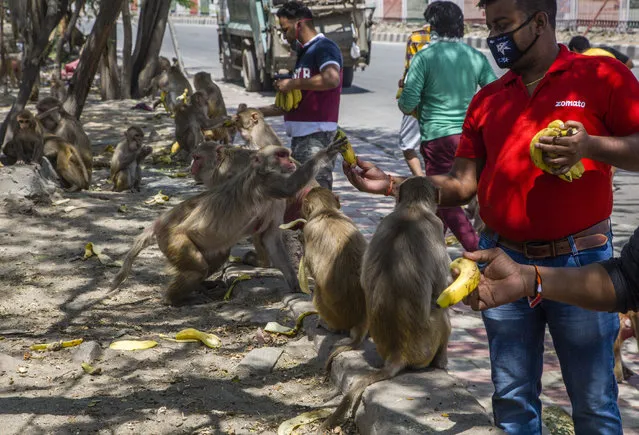
Men give bananas to monkeys gathered on the side of the road as India remains under an unprecedented lockdown over the highly contagious coronavirus (COVID-19) on April 08, 2020 in New Delhi, India. Wild animals, including monkeys, are roaming human settlements in India as people are staying indoors due to the 21-day lockdown. With India's 1.3 billion population and tens of millions of cars off the roads, wildlife is moving towards areas inhabited by humans. Wild animals in many countries have been seen roaming streets. A study says some 60 percent of the new diseases found around the globe every year are zoonotic, meaning they originate in animals and are passed on to humans. COVID-19 is a zoonotic disease that is suspected to have come from the wet markets of Wuhan, China. (Photo by Yawar Nazir/Getty Images)

Men give bananas to monkeys gathered on the side of the road as India remains under an unprecedented lockdown over the highly contagious coronavirus (COVID-19) on April 08, 2020 in New Delhi, India. Wild animals, including monkeys, are roaming human settlements in India as people are staying indoors due to the 21-day lockdown. (Photo by Yawar Nazir/Getty Images)
Details
12 Apr 2020 00:05:00
Dancers perform during the Navam Perahera at the Gangaramaya Temple in Colombo, Sri Lanka, on February 15, 2022. (Photo by Xinhua News Agency/Rex Features/Shutterstock)

Dancers perform during the Navam Perahera at the Gangaramaya Temple in Colombo, Sri Lanka, on February 15, 2022. (Photo by Xinhua News Agency/Rex Features/Shutterstock)
Details
06 Apr 2022 05:21:00
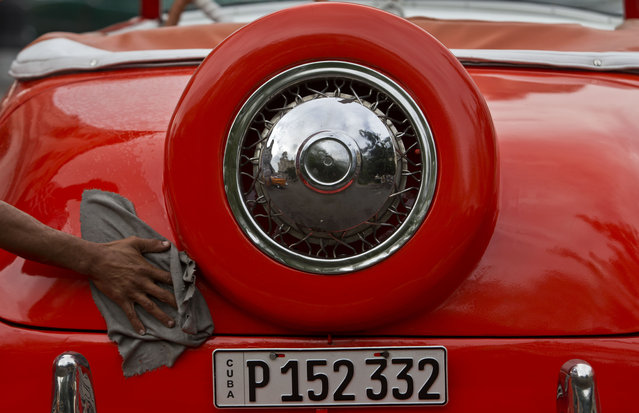
In this October 16, 2014 photo, a man cleans his American classic car before going to work in Havana, Cuba. While the U.S. embargo that took effect in 1961 stopped the flow of new cars, and most parts, a few Cubans now manage to bring in replacement parts when friends or family visit from the U.S. (Photo by Franklin Reyes/AP Photo)

In this October 16, 2014 photo, a man cleans his American classic car before going to work in Havana, Cuba. While the U.S. embargo that took effect in 1961 stopped the flow of new cars, and most parts, a few Cubans now manage to bring in replacement parts when friends or family visit from the U.S. (Photo by Franklin Reyes/AP Photo)
Details
20 Oct 2014 09:01:00
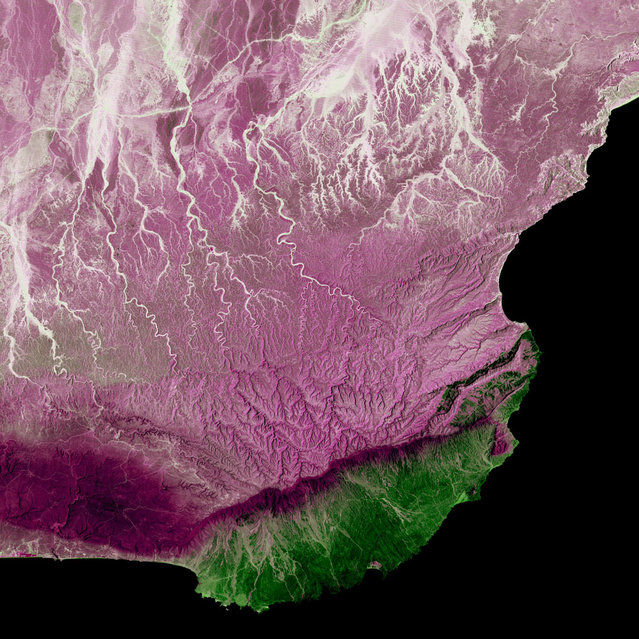
Dhofar Region, Oman. Much of Oman is desert, but the Arabian Sea coast in the Dhofar region represents a startling difference in climate. This coastal region catches the monsoon rains, or khareef, during the summer months. Drenching rains fall primarily on the mountainous ridge that separates the lush, fertile areas along the coast from the arid interior, recharging streams, waterfalls and springs that provide plentiful water supplies in the fertile lowlands for the remainder of the year. Image taken by Landsat 5 on April 2, 2005. (Photo by USGS/NASA)

Dhofar Region, Oman. Much of Oman is desert, but the Arabian Sea coast in the Dhofar region represents a startling difference in climate. This coastal region catches the monsoon rains, or khareef, during the summer months. Drenching rains fall primarily on the mountainous ridge that separates the lush, fertile areas along the coast from the arid interior, recharging streams, waterfalls and springs that provide plentiful water supplies in the fertile lowlands for the remainder of the year. Image taken by Landsat 5 on April 2, 2005. (Photo by USGS/NASA)
Details
25 Dec 2012 11:13:00
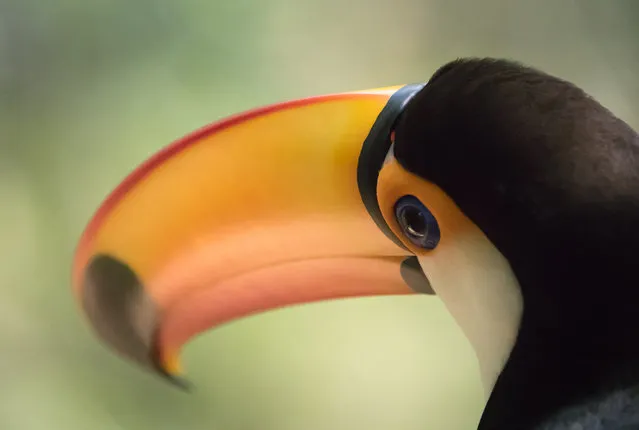
Overall runner-up: Toucan, Mark Tatchell. (Photo by Mark Tatchell/British Ecological Society)

The British Ecological Society has announced the winners of its annual photography competition, Capturing Ecology. Taken by international ecologists and students, the winning images will be exhibited at the society’s joint annual meeting in Ghent in December. Here: Overall runner-up; Toucan, Mark Tatchell. (Photo by Mark Tatchell/British Ecological Society)
Details
05 Dec 2017 08:05:00
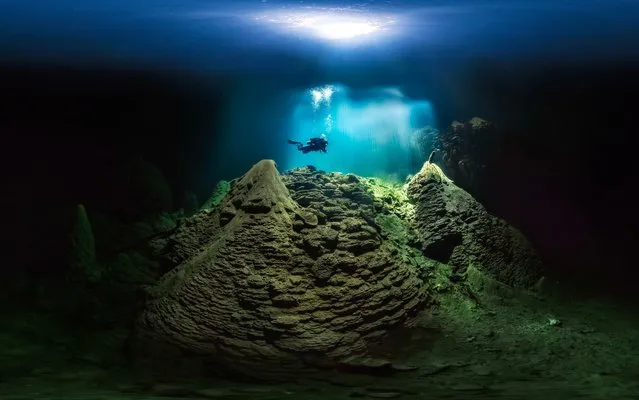
Cave Diver, Anhumas Abyss, Bonito, Brazil: The Anhumas Abyss is an underground cavern with a crystal-clear lake below, more than 260 feet (79 m) deep. A visitor must enter through a narrow opening at the top of the chamber and rappel into the cave. Snorkeling and scuba diving in the lake reveal amazing scenery. Distinctive, conical limestone stalagmites and stalactites occupy the lake and the surrounding area, some reaching 65 feet (20 m) high. “One must rappel about 235 feet (72 m) to get down into this deep lake. The photo was taken at a depth of 50 feet (15 m). It was a challenge to create the image because of the high contrast, plus the diver could not see into the darkness, making communication impossible”. (Photo by Marcio Cabral/Nature’s Best Photography Awards 2017)

Cave Diver, Anhumas Abyss, Bonito, Brazil: The Anhumas Abyss is an underground cavern with a crystal-clear lake below, more than 260 feet (79 m) deep. A visitor must enter through a narrow opening at the top of the chamber and rappel into the cave. Snorkeling and scuba diving in the lake reveal amazing scenery. Distinctive, conical limestone stalagmites and stalactites occupy the lake and the surrounding area, some reaching 65 feet (20 m) high. (Photo by Marcio Cabral/Nature’s Best Photography Awards 2017)
Details
26 Oct 2017 08:10:00